Reviewed by Tara Sullivan · Updated August 2026 · 9 min read
Hair ties are sold on material — silk, satin, ouchless, no-damage — and that's the second question. The first one is size. A hair tie is built so an average ponytail comes up tight in two or three wraps, and a fine ponytail is often half that circumference, so the same tie needs four or five. Those extra wraps are the whole problem: each one stacks more compression into the same narrow ring, and that ring is where the dent forms, where the strands snap, and where your scalp starts aching by lunchtime.
Get to two wraps and most of the material argument goes away. Below: why wrap count is the number that matters, a ten-second test that tells you whether the tie in your hair right now is the wrong size, six ties that reach tension on a small ponytail — each with the limitation the packet leaves out — and the way to secure a fine ponytail so it holds without a kink.
Every product here is chosen independently, on the merits — what genuinely suits fine, thin hair. Links go to each brand's official page, and we don't take payment for placement. Price tiers are rough guides because prices change.
Sorted by relaxed circumference, which is the specification almost nobody prints on the packet.
Chair-side note
I ask clients with fine hair to put their hair up for me before I cut, and then I count. Almost everyone is at four wraps. Nobody has ever noticed — you find the number of turns that makes the ponytail feel secure and then you stop thinking about it, for about fifteen years.
But four wraps on a small ponytail is a different object from two wraps on a large one, even with the identical tie. It's a tighter band, held longer, over a smaller area. When someone tells me their hair snaps at one particular point, I can usually put a finger on it before they show me, because it's exactly where the fourth wrap sits.
SB
— Simone Baptiste, Senior Stylist
Wrap count is the number that decides everything
A hair tie is a loop of elastic with a relaxed circumference — the size it is before you stretch it. Manufacturers pick that number for the middle of the market, which means a ponytail somewhere around 4 to 5 cm across. Stretch the loop around a bundle that size and it comes up firm on the second or third pass.
Fine hair changes the arithmetic in two ways at once. Fine describes the strand and thin describes the density, and a ponytail's circumference depends mostly on the second — but fine strands also compress more readily than coarse ones, so even the same number of hairs gathers into a smaller bundle. A ponytail measuring 3 cm across is unremarkable on fine hair, and against a tie built for 4.5 cm, that's two extra trips around.
Here's why those two trips matter more than they sound. The tie's tension is roughly constant, so each wrap adds another band of compression to the same short length of hair. Two wraps spread that load across a wider ring. Four stack it into a narrow one and hold the hair folded there all day, which is the recipe for three separate complaints readers usually treat as unrelated:
What you notice
What's actually happening
What fixes it
A dent that outlasts the ponytail
A bend held under compression long enough for fine hair to take a set — fine strands set faster because there's less mass resisting the fold
Fewer wraps; a coil-shaped tie; vary the height
Short broken hairs at one height
The same narrow ring loaded and unloaded daily, plus the drag of pulling a four-wrap tie off over the ends
A smaller loop, a covered surface, and unwind rather than yank
A sore scalp after two hours
Tension transmitted back to the follicles — the tighter the ring, the more of it reaches the roots
Two wraps, worn looser, at a lower height
It slips down anyway
Nearly always a sizing problem in disguise: an oversized loop that never reaches proper tension however many turns you take
A tie whose relaxed loop is small enough to bite
This is why the material-first advice you find everywhere is only half an answer. Silk, satin and coated elastics all reduce friction, which is real and worthwhile — friction is what frays the cuticle and causes the fuzz around a ponytail.
But friction isn't what causes the dent or the ache. Those come from compression, and compression is a function of how many times the thing goes round. Fix the size first; then, between two ties of the same size, take the kinder surface.
The ten-second test that tells you if your tie is too big
You don't need to measure anything. Do this with the tie you already own, in the ponytail you already wear.
Gather your hair where you normally wear it and put the tie in as usual. Don't adjust anything for the test — the point is to catch your habit, not your best effort.
Count the wraps. Two is the target. Three is workable. Four or more means the tie is too big for the amount of hair you have, and every problem in the table above is being made worse by an object you can replace for the price of a coffee.
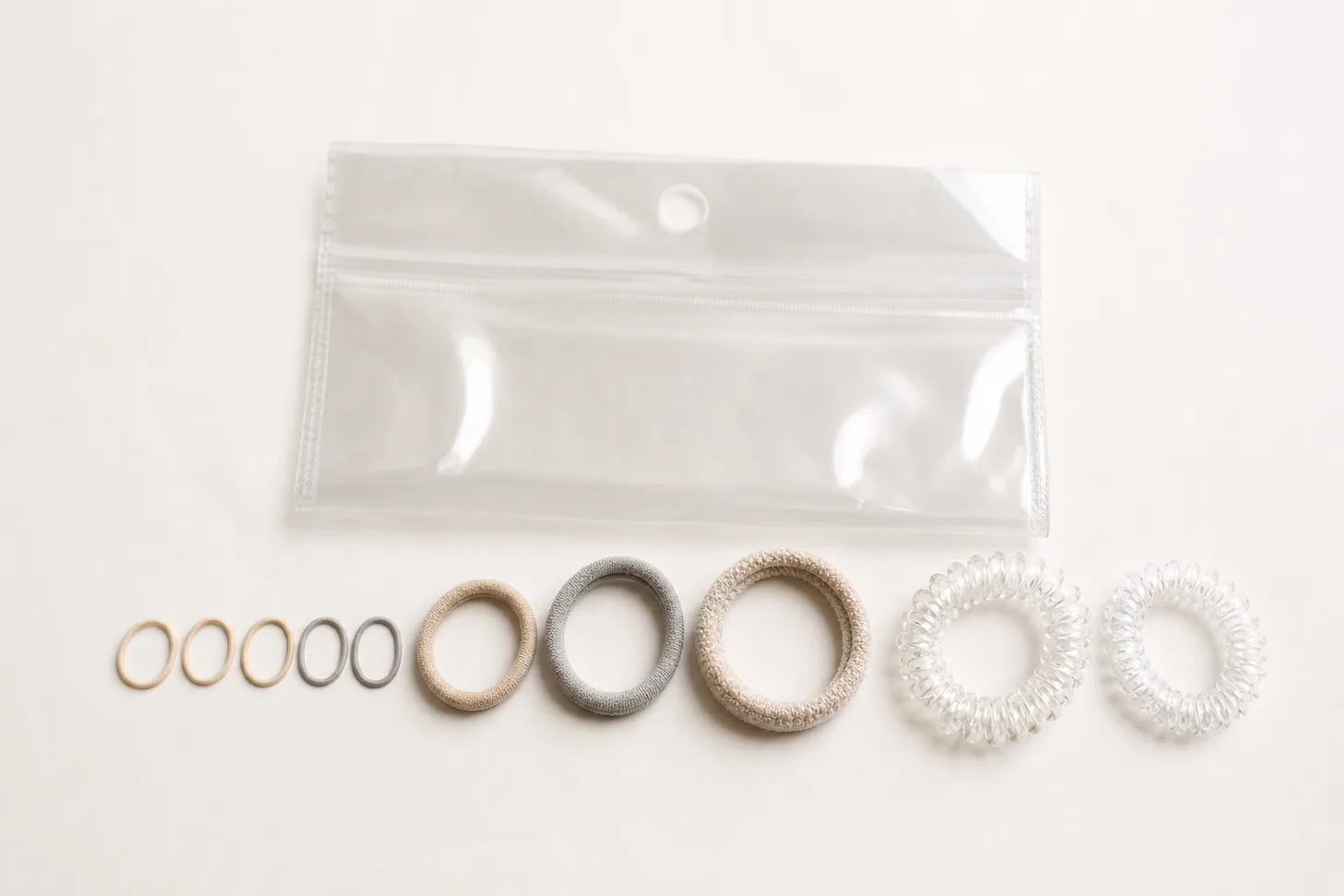
Then measure the ponytail once, so you know what to buy. Circle the gathered base with your thumb and index finger. Fingertips overlapping comfortably means you want mini elastics, around 8 cm relaxed circumference. Fingertips just meeting means a small fabric-covered elastic of roughly 4 to 5 cm relaxed diameter. A visible gap between the fingertips means you have more density than the word thin suggests, and standard small ties will serve you.
One caveat worth stating plainly: a smaller tie is not a tighter tie. You're aiming to reach proper tension in fewer turns, not to strangle a smaller ponytail. The finished ponytail should still let you slide a finger under it at the base.
The picks, by job
Six ties across the sizes and jobs fine hair actually needs, ordered roughly from all-day hold to gentlest — because those two pull against each other, and which one you want depends on the day. Nothing here is a full-volume scrunchie: a large relaxed loop is precisely what this page argues against, and the one scrunchie that genuinely works on fine hair is covered on the barrettes and scrunchies page rather than repeated here.
TELETIES small spiral hair ties in neutral tones, three coils, product shot on white
1
Best overall: TELETIES Small Hair Ties
The rare product whose own copy names the audience — TELETIES describes its small size as the hair tie for thin and fine hair, and splits its range by hair thickness rather than by pattern, with the large size aimed explicitly at thick hair and workout buns. The coil form is what lets the small size work: it grips by wrapping along a length of the ponytail rather than cinching a single ring, so it holds firmly at a diameter that would leave a standard elastic slack. Best for: the everyday ponytail that has to survive a full day and come out without a kink. Honest limitation: a coil costs several times a drugstore multipack, and it wants unwinding rather than pulling — dragged off in a hurry, a hard plastic edge is less forgiving of fragile ends than fabric is.
Gimme Beauty extra fine fit hair bands in blonde and brunette shades, small microfibre elastics on white
2
Best for genuinely fragile hair: Gimme Beauty Extra Fine Fit Bands
Built around a construction idea rather than a coating. The band is made from many fine microfibre elastics working together, which Gimme describes as spreading tension across the bundle instead of concentrating it — the same principle this page argues for, solved inside the tie rather than by buying a smaller one. The brand names extremely delicate and fragile hair as the intended user, which almost nobody in this category does. Best for: hair that already snaps on ordinary elastics, and tying off the end of a braid without a visible knot. Honest limitation: microfibre picks up lint and loses color over time, and the extra-fine version is small enough that if your density sits closer to average than the word thin implies, you'll be back at three wraps.
invisibobble ORIGINAL clear spiral hair rings, three telephone-cord coils, product shot on white
3
Best against the dent: invisibobble ORIGINAL
The brand that made the spiral mainstream, and the only one in this set publishing tested numbers: invisibobble states that its HAIRLOVETECH shape leaves 68% fewer visible marks and does 31% less damage than an ordinary elastic hair tie, with the claims verified by TRI Princeton. The mechanism is the one that matters on fine hair — a helix spreads pressure along the ponytail instead of stacking it into a ring. Best for: days you'll take your hair down and wear it loose afterward, and anyone whose complaint is the kink rather than the hold. Honest limitation: distributed pressure is also less pressure, so a fine ponytail can work its way loose by mid-afternoon — and the plastic deforms permanently if you leave it in a hot car or let it dry stretched.
KOOSHOO plastic-free mini hair ties in organic cotton, small elastics in neutral colors on white
4
Best mini elastic: KOOSHOO Plastic-Free Mini Hair Ties
This is the size the whole page is about, and unusually it's stated on the label — the mini runs around 8 cm relaxed circumference, and KOOSHOO names braids, children's styles and fine hair as what it's for. The build is long-staple organic cotton over natural tree rubber, smoother against the cuticle than bare nylon, with no metal join anywhere. That last detail removes the single most reliable way an elastic cuts a fine strand. Best for: half-ups, short fine ponytails, braid ends, and the hidden lower tie in a stacked ponytail. Honest limitation: natural rubber perishes, so these have a genuine lifespan where a synthetic elastic mostly doesn't — and at 8 cm this is a section tie rather than a whole-head tie, unless your hair is both fine and short.
Kitsch no-snag elastics in clear and black, a large multipack spilled on white
5
Best budget multipack: Kitsch No-Snag Elastics
Sold a hundred at a time, with a coating Kitsch describes as an easy-glide surface that lets the tie come out without snagging — and coming out is the half of the job that gets ignored. A good deal of fine-hair breakage happens on removal rather than during the wear, when a tie that took four wraps to feel secure has to be dragged back over the same four. Best for: keeping in every bag, car and desk drawer so you're never reaching for the one bare rubber band in the house. Honest limitation: the coating is the product, and coatings wear. Once it's gone smooth, what's left is an ordinary elastic — treat these as consumable and replace them rather than keeping the same dozen for three years.
Heliums small 2mm hair elastics in blonde, grey and auburn shades matched to hair color, on white
6
Best color-matched: Heliums Small 2mm Hair Elastics
The only brand here that publishes the specification this page cares about: the small elastics are listed by thickness and relaxed diameter — 2 mm and 1.75 inches — rather than by an adjective. The color range is the second reason to know about them, because they stock blonde, grey and red shades instead of the usual black-and-brown, and on a small ponytail a contrasting tie draws a line exactly where you'd rather the eye didn't stop. Best for: fine grey or blonde hair, low ponytails worn at work, and anyone who'd rather buy by measurement than by marketing. Honest limitation: Heliums publishes numbers rather than performance claims, and there's nothing clever going on — no coating, no coil, no cushioning. You're buying the right size, which is most of the battle, and none of the rest of it.
How to secure a fine ponytail so it holds without a kink
The right tie does most of the work. Four habits do the rest, and they cost nothing.
Lock the last wrap against a fold. On the final pass, pull only half the ponytail through the loop. The tie now grips a doubled bundle rather than a smooth one, which is a real increase in hold with no increase in tension. On very fine hair this alone can take you from three wraps to two.
Add grip before you gather, not tension after. Freshly washed fine hair is slippery and no tie will fix that. A dusting of dry shampoo or a little texture spray through the mid-lengths gives the bundle something to hold onto — the same reason second-day fine hair puts up better ponytails than first-day hair does.
Move the height an inch between wears. Same tie, same place, every day is how you get both a permanent dent and a tender patch. Alternating between two heights solves it, and a mid-height ponytail — level with the top of the ears — is where a fine ponytail reads fullest anyway.
Take it out by unwinding, not by dragging. Pulling a tie down over the ends drags every strand through the loop lengthways. Lift it off wrap by wrap instead. A surprising share of fine-hair breakage happens in this ten seconds rather than across the whole day.
And the one that isn't a habit but a method: use two small ties instead of one bigger one. The stacked ponytail — a lower tail with a second tail tied directly above it, draping over and hiding the first — is the most effective way there is to make a fine ponytail look thicker, and it needs two small hidden ties rather than one large visible one.
Worth saying, because a good part of the fine-hair community has quietly given up on ponytails and isn't wrong to have done so. A tie compresses one point; a clip distributes the same job across a wider area and comes out with no mark. If your complaint is the dent rather than the hold, or you're worried about what a daily ponytail is doing to your hairline, the accessory drawer has better answers than a better elastic:
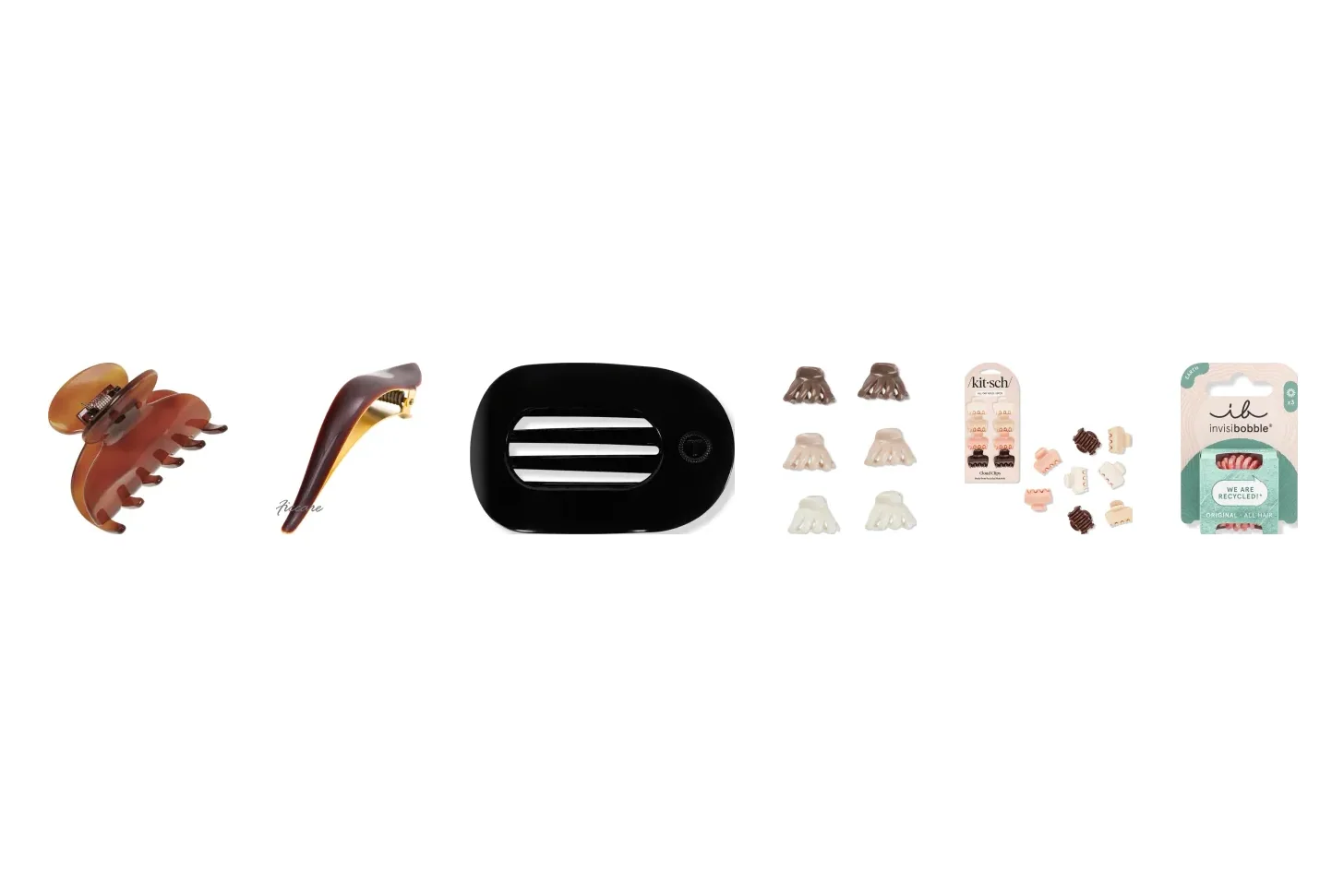
For all-up, all day: a small claw clip. Sizing is the same argument in a different shape — the best hair clips for fine hair is where the claw-clip rules live.
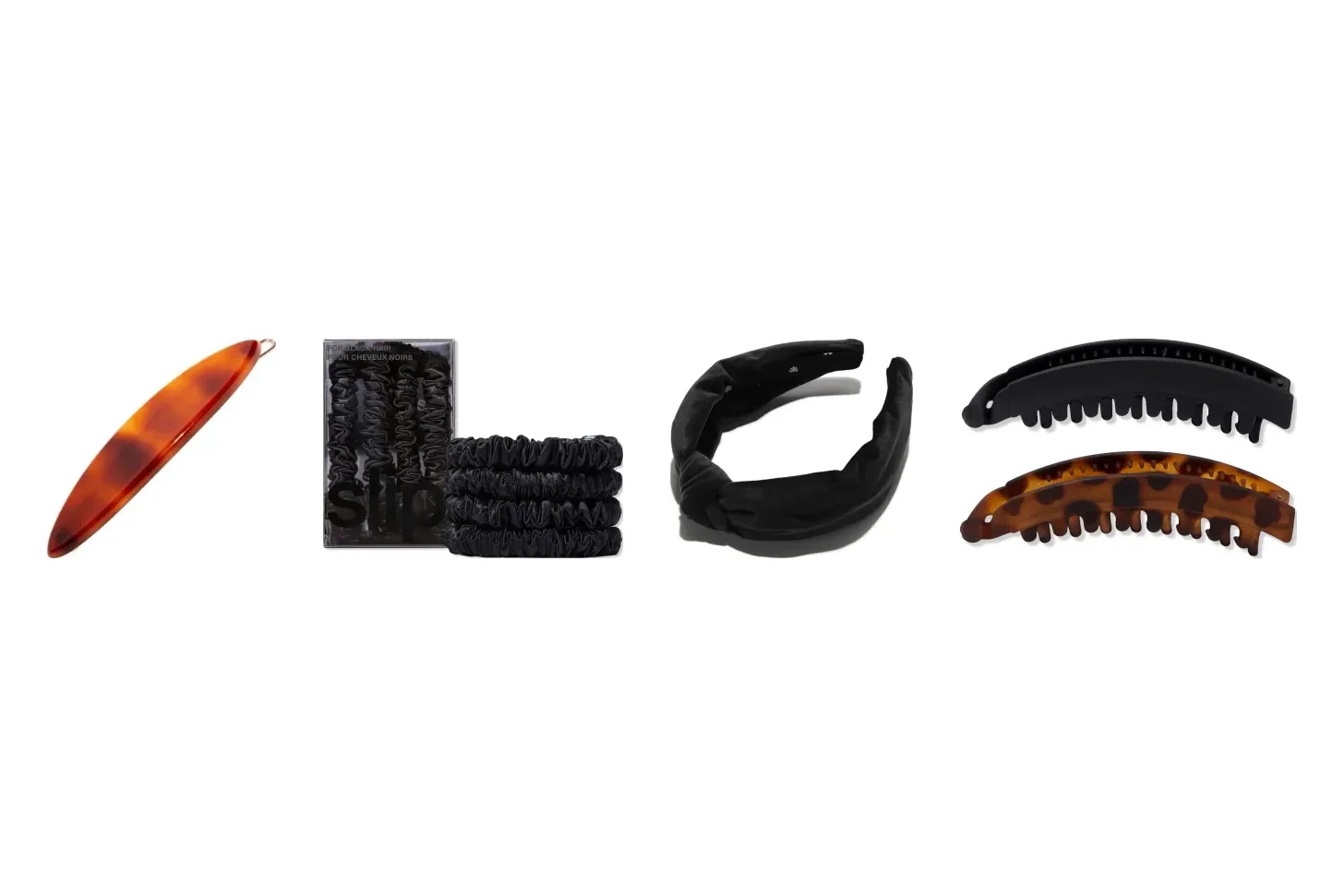
For overnight: a loose skinny silk scrunchie, or nothing at all, plus a silk pillowcase. Hold is irrelevant while you're asleep; hours of friction are not.
For getting the length off your neck without an elastic:easy updos for fine hair is built around the styles that hold on fine hair, and half-up styles covers the lower-commitment version.
When a new hair tie isn't the fix
Your hairline is thinning where the ponytail pulls. Stop pulling it back at all, and get it looked at rather than shopping. Thinning at the hairline on fine hair covers traction specifically, including what's reversible and what isn't.
Your roots are sore within an hour of any ponytail. That's tension, not a tie problem, and it doesn't improve with a gentler elastic worn just as tight. Lower the ponytail, loosen it, and give it days off.
Everything slips because your hair is freshly washed. No tie beats clean, soft, fine hair. Add grip first — second-day fine hair, revived covers the products that give fine hair something to hold.
You're tying hair up to disguise flatness at the roots. A ponytail pulls the roots backward, which flattens the crown further. The fix is upstream: how to get root volume in fine hair.
You want the ponytail to look thicker, not just to stay put. No elastic can do that. The stacked two-tie method can, and it's in fuller-looking ponytails for fine hair.
FAQ
Small ones. The variable that decides whether a hair tie suits fine hair is not the material but the relaxed circumference — how big the loop is before you stretch it. A standard elastic is built so an average ponytail is secure in two to three wraps, and a fine ponytail is often half that circumference, so it takes four or five. Every extra wrap concentrates more compression into the same narrow band, which is what produces the dent, the snapped strands and the ache after two hours. Buy a tie that gets you to two wraps and most of the material argument stops mattering. If two ties are the same size, then prefer the gentler surface: fabric-covered, coated, coil or cotton over bare rubber, and nothing with a metal join.
Twice. Two wraps is the target, three is workable, four or more means the tie is too big for the amount of hair you have. This is the fastest diagnostic there is: put your usual tie into your usual ponytail and count. Most people with fine hair are at four without ever having thought about it, because the tie was sized for a head of average density and nobody sells hair ties by circumference. The fix is a smaller loop rather than a gentler one — a mini elastic, a small-size coil, or an extra-fine band.
Because a dent is a bend held under compression, and the compression rises steeply with every wrap. Two wraps spread the load over a wider band of the ponytail; four wraps stack it into a narrow ring and hold the hair folded there for hours. Fine strands take a set faster than coarse ones because there's less mass to resist the bend, which is why the same tie that leaves nothing in a friend's hair leaves a visible kink in yours. Fewer wraps, a coil-shaped tie, and moving the ponytail height by an inch between wears will handle almost all of it.
Better for breakage, worse for grip, and it's worth knowing both halves. Silk and satin have a low coefficient of friction, which is exactly why they're kind to the cuticle they sit against — and exactly why they slide down a fine ponytail. If you want one, take a skinny version rather than a full scrunchie and plan on one extra wrap. Where they genuinely earn their place is overnight, when hold doesn't matter and hours of friction against a pillow does.
An ordinary ponytail doesn't, but sustained tension in the same spot can. The mechanism is traction: repeated pulling on the same follicles, day after day, at the hairline and temples where the hair is finest and the anchoring weakest. The warning signs are soreness at the roots after taking the ponytail down, short broken hairs along the front hairline, and a hairline that's quietly moving back. Vary the height, keep it loose enough to slide a finger under at the base, and give your hair days off. If the hairline is already changing, stop pulling it back at all and see a dermatologist.
Give it something to hold. Three things work, in this order: choose a tie whose relaxed loop is small enough to reach tension in two wraps; add grip to slippery clean hair with a texture spray or dry shampoo through the mid-lengths before you gather it; and on the final wrap, pull only half the ponytail through so the tie locks against a fold rather than a smooth bundle. A slipping tie on fine hair is nearly always a sizing problem wearing the costume of a grip problem.
They're the best answer to the dent and a mediocre answer to all-day hold, which makes them a specific tool rather than a general one. A coil holds by wrapping in a helix, so the pressure is spread along a length of the ponytail instead of stacked into one ring — that's why it comes out leaving almost no mark. The same distributed pressure is why a fine ponytail can work its way loose in a coil by mid-afternoon. Wear one when you plan to take your hair down and wear it loose afterward; wear a small fabric-covered elastic when it has to stay put.
Measure the ponytail rather than guessing. Gather your hair where you normally wear it and circle it with your thumb and index finger. If the two fingertips overlap comfortably, you're in mini territory — a tie with a relaxed circumference around 8 cm, or a coil sold as small or mini. If they just meet, a small fabric-covered elastic of roughly 4 to 5 cm relaxed diameter is right. If there's a visible gap between the fingertips, you have more density than the word thin suggests and a standard small tie will be fine. The packet almost never lists this number, which is why the wrap count is the more practical test.
Eleven years behind the chair, styling fine and thin hair into things that hold. Simone's rule on hair ties is that you should be able to count the wraps on one hand with fingers to spare — and that a tie you can't see is worth more than a tie that promises.
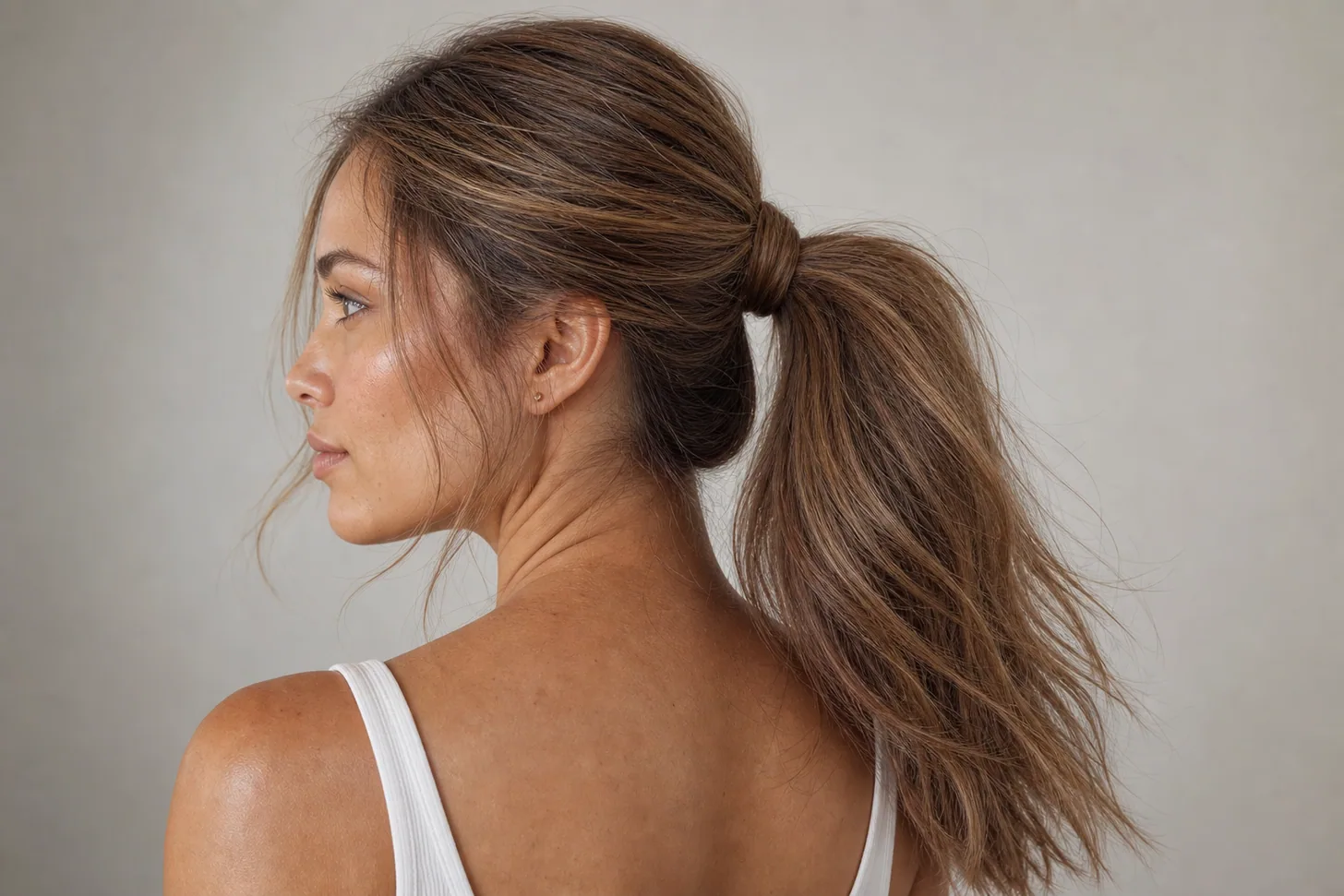
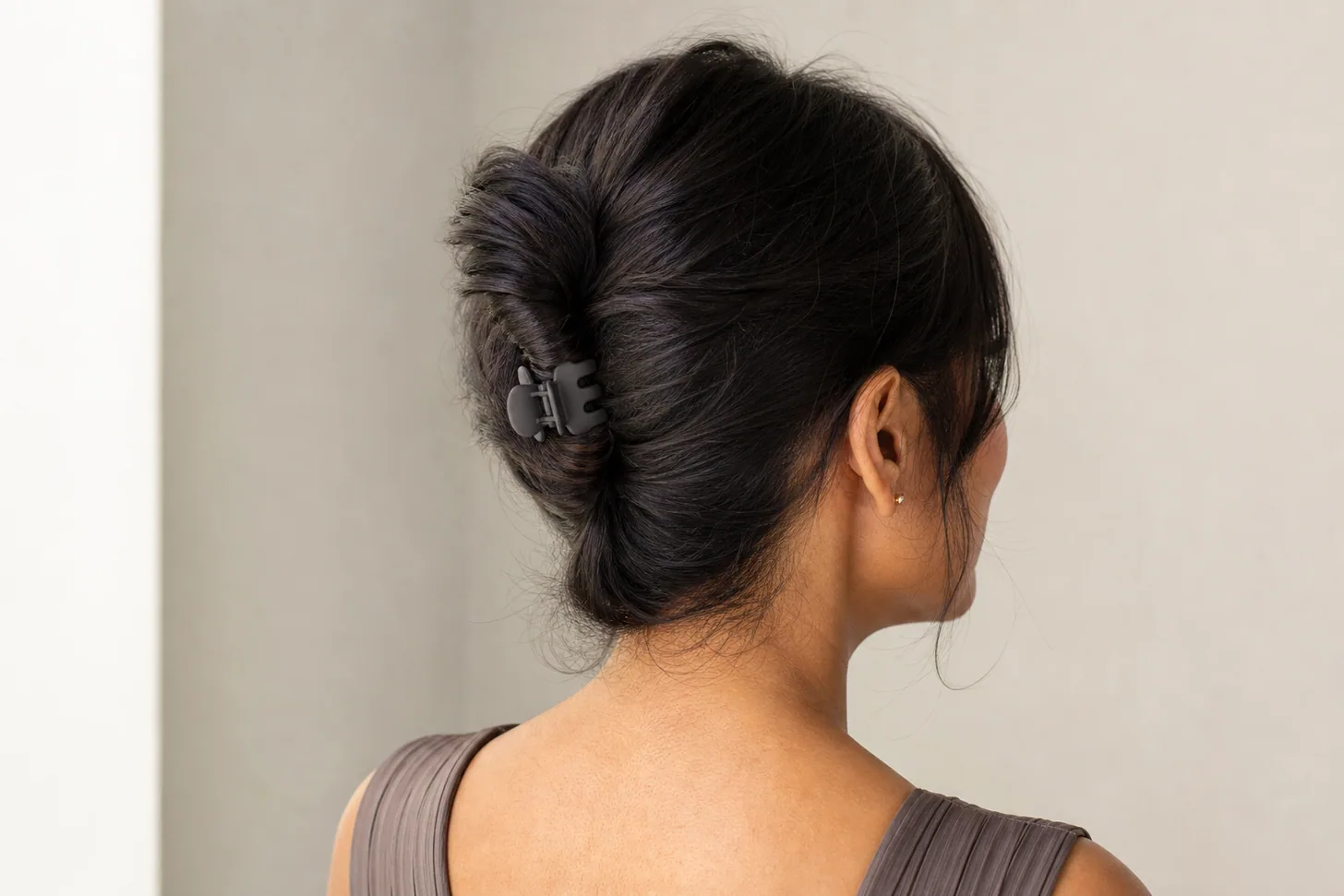
The lead image in this article is an AI-generated illustration, not a photograph of a real product. See our image policy.
Results vary with hair type, density, and growth patterns. This guide is educational and not a substitute for an in-person consultation with a licensed stylist.
Get the good hair intel
One honest, stylist-written guide in your inbox each week. No hype.

 SB
SB