Reviewed by Tara Sullivan · Updated August 2026 · 11 min read
This isn't two problems. It's one distance problem, and once you see it that way the contradiction disappears. Oil is made in exactly one place — glands at the follicle — and then has to travel down the shaft. A fine strand has very little surface per inch, so a small amount of sebum coats the first few inches thoroughly and fast, which is why your roots read greasy within a day.
Getting to the ends takes time and mechanical help, and you almost always wash before it arrives. Meanwhile your ends are the oldest hair you own: at about "1 cm/month", the ends of shoulder-length hair have been on your head roughly two years and have been through every wash, brush, elastic and hot tool since. So the top of your head is over-conditioned by your own oil and the bottom is under-conditioned and weathered.
The trap is that the standard advice for each half makes the other worse — wash more and you strip the ends, mask and oil and you flatten the roots. The fix is a hard border at your ears and two different routines either side of it.
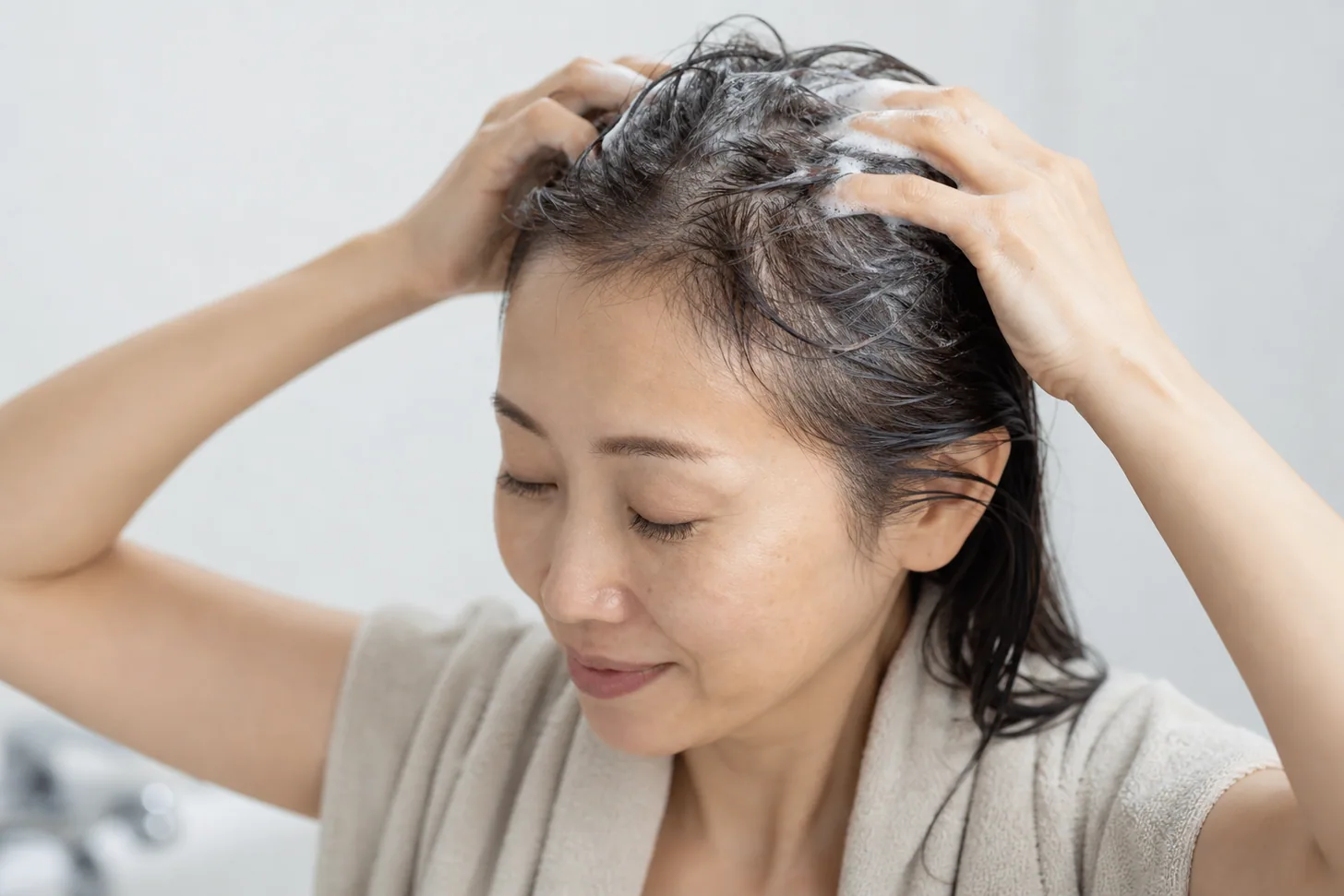
Ends first, working upward, and nothing above the ears — the whole routine in one gesture.
Why it happens: distance, and the age of your ends
Two mechanisms, and neither of them is anything you did wrong.
Oil starts at one end and travels badly. Sebaceous glands sit alongside the follicle, so sebum enters the picture at the scalp. It moves down a strand by contact — hair against hair, hair against fingers, hair against brush — which is slow, and slower still if you don't brush much.
On fine hair the first stage of that journey happens fast, because there's very little surface to cover per inch of strand, so a quantity of oil that would look like nothing on coarse hair coats a fine root thoroughly. The result is a scalp that reads greasy on day two while the last four inches have never seen any of it.
And your ends are much older than you think. Hair grows at "about 0.35 mm/day, 1 cm/month, or 15 cm/year". Run that backwards. If your hair is shoulder-length — call it 25 cm from the crown — the ends emerged from your scalp around two years ago.
Mid-back length puts them at three or four years old. Every wash, every brush, every ponytail, every straightener pass in that whole period has happened to that inch of hair, and unlike skin it cannot repair itself. It's not dry because you neglected it. It's dry because it's old.
Put the two together and you get a gradient, not a pair of conditions: newest, oiliest hair at the top; oldest, driest, most porous hair at the bottom. Treating that gradient as one thing is the mistake — and it's the mistake almost every routine makes.
Why the standard advice makes it worse
Look up either half of this problem on its own and you get confident, opposite instructions.
The oily-hair routine says wash more often, use a clarifying shampoo regularly, skip or minimize conditioner, and keep everything lightweight. Followed literally, that strips ends that were already two years old and had nothing left to spare. The bottles that clean a scalp without doing that to the ends are in shampoo for dry, fine hair.
The dry-hair routine says wash less, use a weekly mask, add a leave-in, seal with oil. Followed literally on fine hair, that leaves the roots carrying product they can't support, flat by mid-morning, and greasier-looking than before.
Which raises the obvious question: where exactly is the line?
The border rule: your ears
Above the ears, nothing but shampoo. Below the ears, everything else. That's the whole rule, and it works because your ears are a landmark you can find in the shower with your eyes shut.
It also matches what dermatologists tell this hair type.
Applied properly the border does two things at once. It stops you adding weight to hair that's already coated in sebum, which is the whole flat-roots problem. And it concentrates whatever you're using on the hair that genuinely can't look after itself. Same products, same wash, different distribution — and on most fine hair that alone is the fix.
If your hair is shorter than shoulder-length, translate rather than abandon it: for a bob, the border is roughly the bottom third; for a pixie, there effectively isn't a lower zone, and your problem is a scalp problem with a bit of dry perimeter.
Chair-side note
I ask people to show me how they condition, and almost everyone does the same thing: pump into one palm, rub both hands together, then start at the top of the head and work down — which puts the highest concentration of product exactly where the sebum already is.
Reverse it. Squeeze the water out of your hair first, because conditioner applied to soaking hair is diluted before it touches anything. Then start at the very ends, and work upward with only what's left on your hands.
By the time you reach your ears there should be nothing left, and that's not a failure, it's the point. I've had clients who changed nothing else about their routine — same shampoo, same conditioner, same wash frequency — and had a completely different head of hair within two weeks. The product wasn't wrong. The direction was.
MH
— Megan Holloway, Editor-in-Chief
The wash-day sequence, run as two zones
Wet thoroughly, longer than feels necessary. Sixty seconds of plain water does a surprising amount of the cleaning at the scalp, and it means you need less shampoo, which means less to rinse out of the ends.
Shampoo the scalp only. Fingertips on the skin, small circles, no piling the lengths on top of your head. A lightweight formula — see shampoo for fine hair. The lather that runs down as you rinse is all the washing the lengths need, and it's deliberately gentler than a direct application.
Squeeze the water out before conditioning. Ten seconds, hands down the length. This is the step everyone skips and it changes how much conditioner you need by roughly half.
Condition ends first, working upward, stopping at the ears. A pea to the shoulder, two past the shoulder blade. Nothing above the border. How much conditioner fine hair actually needs has the fuller version.
Leave it on while you do something else, then rinse properly. Two minutes is plenty. Under-rinsing is the second commonest cause of a flat crown, after applying conditioner too high in the first place.
Blot, don't rub. Wet fine hair is at its most fragile and the ends are the oldest part of it — towel-drying fine hair covers the two minutes that matter.
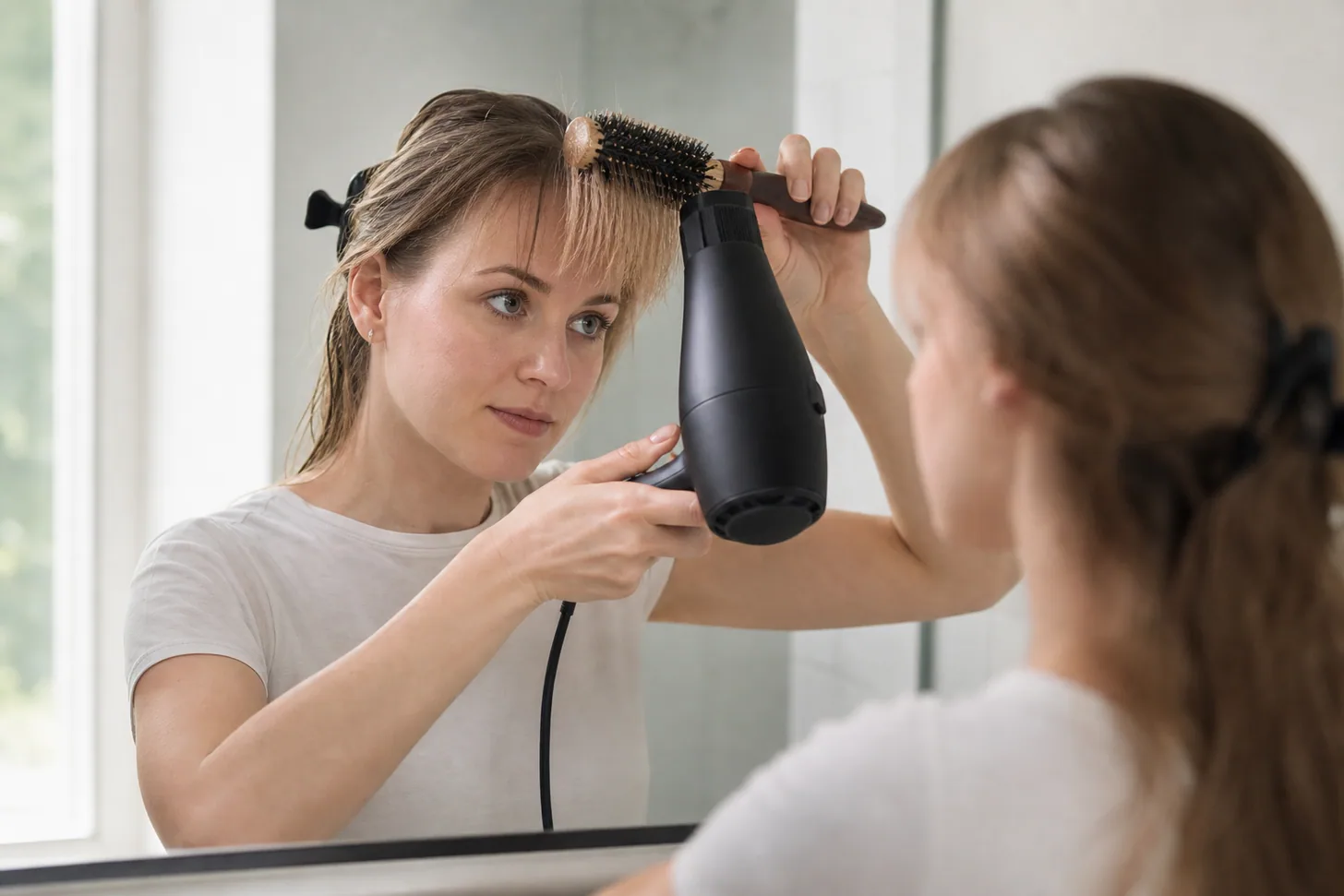
Dry the roots first, against the way they fall. Zone thinking applies here too: the roots want lift and air, the ends want to be left alone.
Done this way, washing daily or every other day is not a problem for dry ends — because the ends are barely being washed at all. That's what unlocks the contradiction, and it's why how often to wash fine hair answers "as often as your scalp needs" rather than giving a number.
Two zones, at a glance
Zone
Its actual problem
What it wants
What must never go here
Scalp & roots (above the ears)
Over-conditioned by your own sebum; flattened by anything added
Lightweight shampoo on the skin; one root product; air and lift when drying
The transition — usually fine, and usually over-treated
Whatever's left on your hands after the ends. Genuinely, that's it
Direct application of anything; this zone gets leftovers only
Ends (the bottom third)
Two-plus years old, porous, mechanically worn, can't self-repair
Conditioner every wash; a light mask weekly; a trim every 8–12 weeks
Heat without protection; elastics at the same height; skipped trims
Between washes, without making it worse
The days between are where most people undo the wash day.
Dry shampoo is a bridge, not a substitute. It absorbs oil, which is useful; it removes nothing, which is the part people forget. Short bursts from eight to ten inches, in sections, thirty seconds to absorb before you touch it. Applied close and rubbed straight in, it cakes — and a week of caked dry shampoo at the root is a second, avoidable version of the same flat problem. Dry shampoo picks covers which ones don't cast gray.
Don't touch your hair. The twenty times a day you tuck the same piece behind your ear is moving oil from your fingers into the exact zone you're trying to keep clean. This sounds trivial. It isn't.
Brush from the ends up, and brush a bit. There's a genuine tension here: brushing distributes sebum down the shaft, which is the one thing that would actually help your dry ends, and it also drags it through hair you'd rather keep clean. The compromise is a short pass with a soft brush at night, from the ends upward, which moves some oil down without working the root.
Clarify on a schedule, not on impulse. Once a fortnight is enough for most fine hair, and it clears the dry shampoo and product that have accumulated. Every wash is too often and will cost your ends. See clarifying shampoo picks.
The three habits that keep this going
Each of these is a reasonable thing to do that happens to be wrong for this specific combination.
1. Stretching your washes to "train" your scalp. Sebum production is hormonal and genetic; there's no mechanism by which a scalp learns to make less because you left it alone.
What happens during a training period is that the oil accumulates, the roots flatten further, and the ends don't benefit, because that oil was never reaching them. The training myth is covered properly elsewhere on the site; the short version is that it costs you six uncomfortable weeks and gives you nothing.
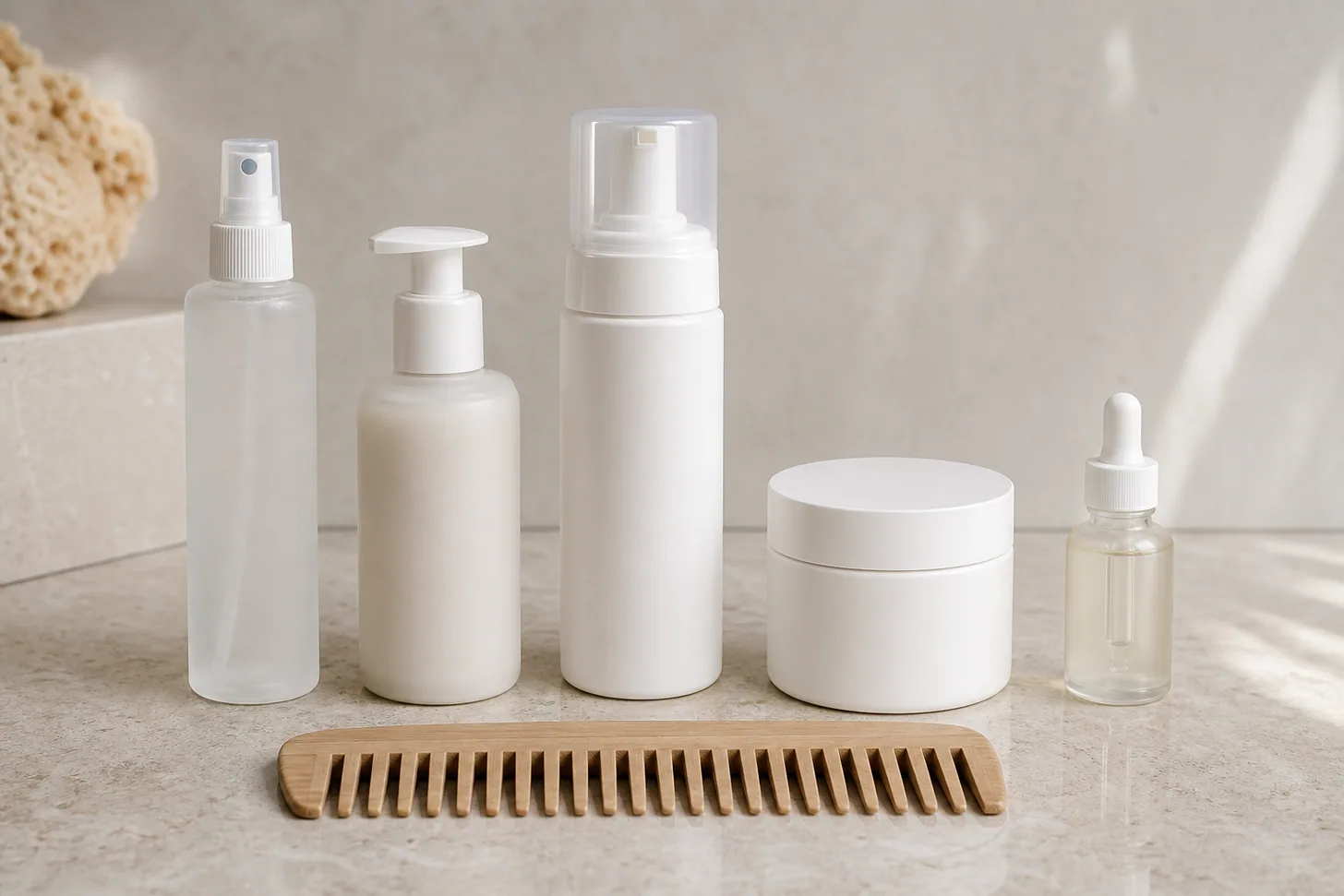
2. Layering three products on the lengths. A leave-in, a serum and an oil are all doing the same job, and on fine ends the coating is what makes them clump into visible ropes by afternoon. Keep one. The order to apply hair products on fine hair works through the overlaps.
3. Treating the ends and hoping the roots forgive you. Masks left on the whole head, oil applied "just a bit higher this time", a leave-in sprayed generally. Every one of those crosses the border, and on fine hair the border is unforgiving.
When it isn't sebum at all
Three impostors produce the same complaint and need different answers.
Product buildup. Appears within an hour of styling even on freshly washed hair, feels tacky rather than slick, makes strands separate into ropes, leaves a film on your brush you have to pick off. Washing more often won't fix it. Clarify once, then use fewer products.
Mineral film from hard water. Affects all of your hair at once rather than the roots first, brings dullness and a rough, squeaky-but-not-clean feeling, and got worse when you moved house. That needs a chelating wash — hard water and fine hair, and what a shower filter can and can't do.
A scalp condition. Flaking, itching, redness or soreness alongside the oiliness suggests something dermatological rather than simply an oily scalp — dandruff on fine hair covers the distinction, and persistent symptoms are worth a doctor's opinion rather than a shelf full of shampoo.
When the two-zone routine isn't the answer
Your ends look tired straight out of the shower.No product rebuilds a worn perimeter. That's a cut — how often to trim fine hair.
The hairs coming out are short and blunt at both ends.That's breakage rather than dryness, and it's a handling problem. See breakage on fine hair.
Everything feels coated on wash day itself.That's buildup or minerals, not sebum. Clarify and check your water before rearranging your routine.
Your scalp is itchy, flaky, red or sore.Oiliness plus symptoms is a scalp condition until proven otherwise, and it needs the right active ingredient rather than a better technique.
Your ends feel rough and straw-like rather than simply dry.That can be protein overload rather than moisture loss, and more conditioner makes it worse. What actually repairs fine hair damage tells them apart.
The oiliness changed suddenly, with nothing else changing.A genuine shift in sebum production over weeks — especially alongside skin changes or cycle changes — is worth mentioning to a doctor rather than solving with shampoo.
FAQ
Because oil is made in only one place and has to travel, and on fine hair it doesn't travel far. Sebum is produced by glands attached to the follicle, so it starts at the scalp and moves down the shaft by contact and by brushing. A fine strand has very little surface area per inch, so a small amount of sebum coats the first inches thoroughly and quickly — which is why fine hair reads greasy at the root within a day. Getting further takes mechanical help and time, and most people wash before it arrives. Meanwhile the ends are the oldest hair you own: at about a centimeter a month, the ends of shoulder-length hair have been on your head roughly two years and have been through every wash, brush, elastic and hot tool since. It's one gradient, not two conditions.
Wash as often as your scalp needs, and change what you wash rather than how often. This is the trap: the standard advice for oily hair is to wash more, which strips ends that were already dry, and the standard advice for dry hair is to wash less and use masks, which leaves the roots flat and greasy. Both are correct for one half of your head and wrong for the other. The way out is to stop treating the wash as a single event applied to one thing. Shampoo the scalp only, with the lather that runs down doing all the cleaning the lengths need. Condition from the ears down, never above. Done that way, washing daily or every other day isn't a problem for dry ends — because the ends are barely being washed at all.
From the ears down, and the American Academy of Dermatology is specific about this hair type: if you have fine or straight hair, apply conditioner to the ends of your hair, while dry or curly hair takes conditioner along the entire length. The ears are a useful border because they're a fixed landmark you can find with your eyes shut in the shower, and because the hair below them is old enough to need help while the hair above is being conditioned by your own sebum for free. In practice: squeeze the water out of your hair first so the conditioner isn't immediately diluted, apply to the ends, work upward with what's left on your hands, and stop at the ears. For a bob, the border is roughly the bottom third.
Not directly, but the way most people use it creates a second problem that looks like the first. Dry shampoo absorbs oil, which is genuinely useful between washes. What it doesn't do is remove anything — so what's on your scalp at the end of the day is the oil plus the absorbent, and left unwashed for several days that becomes a layer that sits at the root and flattens the hair. The result gets read as worsening greasiness, and the response is usually more dry shampoo. Two habits keep it useful: apply in short bursts from eight to ten inches away, in sections, and give it thirty seconds to absorb before touching it; and treat it as a bridge between washes rather than a replacement, with a clarifying wash on a schedule.
Yes — on the ends only, and less often than the jar suggests. The mistake isn't using a mask, it's using it the way the instructions describe, which usually means through the lengths for ten minutes. On fine hair with an oily scalp, a mask anywhere near the root is the fastest route to hair that's flat before you've left the house. Apply to the bottom third only, keep well clear of the ears, and rinse thoroughly, because incomplete rinsing is the second commonest cause of a flat crown. Once a week is plenty, and once a fortnight is enough if your ends are in reasonable condition. If a mask flattens your roots even applied only to the ends, the product is too heavy for your hair rather than your technique being wrong — see masks that don't weigh fine hair down.
No, and the belief that it does is why a lot of people spend six uncomfortable weeks making both halves of this problem worse. Sebum production is driven by hormones and genetics, not by how often you shampoo, and there's no mechanism by which a scalp learns to produce less because it's been left alone. What actually happens during a "training" period is that oil accumulates rather than reduces, the roots flatten further, and the ends don't benefit because they were never getting that oil anyway. The one grain of truth is that harsh over-washing can leave a scalp irritated and feeling tight, which people then interpret as a rebound in oil. The fix for that is a gentler shampoo, not a longer gap.
They look similar and behave differently, and the difference decides what you do next. Sebum-greasy roots appear gradually over a day or two, feel slick when you rub a strand between your fingers, and are always worst at the part and the crown. Product buildup appears within an hour of styling even on freshly washed hair, feels slightly tacky or coated rather than slick, makes strands separate into visible ropes, and leaves a faint film on your brush bristles that you have to pick off. If it's buildup, washing more often won't fix it and may cost your ends for nothing. Clarify once to reset, then rebuild with fewer products — the number of products at the root is usually the actual cause.
Usually by using less on them rather than more, and by cutting them more often. Stringy ends on fine hair have two causes that get confused. The first is genuinely dry, worn ends, which want a light conditioner or a couple of drops of oil and, more than anything, a trim — product can't rebuild a perimeter that has thinned out. The second is over-treated ends, where a leave-in plus a serum plus an oil have coated strands that were thin to begin with, and the coating is what makes them clump into ropes as the day goes on. The test is simple: if your ends look best right after washing and worse by afternoon, you're adding too much. If they look tired even straight after a wash, they need cutting.
Fourteen years in fine-hair care, eight of them behind the chair. Megan's border for every fine head of hair: shampoo above the ears, everything else below them.
Images in this article are AI-generated illustrations, not photographs of real clients or results. See our image policy.
Results vary with hair type, density, and growth patterns. This guide is educational and not a substitute for an in-person consultation with a licensed stylist.
Get the good hair intel
One honest, stylist-written guide in your inbox each week. No hype.

 MH
MH