First, the two products this phrase keeps mixing up
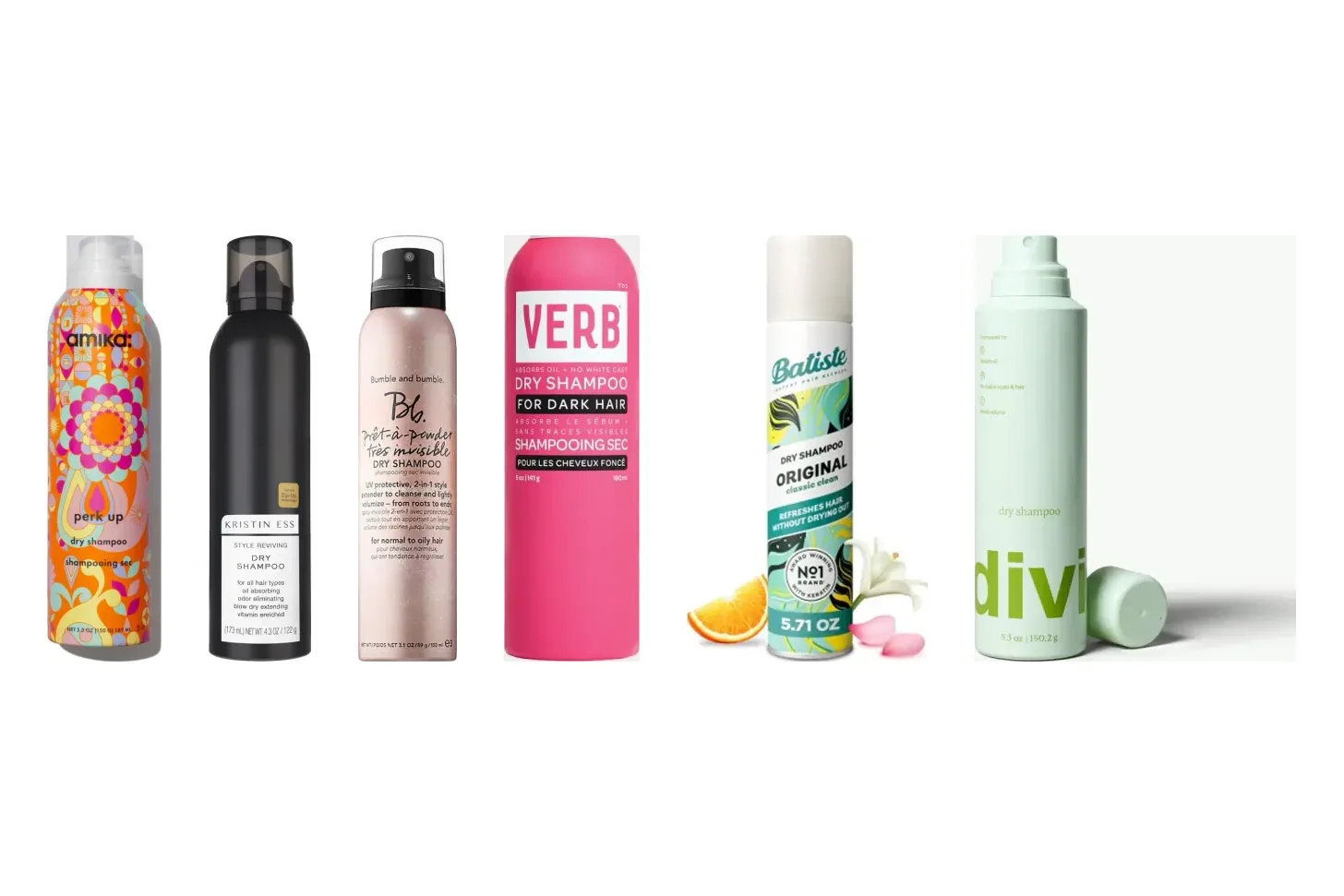
Search best shampoo for dry fine hair and a good half of what comes back is dry shampoo — the aerosol you spray on unwashed roots. That is not really a search-engine failure; it is an English one. The words are almost identical and the products are opposites. One absorbs oil at the root between washes. The other is a liquid wash formulated not to strip.
| Dry shampoo | Shampoo for dry hair |
|---|
| What it is | Powder or aerosol, applied dry | Liquid wash, applied wet |
| Problem it solves | Too much oil at the roots | Rough, thirsty mid-lengths and ends |
| Where it goes | Roots only | Scalp, then rinsed through |
| What it leaves behind | Starch or clay, deliberately | Ideally very little — see below |
Plenty of people with fine hair want both, because oily roots with dry ends is the commonest fine-hair pattern there is and it is a two-product problem by definition. If the powder is what you came for, our dry shampoo picks for fine hair covers that category properly. Everything from here is about the bottle you wash with.
"Dry" and "fine" ask a shampoo for opposite things
This conflict is written into the clinical guidance, not invented by marketing. The dermatology review of shampoo formulation in the Indian Journal of Dermatology describes dry-hair shampoos as providing mild cleansing and good conditioning, and names sarcosines — which it calls excellent conditioners — as the secondary detergents used in conditioning and dry-hair shampoos.
A few paragraphs later, mild amphoteric detergents are the class singled out for fine and damaged hair, chosen because they foam well and leave hair in a manageable state.
Read those two briefs side by side and the conflict is plain. A dry-hair shampoo is engineered to leave things on the hair. That is the mechanism, not a side effect. A fine-hair shampoo is engineered to leave as little as possible. There is no formulation trick that satisfies both at once, which is why you have bought four bottles that promised moisture and delivered a flat afternoon.
There is a second problem the aisle never mentions: shampoo is applied to the wrong end of the hair. Your dryness is in the mid-lengths and ends. Shampoo goes on the scalp and roots, sits for under a minute, and rinses. So a moisturizing shampoo deposits most of its conditioning load exactly where fine hair is least able to carry it, and least of it where the dryness actually is.
Why the same deposit costs a fine strand more
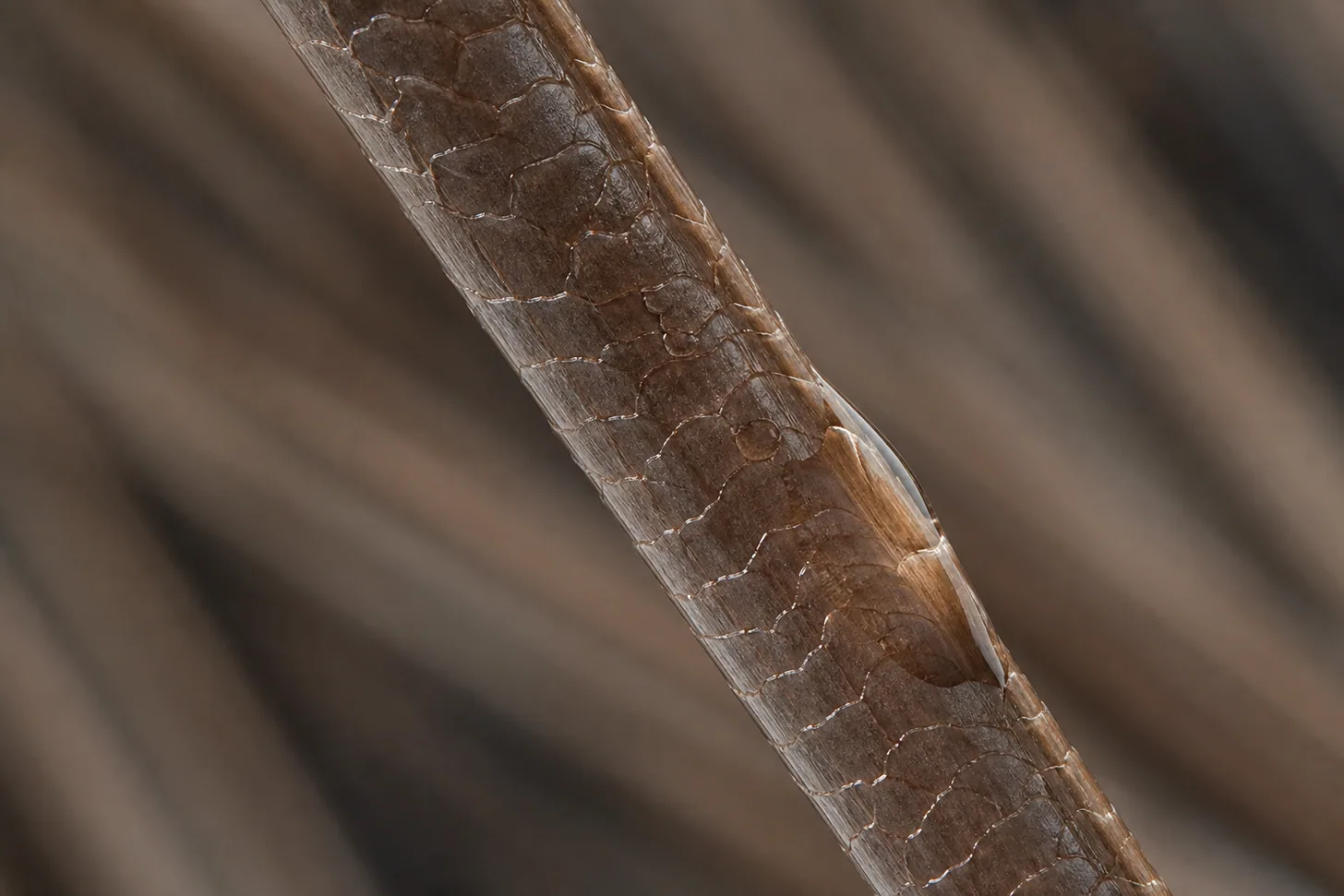
Deposition scales with surface area. Weight — and therefore the root lift you lose — scales with mass. Those two things do not move together as strands get finer, and that gap is the whole reason this category behaves differently on your hair than on your sister's.
For a cylinder, surface area per unit mass rises as diameter falls: halve the width and you roughly double the surface area carried by every gram of hair. The published population figures give a sense of the range involved. A 2020 review in Clinical, Cosmetic and Investigational Dermatology reports mean cross-sectional area of 4,804 ± 159 µm² for Asian hair against 3,857 ± 132 µm² for Caucasian hair, and individual fine strands sit well below either average.
The practical consequence: the identical shampoo, used identically, leaves proportionally more film on a fine head of hair than on a coarse one. The bottle is not lying when it says lightweight. It was weighed against a strand thicker than yours. The same arithmetic is why silicones build up faster on fine hair, and it is worth understanding once, because it explains most of what happens in this aisle.
Which of the three "dry" problems you actually have
"My hair is dry" describes at least three situations on fine hair, and only one of them is solved by a different shampoo. Work out which you are in before you spend anything — it takes one wash and saves a shelf of half-used bottles.
| What you notice | What it probably is | What to do |
|---|
| Hair feels rough and squeaky straight out of the shower; static in winter; the length looks dull all over, not just the last inch | Over-cleansing. The detergent is too strong, or you are washing the lengths rather than the scalp. | A milder daily wash — picks 1, 3 and 5 — and conditioner every wash without exception. |
| Only the bottom two to four inches feel dry; the hair tangles, soaks up water fast and dries fast; there is color, bleach or daily heat in the history | Cuticle damage, not dehydration. The hair is porous, so it takes water in and loses it just as quickly. | A repair-lane shampoo — picks 2 and 6 — plus a bond or protein treatment on the ends only. |
| Hair feels dry and heavy at the same time; a dull film that conditioner does not fix; hard water at home, or a lot of styling product | Residue wearing a dryness costume. Mineral and polymer build-up roughens the surface and blocks moisture from landing. | Reset first with a clarifying shampoo for fine hair, then re-assess. See also hard water and fine hair. |
The middle row draws the wrong purchase most often, because a porous strand feels dry and the instinct is to treat it with moisture. Moisture goes in and straight back out; what porous hair needs first is a smoother cuticle to hold it. Our guide to porosity on fine hair has the self-check, and the repair ingredients that actually do something covers what to use once you know.
Chair-side note
The test I give clients costs nothing and settles the first two rows in a single wash. Shampoo as normal, condition only from the ears down, and let it air-dry. Then run a strand between finger and thumb from mid-length to tip.
If it feels evenly rough the whole way, you have been over-cleansing, and you need a gentler bottle. If the top half is smooth and the last two inches catch, that is damage — and no shampoo on this page will repair it. The moisture will keep running out of those ends until the cuticle is sealed or the ends are cut off.
I have watched people spend a year buying their way up the price list chasing the second one with the wrong category of product entirely. A gentler shampoo, a treatment on the ends and a trim does in six weeks what four bottles did not.

MH
The shampoo is not where the moisture should come from
This is the argument the rest of the page runs on, so it is worth stating plainly. Every step in a wash routine can carry moisture, and they are not equally good at it. They differ in how long they stay on and — crucially for fine hair — in whether you can keep them off the roots.
| Step | Contact time | Can you keep it off the roots? | Moisture per unit of weight added |
|---|
| Shampoo | Under a minute, then rinsed | No — it goes on the scalp by definition | Poor |
| Conditioner | One to three minutes | Yes, completely | Best value on fine hair |
| Light weekly mask | Five to ten minutes | Yes | High, but weekly only |
| Leave-in on the ends | Until the next wash | Yes, if you are disciplined | High — and the easiest to overdo |
Shampoo comes last on every measure that matters. So the job of your shampoo is a negative one: clean the scalp without stripping the lengths, then get out of the way. The picks below are ranked on how well they do that, not on how much moisture they claim. The moisture itself belongs in a conditioner you keep below the ears, a light weekly mask, and the full method in the moisture routine for dry, fine hair.
What to look for on the label
Good signs. A mild primary detergent near the top of the list — sodium cocoyl isethionate, sodium lauroyl methyl isethionate, decyl glucoside, cocamidopropyl betaine. Small humectants that hold water without building film: glycerin, panthenol, sodium PCA, hyaluronic acid. Hydrolyzed proteins in modest amounts, especially if the second row of the table above is you. And a short ingredient list, because in this category what is absent decides how your roots look at four in the afternoon.
Warning signs, in order of how often they cause trouble. Shea butter, coconut oil or castor oil inside the first six ingredients — superb on coarse dry hair, reliably flattening on fine. Non-water-soluble silicones such as dimethicone, for the surface-area reason above.
Long-chain quats like behentrimonium chloride or cetrimonium chloride high in the list, which tell you the formula is built to deposit rather than rinse. And the vocabulary: ultra-rich, super moisture, deeply nourishing, intense hydration. Read each of those as a statement about how much the formula leaves behind — a fact about the product, not a promise about your hair.
One word deserves its own line. Sulfate-free is not a synonym for light. Many sulfate-free formulas make up for weaker detergency with a heavier conditioning load, rinse less completely, and leave fine hair feeling coated within a fortnight. It is a useful signal for the over-cleansing row of the table, and it is a guarantee of nothing else.
The best shampoos for dry, fine hair, by job
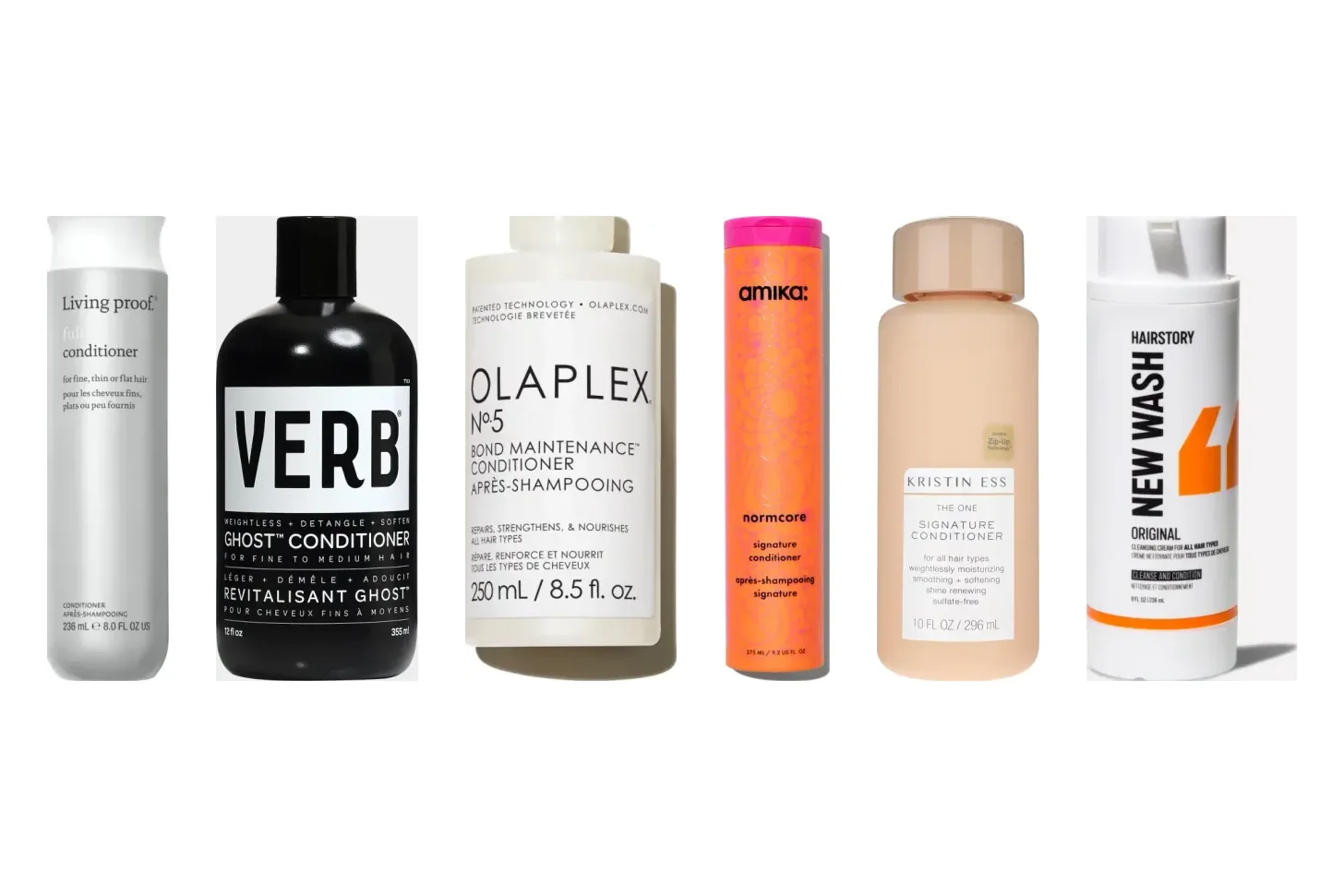
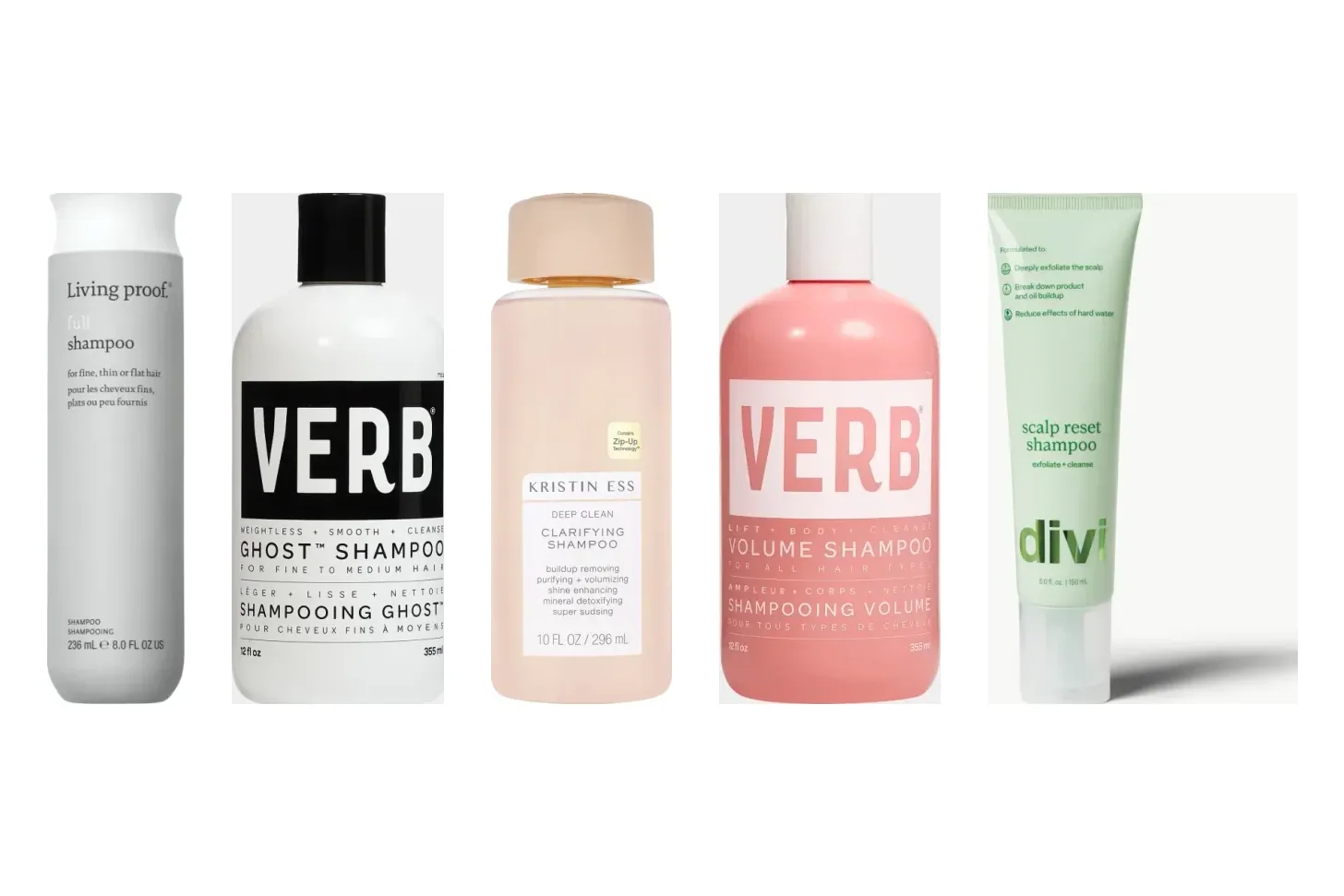
Six picks across six brands, ordered by how little they leave behind while still not stripping. Each one names the row of the diagnostic table it is for, and each has one real limitation stated, because every bottle here is a compromise somewhere.