Reviewed by Tara Sullivan · Updated October 2026 · 10 min read
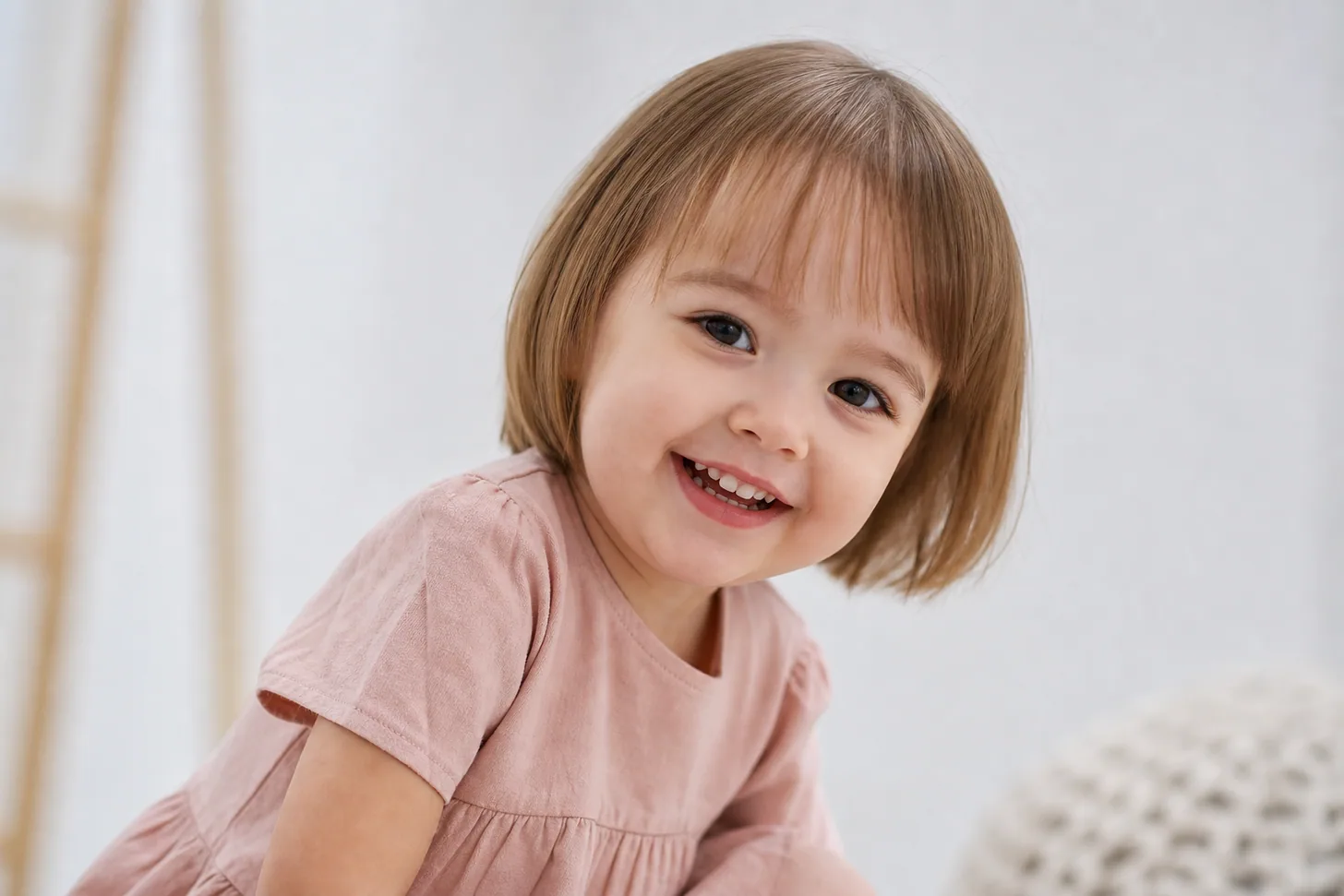
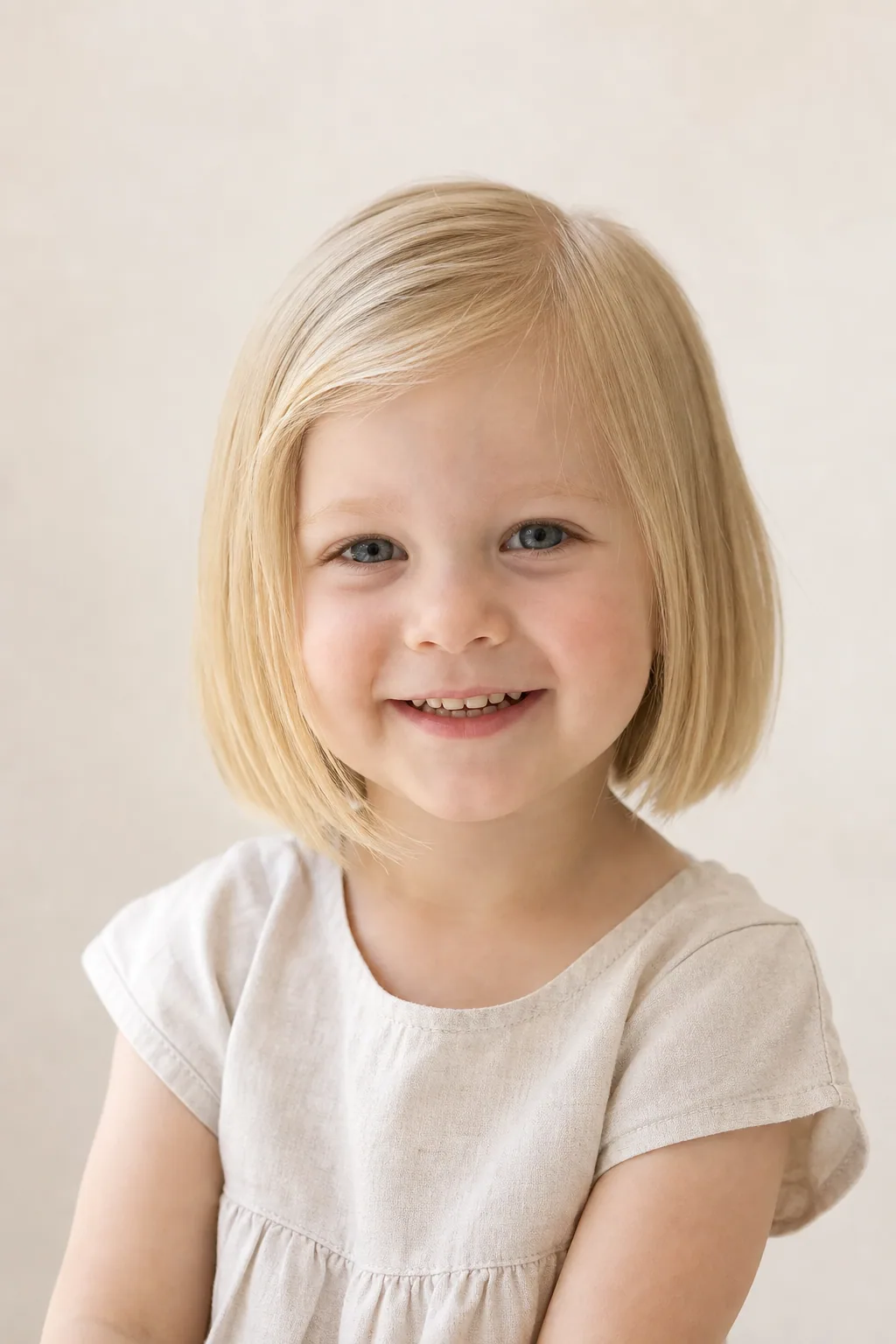
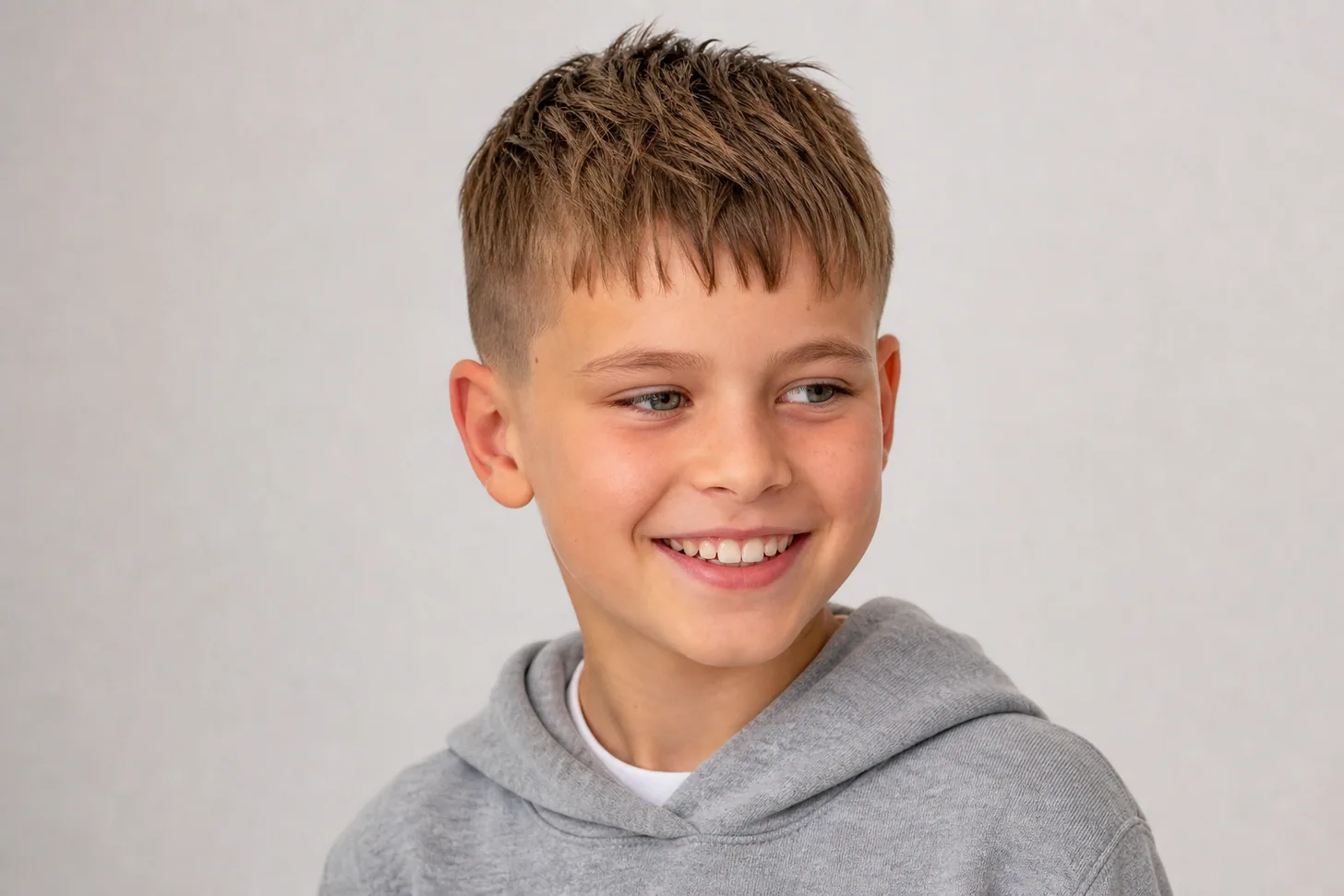
The best haircuts for a toddler girl with thin hair are short to medium, cut to one even length with a blunt edge: a chin bob, a bob with bangs, or a shoulder-length cut with no layers. A blunt line makes fine hair look thicker than long wisps do.
Thin, fine hair is normal in toddlers, and most girls' hair fills out through early childhood. Below are 14 haircuts from the first trim to the longest, plus easy everyday styles and flower girl hairstyles that will not pull on a thin hairline.
Chair-side note
Parents of little girls with wispy hair usually want to grow it long, hoping it will fill in on the way. Long baby-fine hair tends to do the opposite: it tangles, breaks at the back where she sleeps, and hangs in see-through ends.
A blunt bob or one-length cut makes the same hair look twice as thick, and it keeps growing while the hair itself catches up.
SB
— Simone Baptiste, Senior Stylist
Why toddler girl hair is thin, and why a blunt line helps
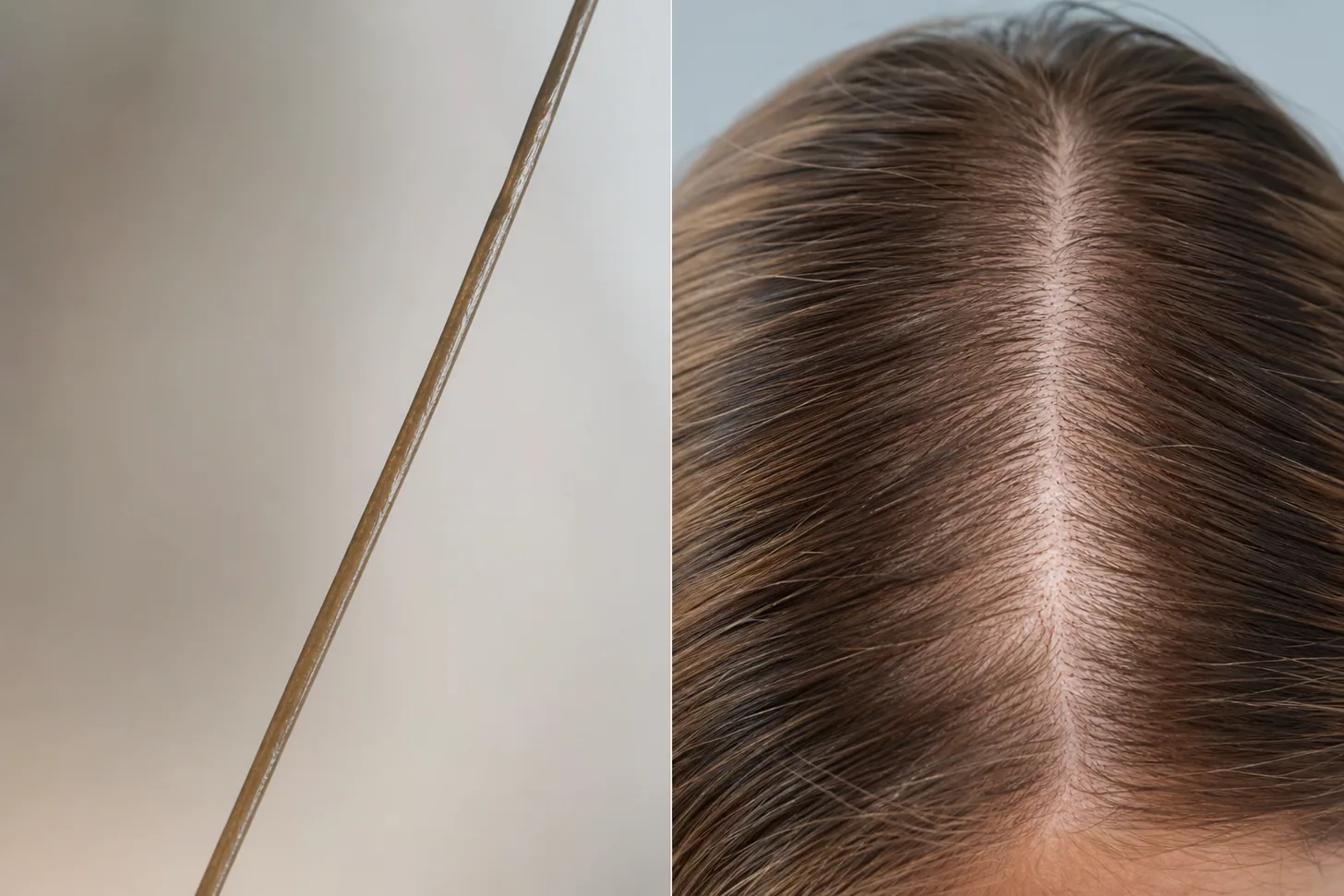
Toddler hair is usually both fine, meaning each strand is narrow, and thin, meaning there are fewer strands than an adult has. It tends to fill out gradually over the first few years, often unevenly.
Fine hair looks fullest where the ends stop together. A blunt, one-length edge keeps all the ends at the same point, so the bottom of the cut reads as solid. Layers and thinning shears do the reverse: they spread the ends out, and a toddler has no spare hair to spread.
Short bob haircuts for toddler girls with thin hair
A short bob is the most forgiving haircut for thin toddler hair. It is easy to brush, it does not tangle much, and it looks neat even when she has been rolling around on the floor.
1
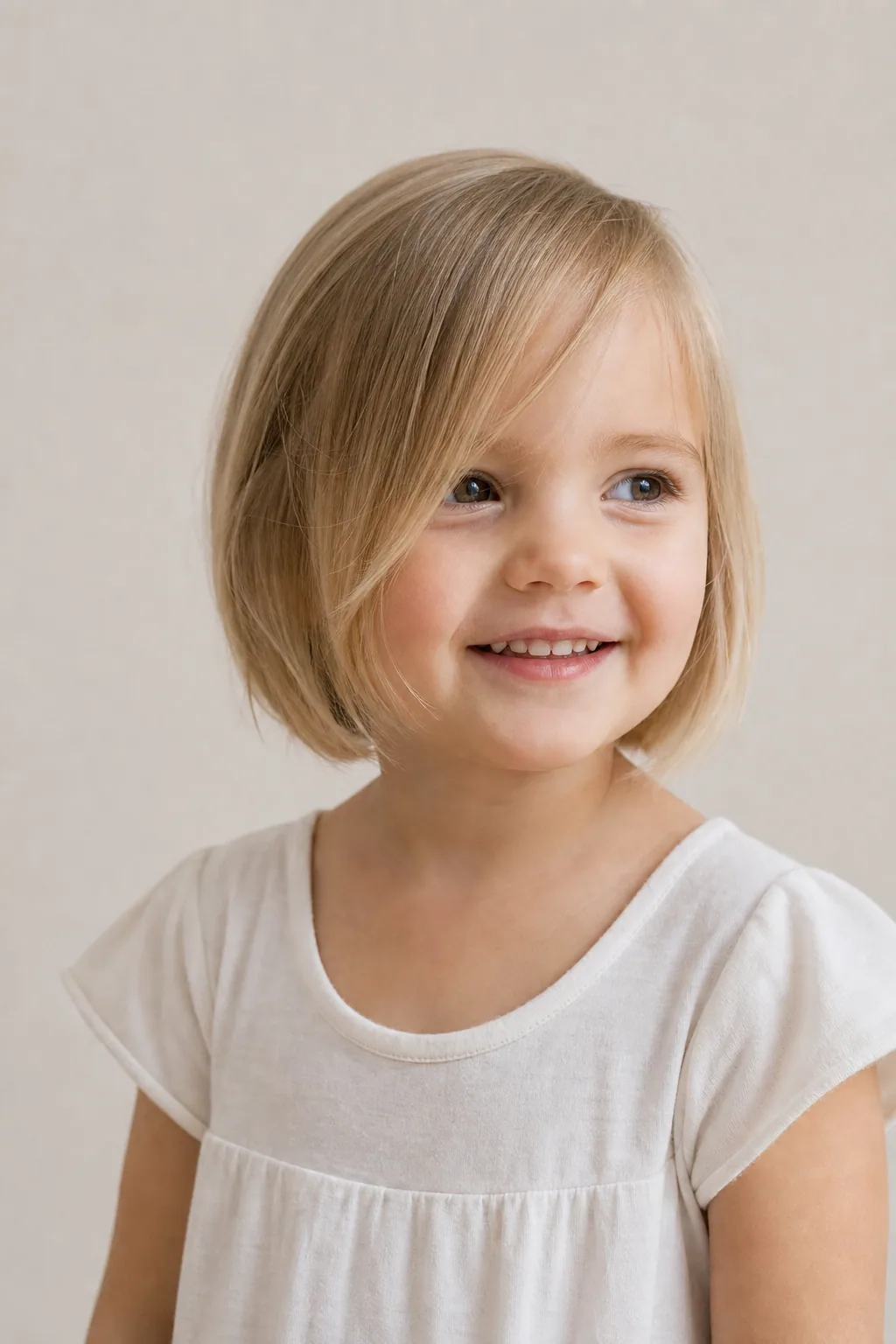
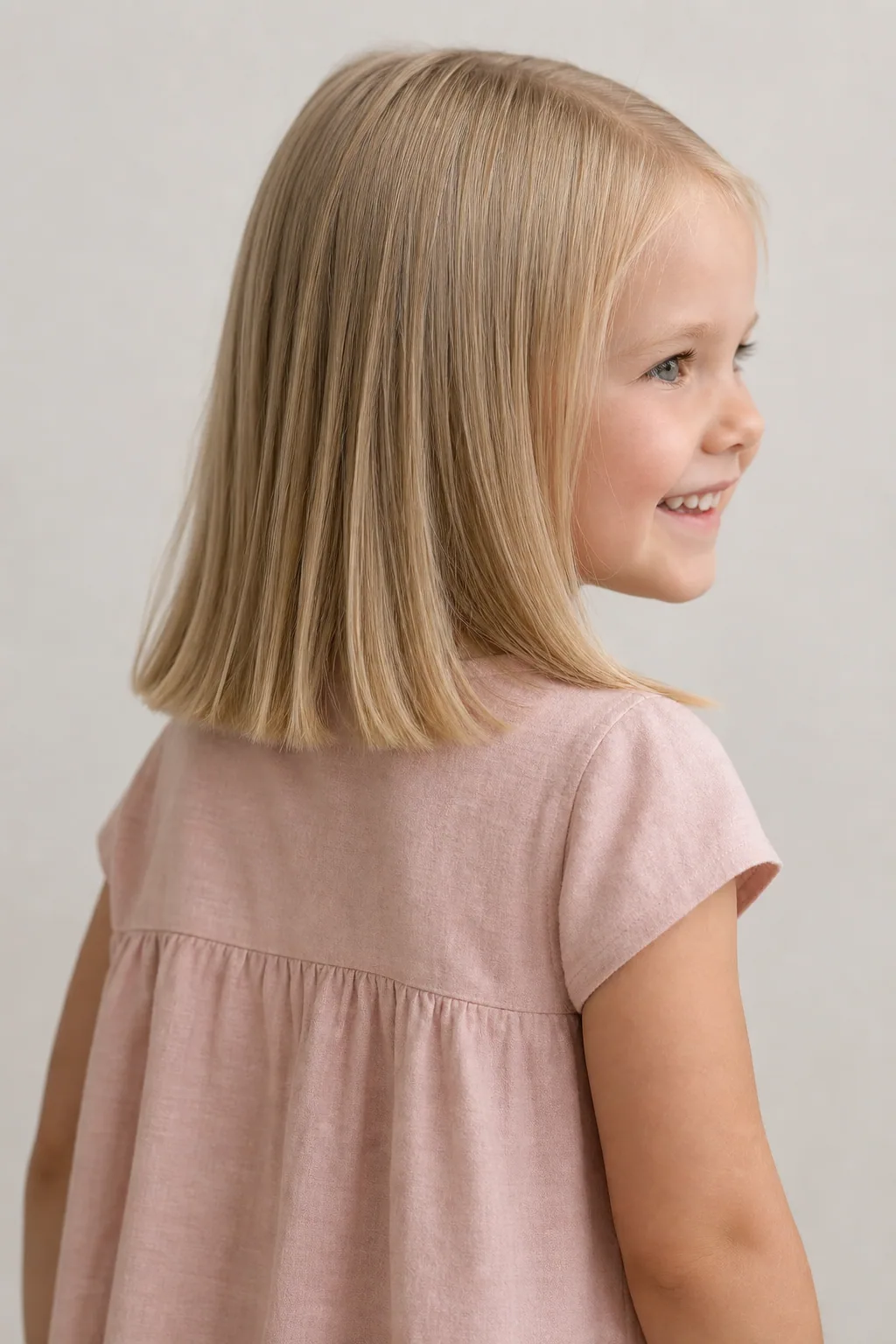
Blunt chin-length bob
One length all round, at the chin, with a blunt edge. It is the simplest and fullest-looking cut for very fine toddler hair.
Ask for it to be cut with scissors on dry hair, so the stylist can see where the wisps really fall.
2
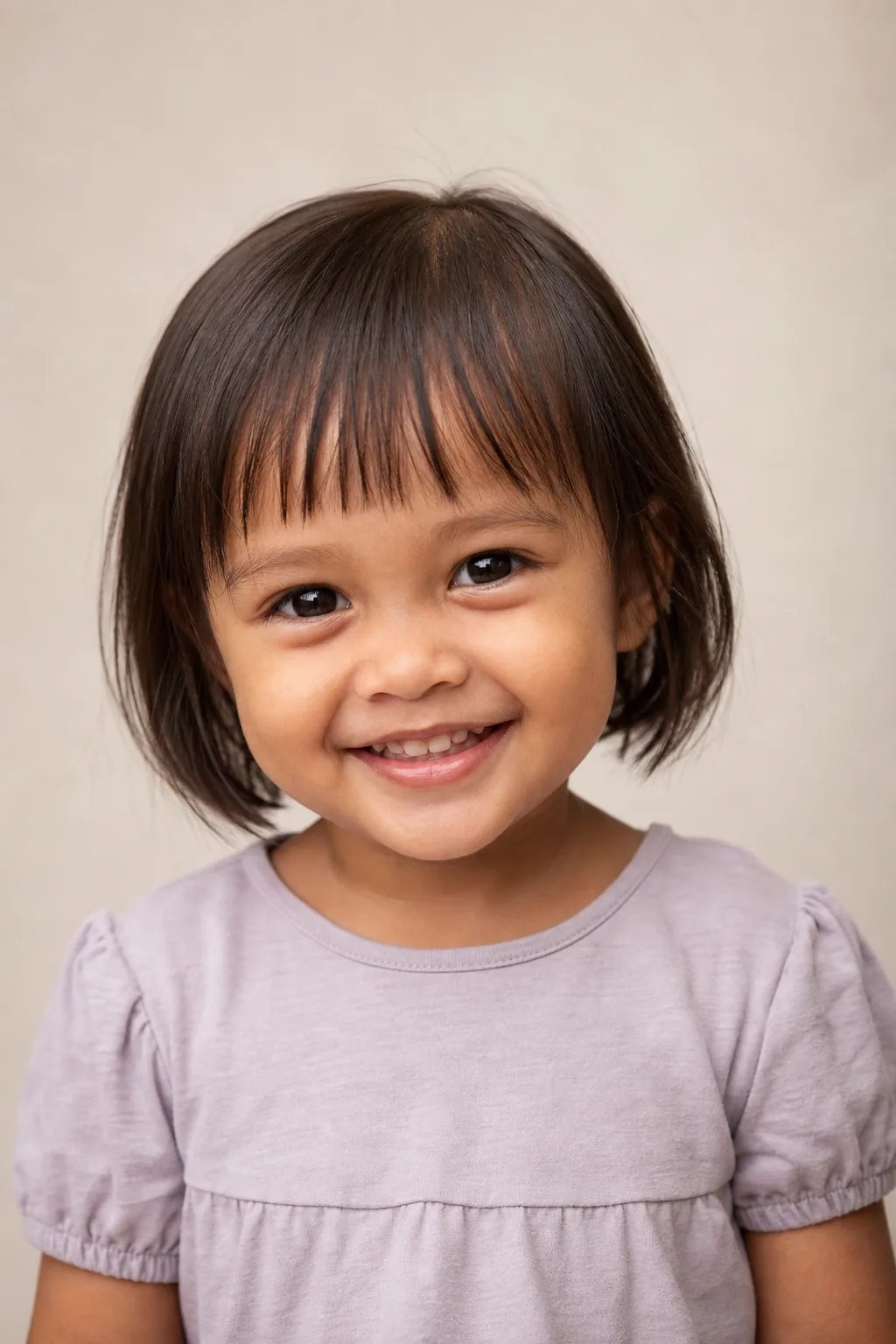
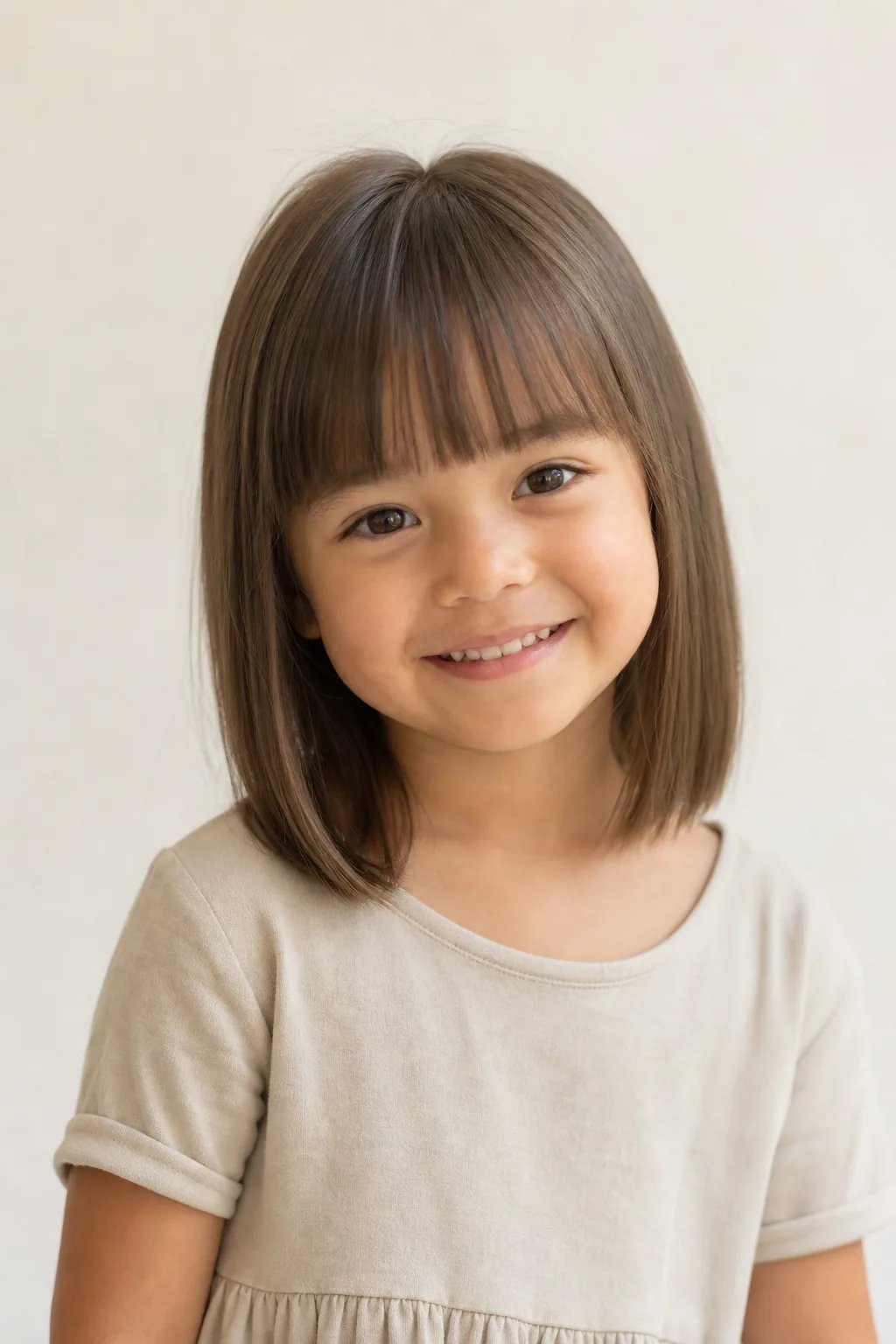
Bob with blunt bangs
A chin bob with straight bangs just above the eyebrows. The bangs borrow hair from the top and add a second solid line, so the whole cut looks thicker.
Bangs need a trim every four to five weeks, which a parent can do at home with care.
3
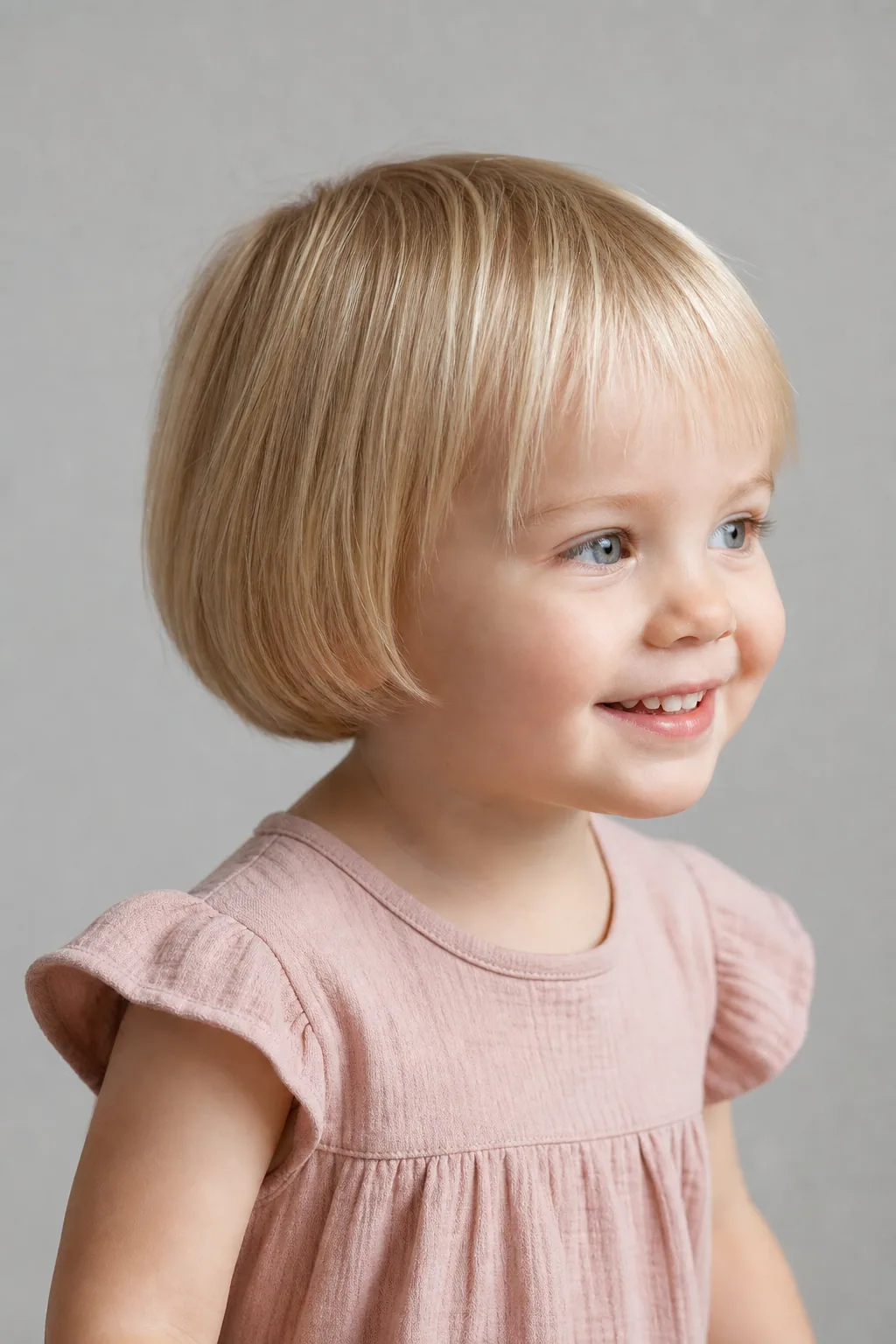
Ear-length rounded bob
A short, rounded bob that ends around the ears. It suits very thin hair that will not hold a longer line, and it dries in minutes.
It is also a good reset if the back has grown in much thinner than the front.
4
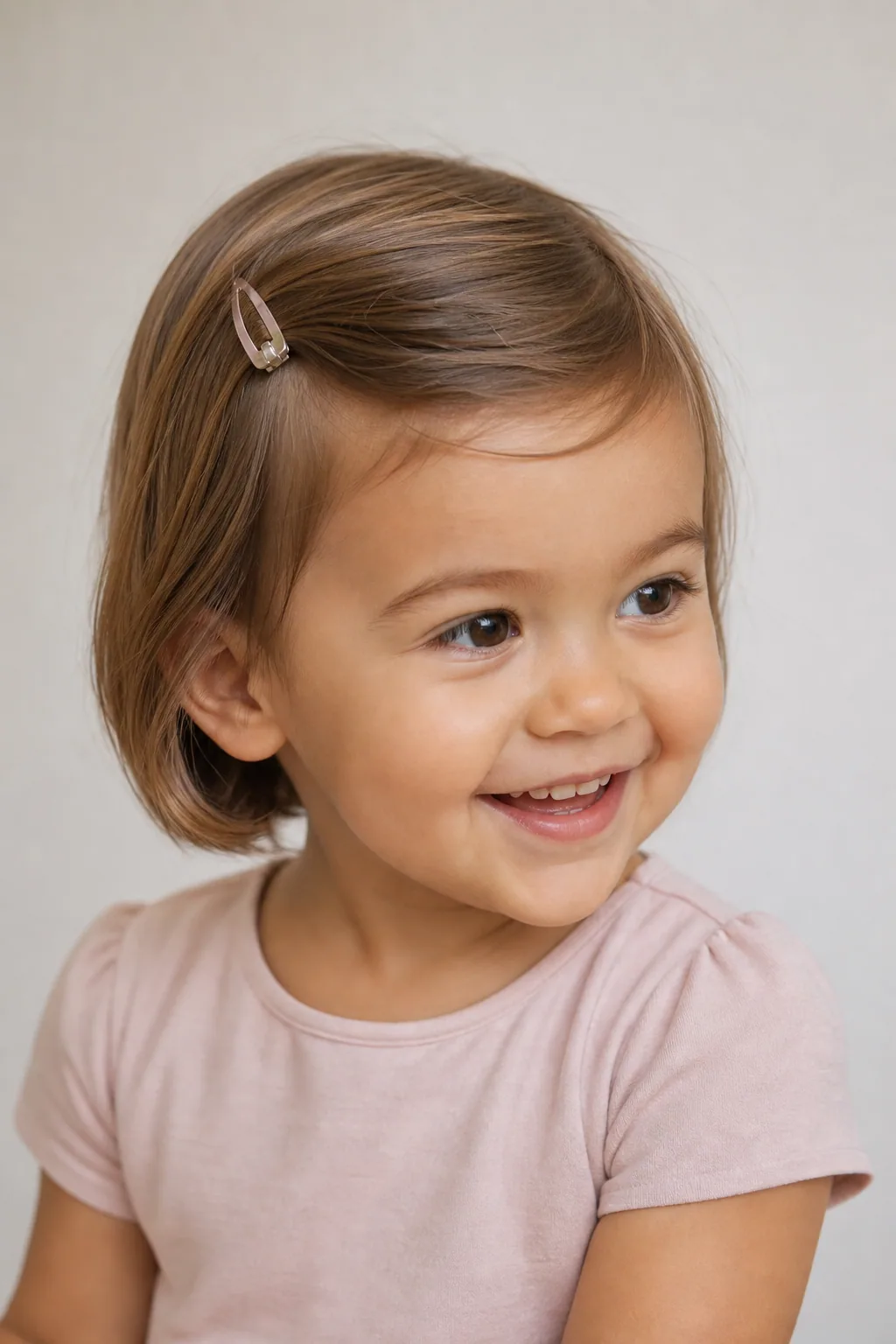
Side-part bob with a clip
A chin bob with a side part, and one small clip to keep the heavy side out of her eyes. It grows out more gently than bangs.
Use snap clips with a soft coating, and move the clip a little each day so it never pulls the same spot.
Little girl haircuts with bangs for thin hair
Bangs are one of the best tricks for thin hair at any age. They cover a sparse front hairline and make the hair look fuller from the front, which is the view that matters most in photographs.
5
Shoulder-length cut with straight bangs
A one-length cut at the shoulders with full straight bangs. It looks classic and grows out evenly.
Keep the ends blunt and skip layers; at this length, layers would leave the bottom see-through.
6
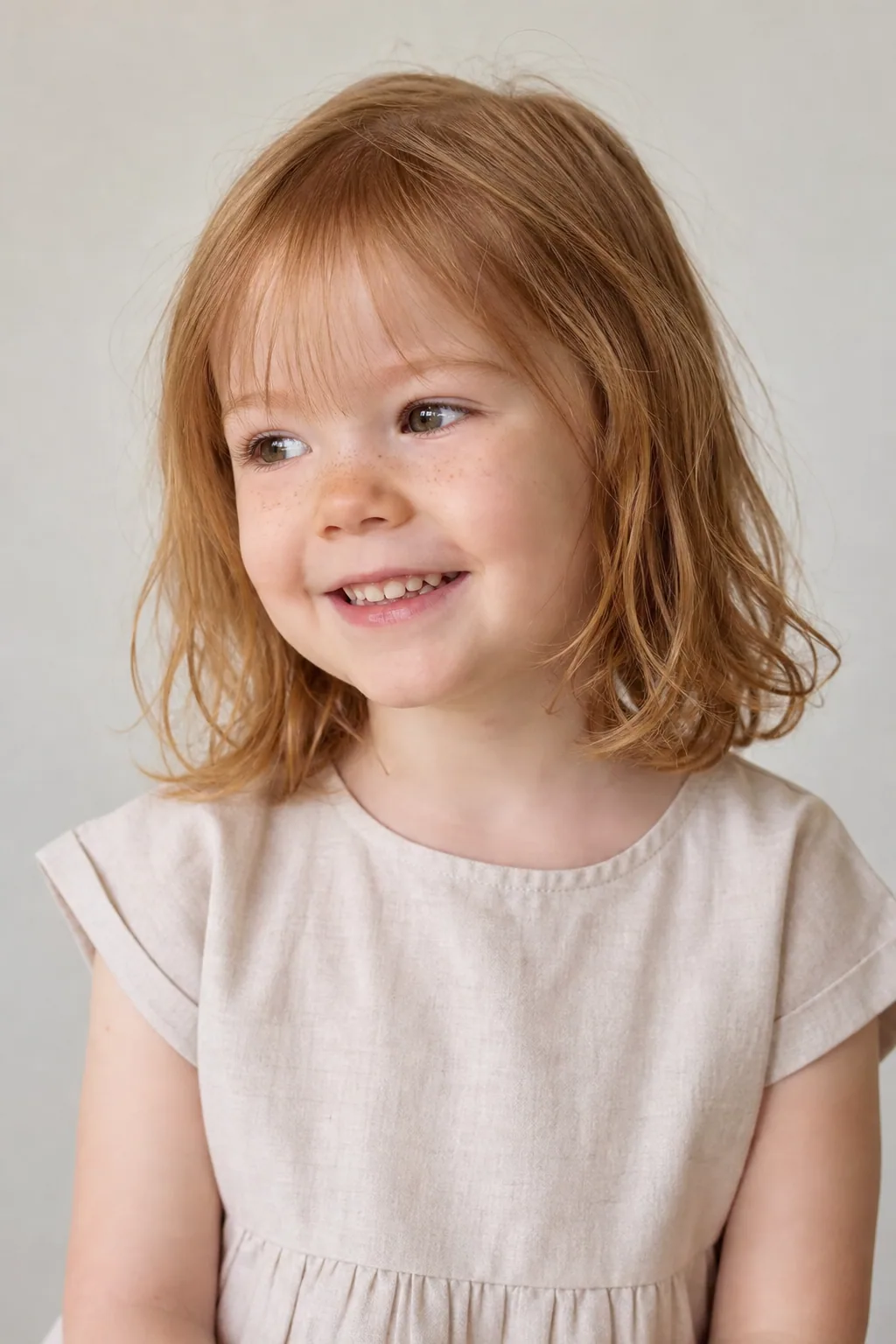
Wispy bangs on a collarbone cut
Softer bangs that let a little forehead show through, on a collarbone-length cut. They suit fine wavy hair, which bends into place on its own.
Bangs left long and swept to the side, blending into the bob. This is the easiest stage when growing bangs out, and it needs no clip once it reaches the cheekbone.
Trim the tips only, so the sweep keeps its shape.
Pixie and very short cuts for little girls with fine hair
Very short hair is less common for little girls, but it is often the best answer for very sparse or patchy hair. It also ends tangles and tears at bath time.
8
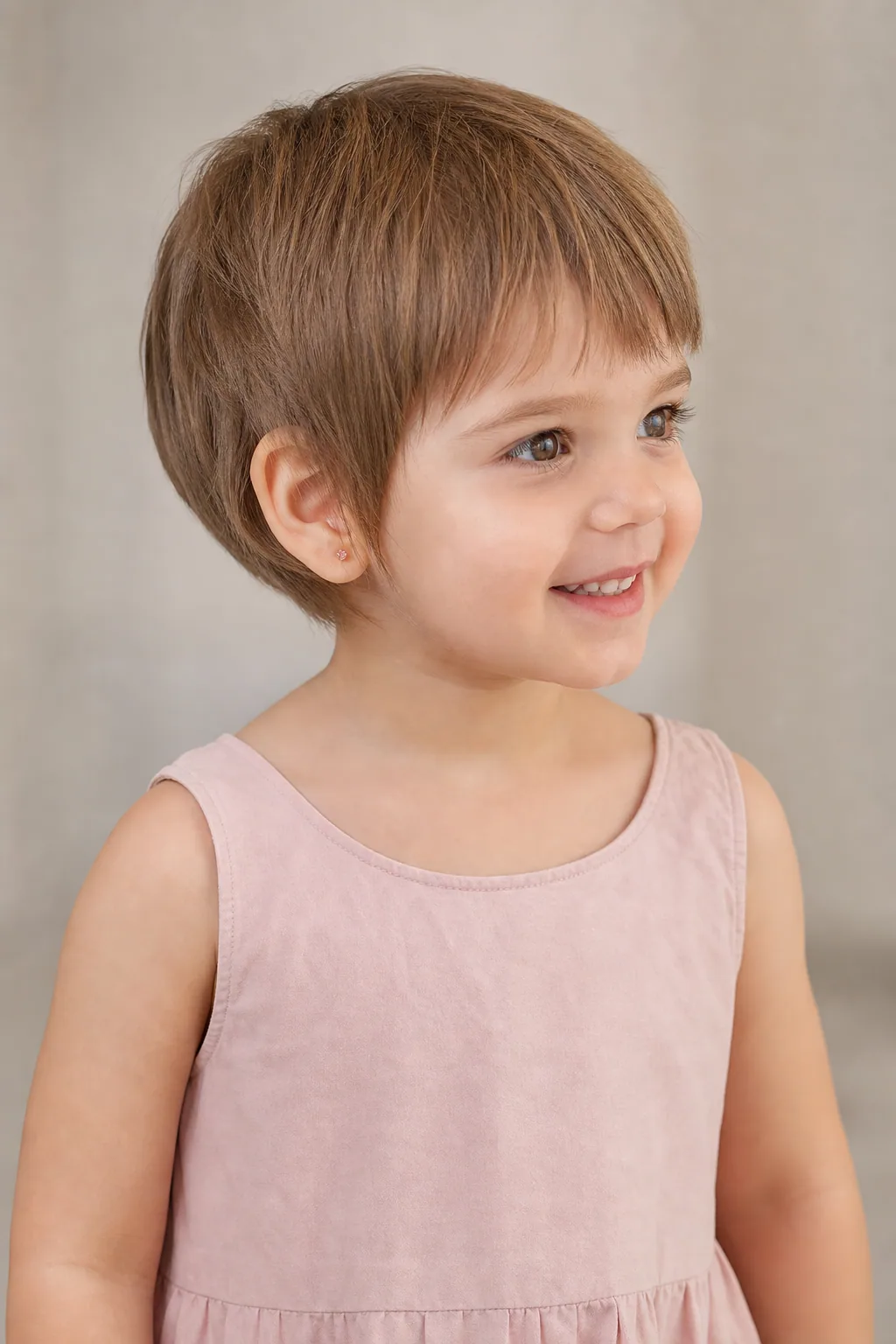
Little girl pixie
A soft, rounded pixie with a short fringe and a little more length on top. Short fine hair sits up instead of lying flat, so it looks fuller.
It needs a trim every five to six weeks. It is also a good way to even out hair that has grown in patchy.
9
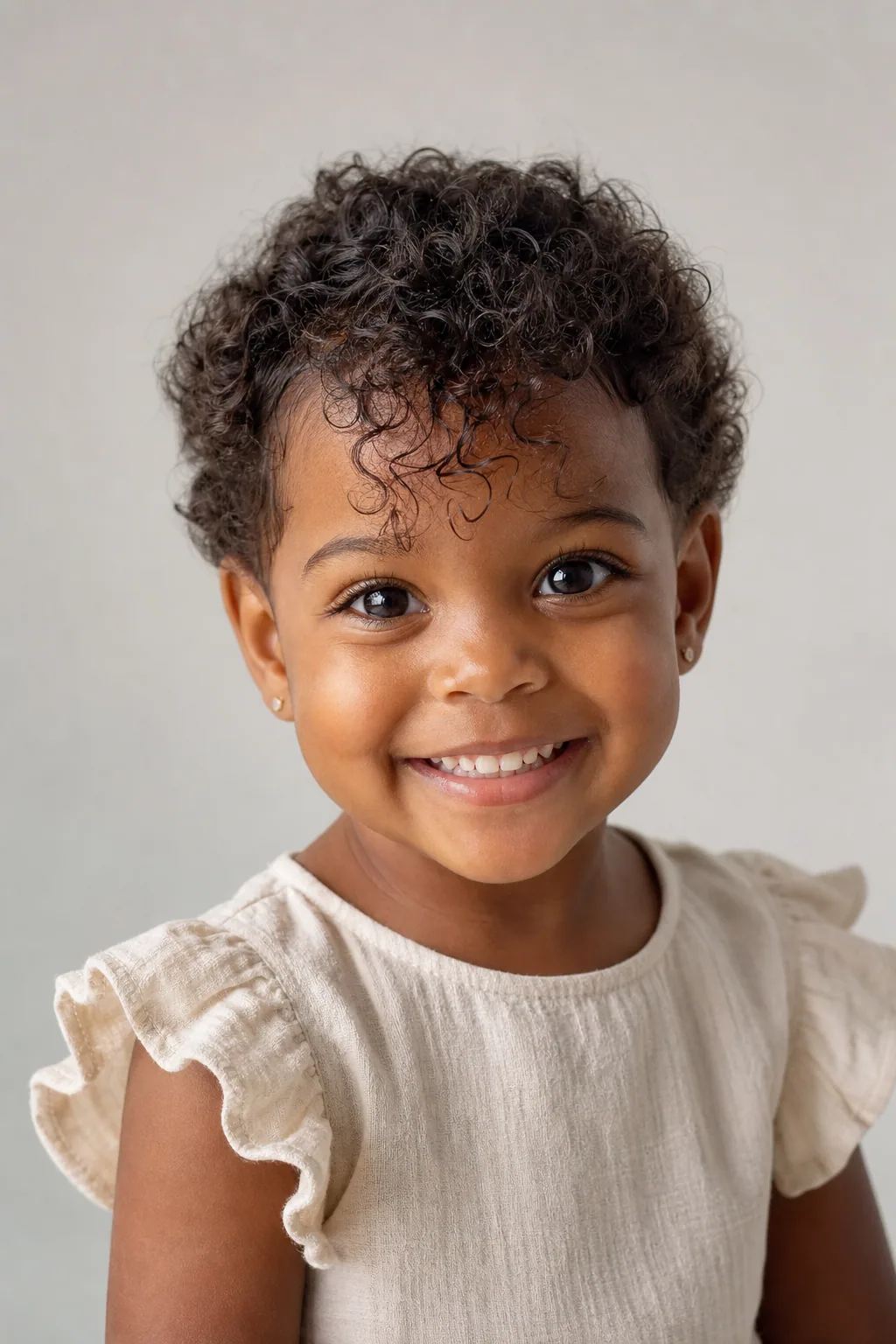
Tousled short crop with a long fringe
A short cut for fine curly or wavy hair, with a longer fringe falling forward. The curls give it height and hide a thin spot.
Curly hair should be cut dry, curl by curl, so the length is not a surprise when it springs up.
Longer haircuts for little girls with fine hair
Longer hair is possible on fine hair, but it needs blunt ends and regular trims. Without them the bottom thins into wisps, and wisps tangle.
10
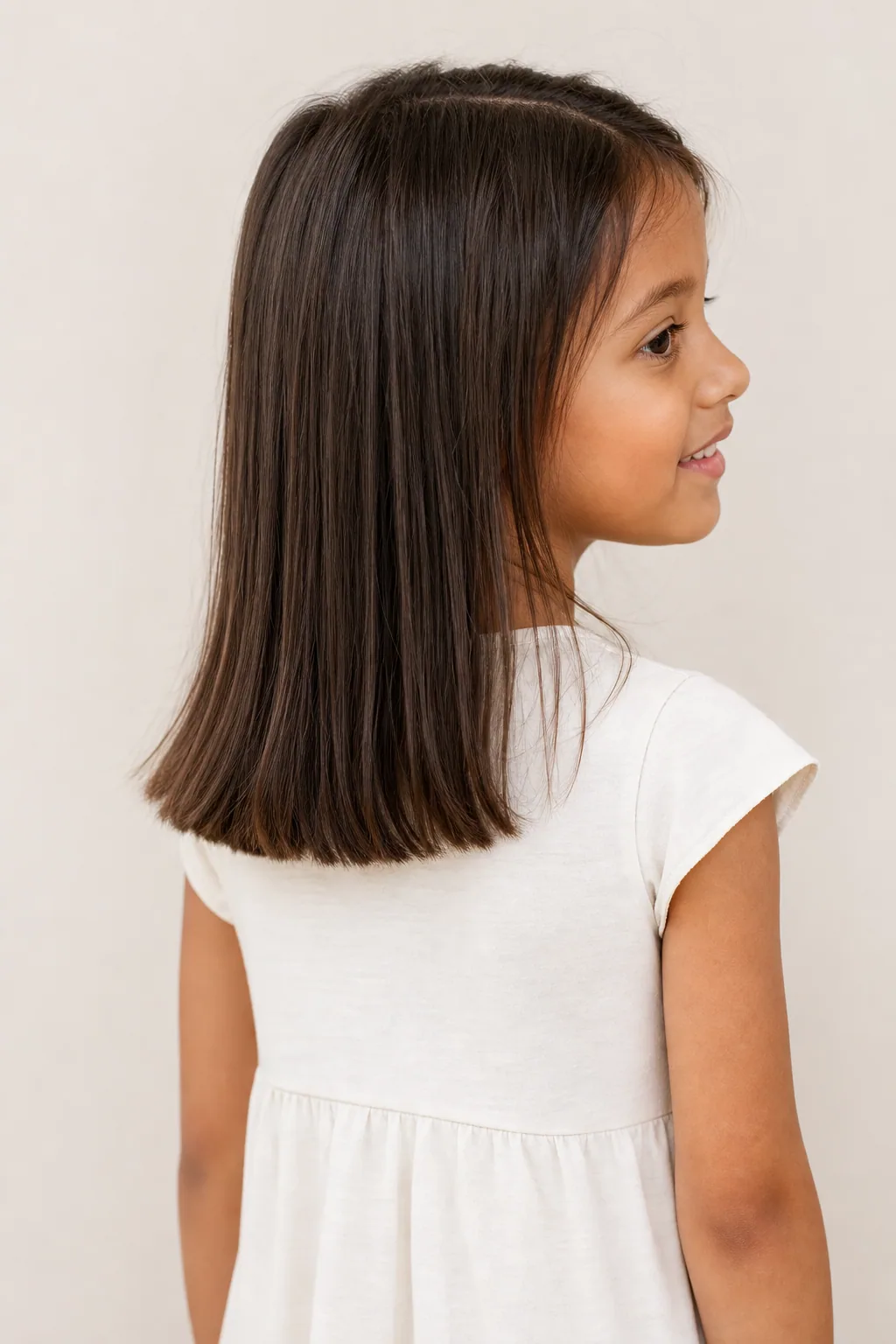
One-length cut at the shoulders
One length, just touching the shoulders, with a blunt edge. It is long enough for a ponytail and short enough to stay thick at the ends.
Trim half an inch every eight to ten weeks to keep the edge solid.
11
Light face-framing pieces
If she wants layers, keep them to a few pieces around the face only. The back stays one length so the ends still look thick.
This is the safest version of a layered little girl haircut on fine hair.
12
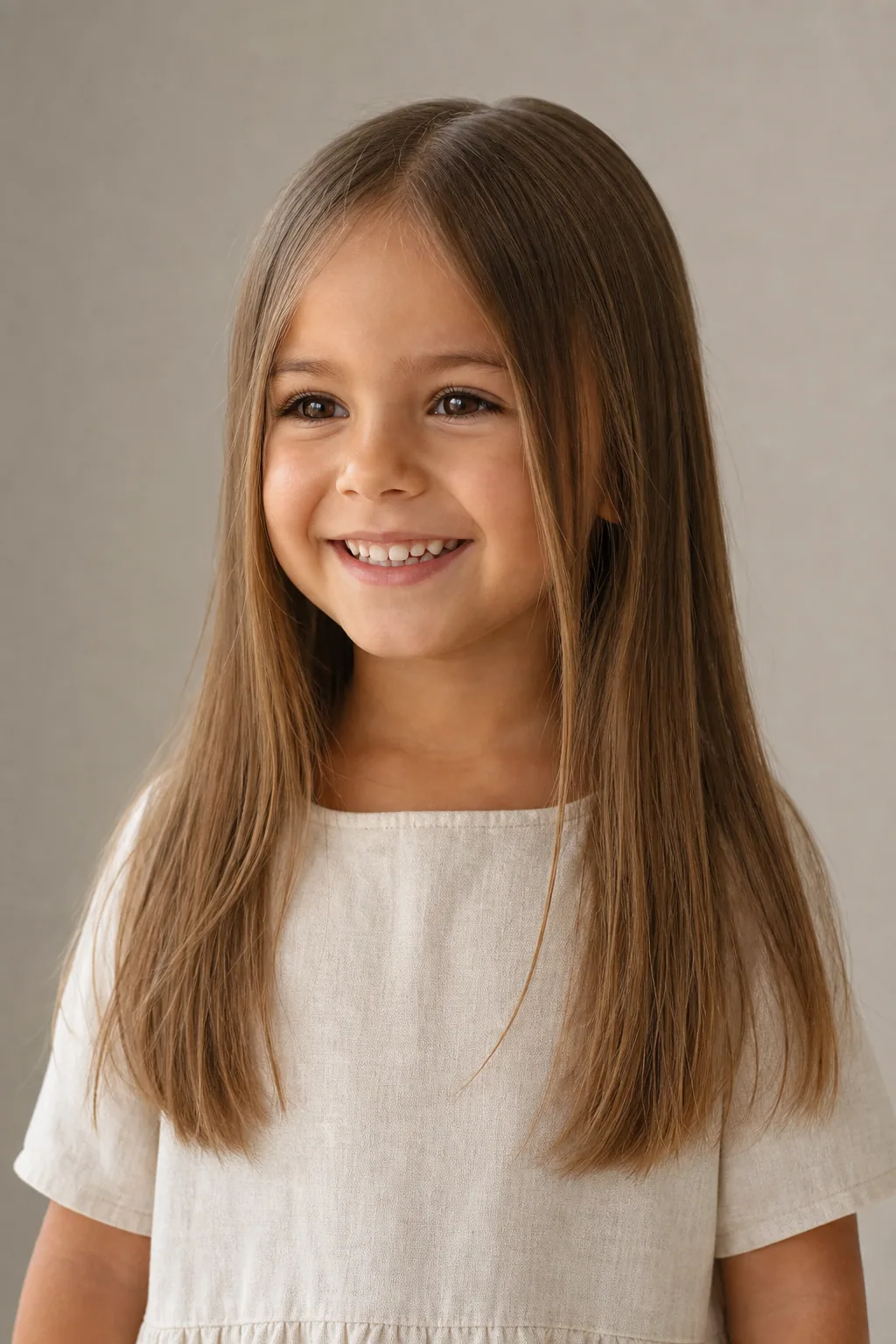
Long blunt cut above the shoulder blades
For girls who really want long hair. Keep it above the shoulder blades, where fine hair still has enough weight to hang straight.
Brush it gently from the ends up, and braid it loosely for sleep to stop knots at the back.
Baby girl first haircut for thin hair
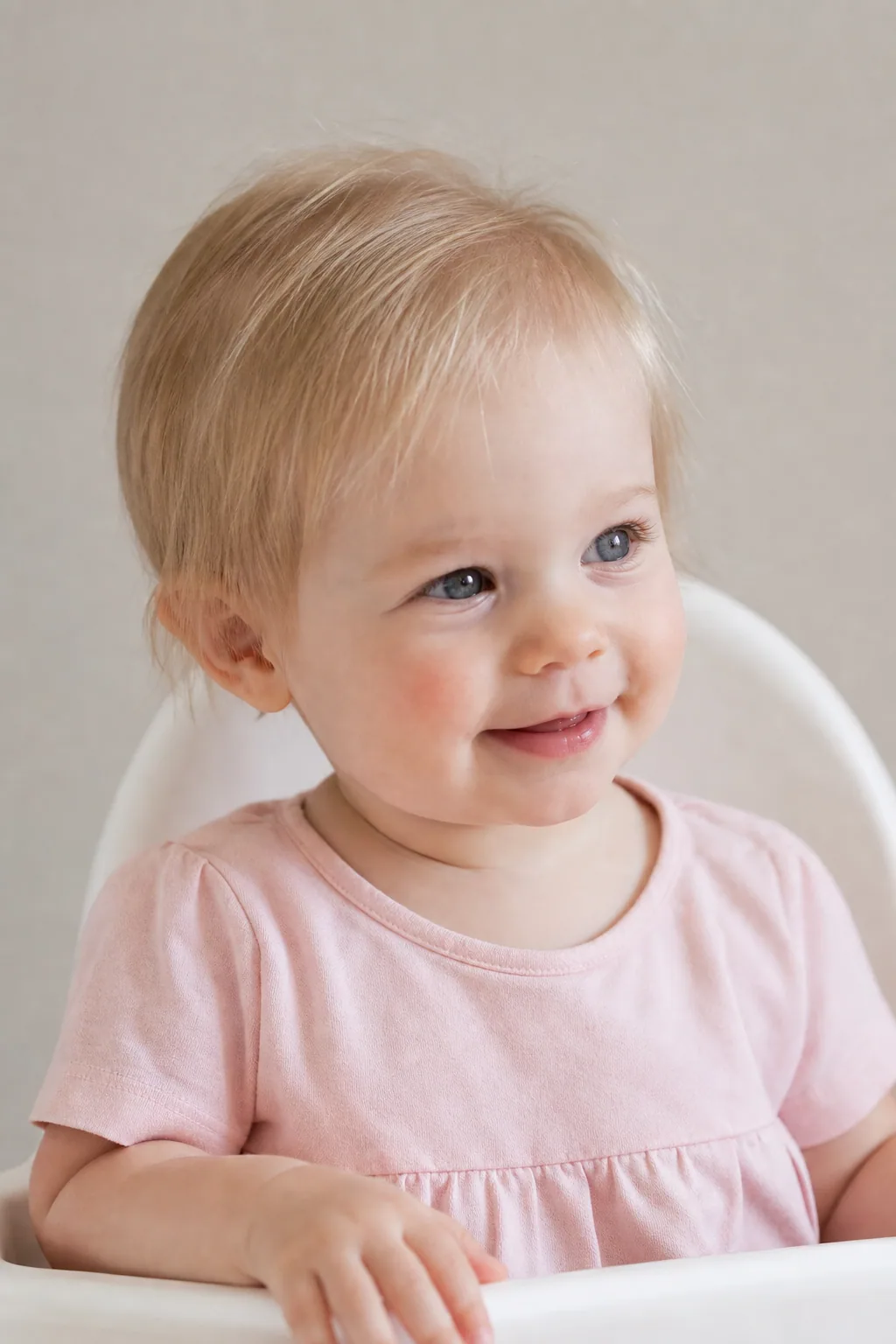
A baby's hair is the finest it will ever be, and it often grows in unevenly: longer on top, wispy over the ears, thin at the back where the head rests. The first haircut is usually just a tidy-up.
There is no right age for it. Cut when the hair falls in her eyes or looks uneven, which for many babies is around the first or second birthday. Choose a time when she is fed and rested, and ask for scissors, not clippers.
13
The first tidy-up trim
The wisps over the ears and at the neck are evened, and nothing comes off the top, which needs all the length it has.
It takes five minutes with scissors, and most babies sit through it on a parent's lap.
14
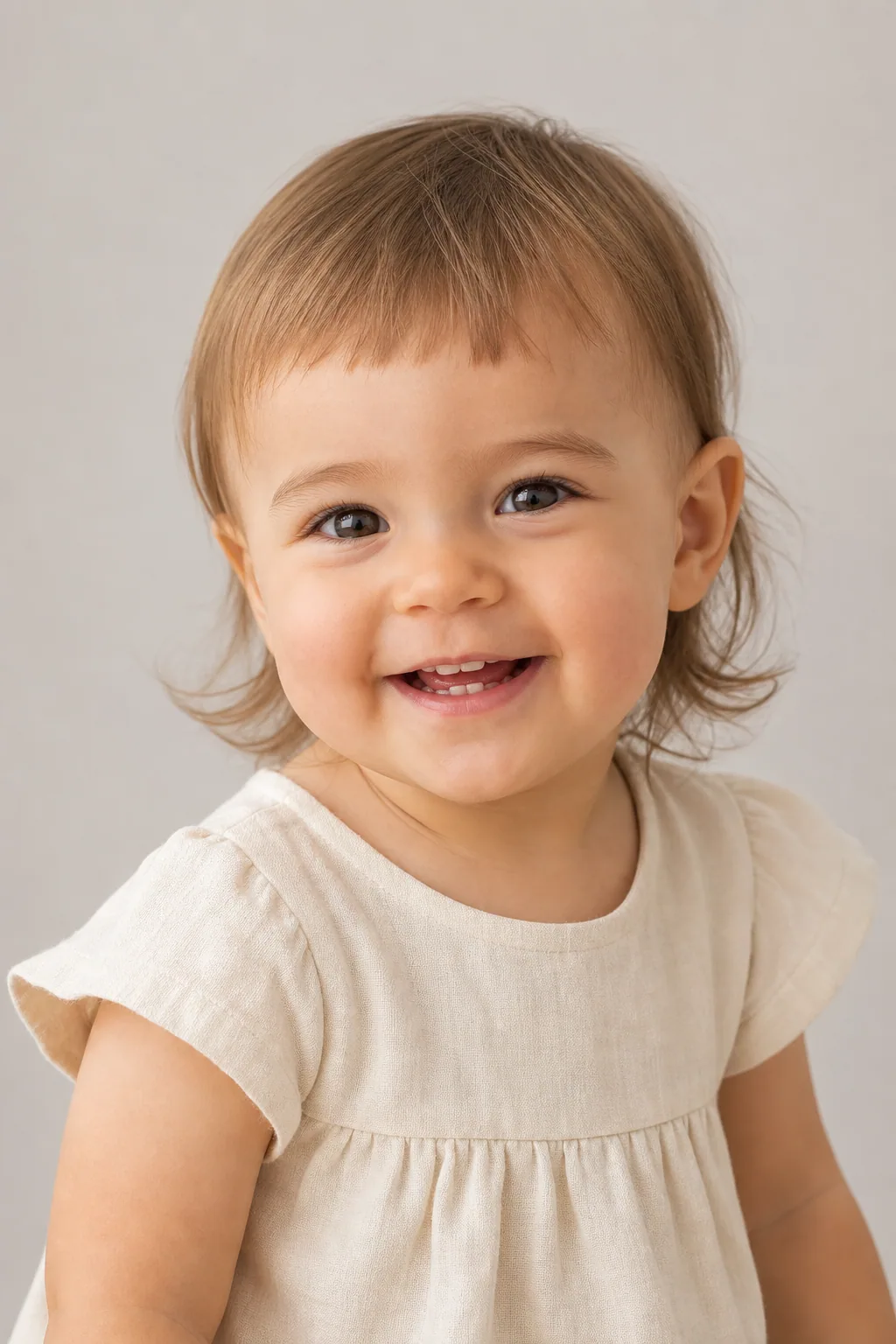
Fringe-only trim
Only the front is cut, into a short soft fringe above the eyebrows. It keeps hair out of her eyes without clips, which babies tend to pull out and put in their mouths.
Leave the back alone until it catches up with the top.
A small top knot on the crown, held with a soft fabric scrunchie, keeps hair out of her face. A loose half-up with one clip, or two tiny bunches, works on a chin bob. Change the position every day, and take everything out for sleep.
Skip rubber bands, tight elastics and heavy bows. Fine hair breaks where a band grips it, and that breakage shows first at the front.
Flower girl hairstyles for thin hair
For a wedding, keep the style soft so it lasts through the day without pulling. A loose half-up with a bow or a few small flowers pinned at the back works on most lengths, including a bob.
On longer hair, try a low, loose bun with flowers tucked around it, or a light flower crown set over loose waves. Choose a crown with a soft band, and try the style once before the wedding.
Say: "Her hair is very fine, so please keep the ends blunt and even, with no thinning shears and only a few layers at the front if any. Please cut it dry, or check it dry before we leave."
A short bob or bangs needs a trim every four to six weeks. Longer cuts can go eight to ten.
When to see a pediatrician instead of a stylist
Your child has a round, smooth bald patch. That can be alopecia areata, an immune condition. It needs a doctor, not a haircut.
There is a scaly, flaky or itchy patch with broken hairs. Scalp ringworm (tinea capitis) is common in children and needs prescription treatment.
The hairline is thinning where ponytails or braids sit, or she pulls or twists her hair. Loosen or stop the styles, and talk to your pediatrician.
The hair is thin but healthy and slowly filling in. That is normal. A blunt, even cut is all it needs.
FAQ
A blunt chin-length bob, with or without bangs. One even length with a blunt edge makes fine hair look thicker, it tangles less than long hair, and it grows out evenly. On longer hair, a one-length cut at the shoulders works the same way.
Yes. Bangs cover a sparse front hairline and add a second solid line, so the hair looks fuller from the front. Straight bangs need a trim every four to five weeks; side-swept bangs grow out more gently.
Usually not. Layers spread the ends out and make the bottom of the cut look thin. If she wants some, keep them to a few pieces around the face and leave the back one length.
Usually, yes. Fine, thin hair is normal in toddlers, and most children’s hair fills out through early childhood. See your pediatrician for smooth bald patches, scaly areas, broken hairs or spreading loss.
There is no set age. Most parents cut when the hair falls in the eyes or grows unevenly, often around the first or second birthday. Keep it simple: even the wisps over the ears and neck, or trim a short fringe only.
A small loose top knot with a soft scrunchie, a half-up with one clip, or two tiny bunches. Keep everything loose, change the position daily and take it out for sleep, so nothing pulls on the hairline.
A loose half-up with a bow or small flowers, a low loose bun with flowers tucked in, or a soft flower crown over loose waves. Avoid anything tight, and practice the style once before the wedding.
Eleven years behind the chair, specializing in short shapes and fine-hair texture. Simone believes the best haircut is the one you can style yourself in ten minutes.
Results vary with hair type, density, and growth patterns. This guide is educational and not a substitute for an in-person consultation with a licensed stylist, or for medical advice from your pediatrician about hair loss or scalp problems.
Hairstyle images in this guide are AI-generated illustrations, not photos of real clients or results. See our image policy.
Get the good hair intel
One honest, stylist-written guide in your inbox each week. No hype.

 SB
SB