Here's the honest answer up front: for most fine hair, a full salon keratin or smoothing treatment usually isn't worth it — it can flatten already-fine hair into a sleek, lifeless sheet, and some formulas carry a real formaldehyde safety concern.
What can help is the opposite of a big commitment: a light, correctly-dosed protein treatment, used occasionally, for hair that's actually damaged. The nuance lives in the details — which "keratin" you mean, whether frizz or flatness is your real problem, and how quickly fine hair tips from strengthened into brittle. Below, a stylist-and-derm walk through all of it.
What keratin and smoothing treatments actually do
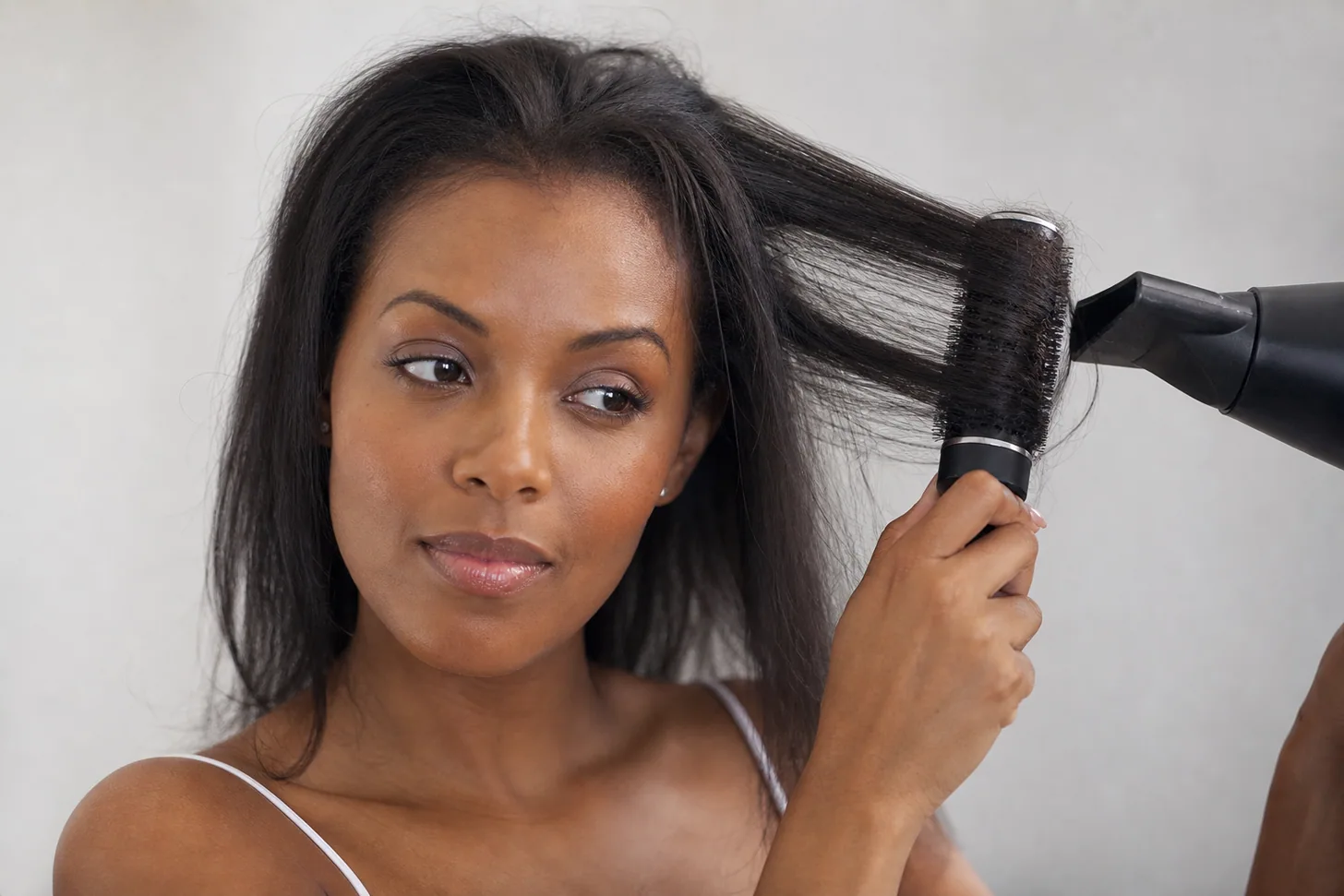
"Keratin treatment" is a loose umbrella — Brazilian blowout, keratin smoothing, a "gloss" or "express" version — but almost all of them do the same core thing: a liquid formula is worked through the hair, then sealed in with a hot flat iron. The heat bonds the product to the cuticle and relaxes some of the hair's natural bend, leaving strands smoother, shinier, more water-resistant, and much faster to blow-dry.
On thick, coarse, frizz-prone hair, that's transformative and genuinely beloved. It's not a permanent chemical change like a relaxer; it wears off gradually over roughly six weeks to a few months. (If your hair is relaxed as well as fine, that permanent change is the more consequential one — short relaxed hairstyles for thin hair covers what it does to a fine strand and the cuts that manage it.)
The key thing to understand is how it makes hair look better: by coating each strand and pressing it flat and close to the neighbors. That's a gift when you have too much texture and volume to manage. It's a problem when the thing making your hair look full was that texture and volume in the first place — which is the fine-hair trap we'll get to. First, the safety question, because on some formulas it's the deciding factor.
The formaldehyde safety question
This is the part that turns a beauty decision into a health one. The U.S. Food and Drug Administration warns that some hair-smoothing products can release formaldehyde gas when the solution is heated with a flat iron or blow-dryer.
Inhaling that gas — especially in a salon that isn't well ventilated — can irritate the eyes, nose, and throat and cause breathing problems, and formaldehyde is classified as a human carcinogen. The people most exposed are the stylists doing this all day, but clients breathe it too.
Two honest clarifications, because alarmism doesn't help anyone. First, not every keratin treatment contains formaldehyde. Many are marketed "formaldehyde-free," often built around glyoxylic acid instead. Those come with their own trade-offs — results tend to fade faster — and, importantly, some testing has found products labeled formaldehyde-free that still released formaldehyde when heated, so the label alone isn't a guarantee.
Second, U.S. regulators have signaled they intend to restrict formaldehyde in these products, but as of mid-2026 a proposed federal ban has been repeatedly delayed and is not yet in force. Translation: the responsibility to ask questions still falls on you. If you're considering a treatment, ask the salon exactly which product they use, ask whether it releases formaldehyde when heated, insist on real ventilation, and — if you're pregnant, breastfeeding, or have asthma — clear it with a doctor first.
Chair-side note
I had a client with fine, slightly wavy hair who booked a keratin treatment somewhere else before a wedding, chasing "effortless." She came to me two weeks later almost in tears — not because it looked bad in photos, but because her hair had gone completely flat to her head and she couldn't get a scrap of root lift back no matter what she did.
There was nothing "wrong" with the service; it did exactly what it does. It just did it to hair that needed the opposite. We waited it out, kept her off heavy product, and her body slowly returned as it grew out. Fine hair rarely regrets skipping this one.
MH
— Megan Holloway, Editor-in-Chief
Why smoothing can backfire on fine hair specifically
Fine hair fakes fullness with geometry. Narrow strands that stand slightly apart, hold a little natural bend, and catch the light in different directions read as more hair than they are. A smoothing treatment erases all three of those things — it lays strands down flat, close together, and uniformly sleek.
On thick hair that subtracts unwanted bulk. On fine hair it subtracts the illusion of density, and you're left with hair that looks sleeker but visibly smaller. The strands aren't actually thinner (this isn't damage or loss — see fine vs thin hair for why those are different things), but the silhouette shrinks, and that effect sticks around until the treatment fades over the following weeks.
There's a second cost that's easy to miss: weight. The treatment leaves a smoothing film on every strand, and fine hair pays for weight in lift. Even if you liked the frizz control, you often lose the root volume that made your everyday hair feel like enough.
That's the trade fine-haired clients tend to regret — they solved a frizz problem they could have handled more gently, and paid for it in body they can't easily get back until grow-out. Colour raises the same worry from a different direction, and the answer is not the one most people assume — does colour thin your hair.
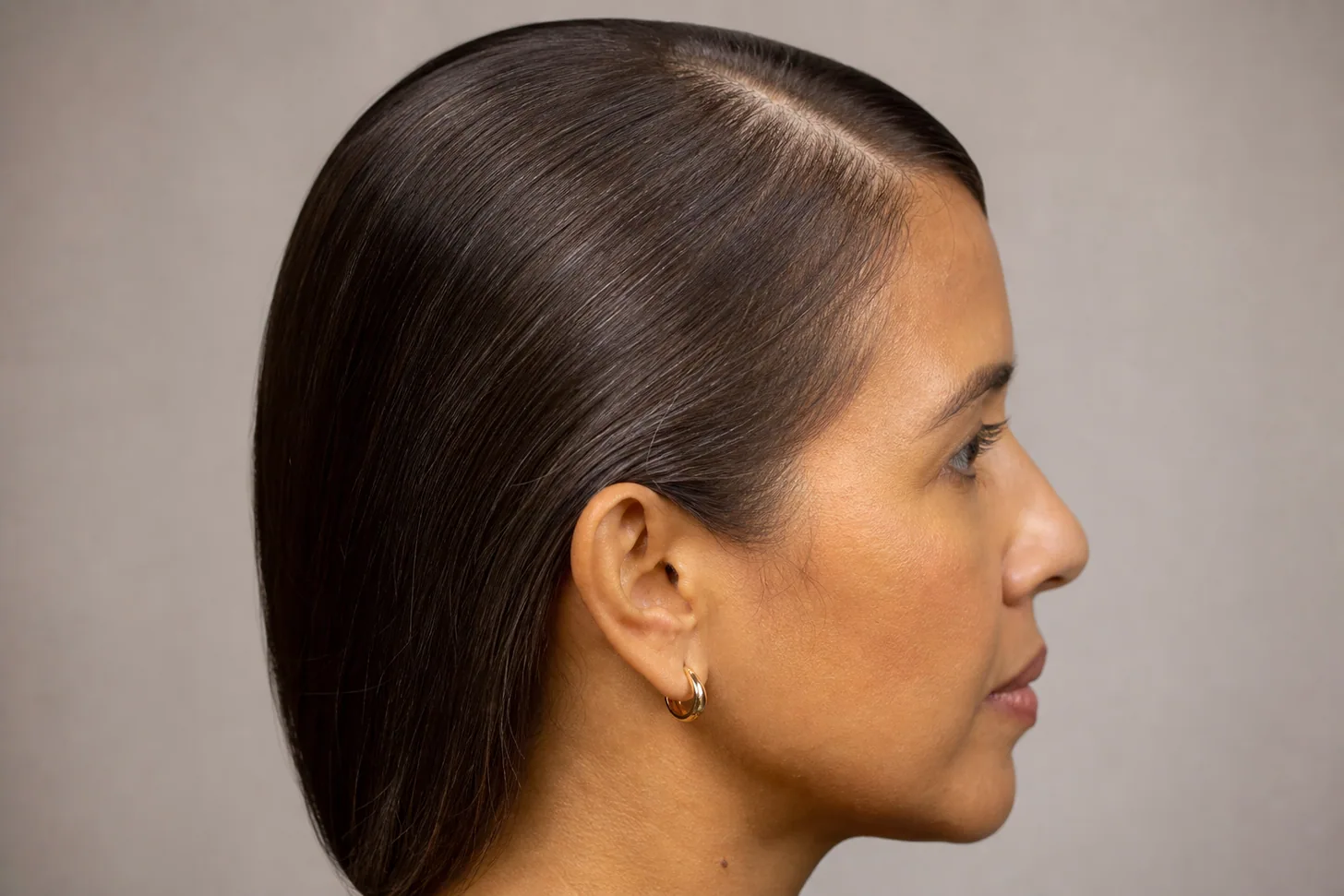
Smoothed fine hair: sleeker, and visibly smaller through the silhouette.
At-home protein treatments and masks — the balance that matters
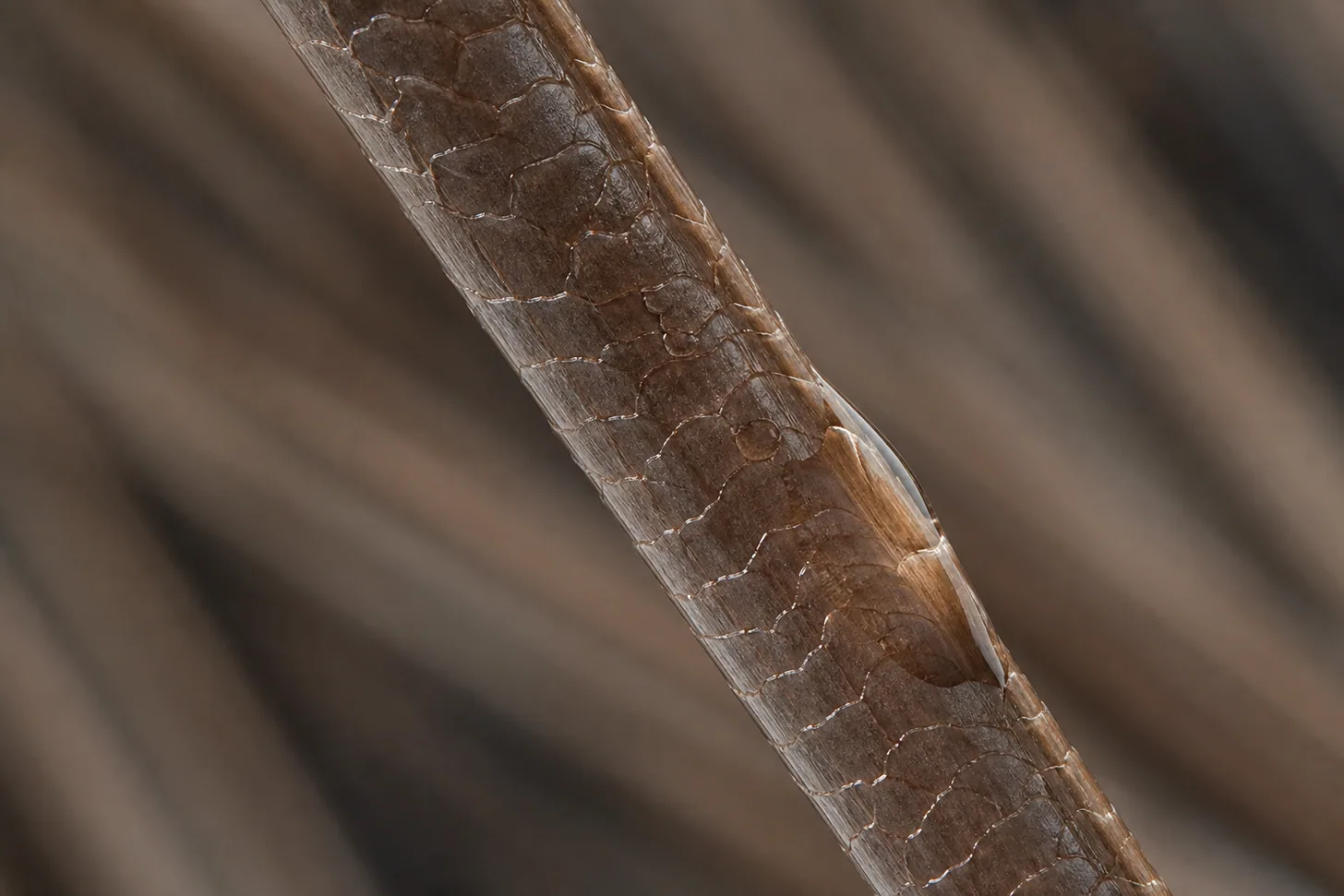
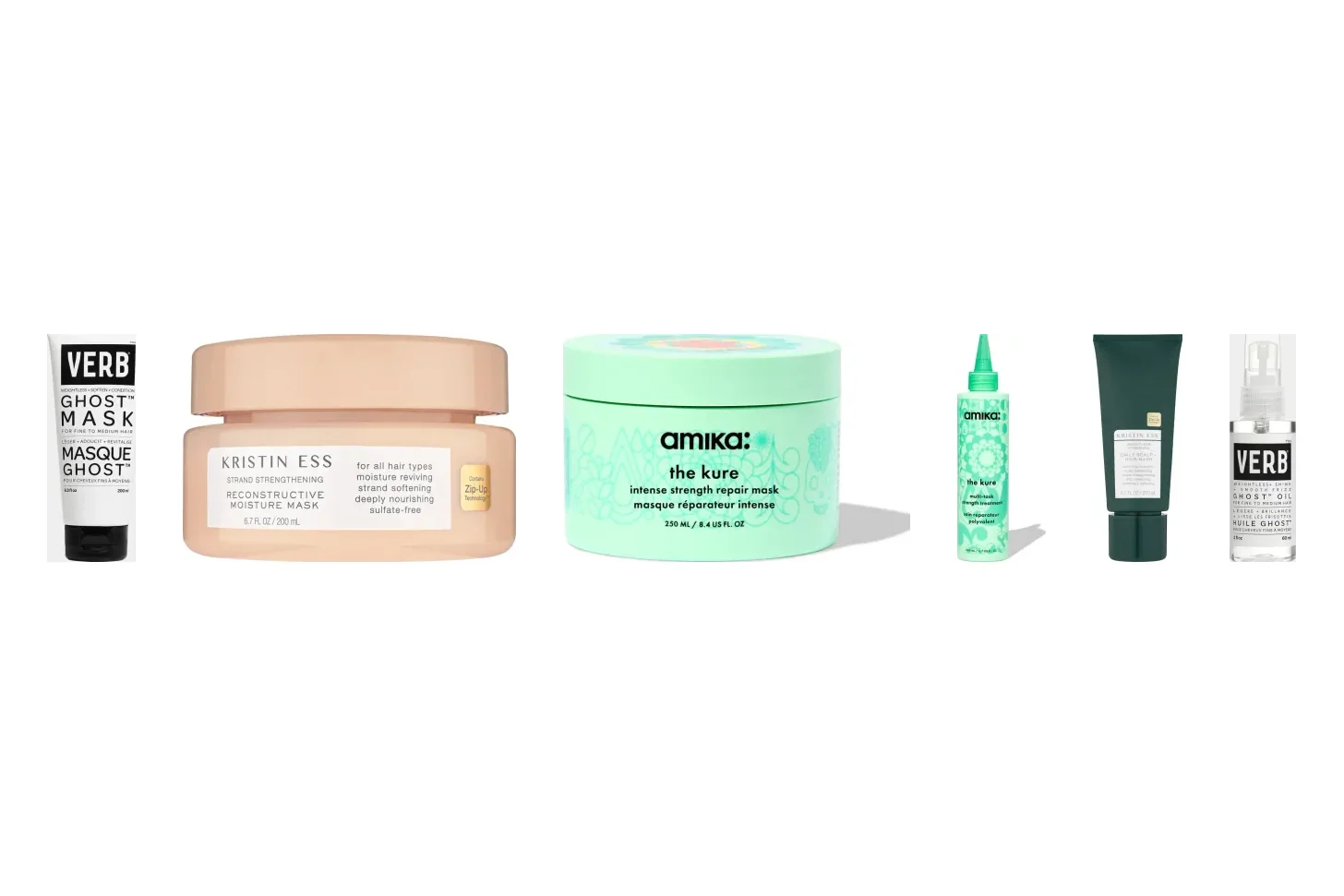
Protein treatments are a different animal from salon smoothing, and here fine hair genuinely can benefit — with a firm hand on the dose. Hair is mostly protein, and when the cuticle gets roughed up by heat, color, or age, a protein treatment temporarily fills those gaps so fragile strands feel stronger and less stretchy. For fine hair that's colored or heat-styled often, a light protein treatment now and then is a legitimately good idea.
The catch is that fine hair reaches "enough" fast. Hair needs a working balance between protein (structure and strength) and moisture (flexibility and softness), and fine strands tip that balance easily. Load on too much protein and you get protein overload: hair that feels dry, stiff, and straw-like even right after conditioning, more little snapped-off pieces around your part and crown, and strands that snap instead of stretching.
A quick home read is the wet stretch — gently pull a shed wet strand; healthy hair stretches a little and recovers, protein-overloaded hair feels rigid and breaks. If your hair got worse after you leaned into protein, believe it.
This balance also depends on how porous your hair is, which is worth understanding on its own — see porosity for fine hair. For the actual products, our best hair masks for fine hair guide favors light, balanced formulas over dense protein bombs for exactly this reason.
Chair-side note
The protein-overload client is almost always someone doing "everything right" — a strengthening mask, a bond product, a protein leave-in, all stacked, all with good intentions. Her hair feels crispy and keeps breaking, so she reaches for more repair, which is more protein, which makes it worse.
My in-chair test is the wet snap: I stretch a wet strand between two fingers, and if it pings and breaks instead of giving, we stop every protein product cold, clarify once, and go pure lightweight moisture for two weeks. The hair softens back up almost every time. With fine hair, protein is seasoning, not the meal.
MH
— Megan Holloway, Editor-in-Chief
Bond-builders are a different thing (and often the better one)
Which one to actually buy — and why the format matters more than the brand on fine hair — is in bond builders for fine hair.
Worth separating out, because they get lumped in with protein and they shouldn't be. Bond-builders — the category made famous by treatments you may have had after a color service — work by re-linking the internal bonds that heat and chemistry break, rather than by coating the strand in protein. Because they repair from the inside and add very little weight, they tend to suit fine hair better than a heavy protein mask when the goal is genuine strength.
They're not a volume product and they won't fix flatness, but if your fine hair is actually damaged, a bond-builder is usually the gentler route to resilience. Which ingredients repair versus merely coat is broken down in our guide to what actually repairs fine hair.
Safer alternatives for fine hair
If what sent you toward keratin was frizz or long drying time, you can usually solve that without flattening your whole head. A lightweight leave-in and a good heat protectant, a round-brush blow-dry that smooths the surface while keeping lift at the root, and a cut shaped to fall smoothly get most fine-haired people 80% of the keratin benefit with none of the volume loss or safety questions.
If frizz is genuinely your headline problem, tackle it head-on with the targeted fixes in how to handle frizz in fine hair rather than reaching for a smoothing service. And if what you actually want is more hair — not smoother hair — that's a density conversation, not a texture one; start with your everyday routine in the fine hair care routine, and if you suspect your hair is genuinely thinning rather than just fine, read fine hair or thinning? before spending on any treatment.
When keratin or protein isn't worth it for fine hair
Your main complaint is flatness or lack of volume.A smoothing treatment makes this worse, not better — it removes lift. Fix it with cut and styling, not chemistry.
You're pregnant, breastfeeding, or have asthma or a respiratory condition and the product isn't confirmed formaldehyde-free. Don't guess — clear it with a doctor, and remember "formaldehyde-free" labels aren't always reliable.
Your fine hair already feels dry, stiff, or crunchy and is snapping.That's likely protein overload. Adding more protein deepens it; stop, clarify once, and rebuild with lightweight moisture.
Your hair is fine but healthy, virgin, and rarely heat-styled.It doesn't need a protein treatment at all — you'd only be adding weight to hair that's already strong.
You're really chasing density, not texture — a widening part, a slimmer ponytail. No treatment addresses that. See a board-certified dermatologist before spending on smoothing or protein.
FAQ
Usually not, if your main goal is fuller hair. A salon keratin or smoothing treatment coats and relaxes the strand to kill frizz and cut drying time — genuinely useful on thick, coarse, frizzy hair. But the same effect on fine hair removes the very texture and lift that made it look like there was more hair there, so a lot of fine-haired clients walk out sleeker and walk back in a few weeks later feeling flatter. If you have fine hair that's also frizzy or wavy, a light, targeted treatment can help — but a full smoothing service is often the wrong tool.
It can, and this is the most common regret I hear. Fine hair reads as full partly because individual strands stand away from each other and hold a little natural bend. A smoothing treatment relaxes that bend and lays everything down flat and close to the head, which is exactly what makes thick hair look polished — and exactly what makes fine hair look like there's less of it. The hair isn't actually thinner, but the silhouette often is, and that effect lasts until the treatment grows and washes out over several weeks to a few months.
Some do. The U.S. FDA warns that certain hair-smoothing products release formaldehyde gas when the solution is heated with a flat iron or blow-dryer, and that inhaling it — especially in a poorly ventilated salon — can irritate the eyes, nose, and throat and cause breathing problems. Formaldehyde is classified as a human carcinogen. Not every keratin treatment contains it; some are marketed formaldehyde-free. But ingredient labels don't always tell the whole story, so ask the salon directly, insist on ventilation, and if you're pregnant or have asthma, talk to a doctor before booking. This is a health question, not just a beauty one.
Both, depending on dose. Fine, damaged, or high-porosity hair can genuinely benefit from a light protein treatment — it temporarily fills gaps in the cuticle and makes fragile strands feel stronger and less stretchy. But fine hair reaches "enough" quickly, and past that point protein stops helping and starts making strands stiff and brittle. The honest rule for fine hair is small amounts, occasionally, balanced with moisture — not a rich protein mask every wash.
Protein overload is what happens when too much protein builds up on the hair and it loses its normal flexibility. The signs: hair that feels dry, stiff, straw-like, or "crunchy" even after conditioning, more breakage and little snapped-off pieces, and strands that snap rather than stretch when gently pulled from a wet state. If your hair got worse after you added protein products, that's the tell. The fix is to stop the protein, clarify once, and lean on lightweight moisture for a couple of weeks until flexibility returns.
For most fine hair, the smarter path is frizz and dry-time control without the weight of a full smoothing service: a well-matched cut, a lightweight leave-in or heat protectant, a good round-brush or blow-dry technique, and — if strands are actually damaged — a bond-builder rather than a protein-heavy mask. If frizz is your real complaint, address that directly instead of flattening the whole head. And if you're chasing "more hair" because your density is genuinely changing, that's a dermatologist conversation, not a salon one.
Fourteen years in hair — eight behind the chair, six in editorial — with a focus on scalp health and the science of fine, flat-prone hair. Megan reviews product formulas the way she'd read a label for her own clients: weight first.
This article is for general education and is not medical advice. If you develop breathing problems, or eye, nose, or throat irritation after a chemical hair treatment, or you're pregnant or have a respiratory condition and are considering one, talk to a doctor or a board-certified dermatologist.
Images in this article are AI-generated illustrations, not photographs of real clients or results. See our image policy.
Results vary with hair type, density, and growth patterns. This guide is educational and not a substitute for an in-person consultation with a licensed stylist.
Get the good hair intel
One honest, stylist-written guide in your inbox each week. No hype.

 MH
MH