Reviewed by Tara Sullivan · Updated September 2026 · 11 min read
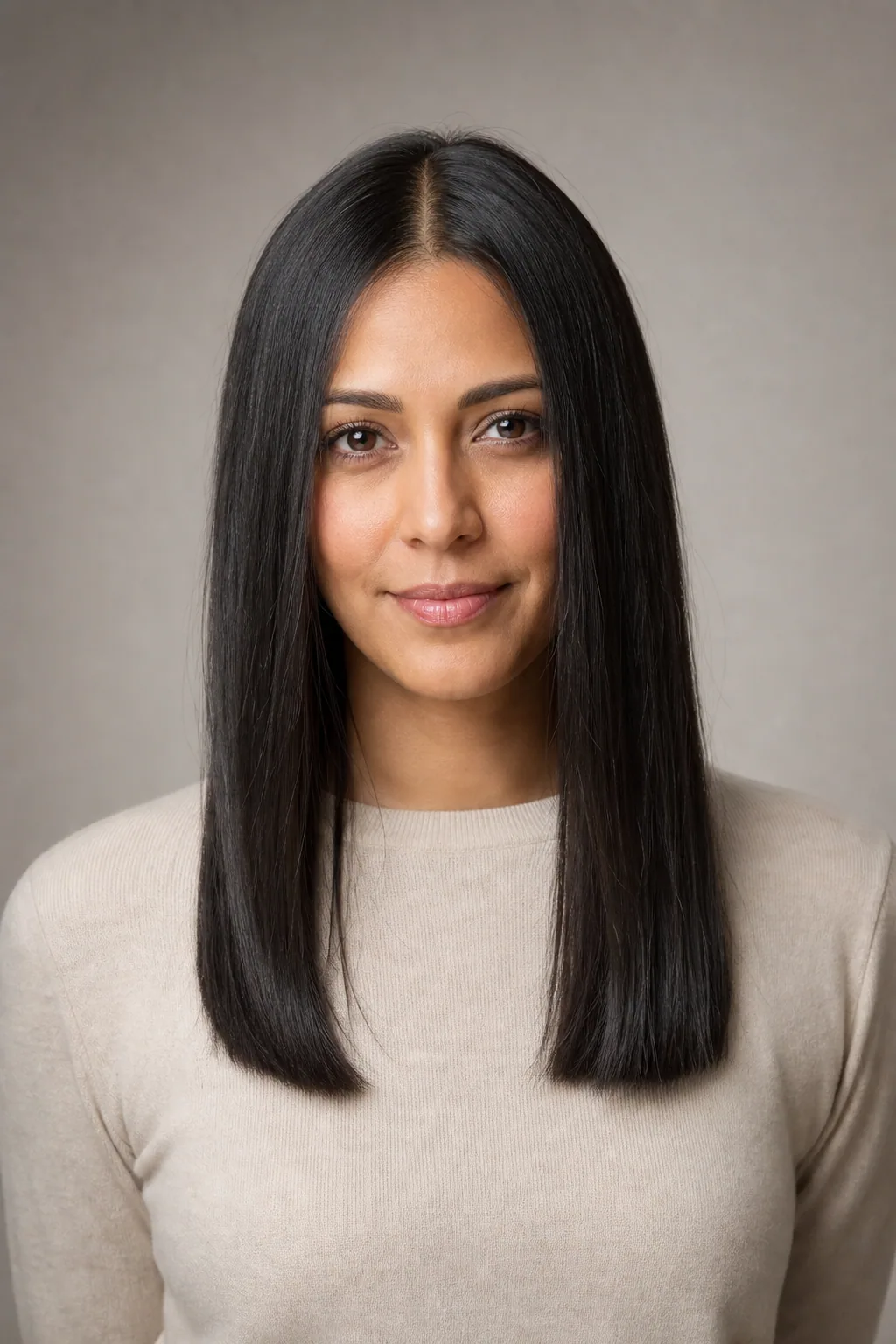
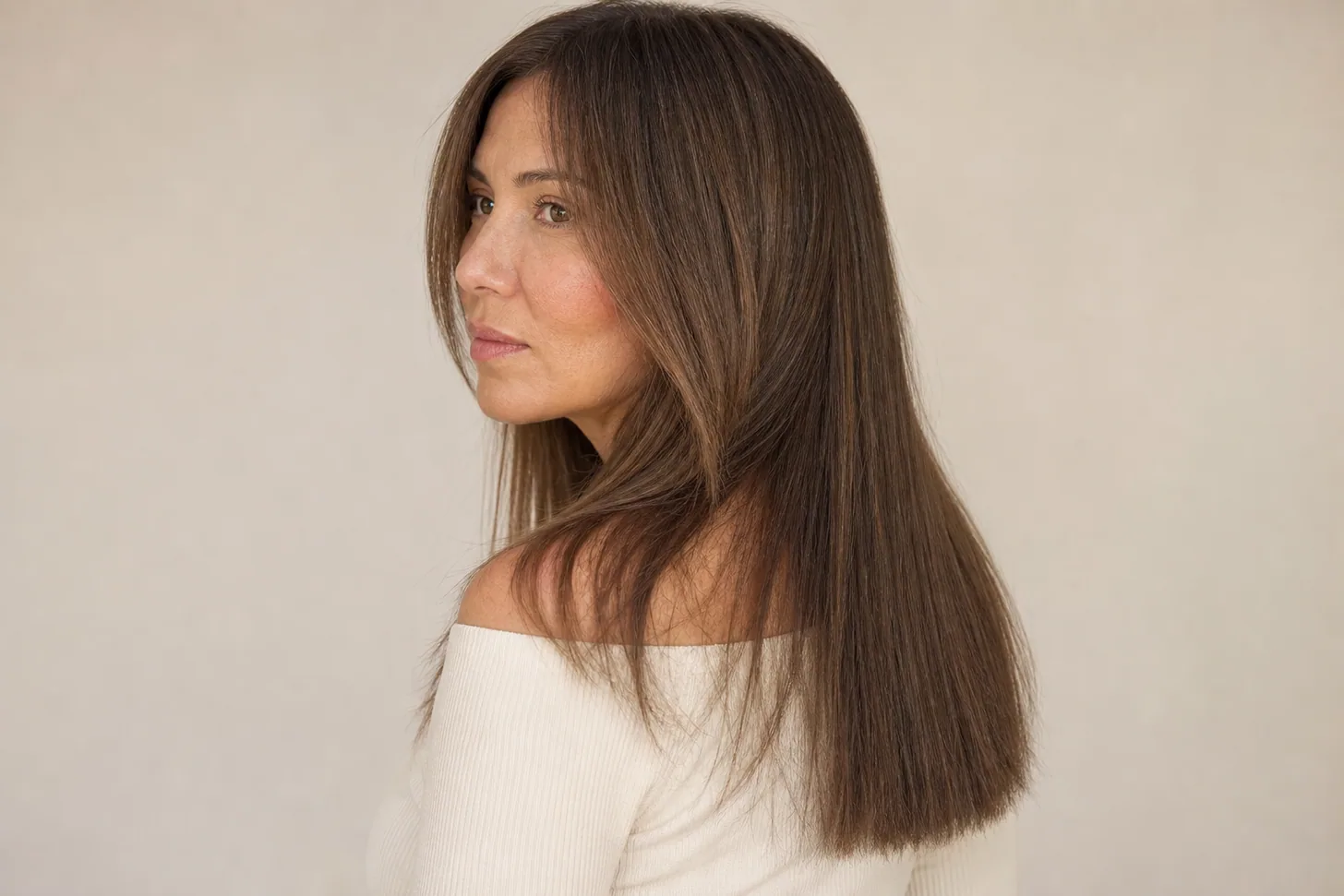
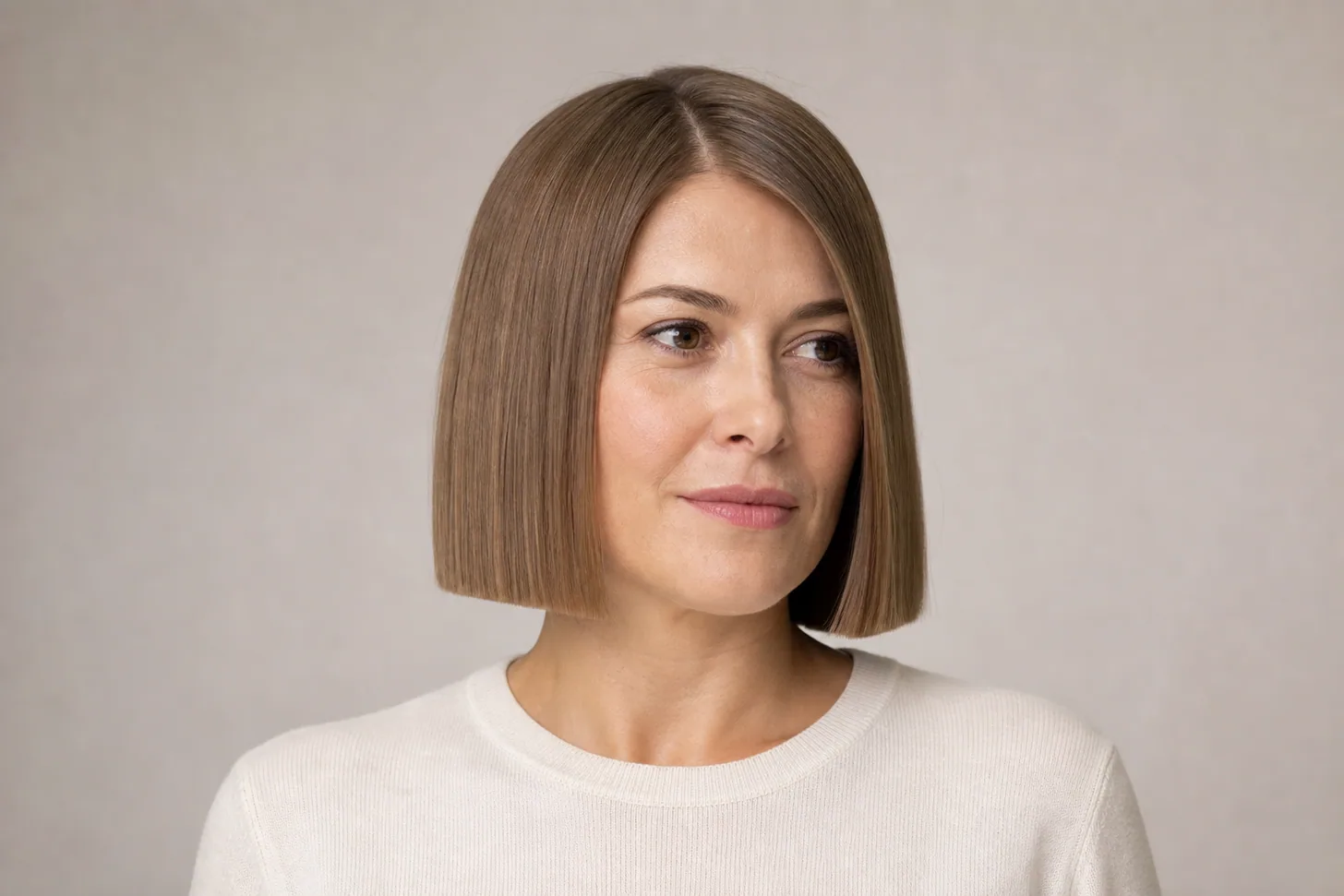
The best haircuts for fine straight hair keep a blunt, solid hemline and hide any layering inside the cut, where it lifts without showing. Straight hair displays every cut line honestly, so visible layers read as steps and tapered ends read as thin.
Below are 14 haircuts for fine and thin straight hair, from pixies to long one-length cuts, with the low-maintenance picks and the exact words to use in the chair.
Chair-side note
On curly or wavy hair, a stylist can hide a lot. On fine straight hair nothing hides: every layer shows as a line, and every thinned end shows as a see-through patch.
That is not a problem. It just means the cut has to be exact. Get the hem blunt and the layering hidden, and straight hair looks thicker than any other texture at the same density.
SB
— Simone Baptiste, Senior Stylist
Why fine straight hair needs a different haircut
Straight strands have no bend to hold each other apart, so fine straight hair packs flat against the head. That is why the same cut can look full on a friend with wavy hair and limp on you.
The fix is in how it is cut, not how short it is. Keep the perimeter blunt so the ends look dense, and put any movement inside the cut with ghost layers that lift without leaving visible steps. The science of why straight hair falls flat is in our fine straight hair explainer.
Short haircuts for fine straight hair
Short cuts take away the weight that drags straight roots flat. On fine straight hair they also show off shine, because a short smooth surface reflects light evenly.
1
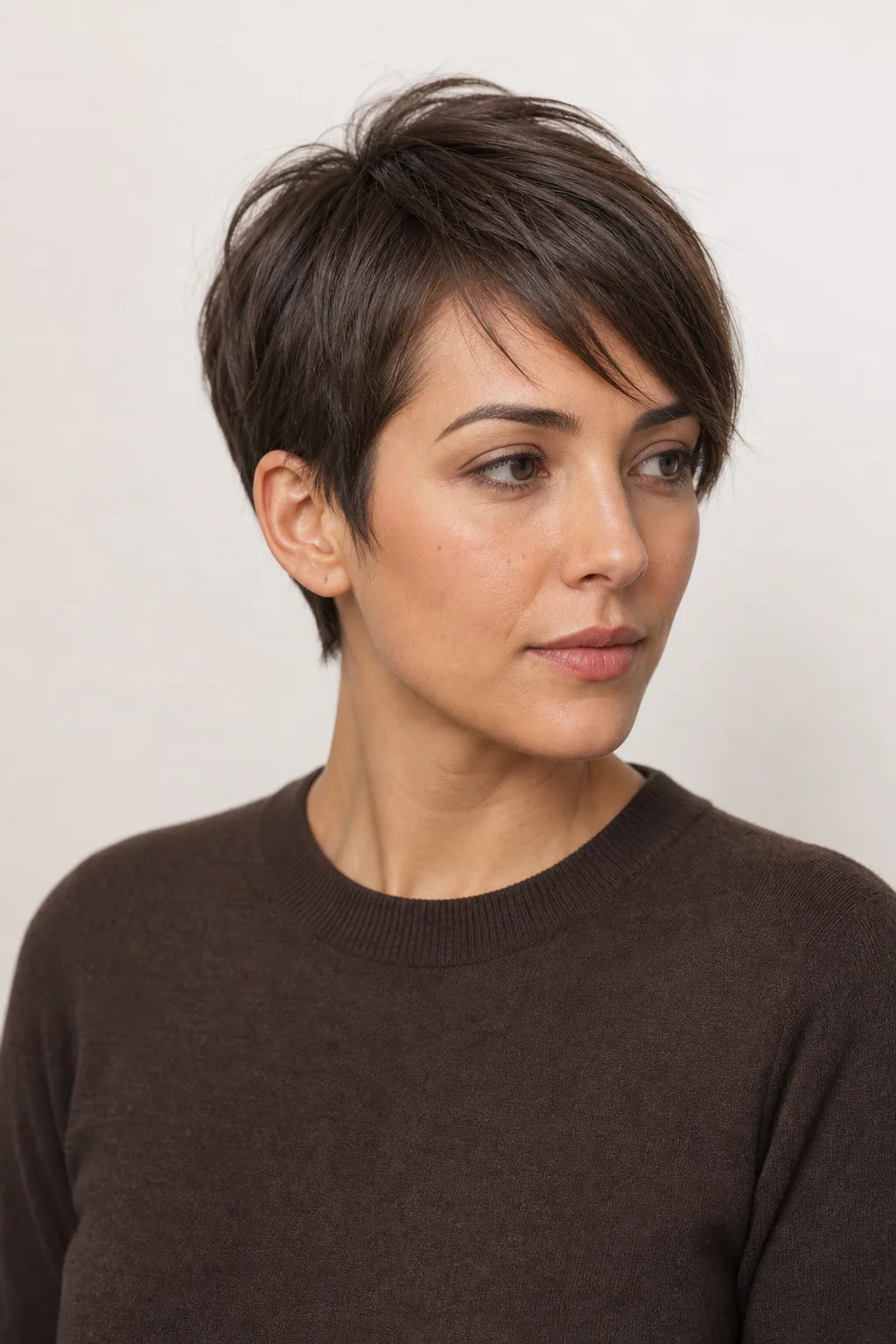
Pixie with a longer, point-cut top
Short, neat sides with two to three inches left on top and point-cut so the ends separate. Straight hair lies flat when every strand is the same length; the point-cutting breaks that up.
Blow the top dry in the opposite direction from how you wear it, then flip it back for lift. See our pixie cut for thin hair for more.
2
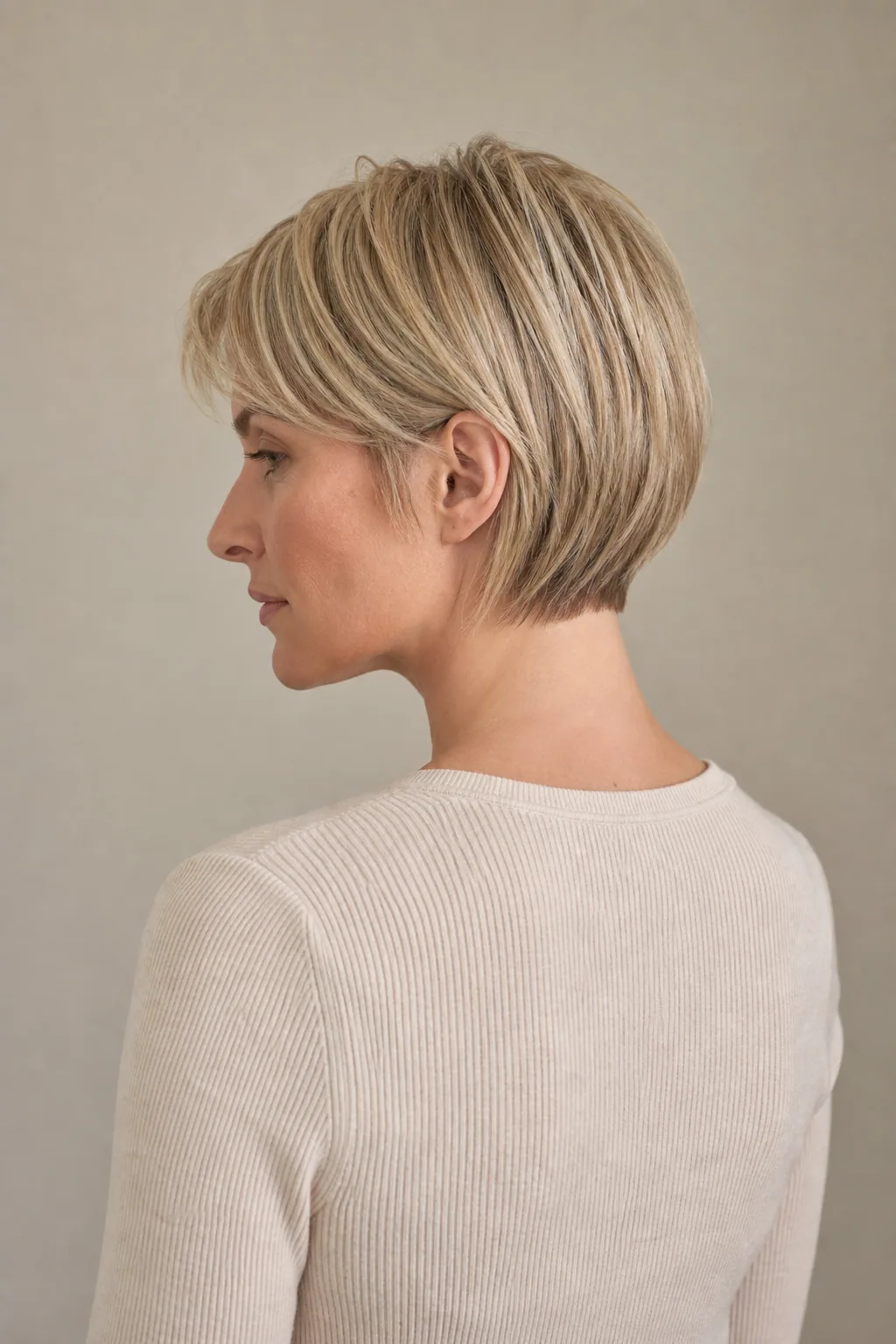
Bixie with a blunt nape
Between a pixie and a bob, with a blunt line at the nape instead of a tapered one. The blunt edge makes the back look full.
It suits straight hair better than wavy hair, because the line stays clean as it dries. More in the bixie for fine hair guide.
3
Ear-length blunt bob
A one-length bob that stops at the earlobe, cut to a sharp line. At this length straight hair has almost no weight, so the root stands up slightly by itself.
A strong jaw or long neck carries it best. If you have a round face, go to the chin instead.
4
French bob with a soft fringe
A lip-length bob with a soft fringe at the brows, worn slightly undone. The fringe adds a second dense edge at the front.
Keep the fringe section narrow on thin hair, or the crown loses hair to it. The French bob for fine hair has twelve versions.
Bobs for thin straight hair
A bob is the classic cut for fine straight hair, because the hem stays dense and the length is too short to drag the roots flat. The shape of the back decides how much lift you get.
5
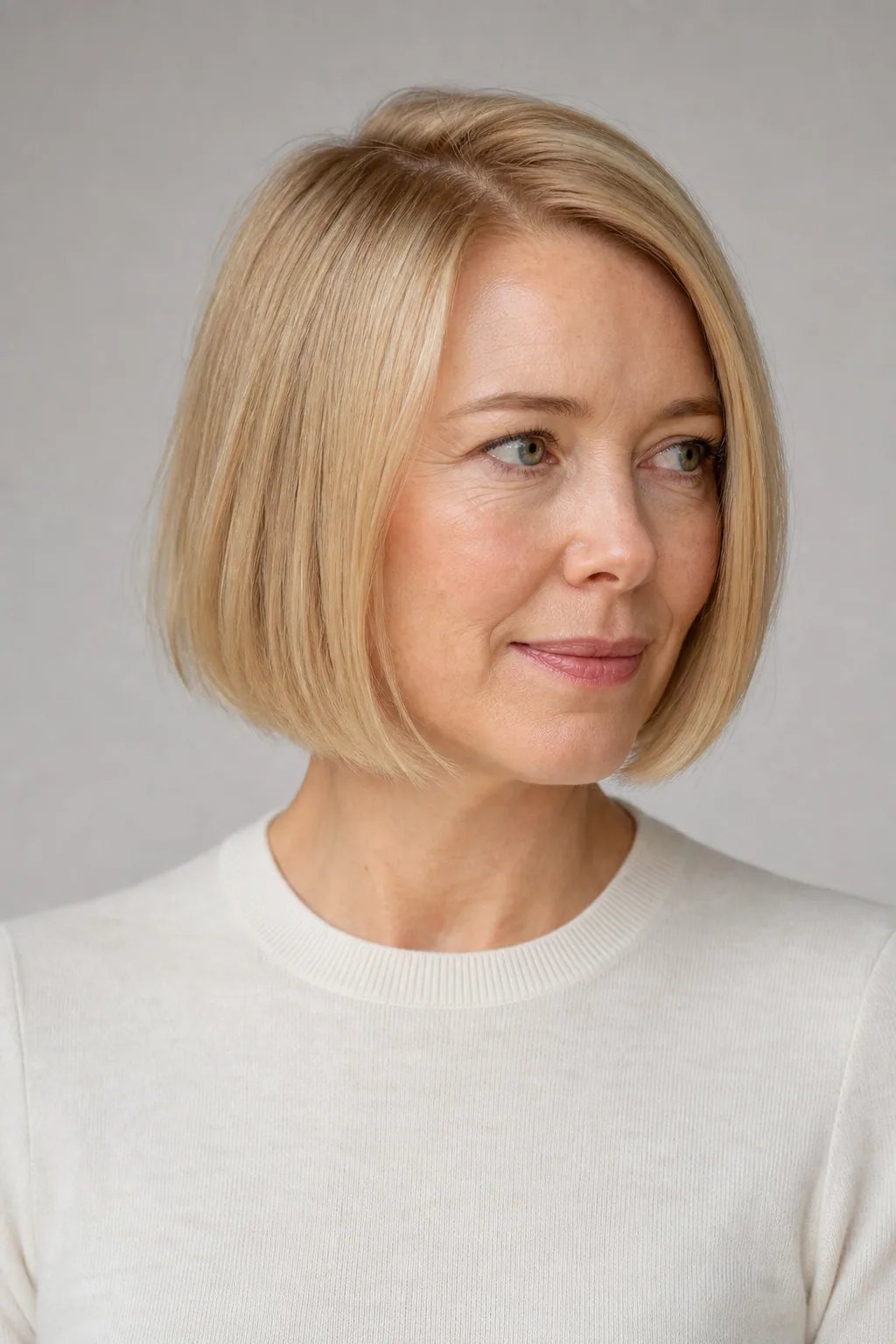
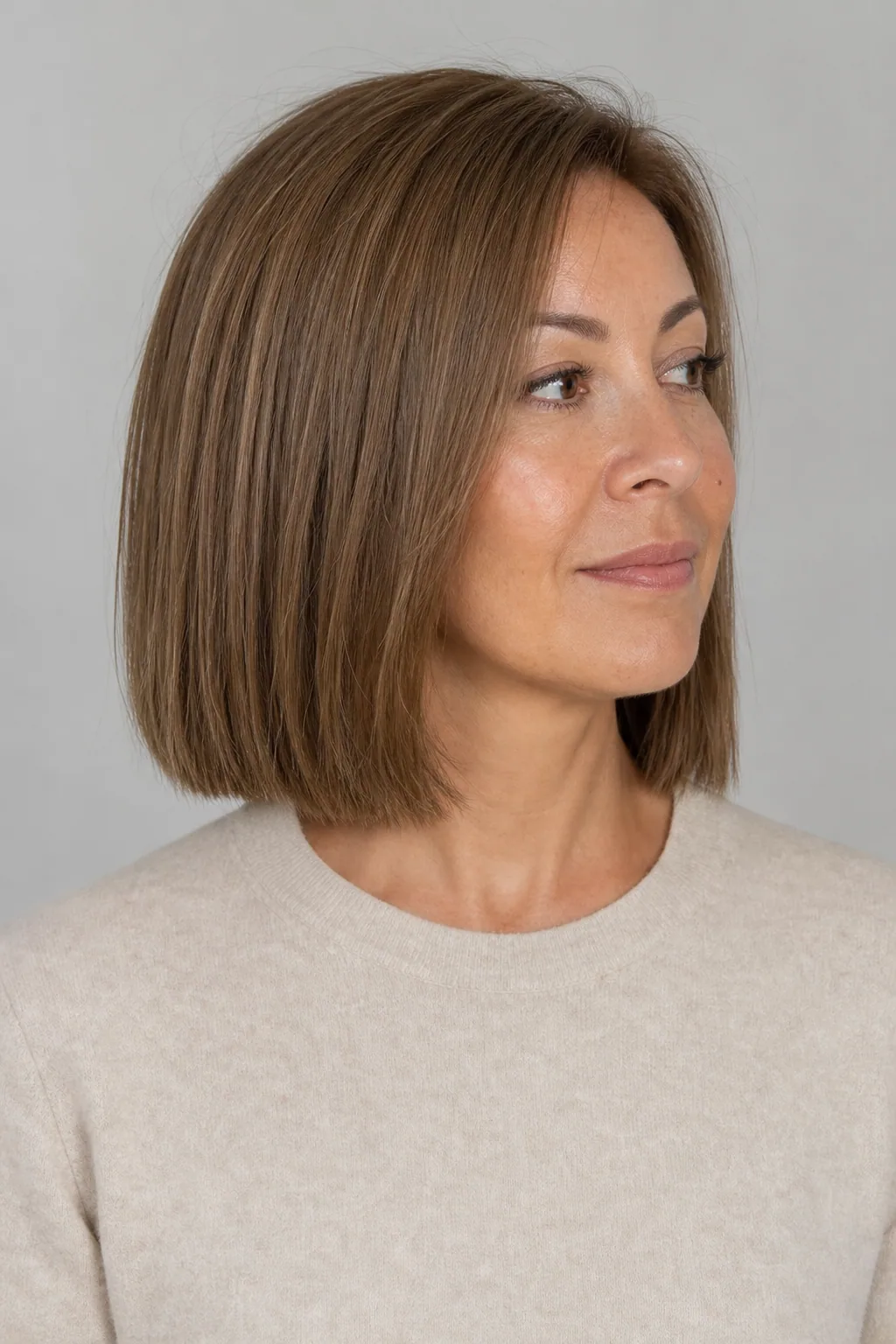
Blunt chin bob with a side part
One length at the chin, with a deep side part for lift. This is the cut that makes straight fine hair look its thickest.
It needs a trim every six to eight weeks to keep the line crisp. Our blunt bob for thin hair guide has thirteen versions.
6
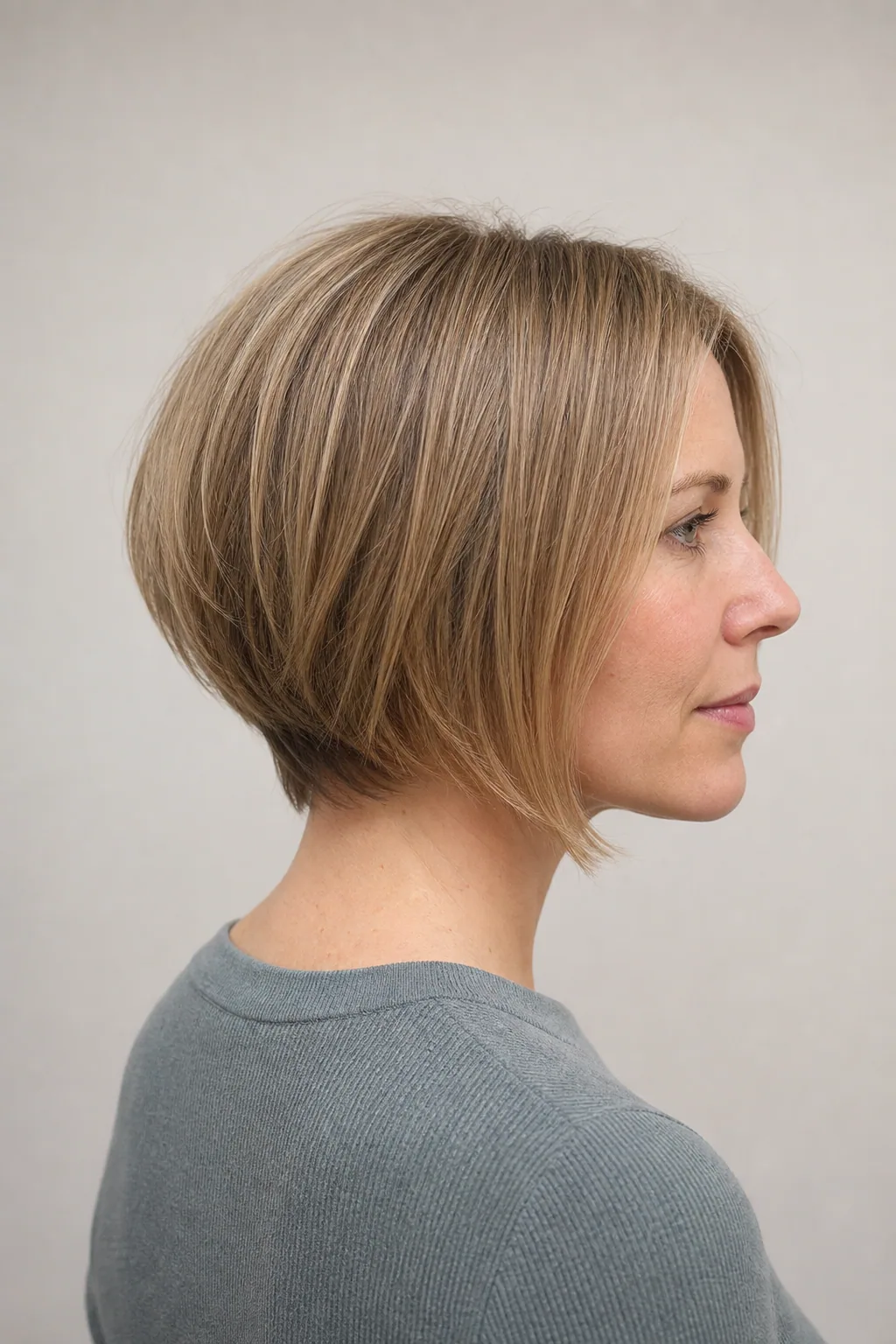
Graduated bob with a stacked back
Short stacked layers at the nape push the crown up, and the front falls longer. It is structural lift, so it does not rely on product.
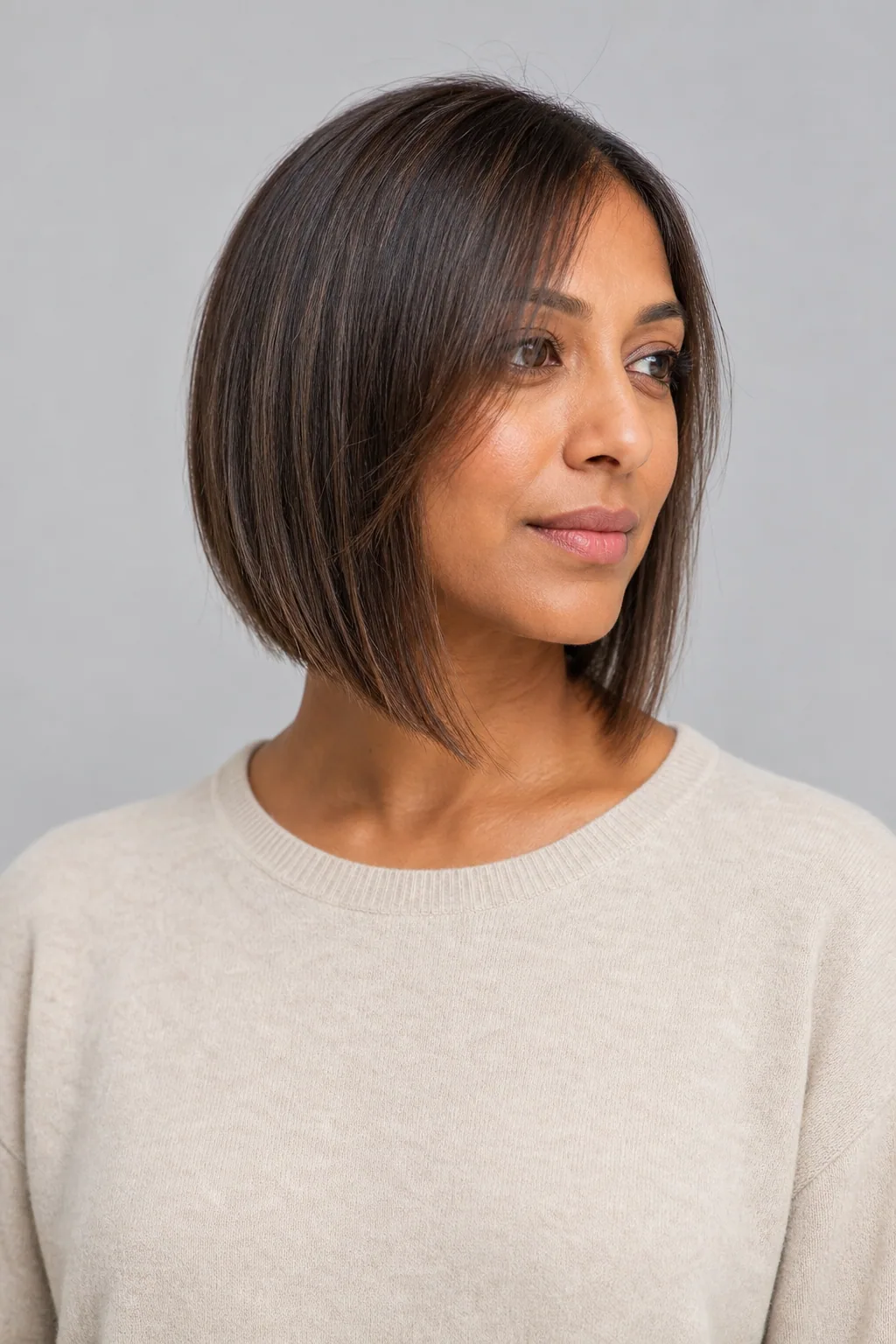
Slightly shorter at the back, angling down to below the chin at the front, with blunt ends all round. The angle is gentler than a stacked bob, so there is no visible graduation.
It suits fine straight hair that looks too plain in a one-length bob. Keep the angle subtle; a steep one leaves the back looking thin.
8
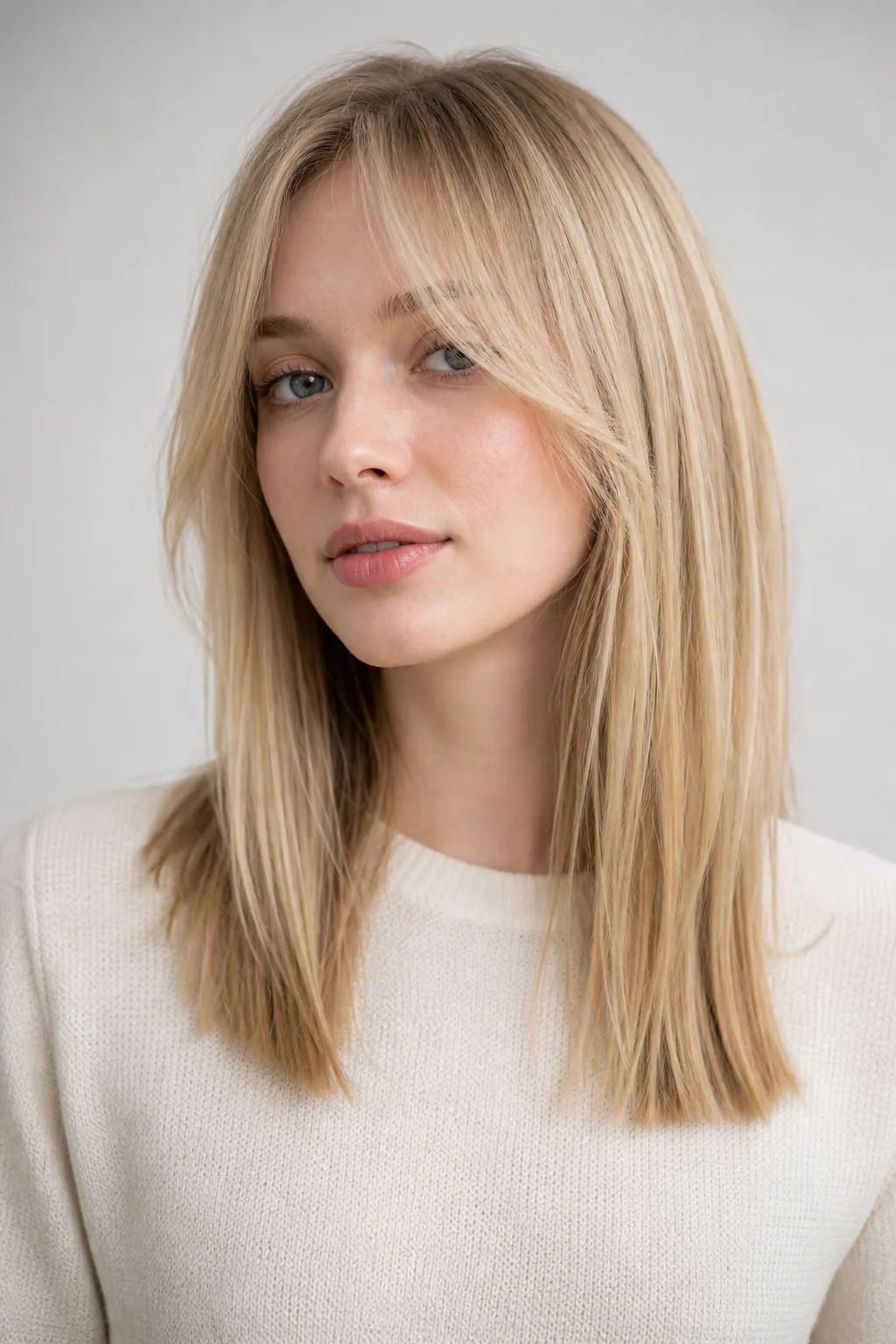
Bob with curtain bangs
A jaw-length bob with long curtain bangs that sweep away from the face. On straight hair, curtain bangs blow into shape in a minute and stay there.
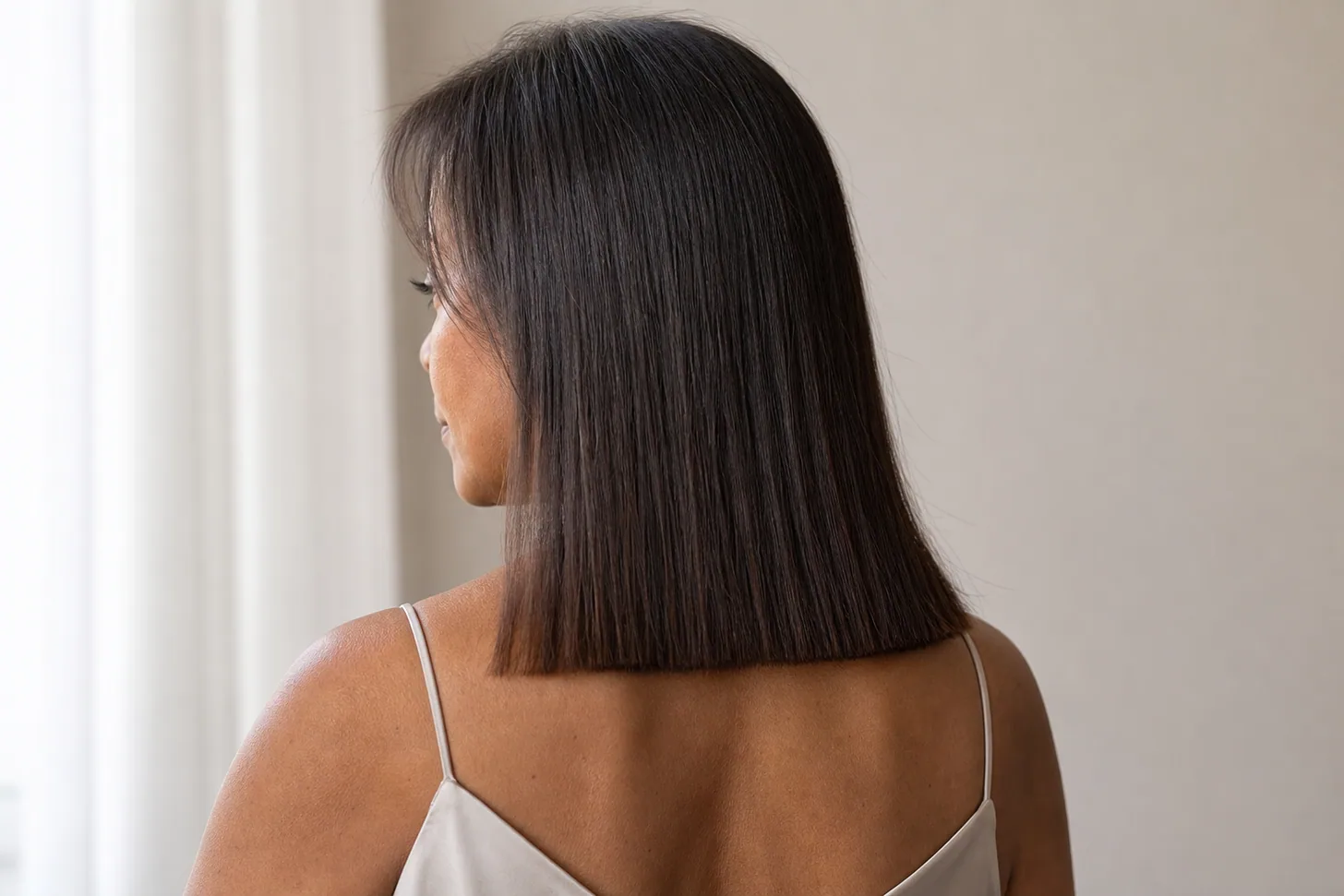
At the collarbone and shoulder, straight hair starts to hang, and the weight pulls the roots down. These three keep the hem full and hide the layering, which is the only way medium length stays full on fine straight hair.
9
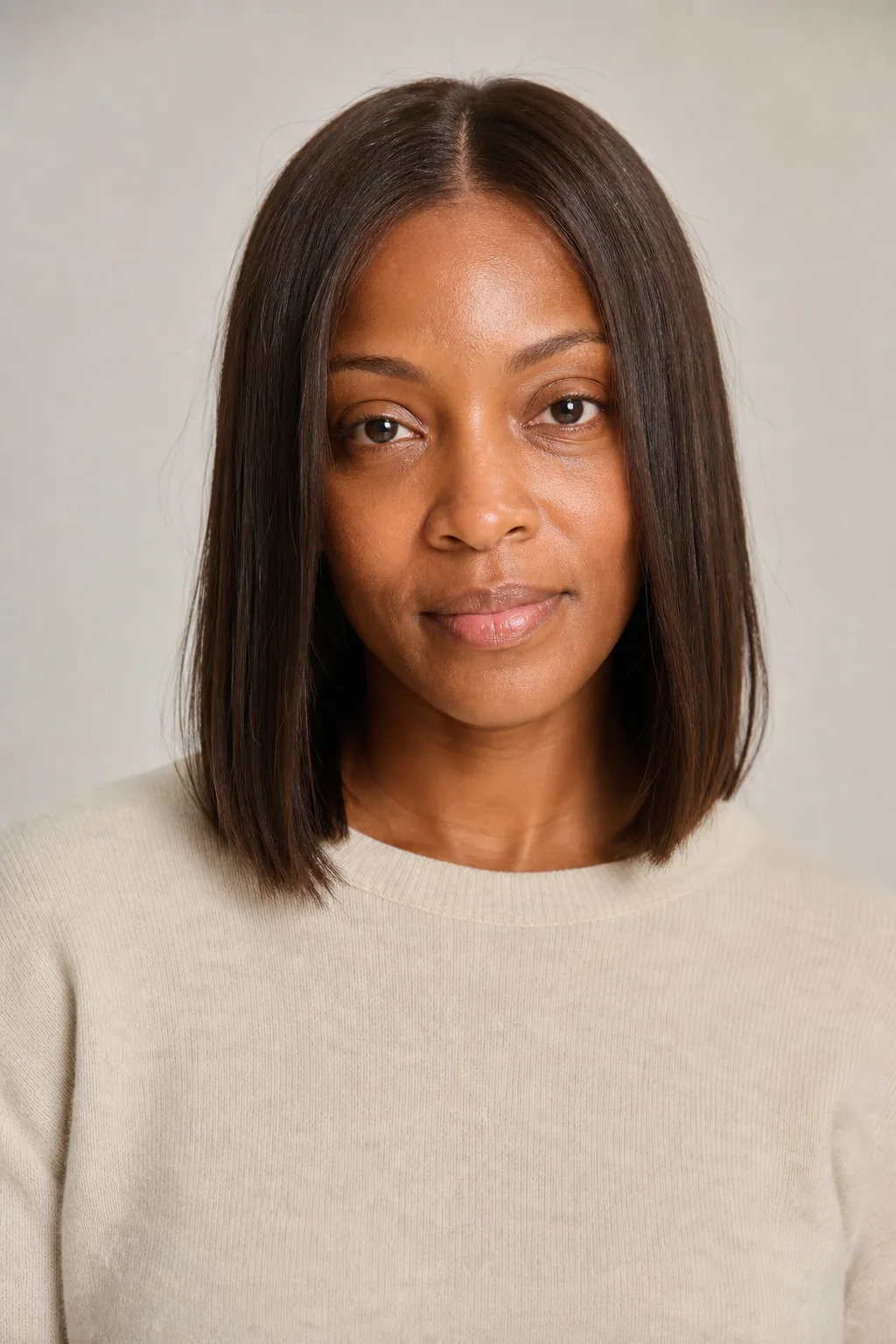
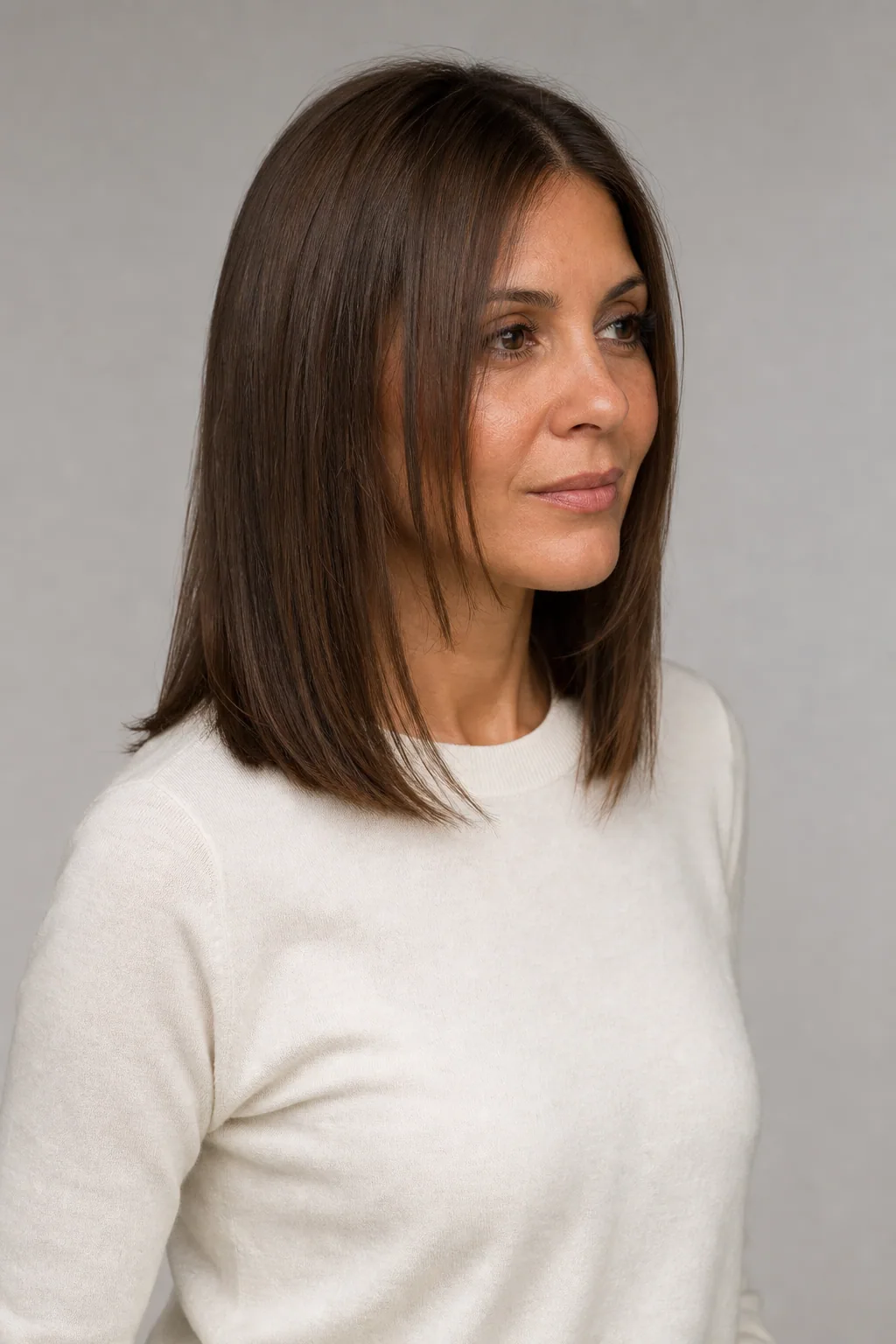
Blunt lob
One length at the collarbone, cut to a solid line. It is the longest cut that still keeps straight fine hair looking dense at the ends.
Tuck it behind the ears or bend the ends with a flat iron for movement. Our lob for fine hair has more.
10
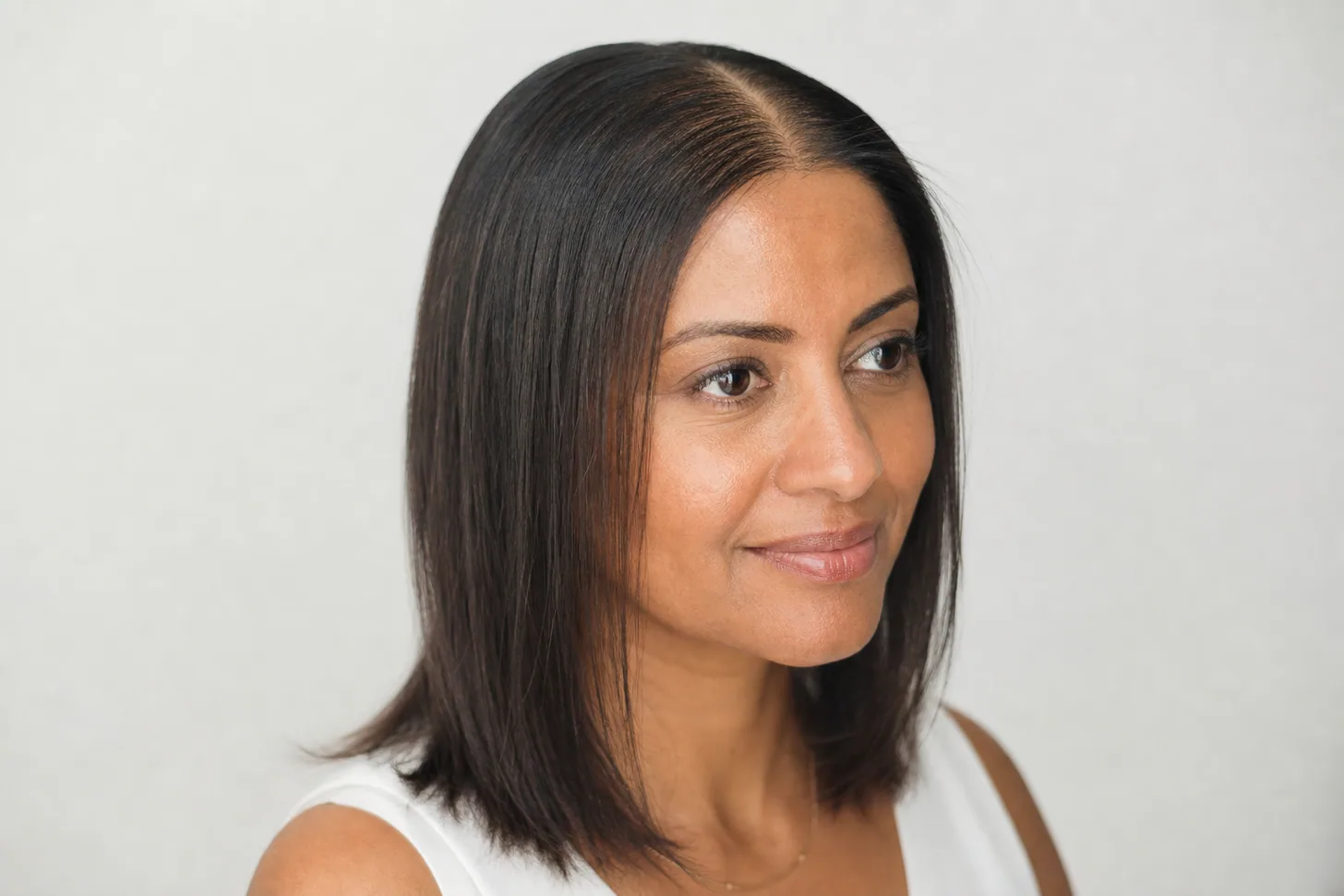
Collarbone cut with ghost layers
A collarbone cut with the layers cut underneath, where they add bounce but never show on the surface. From outside it looks like one length that happens to move.
This is the answer for straight fine hair that feels heavy in a blunt lob. See ghost layers for fine hair for how it is cut.
11
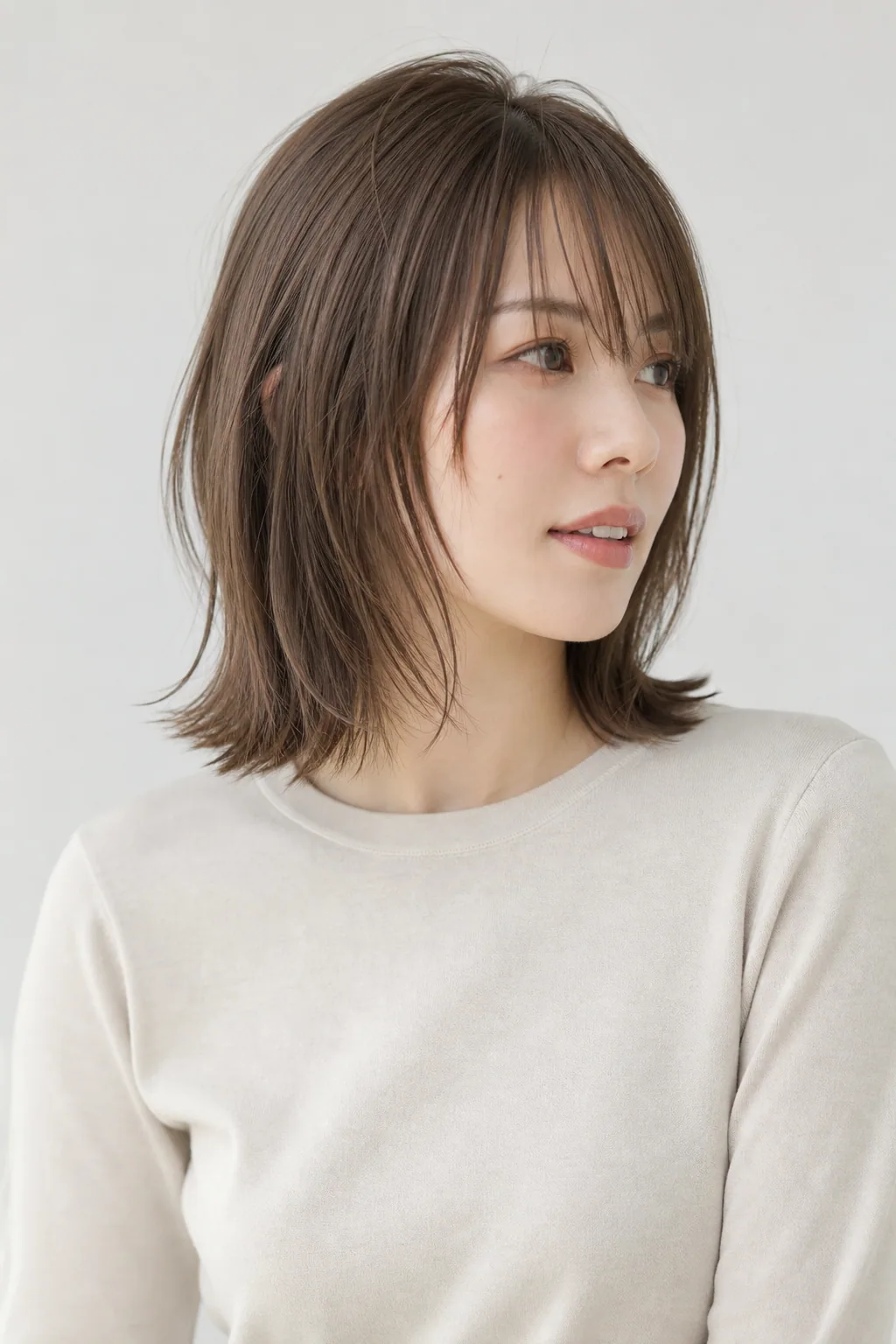
Choppy lob with a textured edge
A lob with the ends point-cut so they separate slightly, rather than sitting in a solid line. It is the most relaxed version, and it needs a little texture spray to show.
Ask for the choppiness at the ends only, never through the length. On thin straight hair, choppy layers higher up read as gaps.
Long haircuts for thin straight hair
Long, straight and fine is the hardest combination to keep full, because length adds weight and straight hair has nothing to resist it. It works if the hem stays heavy and the face gets some shape.
12
Long one-length cut
One length, cut blunt just past the shoulders. Straight hair shows off shine at this length, and a solid hem keeps the ends from looking stringy.
It suits medium density more than very thin hair. If your ends look see-through past the shoulders, go up to the collarbone.
13
Long cut with curtain bangs
Long, blunt length with curtain bangs that sweep off the face. The bangs give long straight hair a shape at the front without layering the length.
The back stays one length; only the pieces around the face are shorter, starting at the chin. It adds movement without taking weight from the hem.
Keep the framing to the front. Layers that continue around the back are what make long fine hair look thin. See face-framing layers for fine hair.
Low-maintenance haircuts for fine straight hair
Straight hair is the easiest texture to keep low maintenance, because a blunt cut dries into its own shape. The lowest-effort cuts above are the blunt chin bob (No. 5), the blunt lob (No. 9), and the collarbone cut with ghost layers (No. 10).
Each needs only a rough-dry and a comb. The short cuts need less styling but more frequent trims, so they are low-effort day to day, not month to month. For more, see low-maintenance haircuts for fine hair.
Styling fine straight hair so the cut holds
Straight hair holds a shape only once it has cooled. Blow-dry the roots in the opposite direction first, then flip them back, and let the hair cool before you touch it.
Use products that add grip rather than weight: a light mousse at the root, and a texture spray instead of oil on the ends. Our guide to root volume for fine hair has the full method.
If your straight hair is thin but not fine
Some straight hair is sparse but coarse, with wide, stiff strands. It holds a cut differently and can carry more layering and heavier products than fine hair. If that sounds like your hair, start with thin but coarse hair instead.
Say: "My hair is fine and very straight. Please keep the hem blunt and one length, and hide any layers inside the cut so they don't show as steps. No thinning shears or razor, please; point-cut if you need texture."
Ask for the hem to be checked dry. Straight hair shows every uneven strand, and a line cut wet can dry slightly off.
When these rules bend
Your straight hair is coarse, not fine. Wide strands do not go see-through, so more layering is fine. See thin but coarse hair.
You want lots of visible layers. On fine straight hair they show as steps and thin the ends. Ask for face-framing only, or ghost layers.
Your hair is thinning, not just fine. If your part is widening, the cut is only part of the answer. Start with fine hair or thinning?
You straighten naturally wavy hair. Your cut should suit the wave on the days you skip the iron. See fine wavy hair.
FAQ
A blunt bob between the chin and the jaw, for most people. The solid hem makes the ends look dense, and the length is too short to drag straight roots flat. If you want more length, a blunt lob with hidden ghost layers is the next best choice.
Only hidden ones. Visible layers show as steps on straight hair, and they thin out the ends. Ask for ghost layers cut inside the shape, or face-framing pieces at the front only, and keep the hem one length.
Blunt, one-length cuts: a blunt bob, a blunt lob, or a long one-length cut on medium density. Graduated bobs add height at the crown. Avoid razor cuts, thinning shears, and long layers through the length.
A blunt chin bob, a blunt lob, and a collarbone cut with ghost layers all dry into shape with a quick rough-dry. Pixies need less styling but more frequent trims, every four to six weeks.
Shorter usually looks fuller, because straight hair has nothing to resist the pull of its own weight. Chin to collarbone is the sweet spot. Long straight hair can work if your density is medium and the hem is kept blunt.
Usually the cut was layered or thinned like thicker hair. Straight fine hair needs a blunt hem and hidden layers. Also check your styling: let the roots cool before touching them, and swap heavy products for a light mousse.
Eleven years behind the chair, specializing in short shapes and fine-hair texture. Simone believes the best haircut is the one you can style yourself in ten minutes.
Results vary with hair type, density, and growth patterns. Hairstyling guidance is not a substitute for an in-person consultation with a licensed stylist.
Hairstyle images in this guide are AI-generated illustrations, not photos of real clients or results. See our image policy.
Get the good hair intel
One honest, stylist-written guide in your inbox each week. No hype.

 SB
SB