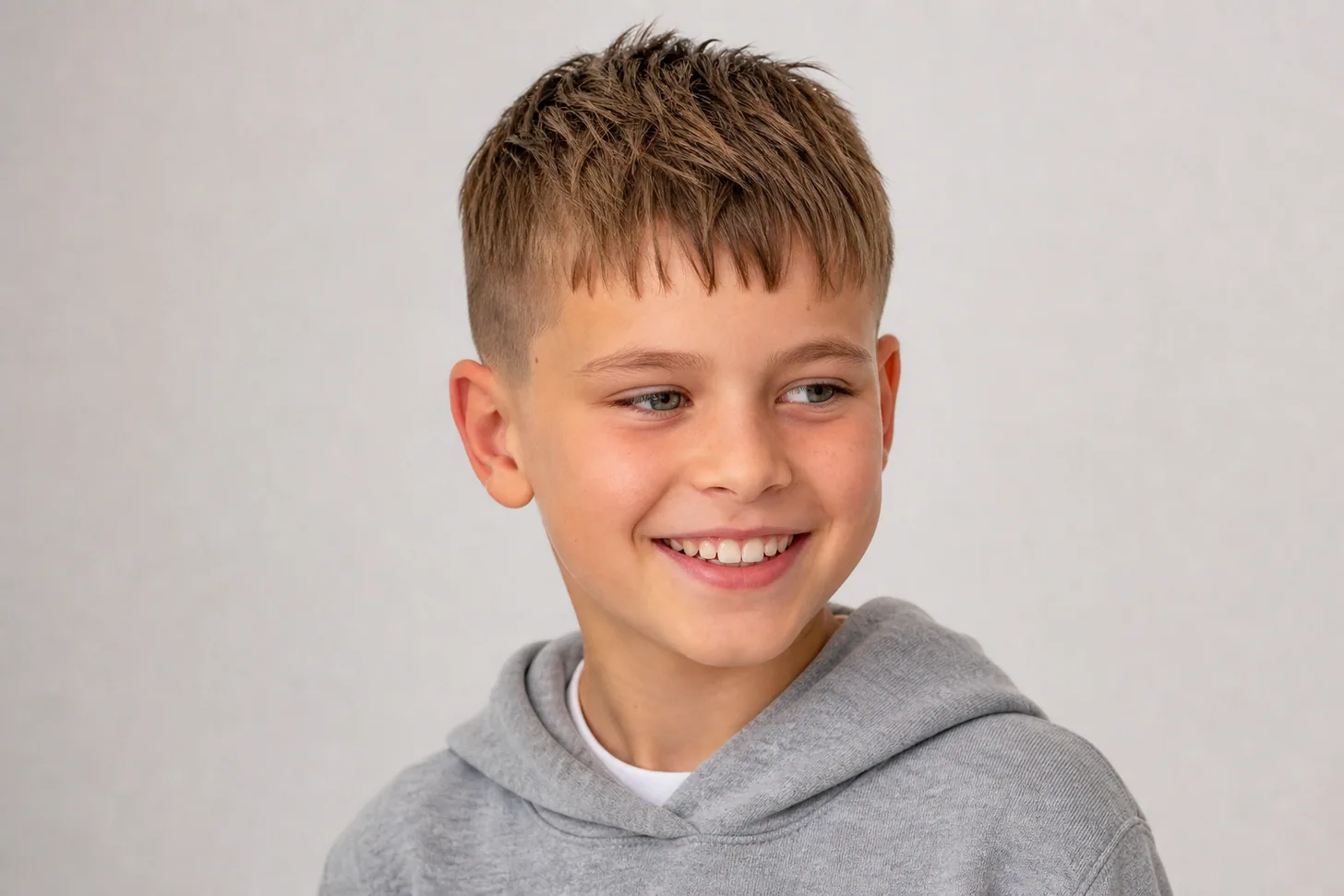
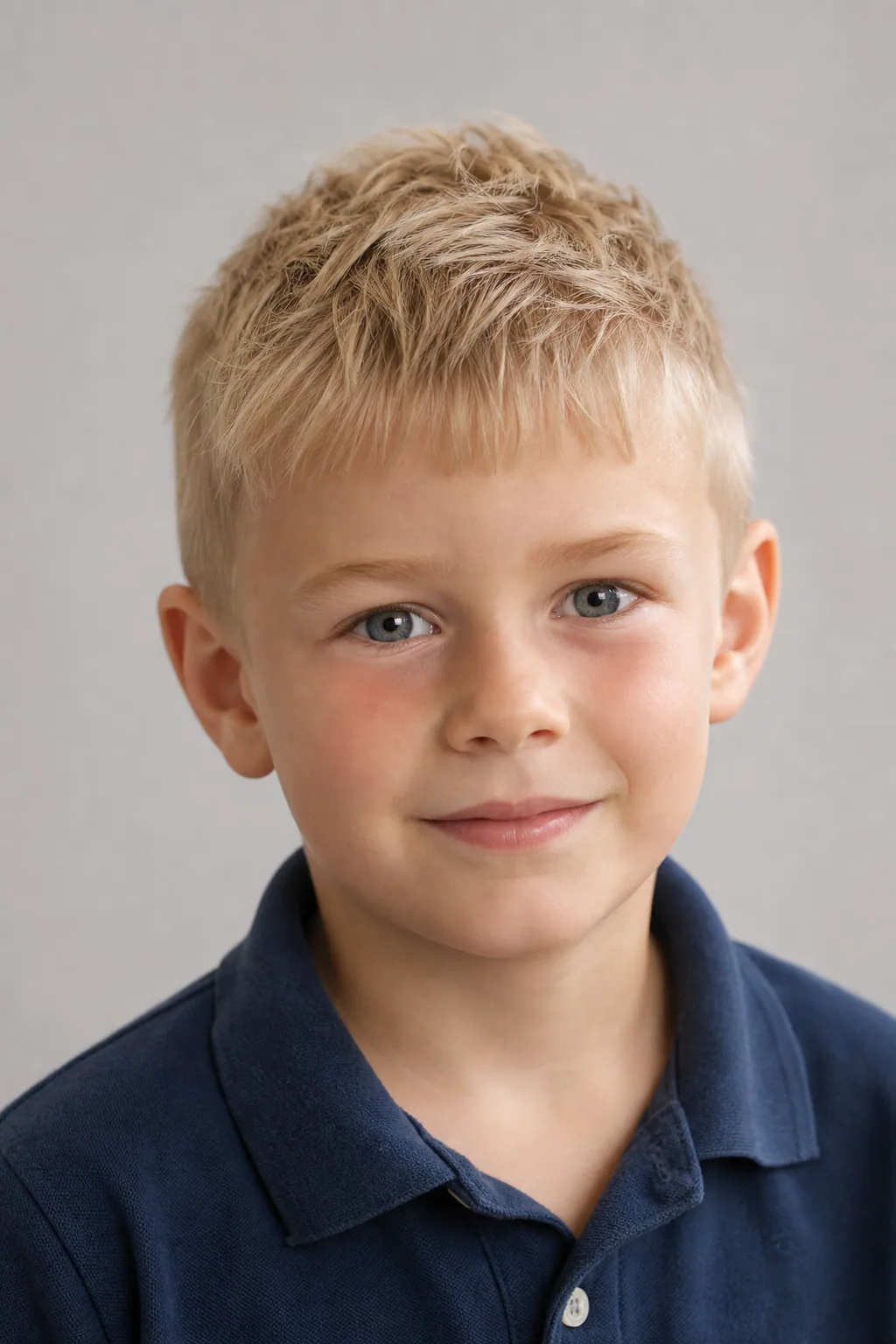
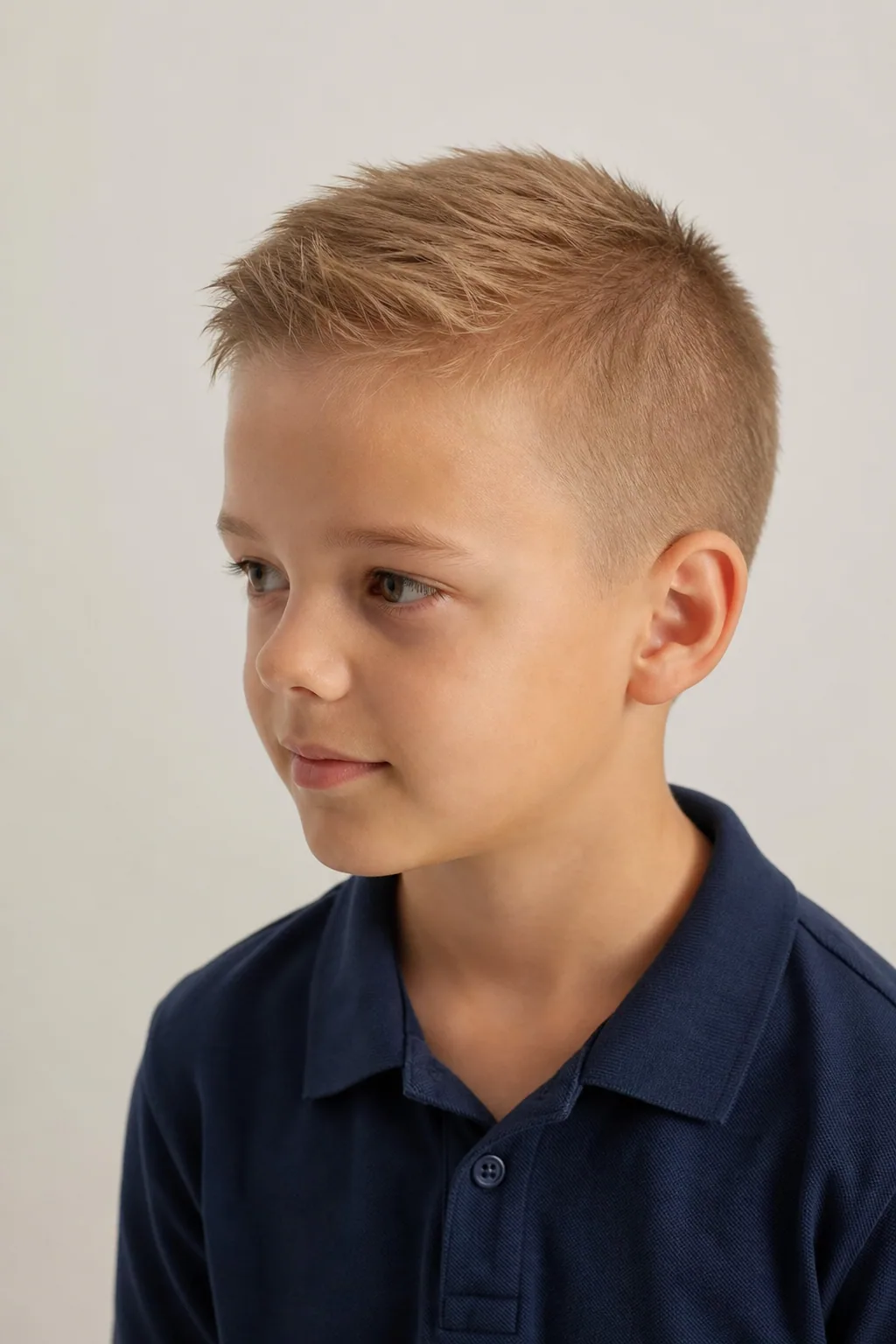
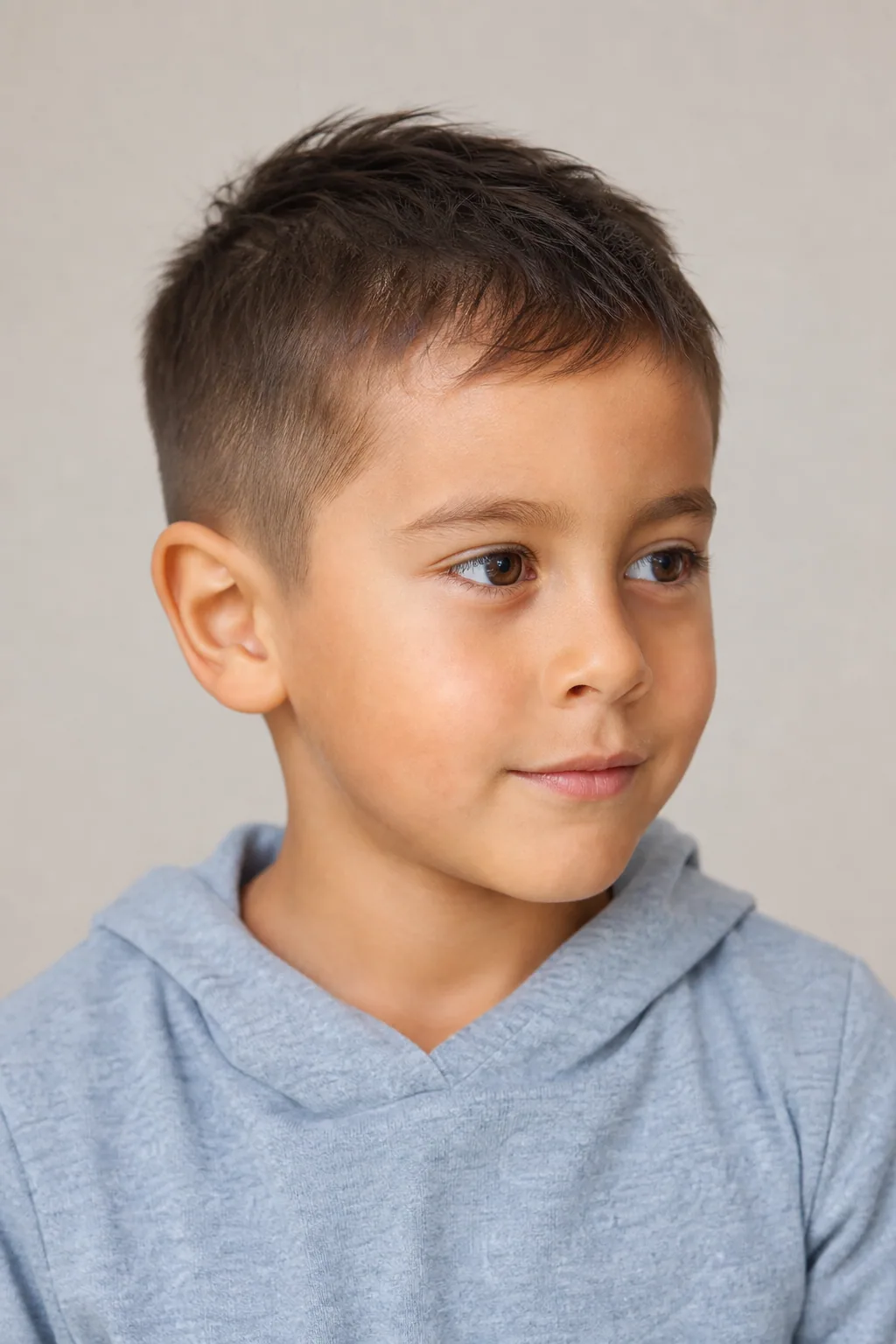
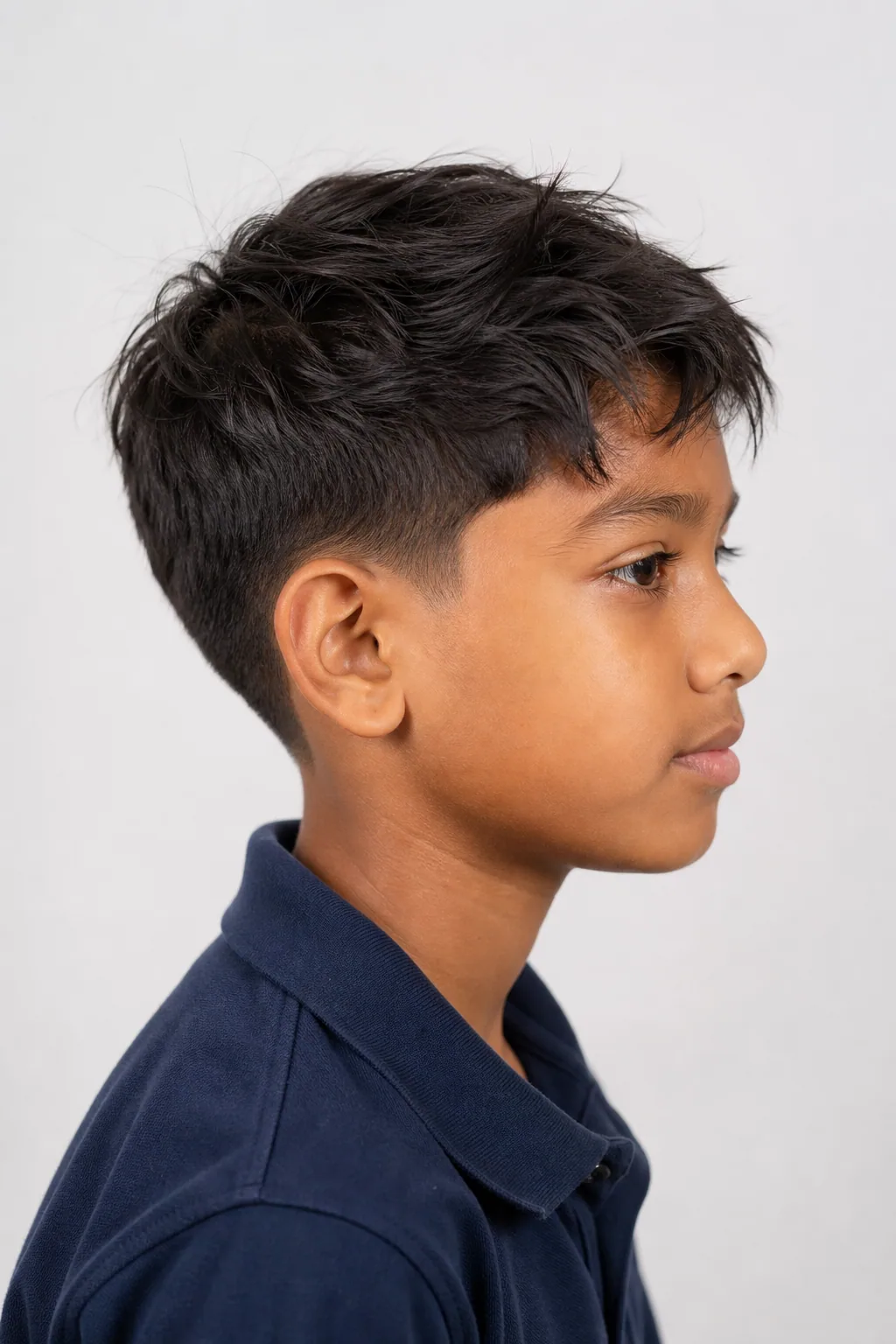
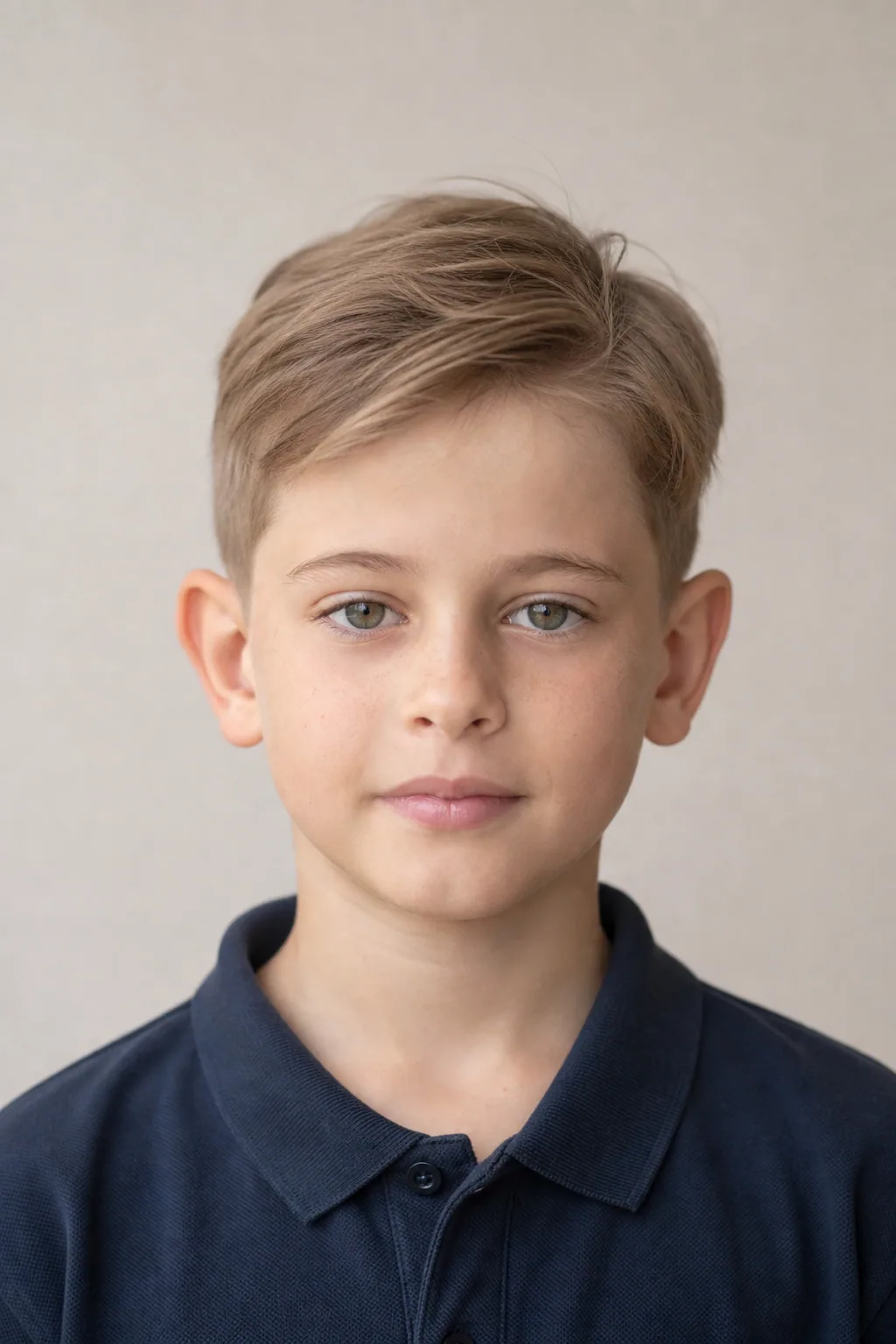
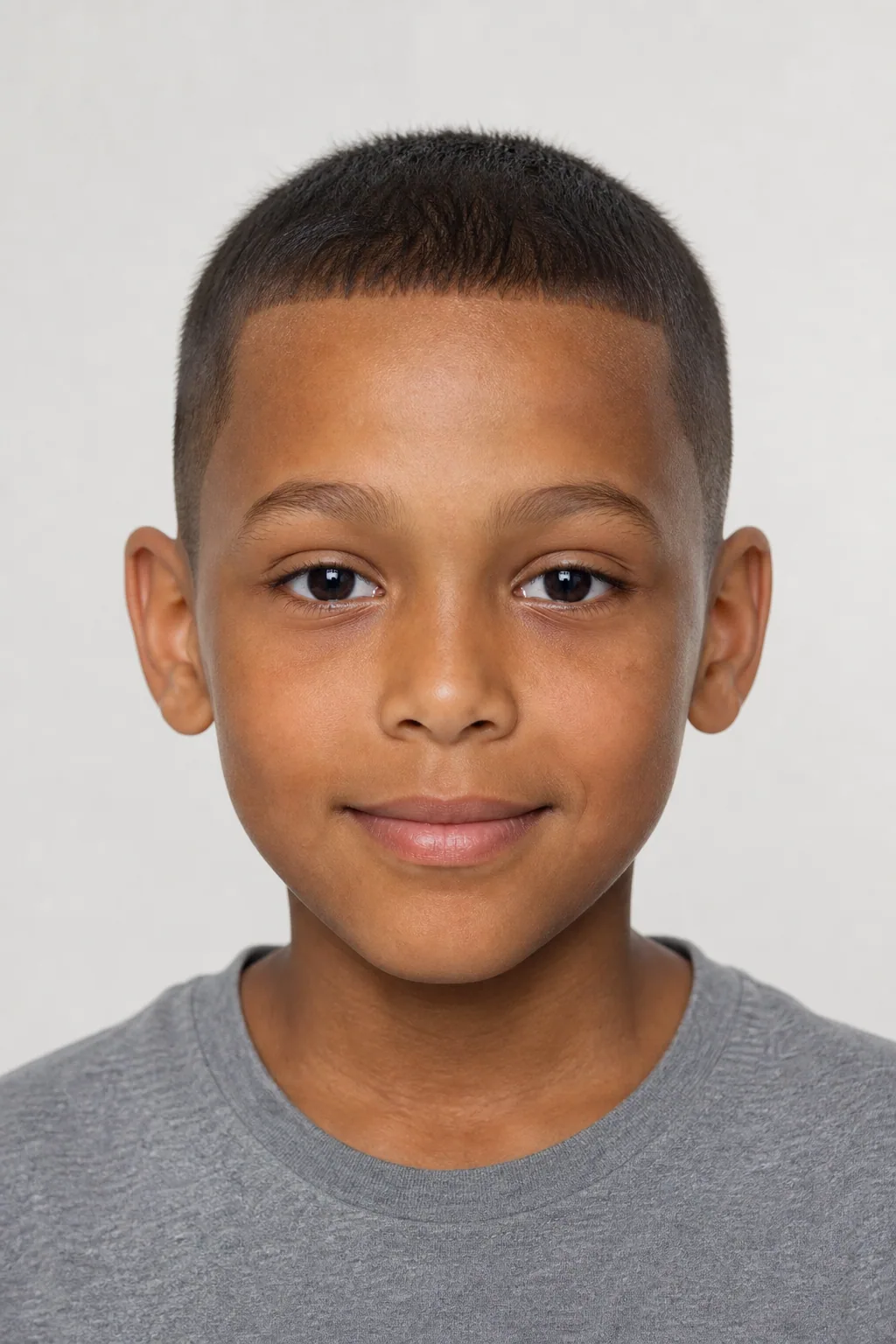
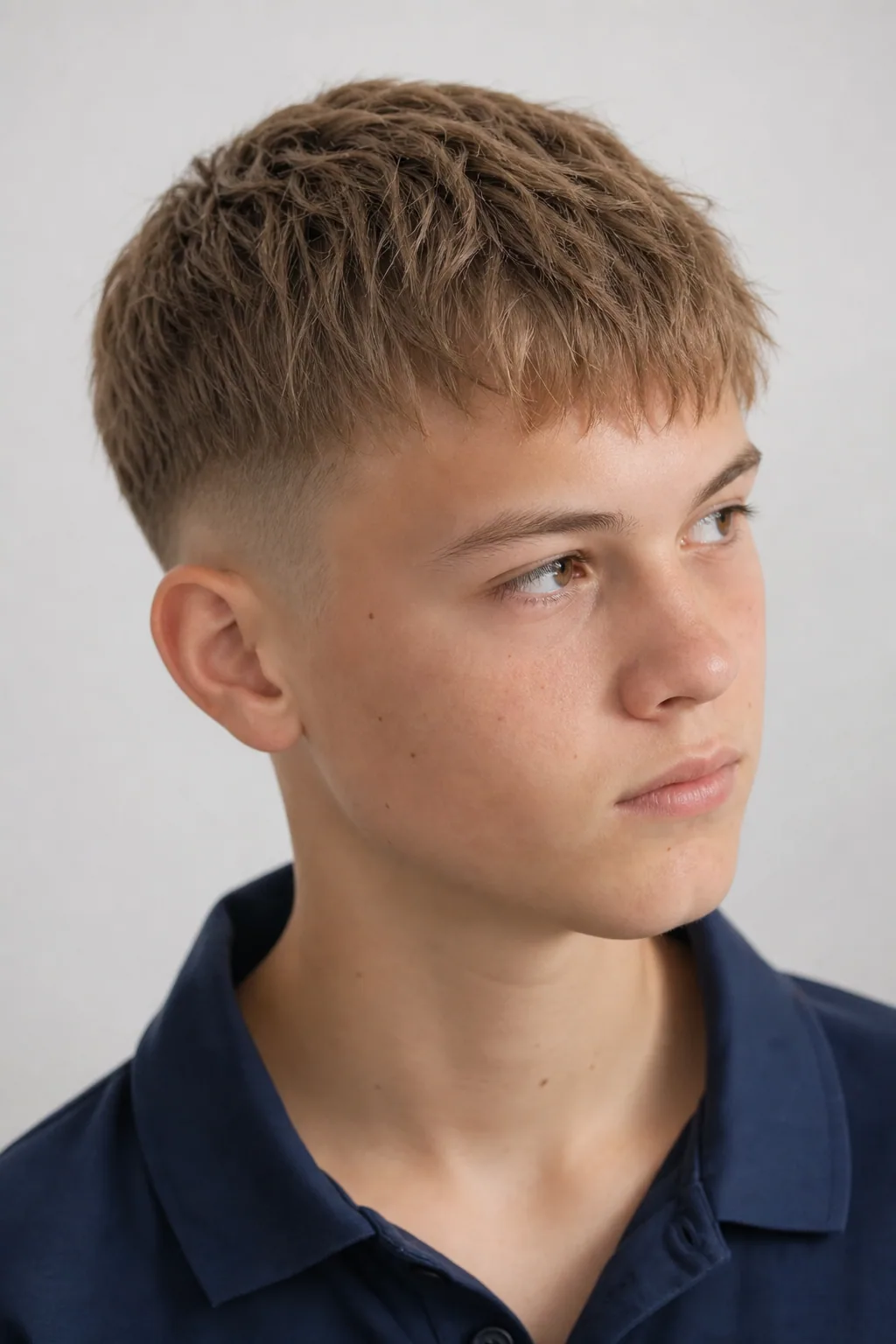
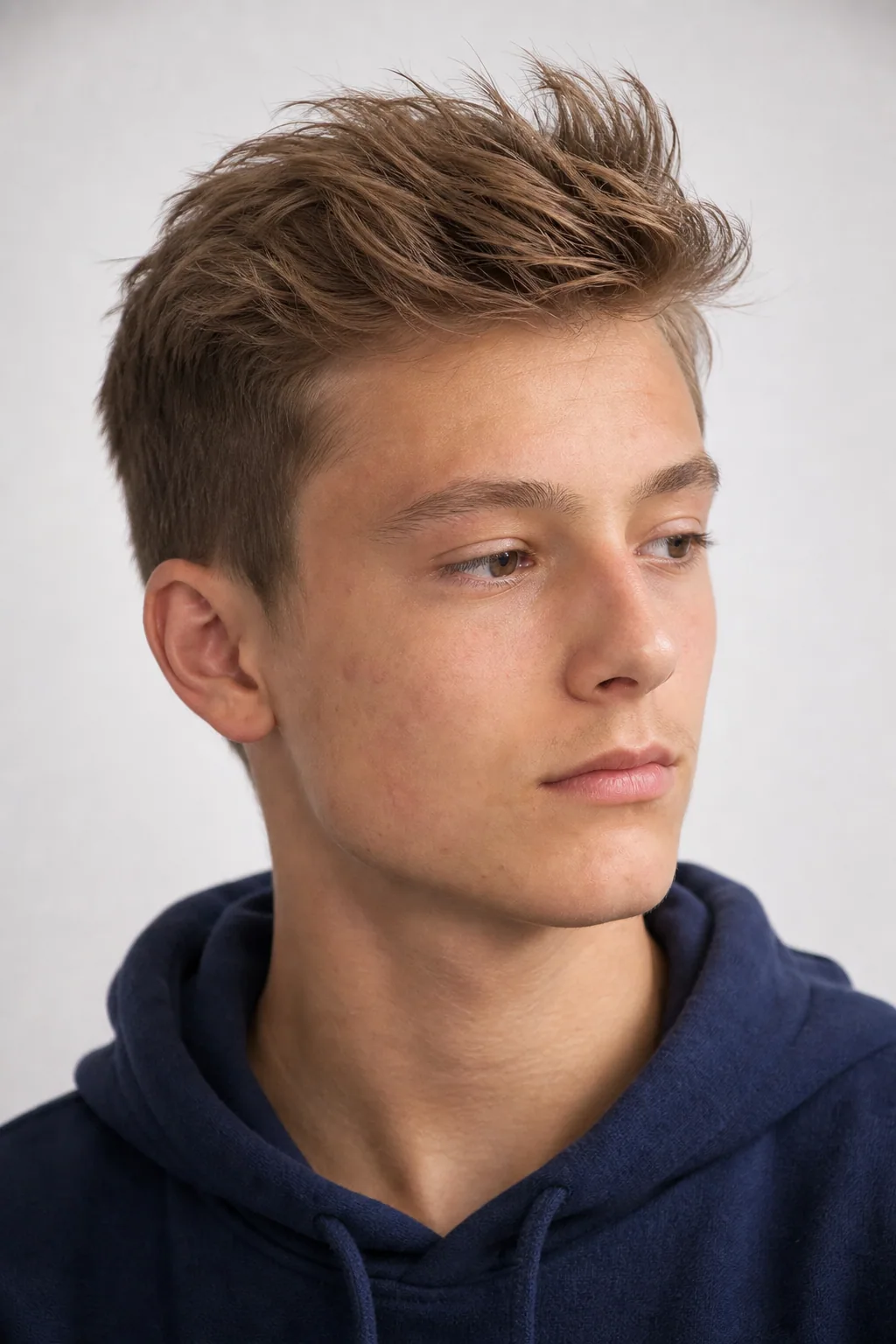
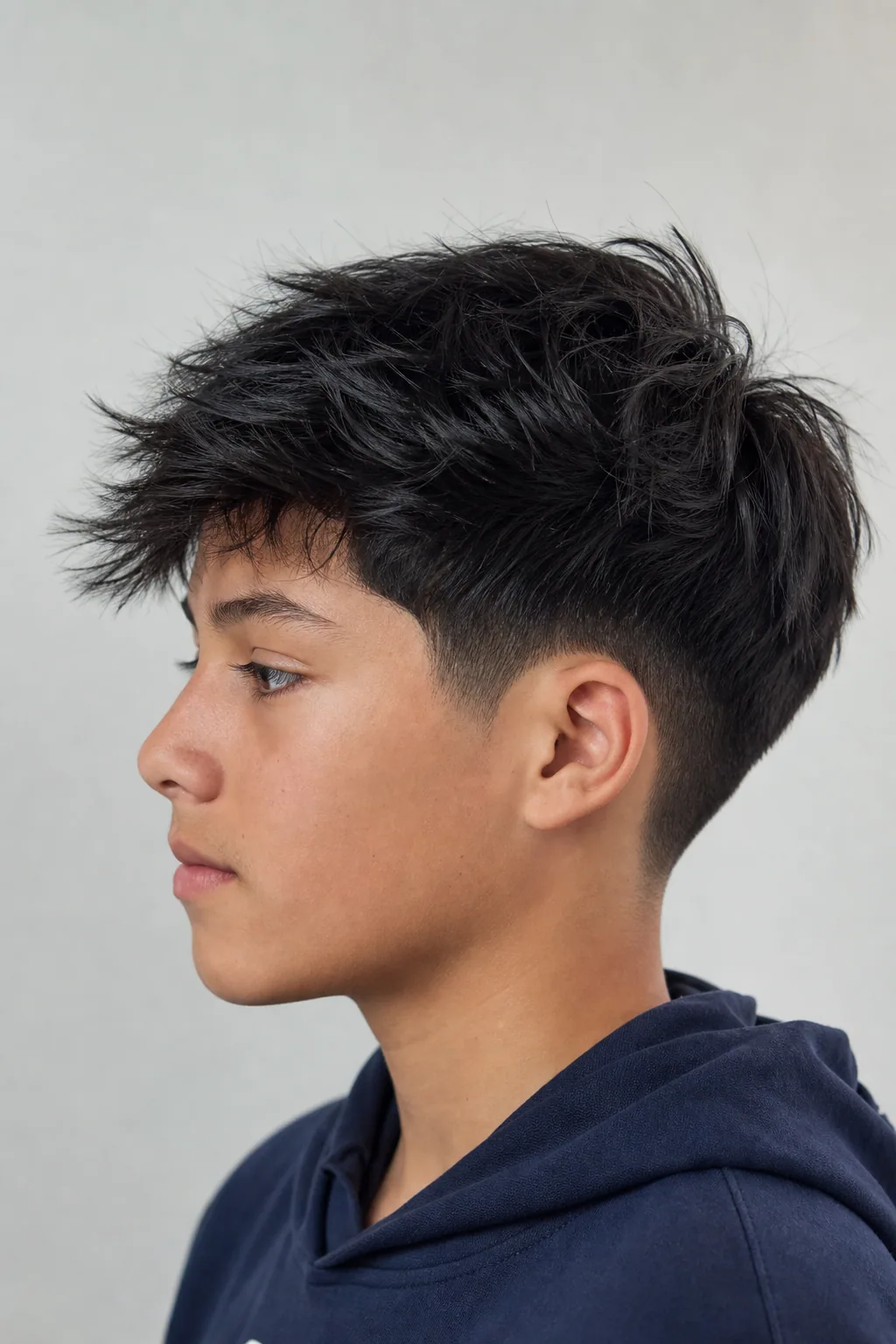
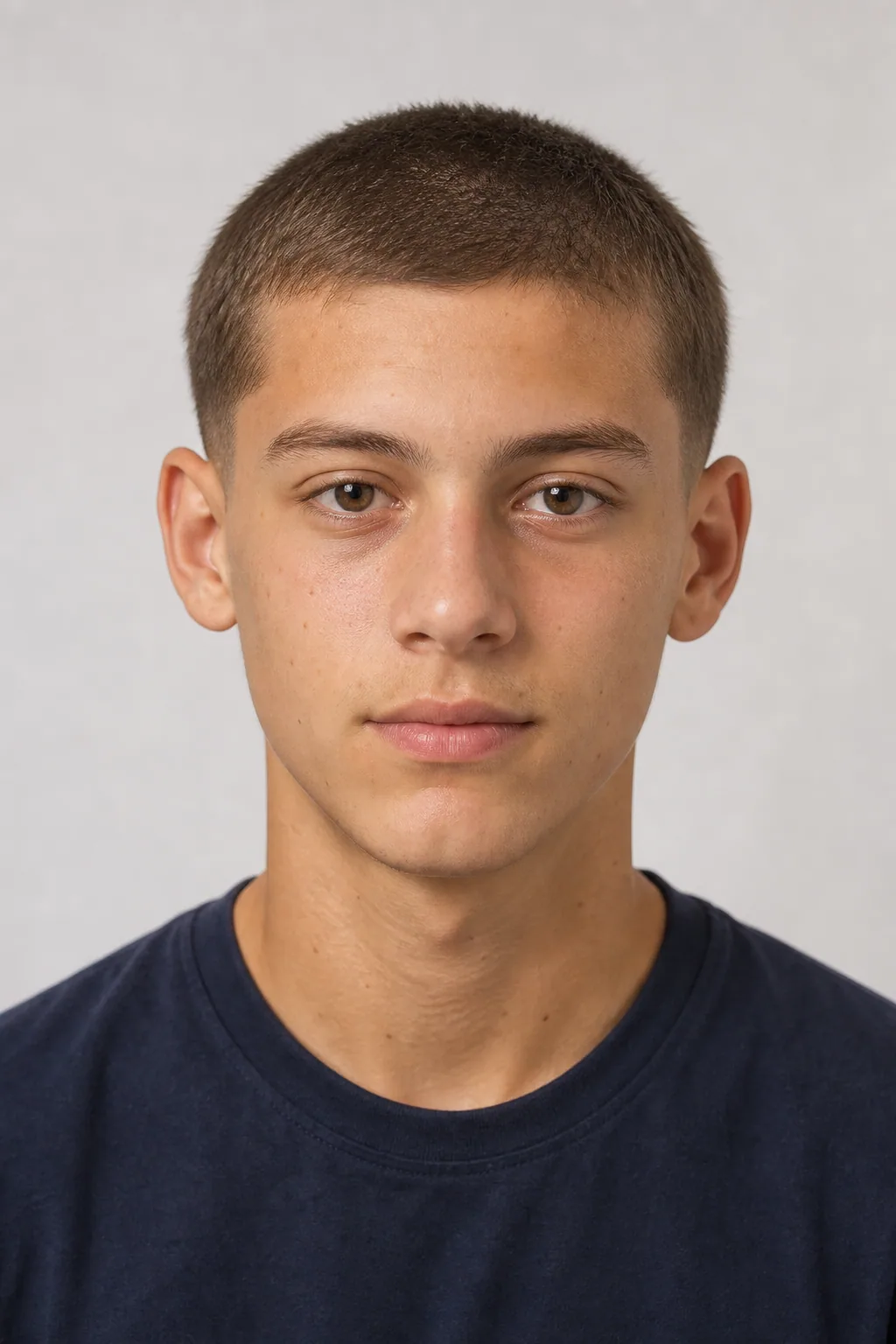
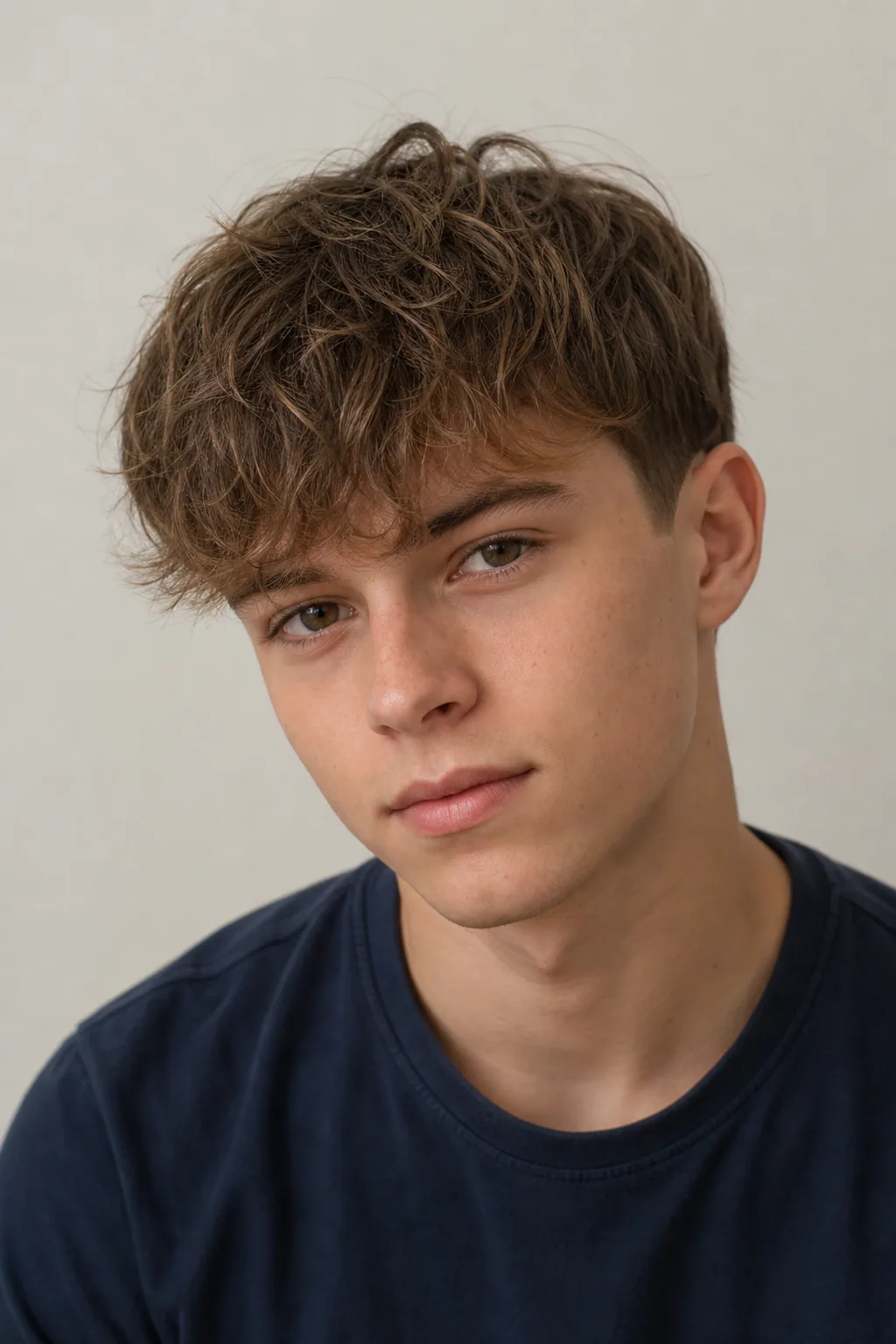
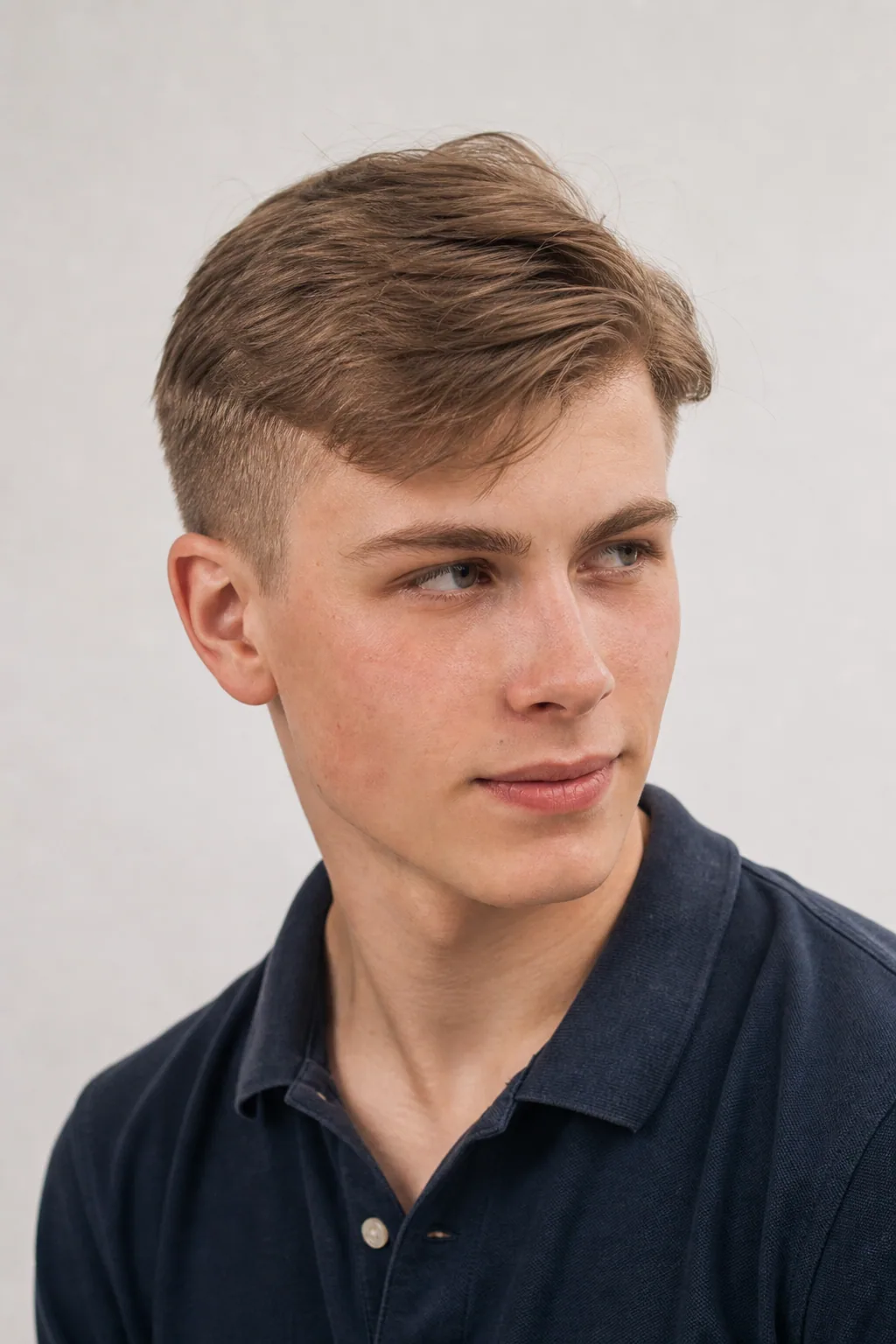
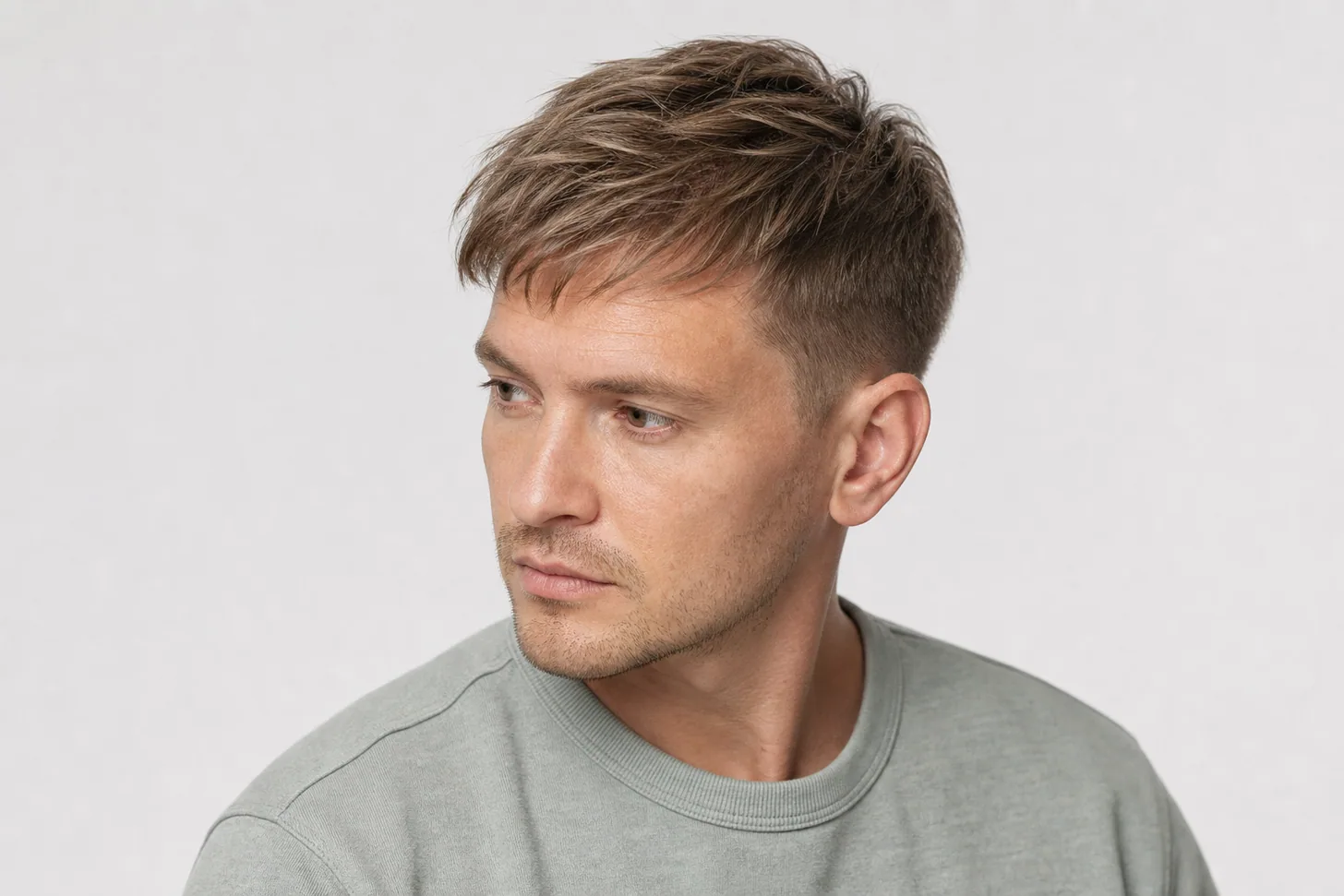
The best haircuts for boys with thin hair are short at the sides, textured on top, and cut so the top stands up instead of lying flat: a textured crop, a crew with a longer front, or a low taper with a messy top. Short, separated pieces look like more hair than long, smooth strands.
Most boys with thin hair simply have fine hair, which is normal and often runs in families. Below are 12 cuts for school-age boys and teens, the trends that make thin hair look thinner, and the few signs that mean a doctor should look at it.
Chair-side note
Boys with fine hair usually arrive at my chair wanting the cut a friend has, and the friend has thick hair. The same cut on fine hair lies flat and shows the parting.
The fix is almost never a different style, just a shorter, choppier version of it. Take the idea, lose an inch, and cut texture into the top.
SB
— Simone Baptiste, Senior Stylist
Why some boys' hair looks thin
Hair can be fine, meaning each strand is narrow, or thin, meaning there are fewer strands. Many children have both, and it is usually inherited. Straight fine hair shows it most, because it lies flat and reveals the scalp along the parting.
Hair often gets a little thicker through childhood and changes again at puberty. So the goal of a cut is not to fix anything, just to make the hair look its fullest now.
Two things do that. Short sides take away the contrast with a thinner top. A textured top, cut into small separate pieces, makes the hair stand up and overlap instead of lying in flat lines.
Haircuts for boys with thin hair, ages 6 to 11
These are easy to look after, grow out neatly, and survive a day at school. Younger boys with baby-fine hair will find more options on our toddler boy haircuts for thin hair page.
1
Short textured crop
The most reliable cut for a boy with thin, straight hair. About an inch on top, cut choppy, pushed forward into a short fringe, with the sides short.
It needs no product and dries into shape. Ask for the fringe to stop well above the eyebrows so it stays out of his eyes.
2
Crew cut with a longer front
The crew grades from about an inch at the front to shorter at the crown, which is where fine hair tends to part and look sparse. It keeps the length where it shows best.
A good choice for a boy with a crown whorl that sticks up. More versions are on our crew cut page.
3
Short back and sides, brushed forward
A classic scissor-cut shape with a little more on top, brushed forward. Scissor-cut sides stay soft as they grow, so it looks tidy for five or six weeks.
Brushing forward rather than to the side avoids a parting, and a parting is where thin hair shows the most scalp.
4
Low taper with a messy top
The taper tidies only the edges, so the sides still have hair next to the top. A high fade would leave a long, sparse top sitting on bare skin, which makes thin hair look thinner.
Scrunch the top with dry fingers after washing; that is all the styling it needs.
5
Short side part
The school-photo cut. On thin hair, keep the top short, about an inch and a half, and make the part soft and pushed with fingers rather than combed into a sharp line.
A deep, combed part shows a stripe of scalp. A soft one blurs it.
6
Caesar cut
Short and even all over the top, brushed forward into a short fringe. It is one of the lowest-maintenance cuts there is, and it looks the same on the fifth week as the first.
Keep the fringe short and slightly textured. A heavy, blunt fringe on fine hair splits into strands.
Teen boy haircuts for straight fine hair
Teens want cuts with more length and more attitude on top, and most of those can work on fine hair. The adjustments are the same every time: an inch shorter than the photo, texture cut in, and a taper rather than a high fade.
7
Textured French crop with a low fade
The most requested teen cut, and one of the best for fine hair. The choppy, forward top hides a flat crown and a high forehead, and the low fade keeps the sides neat.
Ask for the fade to stay below the temples. Above that, the top starts to look sparse against the skin.
8
Short messy quiff
A short quiff lifts the front, which makes fine hair look thicker from the front and side. Keep it messy and matte; a smooth, glossy quiff shows every gap.
It needs a quick blow-dry and a little clay. Our styling routine for fine hair is written for men but works the same for teens.
9
Mid taper with a textured top
A taper up to the temples gives the sharper look of a fade while leaving some hair at the sides. With an inch and a half on top, it balances well.
For sports, hot weather, or a teen who wants zero effort. A number 3 on top is long enough to cover the scalp on fine hair; a number 1 usually is not.
Keep the hairline natural. A sharp line-up can make a fine hairline look thinner at the corners.
11
Textured fringe on wavy fine hair
Fine hair with a natural wave can carry a little more length, because the wave adds bulk. Keep the sides short and let the top fall forward in its own shape.
A grown-up cut for prom, interviews or graduation photos. It is a crew with just enough length at the front to part, so it stays short where fine hair shows most.
Style the part with fingers, not a comb, so it stays soft.
Trends that make thin hair look thinner
Long curtains. A long middle part on straight fine hair splits into two flat panels and shows a line of scalp down the middle. If he wants the look, keep it to cheekbone length and textured.
A high skin fade under a long top. The bare sides make the top look sparse by comparison. A low or mid taper gives the same neatness without that contrast.
The perm, or "broccoli" cut. A perm adds real volume to fine hair, but it is chemical processing on young hair, and fine hair is the type most easily damaged by it. If an older teen wants one, go to a stylist who perms often, and read our guide to perms on fine hair first.
Cowlicks and double crowns
Fine hair shows a cowlick more, because it has too little weight to lie over it. The answer is usually to cut with it, not against it: leave the crown shorter so it stands evenly, or direct a fringe the way the front cowlick already pushes.
Bring a photo, and say the hair is fine. Ask for "short sides with a taper, not a high fade, and texture cut into the top with scissors." Ask them not to use thinning shears on the top, which remove bulk thin hair cannot spare.
Most of these cuts look best trimmed every four to six weeks. Past that, the top gets long enough to lie flat and part.
When thinning in a teenager is not normal
Hair that has always been fine is not a concern. Hair that is getting thinner, or falling out in noticeable amounts, is worth a visit to the pediatrician or family doctor.
In teenagers, common reasons include shedding a few months after an illness, stress or rapid weight loss, round bald patches from alopecia areata, tight hairstyles, and low iron or thyroid problems. Pattern hair loss can also begin in the late teens in some boys. Most of these can be treated, and they are easiest to treat early.
When to see a doctor rather than a barber
Round, smooth bald patches appear. That pattern is typical of alopecia areata, which a doctor or dermatologist should assess.
He is pulling or twisting his hair. Hair pulling is common and treatable. Mention it to his doctor rather than covering it with a cut.
The hairline or crown is receding in his teens. Early pattern loss responds best to early treatment. See a dermatologist, and read how to tell fine hair from thinning.
FAQ
A short textured crop is the most reliable: about an inch on top cut into choppy pieces and pushed forward, with short sides. It hides the scalp, needs no styling and grows out evenly. A crew cut with a longer front and a low taper with a messy top are close seconds.
Mostly short, especially at the sides. Longer fine hair lies flat, separates into strands and shows the parting. Short hair stands up and overlaps, which covers more scalp. The top can stay an inch or two long if it is cut with texture rather than left blunt.
Often, a little. Many children's hair fills out through childhood and changes again at puberty. Hair that is naturally fine usually stays fine, though, because strand width is largely inherited. What matters is whether it is getting thinner over time, which is worth a visit to the doctor.
A low or mid taper is. It tidies the sides while leaving some hair next to the top. A high skin fade under a longer top makes fine hair look thinner by comparison, because the top sits on bare skin. Keep the fade below the temples.
Not usually. Teenagers can lose hair after an illness, stress or crash dieting, from alopecia areata, tight hairstyles, low iron or thyroid problems, and pattern hair loss can start in the late teens. Most causes are treatable, so a teen whose hair is getting noticeably thinner should see a doctor.
Say the hair is fine, and ask for short sides with a taper rather than a high fade, and texture cut into the top with scissors. Ask them not to use thinning shears on the top. Bring a photo, and expect the cut to need a trim every four to six weeks.
Eleven years behind the chair, specializing in short shapes and fine-hair texture. Simone believes the best haircut is the one you can style yourself in ten minutes.
Results vary with hair type, density, and growth patterns. Hairstyling guidance is not a substitute for an in-person consultation with a licensed barber or stylist.
This article is not medical advice. If a child's or teenager's hair is thinning, shedding heavily, or falling out in patches, see a pediatrician, family doctor or board-certified dermatologist.
Hairstyle images in this guide are AI-generated illustrations, not photos of real clients or results. See our image policy.
Get the good hair intel
One honest, stylist-written guide in your inbox each week. No hype.

 SB
SB