Reviewed by Tara Sullivan · Updated August 2026 · 11 min read
"Silicone-free" is the only ingredient claim that was aimed squarely at you. It sits on the shelf next to "volumizing" and "weightless", it's marketed to fine hair specifically, and it has convinced a lot of women that one family of ingredients is the reason their hair goes flat.
The honest answer is that which silicone is in the bottle matters enormously and whether one is barely matters at all — and the review literature says so in almost those words. A 2025 review in Skin Appendage Disorders gives the fine-hair case directly: "For fine or limp hair, volatile or water-soluble silicones are preferable to preserve volume." Not avoid — choose the light ones.
Meanwhile the thing that replaced silicones in a lot of "free-from" conditioners is shea butter, coconut oil and castor oil, several of which flatten fine hair considerably harder than the dimethicone they replaced. Here's what each family actually does, how to read a label in ten seconds, and the two situations where avoiding them genuinely is the right call.
The answer isn't on the front of the bottle. It's about fifth down the list on the back.
What a silicone actually does
It coats. That's the whole mechanism, and everything good and bad about silicones follows from it.
Read that list with fine hair in mind and it's almost a description of your specific problems. Friction during combing is how fine hair breaks — it tangles more readily and snaps at lower force than coarse hair.
Mechanical stress during heat styling is the other half of the same problem. And a barrier against humidity is the difference between a style that survives until six and one that surrenders at eleven. This is not a hostile ingredient class that happened to end up in your bottle.
What silicones don't do is repair, strengthen or feed anything. The film is cosmetic and it's on the outside; the fiber underneath is unchanged. Structural work belongs to a different category entirely, and the ingredients that actually repair fine hair covers which ones have a claim to it. So the honest framing is: a silicone is a very good coat. The only question is whether the coat is the right weight for the hair wearing it.
Three families, and only one is a problem for fine hair
The names look interchangeable on a label. They behave nothing alike.
Rather than laying an even blanket over everything, it concentrates where the fiber is worn — which on fine hair usually means the last few inches — and leaves the roots comparatively alone. That's precisely the distribution you'd design if you could.
What you'll see on the label
Family
Behavior on fine hair
Verdict
Cyclopentasiloxane, cyclomethicone
Volatile
Spreads, then evaporates — no residue
Fine-hair friendly; no concern
PEG-12 dimethicone, PEG-8 dimethicone
Water-soluble
Conditions, rinses out on the next wash
Fine-hair friendly; no concern
Amodimethicone
Insoluble, targeted
Binds to damaged areas, largely spares roots
Usually a good fit, even on fine hair
Dimethicone — low on the list
Insoluble
Thin film; slip and shine, little weight
Fine at trace levels; clarify occasionally
Dimethicone — in the top five
Insoluble
Substantial film; roots collapse by afternoon
The one to watch on fine hair
Dimethiconol, behenoxy dimethicone
Insoluble, heavy
Durable, rich finish; flattens easily
Ends only, sparingly, or skip
Shea butter, coconut or castor oil high on the list
Not a silicone at all
Doesn't evaporate, doesn't rinse cleanly
Often heavier than what it replaced
Chair-side note
The most common version of this I meet in the salon is a woman who went silicone-free about six months ago, felt an immediate improvement for two or three weeks, and has been quietly disappointed ever since. Both halves of that are real and neither is about silicones. The improvement was the clarifying wash she did to "start clean" — that's what stripped the buildup, and it would have worked identically had she gone back to her old conditioner afterwards.
The disappointment is the new conditioner, which is usually silicone-free in the way a butter is silicone-free: no cones, plenty of shea, and her roots are down by two o'clock. When I ask her to turn the bottle around, the change she actually wants is three ingredients up from the bottom of a list she's never read. That's the whole reason I'd rather teach the label than the rule.
MH
— Megan Holloway, Editor-in-Chief
How to read the label in ten seconds
Four rules. Once you know them you'll never need a "free-from" badge again.
1. Three endings and one prefix. Silicones end in -cone, -conol or -siloxane. Anything with a PEG- in front of it has been made water-soluble and rinses out. That's the entire vocabulary.
2. Position beats presence. Ingredients are listed in descending order of concentration. A silicone in the top five is a structural part of the formula; one sitting after the fragrance and preservative is a trace and will not flatten anything. Most of the arguments about silicones are really arguments about concentration.
3. "Cyclo-" and "PEG-" are the two prefixes fine hair can stop worrying about. One evaporates, the other rinses. If those are the only silicones in a product, buildup is not on your list of concerns.
It's not a scandal, but it's the least controllable version of the ingredient for fine hair, because you can't choose where it lands and it lands on your roots. How to condition fine hair makes the case for separating the two steps.
One more that isn't a rule but is worth internalizing: where you put a product matters more than what's in it. A dimethicone-rich conditioner on the mid-lengths and ends is a good product used well. The same conditioner massaged into your scalp is the thing making your roots flat by lunchtime, and no amount of ingredient-swapping fixes an application habit. What order to apply fine-hair products covers the sequencing.
The silicone-free trap
Here's the part the category doesn't advertise. Slip, softness and shine have to come from somewhere. Take the silicone out of a conditioner and a formulator has to replace that function, and the usual replacements are heavier natural emollients — shea butter, coconut oil, castor oil, cocoa butter, and thick fatty alcohols.
On coarse, dry, curly or chemically-processed hair, those are excellent materials and often preferable. On fine hair a number of them are worse than what they replaced, for three reasons: they don't evaporate, they aren't water-soluble, and they sit as a coating with real mass rather than as a molecular-thin film.
Coconut oil in particular is a wonderful ingredient with a genuine affinity for hair and a well-earned reputation — and it is one of the most reliably flattening things you can put on fine hair.
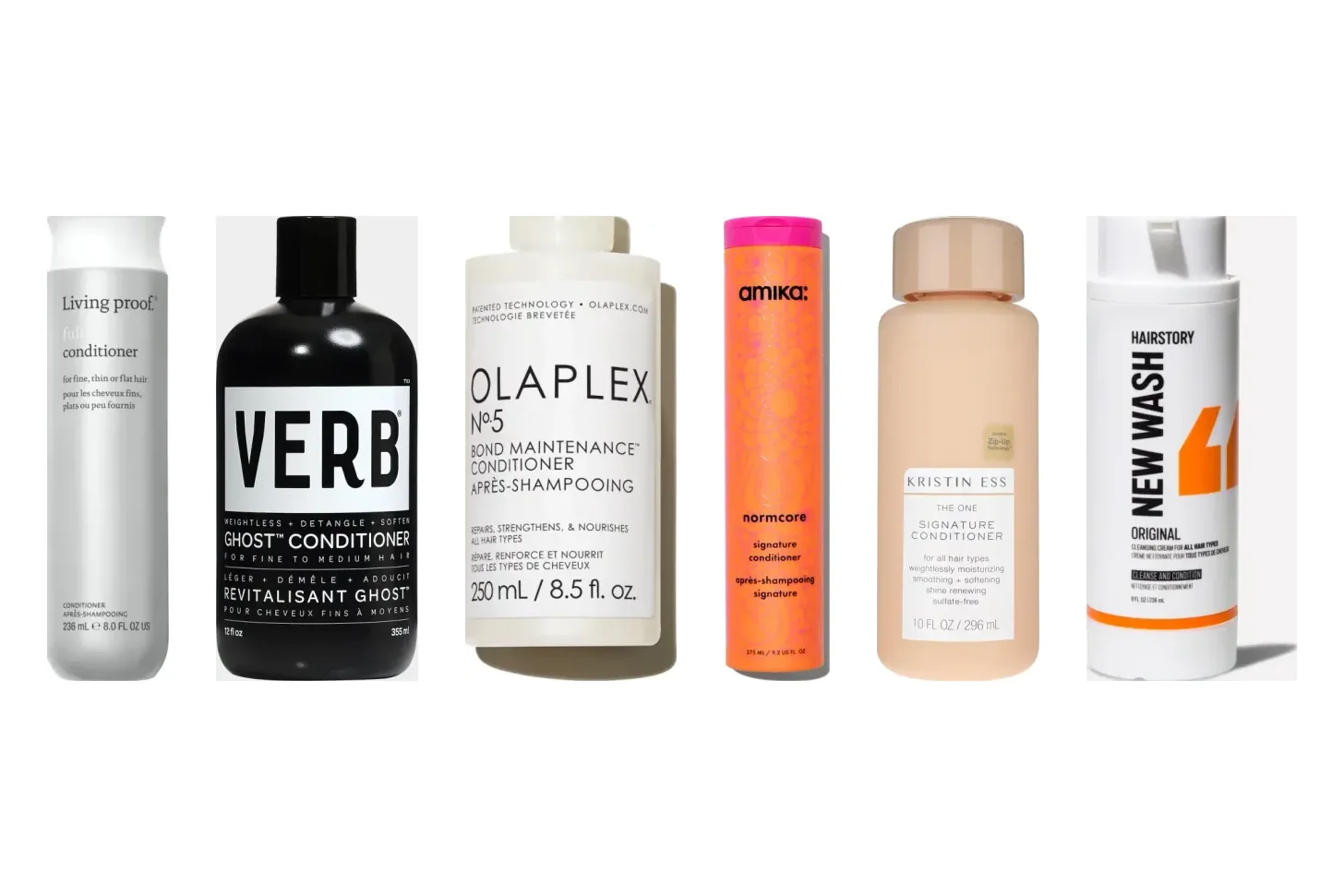
So: "silicone-free" is a formulation claim, not a weight claim. The two get conflated constantly, including by people selling them. Judge a product the only way that's ever worked — by whether your roots are still up four hours later. Conditioners that don't flatten fine hair is picked on exactly that criterion, and what weighs fine hair down lists the heavy ingredients by name.
Buildup: what's true, and what the fix costs
Buildup is real, it's specific to the insoluble family, and it's more visible on fine hair than on anyone else's — not because more accumulates, but because there's less fiber underneath to carry it. The same weight of residue distributed over less hair reads as limp sooner.
The symptoms are recognizable: hair that feels coated rather than dirty, a dullness that shampoo doesn't lift, styling products that suddenly stop working, roots that go flat within hours of a wash, and color that looks muted. If you have hard water as well, the two compound — hard water on fine hair covers the mineral half.
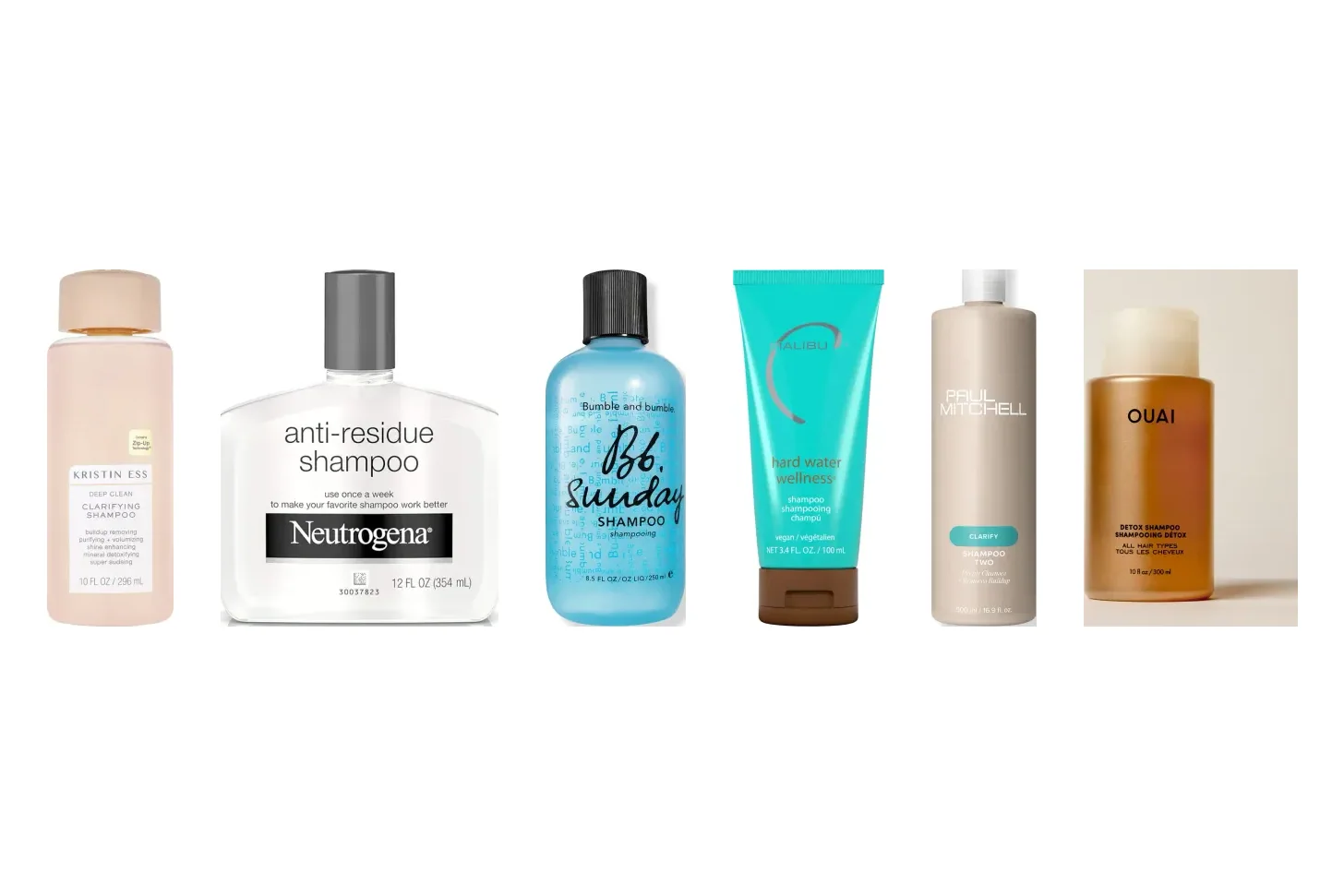
In practice, for fine hair: a clarifying wash every two to four weeks if you use styling products most days, less often if you don't; rotation between a lighter and a richer conditioner rather than committing to one; and no weekly stripping, which trades one problem for a worse one.
When avoiding silicones genuinely is the right call
In the days before color, lightening, or a smoothing service.A film is a barrier, and anything that has to reach inside the fiber works less evenly through one. Clarify a day or two beforehand — see coloring fine hair at home and keratin treatments on fine hair.
If you're running a no-sulfate routine on fine wavy or curly hair.Without a strong surfactant in the rotation, insoluble silicones have no exit. Either keep a clarifying wash in the schedule or stay with soluble and volatile ones — fine wavy hair and thin curly hair.
If your hair feels coated and no product is working.Not a reason to swear off the category, but a reason to clarify now and rotate afterwards.
Not because you're shedding or thinning.There's no good evidence silicones cause hair loss, and looking there costs you the time it takes to find the real cause. Start at fine or thinning? or how hair actually grows.
Not by dropping your heat protectant.Many are silicone-based and work partly because of it. Removing that protection to avoid a film is a bad trade — heat protectants for fine hair.
Not on the ends of long fine hair that's already worn.Old ends need the friction protection more than your roots need the extra half-inch of lift. Put it where it's earned.
FAQ
Not as a category. Which silicone is in the bottle matters far more than whether one is, and the 2025 Skin Appendage Disorders review is direct about the fine-hair case: "For fine or limp hair, volatile or water-soluble silicones are preferable to preserve volume." That's not avoid — it's choose the light ones. Volatile silicones like cyclomethicone and cyclopentasiloxane "evaporate after application, delivering a lightweight finish without leaving behind any residue", and water-soluble ones like dimethicone copolyol "rinse out more effectively". The genuine problem is a heavy water-insoluble silicone high on an ingredients list, used daily and never clarified — and fine hair shows that accumulation sooner, because there's less fiber underneath to carry the same coating.
They coat it. The review describes "a thin film over the hair shaft, effectively reducing friction during combing, preventing moisture loss, and imparting a noticeable shine", and "a uniform, protective layer around each hair strand, which reduces mechanical stress during combing and heat styling while also acting as a barrier against humidity". Every one of those matters disproportionately on fine hair, which tangles readily, breaks at lower force and loses a style the moment humidity rises. What silicones don't do is repair, feed or strengthen — the film is cosmetic and sits on the outside. So a silicone is a very good coat, and the only question is whether the coat is the right weight for the hair wearing it.
Three endings and one prefix. Most silicones end in -cone (dimethicone, amodimethicone), -conol (dimethiconol) or -siloxane (cyclopentasiloxane). Anything with a PEG- prefix has been modified to be water-soluble and rinses away. Position matters as much as presence: ingredients run in descending order of concentration, so a silicone in the top five is a substantial part of the formula while one after the fragrance is a trace. Two shortcuts: if a conditioner lists dimethicone second or third, treat it as a heavy product whatever the front says; and a two-in-one shampoo is essentially a silicone delivery system, since dimethicone "is the main ingredient of the two-in-one shampoos".
No, and this trap catches more fine-haired women than silicones ever did. Take silicone out of a conditioner and the slip has to come from somewhere — usually heavier natural emollients: shea butter, coconut oil, castor oil, cocoa butter, thick fatty alcohols. Those are excellent on coarse, dry or curly hair. On fine hair several are considerably more flattening than the dimethicone they replaced, because they don't evaporate, don't rinse cleanly, and sit as a coating with real mass rather than a molecular-thin film. Silicone-free is a formulation claim, not a weight claim. Judge a product by whether your roots are still up four hours later.
Some do — the insoluble ones. "Prolonged use of water-insoluble silicones, such as dimethicone, can lead to accumulation on the hair shaft," and removal "requires strong surfactants, which can be harsh on delicate or textured hair, potentially leading to dryness and brittleness". So a clarifying wash works, and doing it constantly doesn't. The review's own guidance is rotation: "alternate between silicone-based and silicone-free products, use clarifying shampoos periodically, especially for fine or oily hair." For fine hair in practice: clarify every two to four weeks if you use styling products daily, rotate a lighter and a richer conditioner the rest of the time, and don't strip weekly.
There's no good evidence that silicones cause hair loss or block follicles, and the claim travels much further than its support. Silicones sit on the fiber rather than being absorbed, and conditioner belongs on the mid-lengths and ends rather than the scalp anyway — which is also the fine-hair advice for volume reasons. What buildup genuinely does is make hair feel coated, limp and dull, and make a scalp that already greases feel dirtier sooner, because residue and sebum accumulate together. That's a cosmetic problem with an easy fix, not a growth problem. If you're shedding or thinning, silicones aren't a plausible cause and looking there costs you time.
For a short window beforehand, yes — one of the few places an outright avoid is right. A heavy silicone film is a barrier, and barriers interfere with anything that needs to reach inside the fiber: color, lightener, a keratin or smoothing service, and to a lesser degree a bond builder. Salons handle it by clarifying first, which is why a colorist may ask you to arrive washed but unstyled. The practical rule is a clarifying wash a day or two before a chemical service, and no silicone-heavy leave-ins in between. Outside those windows there's no need to avoid them — and dropping your heat protectant to do so costs more than it saves.
They behave nothing alike despite the similar names. Cyclomethicone and cyclopentasiloxane are volatile — they "evaporate after application, delivering a lightweight finish without leaving behind any residue", which is why a serum can feel weightless a minute later, and it makes them the fine-hair-friendly option. Dimethicone is the durable one, "the most widely used silicone in hair care industry", water-insoluble, so it stays and can accumulate. Amodimethicone is the clever one: amino-functional silicones "selectively bind to the most damaged areas of the hair shaft through electrostatic interactions" — so it concentrates where the hair is worn instead of blanketing everything, which on fine hair means conditioning for the ends without weight at the roots.
Fourteen years in fine-hair care, eight of them behind the chair. Megan would rather teach you to read the back of the bottle than hand you a rule about the front of it.
Images in this article are AI-generated illustrations, not photographs of real clients or results. See our image policy.
Results vary with hair type, density, and growth patterns. This guide is educational and not a substitute for an in-person consultation with a licensed stylist.
Get the good hair intel
One honest, stylist-written guide in your inbox each week. No hype.

 MH
MH