Reviewed by Tara Sullivan · Updated October 2026 · 9 min read
Butterfly bangs are a long, layered fringe that starts around the cheekbones and flicks out and back from the face, like a pair of wings. They are the front of the butterfly cut, worn without the rest of its layers.
On thin hair they are a good way to get volume at the face without cutting layers into the whole head. Here are 12 ways to wear butterfly bangs on fine hair, and how they differ from curtain bangs.
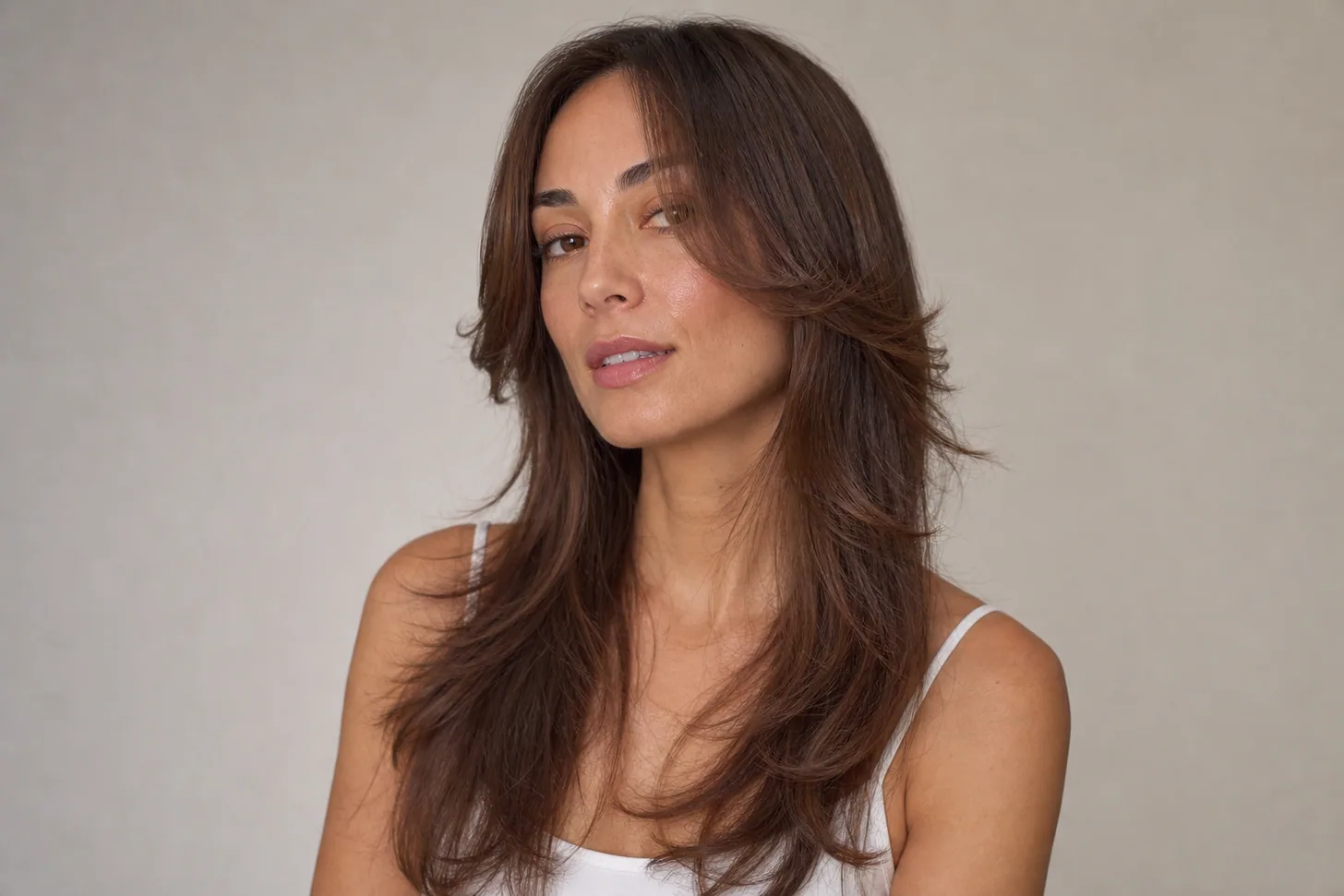
butterfly bangs on fine light-brown hair, long layered face-framing fringe starting at the cheekbones and flicking out and back from the face, center part, long straight hair, woman in her 20s, front view
Chair-side note
Butterfly bangs are what I offer clients who want the butterfly cut but have hair too thin for layers all over. All of the shape goes at the front, and the length behind stays dense.
I cut the shortest piece at the cheekbone and blend down to the jaw. Any shorter and fine hair won't flick back; it falls flat onto the face.
SB
— Simone Baptiste, Senior Stylist
What are butterfly bangs?
Butterfly bangs are cut in layers from the cheekbone down to the jaw or collarbone, parted in the center or just off it. They are blow-dried up and away from the face, so the ends flick outward.
They came out of the butterfly haircut, which adds short layers around the face and crown. Worn alone, the fringe gives the same face-framing volume with much less hair taken from the head.
Butterfly bangs vs curtain bangs
Curtain bangs start higher, around the brows or upper cheekbones, and sweep to each side in a curve. Butterfly bangs start lower and are cut in more layers, so they lift and flick away from the face rather than sweeping across it.
On fine hair, butterfly bangs are often easier: they are longer, so they hold a shape better and grow out into face-framing layers within a few weeks.
Classic butterfly bangs
The fringe itself, from short to long. Start with the cheekbone version if this is your first fringe.
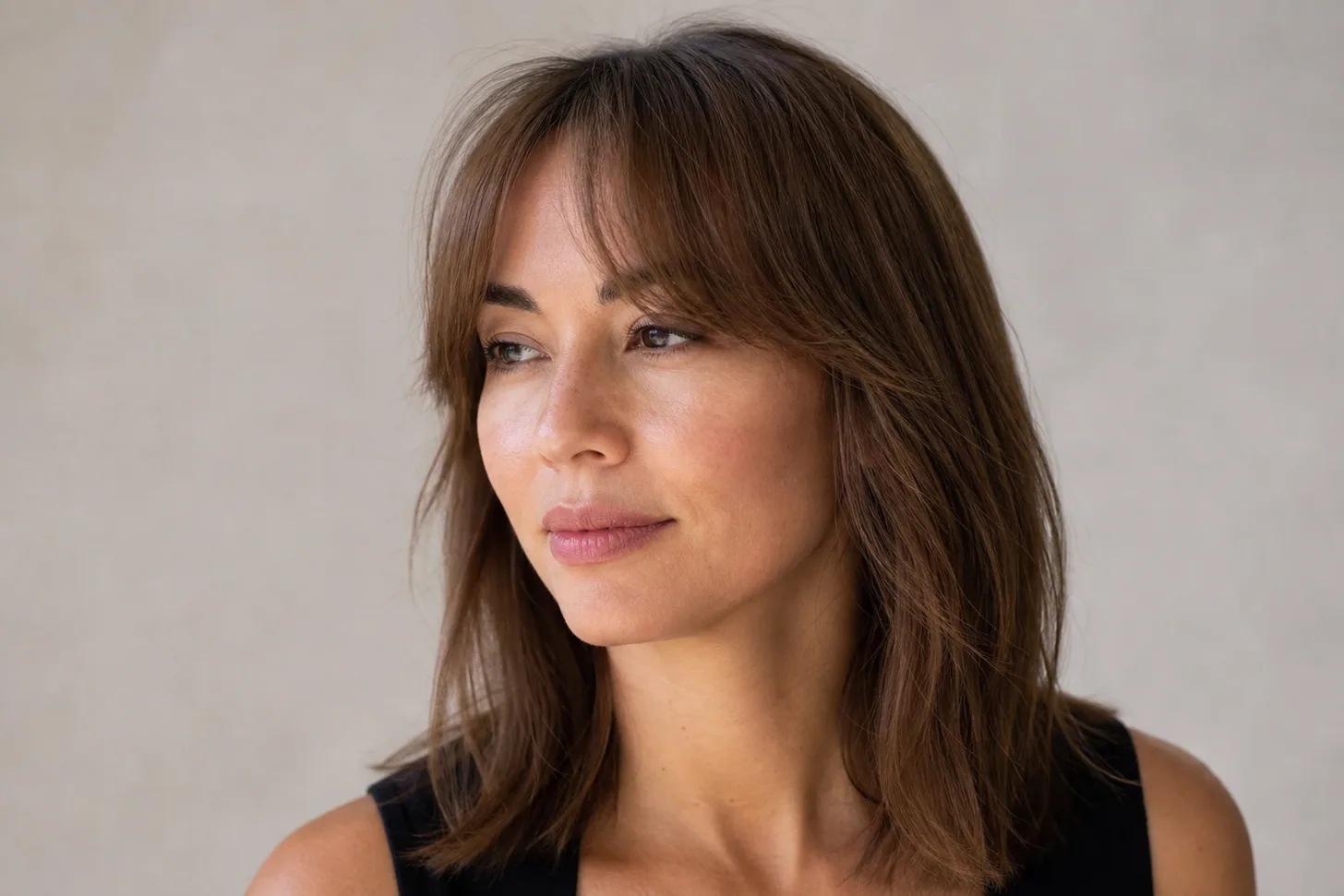
classic butterfly bangs on fine dark-brown hair, layered fringe from the cheekbones to the jaw flicked out and back, center part, long straight hair, woman in her 20s, front view
1
Classic butterfly bangs
Layers from the cheekbones to the jaw, flicked out and back. It's the standard shape and suits almost every face.
Blow-dry each side away from the face with a round brush.
short butterfly bangs on fine dark-blond hair, the shortest layers starting just below the eyes and flicking out at the cheekbones, center part, shoulder-length hair, woman in her 20s, front view
2
Short butterfly bangs
A little shorter, starting just below the eyes. It gives more volume at the face but needs styling every day.
Don't go shorter than this on fine hair, or the fringe won't lift.
long butterfly bangs on fine honey-blond hair, layered fringe from the jaw to the collarbone flicked softly back, center part, long hair, woman in her 30s, front view
3
Long butterfly bangs
Starting at the jaw and blending to the collarbone. It is the easiest version to wear and to grow out.
Air-dry it pushed back from the face, then tidy it with a few minutes of blow-drying.
side-parted butterfly bangs on fine medium-brown hair, deep side part, longer wing sweeping back on one side, shorter wing on the other, long hair, woman in her 30s, front three-quarter view
4
Side-parted butterfly bangs
A deep side part, with one longer wing and one shorter. The side part puts more hair on top, which helps if your part is widening.
Flip the part every few weeks to keep the root lifted.
Butterfly bangs with a lob, long hair or a bob
The fringe looks different with every length behind it. It suits lengths from the jaw down; on a short bob, the fringe and the hem end up at the same point.
collarbone lob with butterfly bangs on fine light-brown hair, layered fringe flicking out from the cheekbones, blunt dense hem, woman in her 30s, front view
5
Lob with butterfly bangs
A blunt collarbone lob with the fringe flicking out above it. The heavy hem keeps the ends dense, and the bangs add volume at the face.
long one-length straight hair past the shoulders with butterfly bangs on fine dark-brown hair, layered fringe flicked back, no other layers, woman in her 20s, front view
6
Long one-length hair with butterfly bangs
Long hair with no layers except the fringe. It is the best way to get the butterfly look on thin hair, because the lengths stay full.
Keep the ends trimmed blunt.
long hair with soft long layers and butterfly bangs on fine dark-blond hair, layered fringe flowing into face-framing layers, voluminous blow-out, woman in her 20s, front three-quarter view
7
Butterfly bangs with long layers
The fringe flows into soft long layers. It is closer to the full butterfly cut and needs fine hair that isn't too thin.
jaw-to-shoulder long bob with butterfly bangs on fine auburn hair, fringe flicking out at the cheekbones, soft bend at the ends, woman in her 30s, front view
8
Long bob with butterfly bangs
A long bob just past the jaw, with the bangs flicking out above the ends. It is the shortest length that still works.
Turn the ends of the bob under and the bangs out.
Butterfly bangs by finish and age
Blow-dried, air-dried, pinned back or worn after 50, the same fringe adapts.
bouncy blow-out butterfly bangs on fine light-brown hair, fringe rolled up and back with a large round brush into big soft wings, voluminous long hair, woman in her 20s, front view
9
Blow-out butterfly bangs
Rolled up and back with a round brush into big, soft wings. It's the most dramatic finish.
Set each side with a velcro roller while you do your makeup.
air-dried wavy butterfly bangs on fine wavy light-brown hair, natural bends flicking the layered fringe away from the face, loose waves, woman in her 30s, front view
10
Air-dried wavy butterfly bangs
Natural waves flick the fringe away from the face without a blow-dry. Wavy fine hair is the easiest texture for this fringe.
Scrunch in a little light mousse before air-drying.
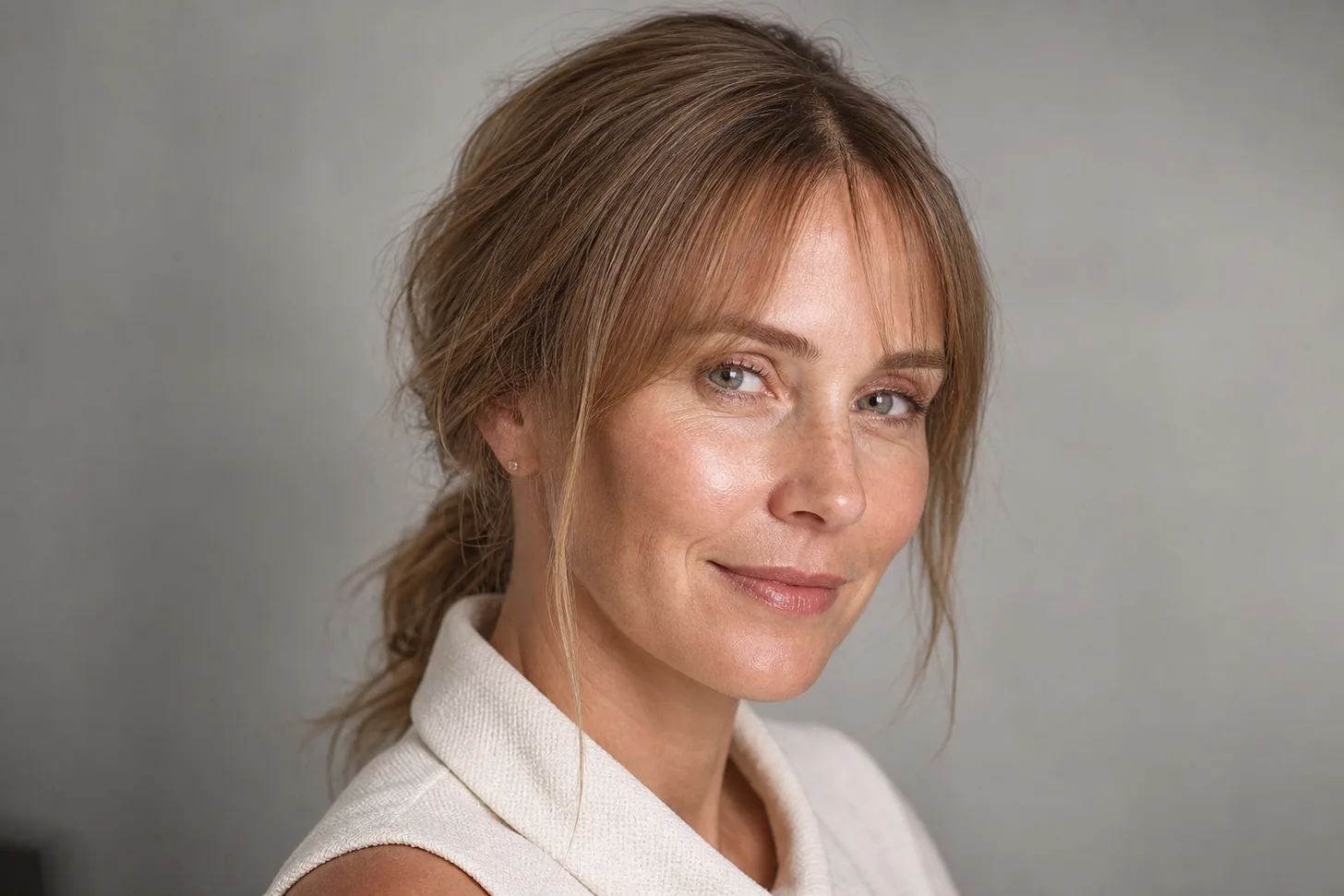
soft butterfly bangs on fine light-brown hair with gray blending, layered fringe from the cheekbones flicked back, shoulder-length layered hair, woman in her 50s, front view
11
Butterfly bangs over 50
Starting at the cheekbones, the fringe lifts the face and draws the eye up. It's softer than a full fringe, which suits fine hair after 50.
butterfly bangs on fine dark-brown hair twisted back from each side and pinned with small clips at the crown, long hair down, woman in her 20s, front three-quarter view
12
Butterfly bangs pinned back
Twist each side back and clip it at the crown. It's the easy option on a day you can't style the fringe.
While the fringe is damp, blow-dry the roots up and back. Then wrap each side around a medium round brush, rolling away from the face, and cool it before letting go.
Say: "I'd like butterfly bangs, with the shortest layer at my cheekbones blending down to my jaw. Please keep the rest of my length full, and don't use thinning shears or a razor."
Bring photos of butterfly bangs on fine hair, so your stylist knows you want the fringe, not the whole butterfly cut.
When butterfly bangs may not suit you
Your hair is shorter than your jaw. The fringe and the hem end up at the same length. Try curtain bangs instead.
You never use a hairdryer. Straight fine hair falls flat without a quick blow-dry. Long butterfly bangs air-dry best.
Your hair is very thin at the front. Layers at the face take hair from where it is thinnest. A side part may cover more.
You want coverage at the forehead. Butterfly bangs leave the forehead open. A bottleneck fringe covers it.
FAQ
Butterfly bangs are a long, layered fringe that starts around the cheekbones and flicks out and back from the face like wings. They are the front of the butterfly cut, worn on their own.
Yes. They add volume at the face without cutting layers through the whole head, so the rest of your hair stays full.
Curtain bangs start higher and sweep to each side in a curve. Butterfly bangs start lower, are cut in more layers and flick away from the face.
Blow-dry the roots up and back while damp, then roll each side away from the face on a round brush and let it cool. Finish with a light, flexible hairspray.
Yes. Butterfly bangs are only the face-framing layers at the front. The rest of the hair can stay one length.
They need a quick blow-dry most days and a trim every six to eight weeks. They grow out easily into face-framing layers.
Eleven years behind the chair, specializing in short shapes and fine-hair texture. Simone believes the best haircut is the one you can style yourself in ten minutes.
Results vary with hair type, density and growth patterns. Haircut guidance is not a substitute for an in-person consultation with a licensed stylist, and sudden or heavy hair loss is worth raising with a doctor.
Hairstyle images in this guide are AI-generated illustrations, not photos of real clients or results. See our image policy.
Get the good hair intel
One honest, stylist-written guide in your inbox each week. No hype.

 SB