Reviewed by Tara Sullivan · Updated July 2026 · 10 min read
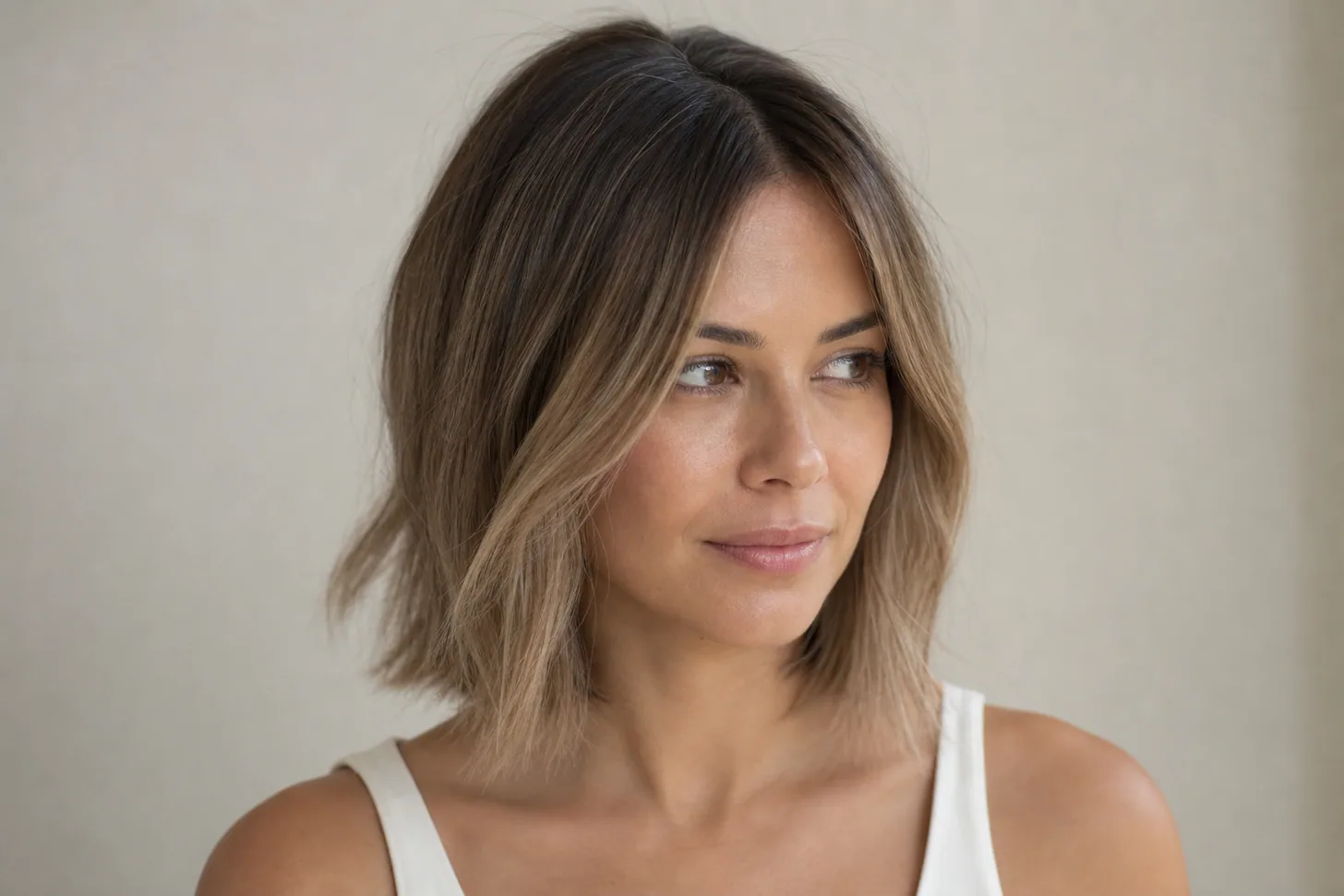
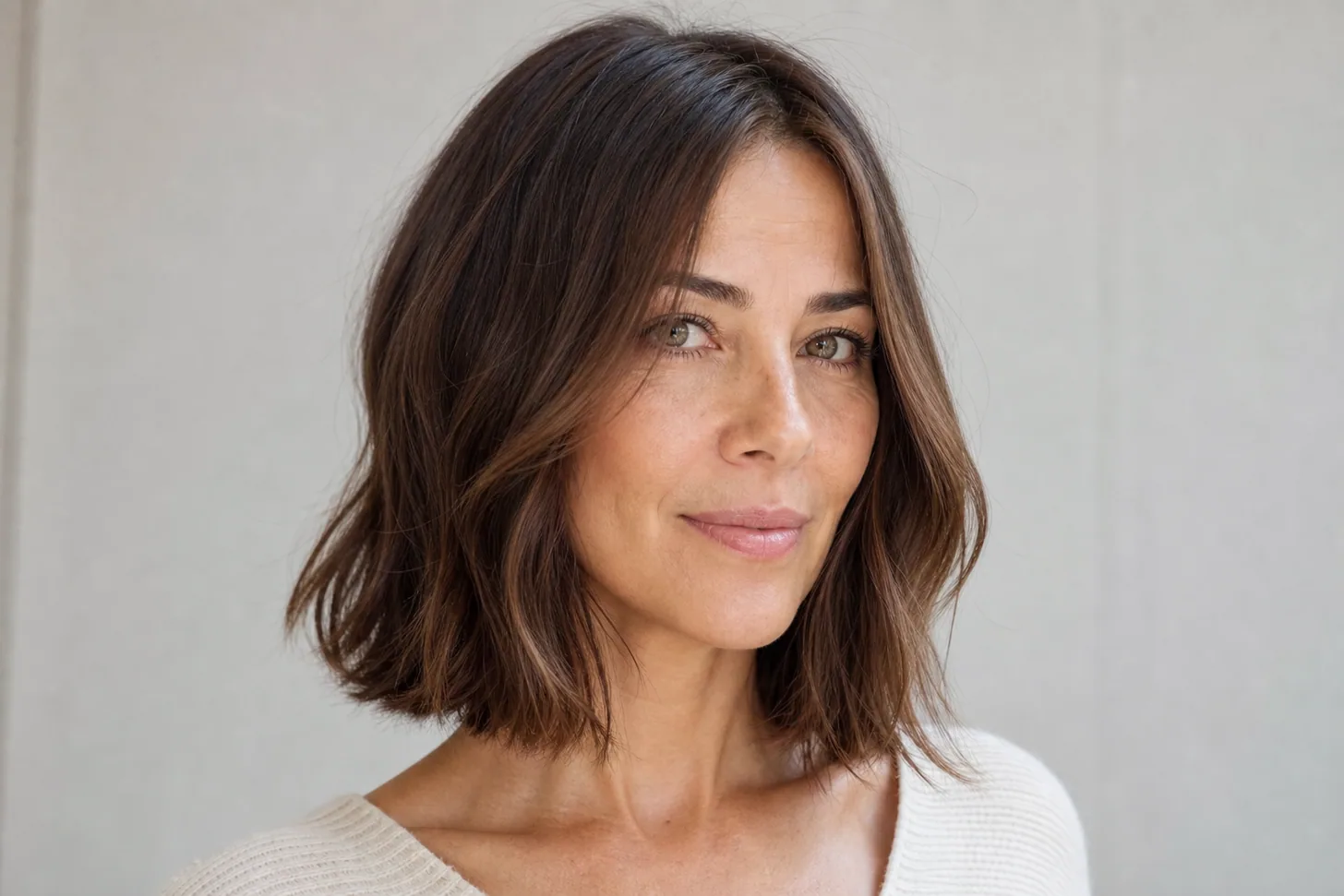
Balayage that flatters fine hair looks almost undecided in the salon photo — and that is the point. The versions that make low-density hair read fuller keep the lift within about two levels of the natural base, keep the root deliberately deeper than the lengths, and concentrate brightness around the face rather than across the whole head.
The bright, high-contrast balayage that photographs so well belongs to models with twice the density; on fine hair the same formula separates into stripes and the gaps between them show scalp. Below are 14 balayage looks that work on fine and thin hair — grouped by shade family, then by length, with one popular version I would talk you out of — plus what to say in the chair.
Fine-haired clients bring me the same photograph roughly once a week: long, thick, expensively bright balayage, usually shot on a balcony. What I have learned not to do is say no. Instead I ask which part of it she loves, and it is almost never the brightness — it is the way the hair looks like it has depth behind it.
That I can give her. I paint fine, close sections starting well below the root, I leave the whole under-section alone, and I put the brightest pieces where her face is. She goes home with maybe a third of the lift in the photo and tells me it looks like more hair. Density is the illusion people are actually buying; brightness is just the thing they know how to ask for.
PN
— Priya Nair, Master Colorist
Three rules that decide whether balayage suits fine hair
Keep the contrast low. One to two levels lighter than your base blends into the hair around it; three or more separates from it. Every look below assumes the low number, and that single setting matters more than which shade family you choose.
Keep the root deep. A shadow at the root gives your eye something to read as the hair being denser at the scalp than it is, and it is the difference between color that hides a widening part and color that advertises it. It also means grow-out is a blur, not a line.
Keep the underneath dark. The instinct is to lighten everything you can see; the trick is to lighten only the top layer and the face frame and leave the sections beneath them alone. Hidden depth is what the eye interprets as more hair when the top layer moves. Whether you are working with fine strands, low density, or both changes how much brightness you can carry — settle that first in fine hair versus thin hair.
Soft, low-contrast balayage
The base-adjacent versions: enough variation to build shadow, not enough to separate. If you take nothing else from this gallery, take one of these five to your colorist.
shoulder-length fine hair in soft bronde balayage, low contrast between base and painted pieces, natural daylight
1
The Bronde Balayage
The single most requested version in my chair and the one that suits the most fine hair: a base sitting between dark blonde and light brown, painted a level or two brighter through the mid-lengths and ends. Because the two tones are so close, the eye never resolves individual pieces — it just registers depth. Best for anyone whose natural color is a mousy dark blonde, since it works with the base rather than fighting it.
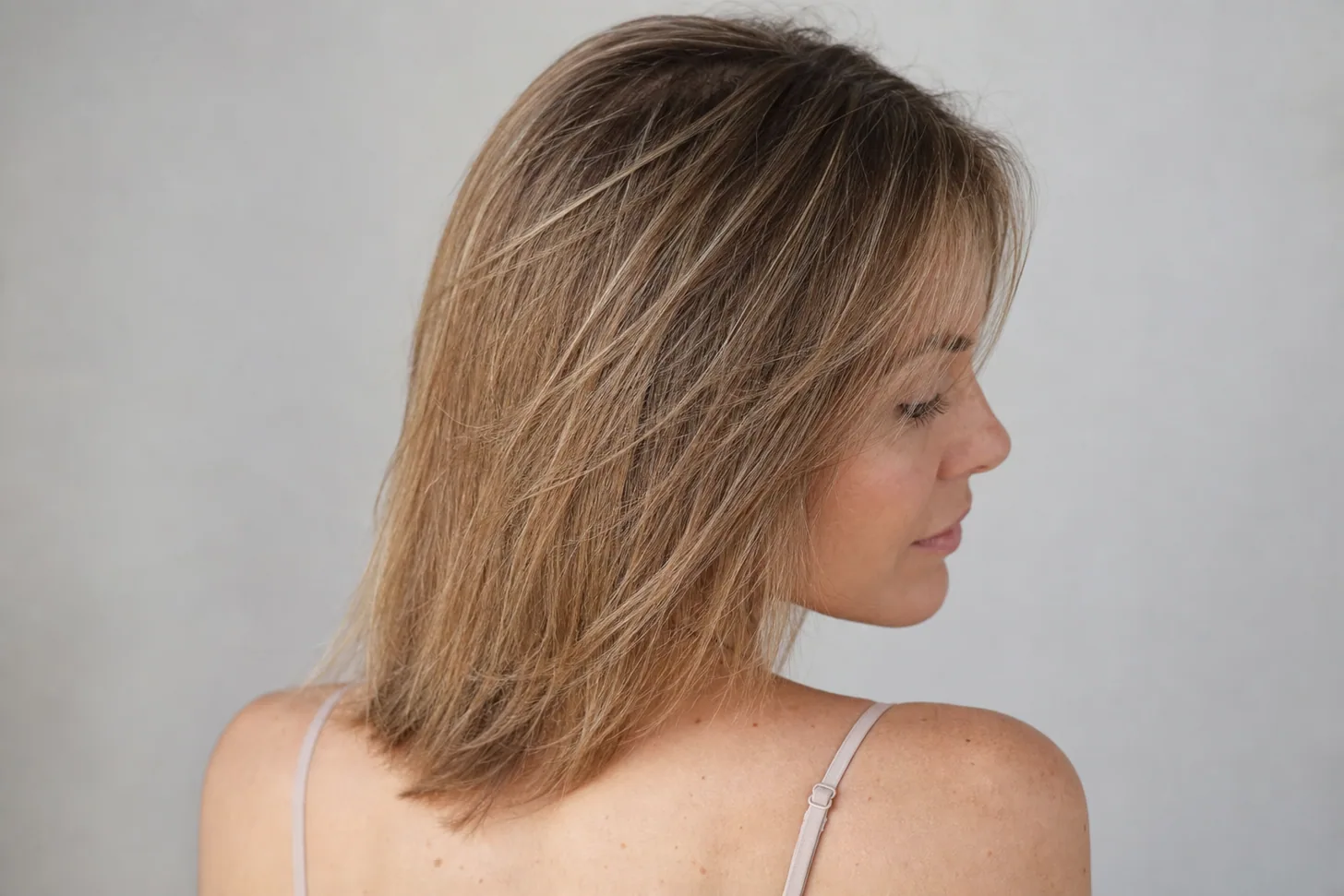
fine hair with a deliberately deeper shadow root melting into lighter painted lengths, back view showing the smooth transition
2
The Shadow-Root Balayage
Here the colorist deliberately deepens the first two or three inches at the scalp before or after painting the lengths, so the root is the darkest thing on your head. On low-density hair this does a specific job: it puts contrast exactly where the scalp would otherwise show through, and it makes the part look narrower. It is also the reason you can go three to four months between appointments — there is no line to chase, only a soft gradient that grows.
fine hair with two brighter face-framing sections against a deeper base, front view, subtle money piece scaled for fine hair
3
The Fine-Hair Money Piece
Two brighter sections at the front against a base that stays deep everywhere else — the one place high contrast earns its keep, because it is contained and intentional. Ask for it at half the width you have seen on social media; on fine hair a wide bright panel at the temples reads as a stripe, while a narrow one reads as light hitting the face. It is also the cheapest color appointment that changes how you look in every photograph.
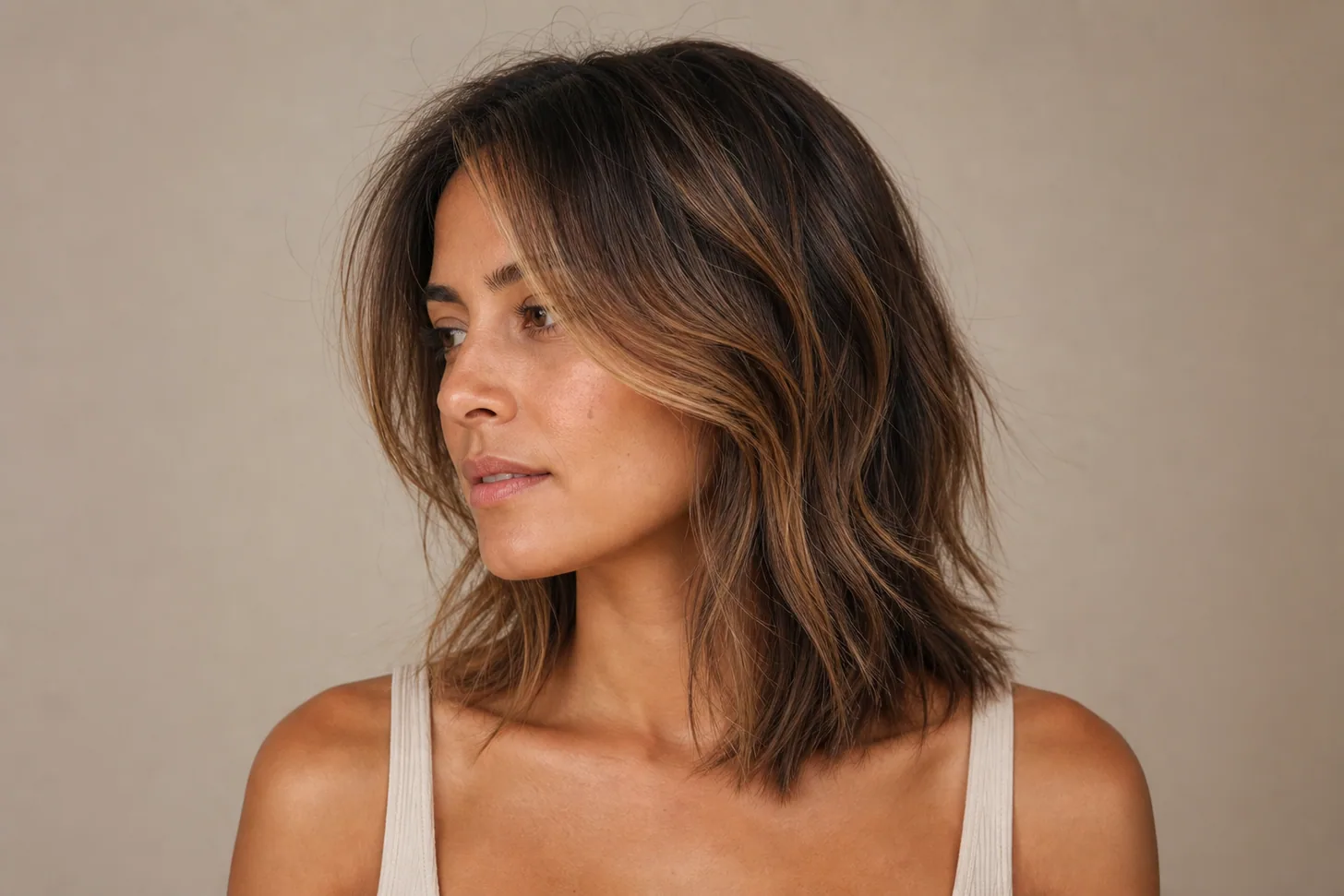
chestnut brown fine hair with warm caramel balayage pieces, low contrast, soft movement through the mid-lengths
4
Caramel on Chestnut
The brunette answer to bronde, and a better option than most brunettes are offered. Warm caramel pieces painted through a chestnut base give brown hair the shadows it needs without lifting far enough to expose the orange stage that brunettes fear. Warmth also helps here for a reason nobody mentions: warm tones advance visually and cool tones recede, so a warm dimension sits forward and makes the hair look like it occupies more space.
fine dark-blonde hair with sandy blonde balayage through the ends, sun-kissed and blended, side view
5
Sandy Blonde Over a Dark Blonde Base
For hair that is already blonde-ish and looks flat because every strand is the same shade. Painting a sandy, slightly warmer blonde through the surface and ends restores the variation that most people had naturally as children and lost in adulthood. Two levels of lift is genuinely enough — this is the look that people over-lift, and the moment the base disappears the fullness illusion goes with it.
Balayage by length
Length changes the technique more than most people realize, because a gradient needs distance to develop over. The shorter the hair, the finer and higher the painting has to be — and the more the whole thing depends on the colorist's hand rather than the formula.
chin-length blunt bob on fine hair with fine high-placed balayage through the top layer, deep under-section visible at the nape
6
Balayage on a Chin-Length Bob
On a bob the painting has to start higher — around the cheekbone rather than the collarbone — or there is no room for the gradient to blend before the hair simply ends. Keep the under-section deep and the perimeter solid, so the blunt line that gives a fine bob its density is not undermined by pale, wispy-looking ends. Pairs best with the weight-heavy shapes in our bob gallery for fine hair.
collarbone-length lob on fine hair with soft balayage on the surface layer and noticeably darker hair underneath
7
The Lob With a Deep Underneath
My default recommendation for fine hair at collarbone length, because the lob already has weight at the perimeter and this colors with that rather than against it. Only the surface layer and the face frame are painted; everything beneath stays at base level. When the hair moves you catch two tones at once, which is exactly the impression of layered density that a single-process color can never produce. See the shapes it suits in our lob gallery.
mid-length fine hair with point-cut layers and balayage placed to follow the layers, showing dimension where the layers fall
8
Balayage Placed to Follow Layers
A good colorist will ask to see your hair dry and unstyled before painting a layered cut, because the brightness needs to land where the layers actually fall rather than in a generic pattern. Done this way, the color exaggerates the shape the stylist built — each layer edge catches light and the cut reads as more textured than it is. Ask your colorist and your stylist to talk, or book them on the same day.
long fine hair with balayage that stops short of the very ends, keeping the ends from looking sheer, back view
9
Long Balayage That Doesn't Go Sheer at the Ends
Long fine hair thins toward the ends by nature, and saturating those ends with lightener is what turns them translucent. The version that works keeps the brightest concentration through the mid-lengths and eases off in the last two inches — the reverse of standard balayage saturation. It looks unusual on the foil-free painting table and completely normal on a head of hair.
short fine pixie cut with a few hand-painted brighter pieces through the fringe and crown, close crop view
10
Micro-Balayage on a Pixie or Crop
Not every colorist offers it and not every colorist should. On a crop there is no gradient — there are only a handful of hand-painted pieces through the fringe and the crown, placed to catch light where the hair stands up. Done well it gives a short fine cut the illusion of texture and movement; done heavily it looks like a frosted tip from 1998. Ask to see the colorist's own photographs of short balayage before booking.
Balayage for specific situations
Three cases where the standard brief needs adjusting: hair that is going gray, hair that suits cool tones, and hair that needs a root shadow built into the technique rather than added afterward.
fine graying hair with soft blonde balayage blending the grays rather than covering them, mature woman, natural light
11
Gray-Blending Balayage
Instead of covering grays with permanent color every four weeks — a schedule that punishes fine hair — this uses painted lightness to make the grays read as highlights. The grays stop being an intrusion and become part of the dimension, and the regrowth stops being an emergency. It is the single most practical color decision for fine hair going gray, and it pairs naturally with the low-maintenance shapes in our gallery for mature fine hair.
fine hair in cool beige balayage over a neutral ash base, soft and blended, showing tone without brassiness
12
Cool Beige on an Ash Base
Cool tones read as expensive and photograph beautifully, and they come with a maintenance bill that is worth knowing about in advance: fine hair is often more porous than it looks, so toner fades from it faster, and a cool beige that looked perfect on Saturday can look brassy in five weeks. If you love this look, budget for a gloss every six to eight weeks — and if the warmth is arriving faster than that, read brassy fine hair before you book, because a fade that beats a fortnight is usually your water rather than your colorist. If that sounds like too much, take the warm version instead and enjoy it fading gracefully.
fine hair with teasylight-balayage hybrid showing a soft graduated root and brighter mid-lengths, no visible regrowth line
13
The Teasylight Hybrid
The colorist backcombs each section at the root before painting, so the pushed-back hair shields the scalp area and the lift graduates from nothing at the root to full brightness through the lengths. You get the shadow root built into the service rather than added as a second step. The honest limitation is mechanical: backcombing fine hair is rough on it, so this is a technique for a light-handed colorist and not one to repeat every couple of months.
And one to skip
Every gallery on this site names the version that does not work, because that is the part the inspiration photos leave out.
high-contrast ombre balayage on fine hair showing a visible horizontal demarcation and sheer pale ends, illustrating what to avoid
14
The High-Contrast Ombré Balayage — skip this one
Dark on top, bright blonde from the mid-lengths down, with a visible horizontal transition. On dense hair it is dramatic; on fine hair it does three unhelpful things at once. The transition line has no hair to hide in, so it reads as a band. The heavily lightened lower half goes translucent because there was not much density there to begin with. And the dark upper half, undiluted by any dimension, sits flat against the scalp. If you love the contrast, take it as a money piece instead, where it stays contained.
What to ask for at the appointment
Say: "My hair is fine and I want it to look fuller rather than lighter. Can we stay within two levels of my natural base, keep a shadow at the root, paint fine close sections through the top layer and around my face, and leave the under-sections deep? Please add a bond-builder, and I would rather come back in four months than in six weeks."
Two questions to ask back. "How many levels lighter is this than my base?" — you want a number, and you want it to be one or two. And "Will you paint the under-sections?" — the answer you want is no.
Bring a photo by all means, but say plainly that you want your hair's version of it; the reference model very likely has twice your density, and the same placement on your head produces a different picture. The wider vocabulary for these conversations is in the exact words to ask for a fuller-looking haircut.
Living with it afterward
Balayage's real gift to fine hair is the appointment schedule: three to four months between lightening sessions, with a gloss at six to eight weeks to keep the tone honest. Fewer lifting sessions is the whole game, because the cost to a fine strand is cumulative and it does not reverse. If your colorist has offered foilyage instead, the two techniques compared on fine hair explains what changes.
If your painted pieces are the thing you notice going brassy first, that is normal on porous fine ends and it is a toner problem, not a shampoo problem. And if the tone has landed somewhere you did not intend, do not reach for a box to fix it — read why correction takes more than one visit before you make it a bigger job. On the underlying worry about damage rather than tone, does color thin your hair separates breakage from actual loss.
When balayage isn't your best move
You need to go several levels lighter, quickly. Open-air painting cannot get you there in one sitting. That is a foilyage conversation, staged over visits — or a reason to reconsider how light you truly need to be.
Your part is widening or the crown is see-through. Any lightening at the top makes it more visible. Root shadow and lowlights first; brightness only around the face.
Your hair already stretches noticeably when wet. That is over-lifted fine hair. Glosses and repair for a few months before any more lightener.
You have box-dyed at home in the last few months. Painted lightener lifts unpredictably over box color and can go patchy or orange. Tell your colorist exactly what you used — see at-home color for fine hair.
You want a change every eight weeks. Balayage rewards patience and punishes frequency. If you like frequent change, glosses and toners are the safer way to get it.
FAQ
It's one of the better color choices for fine hair, for two reasons. Hand-painted placement lets the colorist put brightness only where it will be seen and leave depth everywhere else, and that light-against-dark contrast is what makes low-density hair read as fuller than it is. It also grows out as a soft blur rather than a line, so you need fewer lightening appointments — which matters more on fine hair than on any other type, because the damage from lifting is cumulative. The condition is restraint: soft placement within a couple of levels of your base, not a bright all-over lift.
Yes, when the contrast is kept low and the root is kept deep. Depth is what your eye reads as volume — a flat, single shade gives it no shadows to interpret, while soft variation suggests layers of hair sitting behind each other. The failure mode is the opposite of what people expect: too much lightening, not too little. Once the whole head has drifted pale there's no contrast left, and pale hair over a pale scalp is the least forgiving combination there is for anyone with low density.
Low-contrast, root-shadowed, and concentrated around the face and the top layer. In practice that means a bronde or soft caramel rather than a bright blonde, painted starting an inch or two below the root, with the under-sections left deliberately deeper. Ask for fine, close-together painted sections instead of wide ones — the wider the section, the more it separates into a visible stripe, and a stripe on a fine head draws the eye to the gap beside it rather than to the hair.
Any lightening opens the cuticle and costs the strand something, and fine hair has less structure to spare than coarse hair. Balayage is at the gentler end of the scale because it's applied in the open air rather than wrapped in foil, it's usually kept off the root, and it's repeated less often. It isn't damage-free. Ask for a bond-builder in the formula, keep the lift to a couple of levels, and treat a spongy, stretchy feel in wet hair as the signal to stop lifting and switch to glosses for a few months.
Every three to four months for the painting itself, with a gloss or toner at roughly six to eight weeks to keep the tone from going brassy. That long gap is balayage's main advantage on fine hair: there's no hard regrowth line to chase, so you're not back in the chair every six weeks adding cumulative damage. If your color is forcing you back sooner than three months, the placement is starting too close to the root for your hair.
You can, but the technique changes and not every colorist enjoys it. There's less length for the gradient to develop over, so the painting has to be much finer and start higher, and the margin for error is small — on a chin-length bob a misplaced bright section has nowhere to blend into. Ask specifically for soft, fine painted pieces through the top layer and around the face, with the under-section left deep. On a pixie, a few hand-painted pieces through the fringe and crown do more than a full head of anything.
Twelve years coloring at a high-end studio, now a Redken-certified educator who trains stylists in balayage, foilyage, and color correction. Priya's rule for fine hair: the goal is dimension, not maximum lift.
Images in this article are AI-generated illustrations, not photographs of real clients or results. See our image policy.
Results vary with hair type, density, and growth patterns. This guide is educational and not a substitute for an in-person consultation with a licensed stylist or colorist.
Get the good hair intel
One honest, stylist-written guide in your inbox each week. No hype.

 PN
PN