Reviewed by Tara Sullivan · Updated August 2026 · 11 min read
On fine hair, the pigment in a purple shampoo is almost never what goes wrong — the detergent and the frequency are. Toning shampoos are built to clean hard enough to let violet sit on the cuticle, fine hair has less cortex to absorb that treatment, and dry fine hair turns porous.
Porous hair loses tone faster, which sends you back to the bottle sooner, which dries it further: used three or four times a week, purple shampoo accelerates exactly the brassiness it's sold to fix. So the picks below are chosen on two things most roundups ignore — how gentle the surfactant system is, and whether the brand tells you how to dilute and time it.
Six by job: the lightweight everyday one, the one for blonde hair that's also fragile, the budget pick that comes with its own dilution instructions, the professional-strength bottle that will absolutely turn fine hair lilac if you treat it casually, a blue one for the people whose problem is orange rather than yellow, and the format that suits fine hair better than shampoo does.
Every product here is chosen independently, on the merits — what genuinely suits fine, thin hair. Links go to each brand's official page, and we don't take payment for placement. Price tiers are rough guides because prices change.
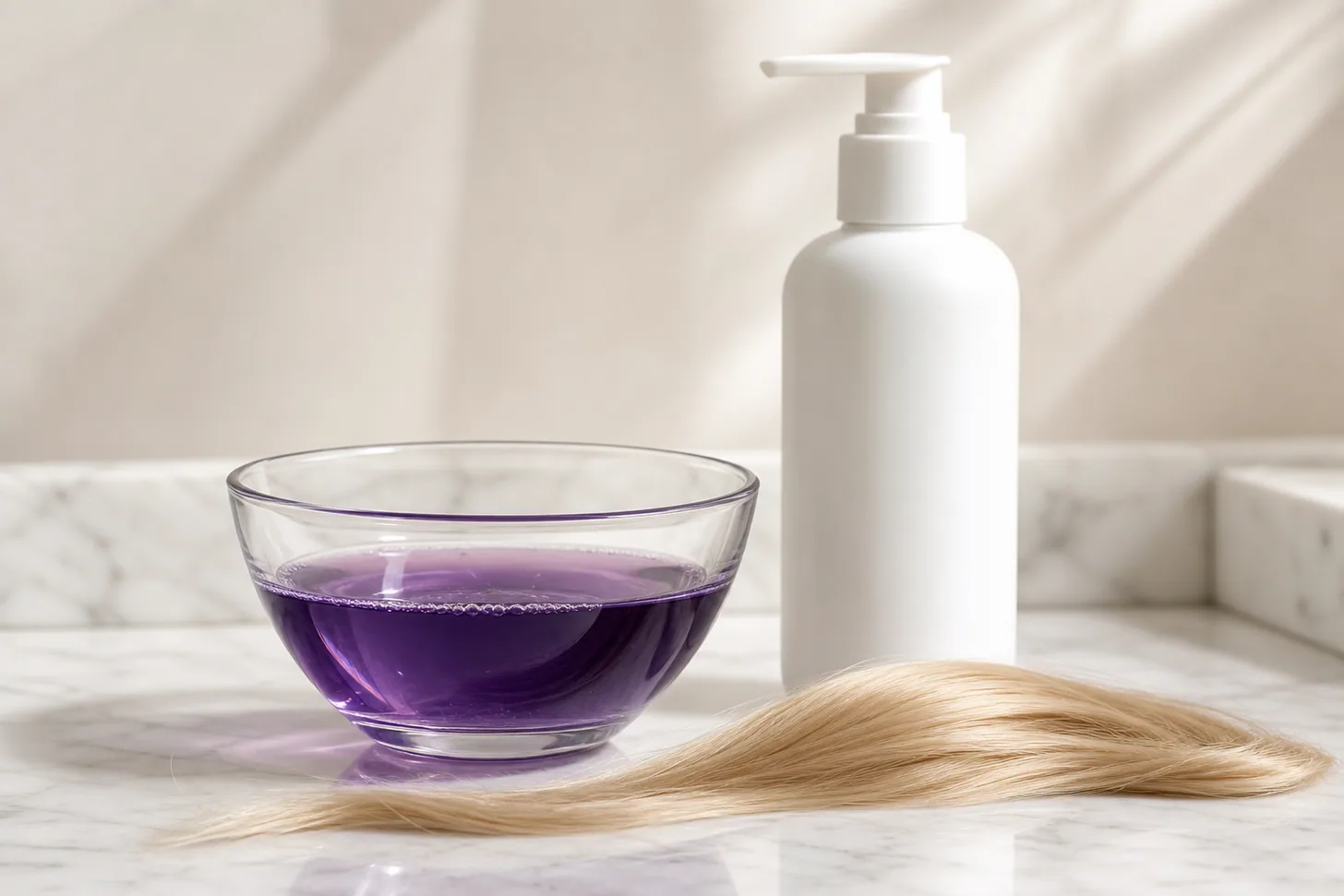
Diluted, timed and placed on the ends: the three things that decide whether this works on fine hair.
What purple shampoo does — on blonde hair, and on brown
Purple shampoo does one thing: it deposits a small amount of violet pigment on the outside of the hair while it washes. It does not lighten, lift, strip or remove anything, and it does not change the color underneath — which is why a bottle that promises to "brighten" is describing an optical effect, not a chemical one.
The whole mechanism is color opposition. Violet sits opposite yellow on the color wheel, so violet pigment laid over yellow cancels it and the hair reads cooler and cleaner. That is the entire product.
Which means what it does depends completely on what color your brass actually is, and that is where most disappointment starts. Hair that was lifted properly and went pale fades toward yellow, and purple is exactly right for it: the yellow drops out and the blonde looks brighter, not lighter.
Hair that started darker — brunette, dark blonde, most highlighted light-brown — does not fade to yellow at all. It fades to orange, and violet is not orange's opposite. Laid over orange, purple pigment does not neutralize it; it sits on top and muddies it, which reads as dull, slightly grey-brown, and flat.
That is why purple shampoo on brown hair so often appears to do nothing, or worse than nothing. The opposite of orange is blue, and a blue toning shampoo is the correct tool there — there is one among the six picks below, and brassy fine hair has the ten-second daylight test that tells you which of the two you are actually looking at.
Two more things it does that nobody advertises. On fine hair the deposit builds faster than it does on coarser hair, because there is less strand to spread the same pigment across — which is the lilac problem, and the reason the method section below matters more than the bottle you buy.
And it should go on wet hair, always. Applied to dry hair the pigment grabs unevenly and far harder, concentrating wherever the hair is most porous, which on fine hair is the ends and any highlighted section. Wet, diluted and timed is the difference between toning and staining.
Why fine hair runs this cycle faster in both directions
Fine hair isn't just a smaller version of thick hair when it comes to toning — it behaves differently at every stage, and the differences all point the same way.
It lightens sooner, so it reaches the brassy stage sooner. There's less mass for lightener to work through, so fine hair hits its target level faster and, in the process, hits a higher porosity faster too.
It takes pigment faster. A porous cuticle is an open one. Violet lands and holds, which is why the lilac ends people complain about are almost always on fine, lightened hair, and almost always at the ends rather than the roots — the ends have been porous for longer.
And it loses pigment faster. There's less cortex holding the deposit, so what went on in one wash comes off over the next two or three. The practical effect is that fine blondes are on a shorter toning half-life than the salon calendar assumes, which is genuinely inconvenient and also the reason people over-use these products.
Add the detergent question on top. A toning shampoo has to open the surface enough for pigment to sit on it, so its cleaning system is generally more aggressive than an everyday shampoo's — and dry fine hair is a short step from porous fine hair. That's the loop, and everything below is chosen to interrupt it.
Chair-side note
When someone tells me their purple shampoo has stopped working, my first question isn't which one they're using — it's how long the tone lasted after their last salon appointment. Six to eight weeks of gradual warming is normal fade, and purple shampoo is the right tool for it.
Warm again inside a fortnight, with the hair feeling rough and looking dull all over at once, is almost always the water, and violet pigment has nothing to grab onto because there's no yellow to cancel — there's a mineral film sitting on top of the color.
I've had clients on their fourth bottle of purple shampoo who needed a chelating wash and a shower filter. That's why I'd rather you read the diagnosis before you read the picks: brass is two problems wearing one face, and only one of them lives in this aisle.
PN
— Priya Nair, Master Colorist
The method matters more than the bottle: dilute, time, place
You can get a good result on fine hair out of almost any of these products, and a bad one out of the best of them. Three habits decide which.
Dilute, at least the first time. Mix roughly half purple shampoo with half of your regular shampoo in your palm. This isn't a workaround — Kristin Ess builds it into the official instructions, advising that for light blonde or porous hair you dilute by mixing half purple shampoo with regular shampoo to reduce intensity. If a brand is telling you to use less of its product, believe it.
Time it short. One to three minutes on fine hair, not the five to ten a professional-strength bottle may suggest. Fanola's own instruction is to "leave on for a few minutes, emulsify and rinse", and it describes the pigment as progressive-release, meaning the longer it sits the more it deposits. On fine hair that's a feature you want to use conservatively. Set a timer rather than guessing in the shower.
Place it on the ends. The brass is usually in the mid-lengths and ends; the roots are newer, less porous, and are also where residue flattens fine hair. Work the diluted shampoo through the lengths first, and let whatever reaches the scalp be incidental.
Then condition, every single time. Toning without following it with something is what turns "my hair is a bit brassy" into "my hair is brassy and straw-like". A lightweight conditioner that won't flatten fine hair on the ends is the minimum.
The six worth owning, by job
You need one of these, not four. Find the line that describes your hair and stop there — and remember this is the occasional bottle, not the everyday one; a color-safe shampoo for fine hair is what should be doing the rest of the week.
Verb Purple Shampoo bottle, violet toning shampoo, product shot on white
1
Best overall for fine hair: Verb Purple Shampoo
The one I'd hand most fine-haired blondes first, because it's the one least likely to leave the hair feeling stripped. Verb describes it as "A pro-grade violet pigment-infused shampoo that neutralizes brassy hues and enhances cool tones in blonde, grey and silver hair", and lists the formula as having "No harmful sulfates" along with no parabens, vegan and cruelty-free. That surfactant choice is the whole reason it's at the top of this list — on fine hair the drying is the damage pathway, not the pigment. The brand also publishes a number rather than an adjective, saying it's "Clinically proven to reduce brassiness by 24%", which is a usefully modest claim in a category full of dramatic before-and-afters. Best for: weekly maintenance on fine blonde, highlighted or silver hair that you'd like to keep feeling like hair. Honest limitation: a gentler formula deposits less per wash, so if your hair has gone properly gold since your last appointment this won't rescue it in one go — it's built to hold a tone, not to reverse one.
Olaplex No. 4P Blonde Enhancer Toning Shampoo bottle, product shot on white
2
Best when fine blonde hair is also fragile: Olaplex Nº.4P Blonde Enhancer
Choose this one if the problem isn't only color. Olaplex positions it as a product that "TONES, STRENGTHENS, AND REPAIRS FOR BRIGHTER, STRONGER BLONDES AND GRAYS", and the formulation list is unusually relevant to this hair type: it's "FREE OF - Sulfates - Silicones - Phthalates - Phosphates - Parabens - MIC/MIT - Protein". Two of those matter more than the rest here. No silicones means nothing accumulating at the root to weigh fine hair flat. And protein-free is the detail nobody points out: fine hair that's been bleached is often already carrying more protein treatment than it can use, and a toning shampoo that adds more is how hair ends up brittle and squeaky. The brand also notes the pigment is highly concentrated, which is a reason to keep the timing short rather than a reason to be pleased. Best for: fine hair that's been lightened repeatedly, feels rough at the ends, and needs the toning wash to do no further harm. Honest limitation: it's the most expensive way to do this job, and the brand's own results photography assumes you're also using the matching conditioner and serum — the shampoo alone is doing less than the picture suggests.
Kristin Ess The One Purple Shampoo bottle, product shot on white
3
Best budget: Kristin Ess The One Purple Shampoo
The drugstore pick that behaves like a salon one, and the only bottle in this list that hands you the fine-hair instructions unprompted. The brand's stated brief was "to create a purple shampoo that is great for toning blondes + brunettes and is also sulfate-free", and it's free of parabens, phthalates and silicones. What earns it the slot is the how-to-use: apply a quarter-size amount, direct more product toward areas with visible brass, and — the line that matters here — for light blonde or porous hair, dilute by mixing half purple shampoo with regular shampoo to reduce intensity. That's precisely the advice a fine, over-lightened head of hair needs, and most brands leave you to work it out from a bad result. Best for: anyone toning at home for the first time, and anyone who'd rather learn on a cheaper bottle. Honest limitation: it's a genuine everyday-strength formula, so on hair that's gone strongly yellow you'll be doing this over several washes rather than one — which, for fine hair, is arguably the right pace anyway.
Verb Purple Mask jar, violet toning hair mask, product shot on white
6
Best format for fine hair, full stop: Verb Purple Mask
Yes, that's Verb twice — not brand loyalty, but the fact that the two lightest formulas I'd put near fine hair happen to come from the same house, and I'd rather say so than pad the list with a sixth shampoo. This is here because a mask is a better tool than a shampoo for most fine hair, and almost nobody says so. A shampoo has to go on the scalp to be a shampoo, which puts pigment and detergent exactly where fine hair least needs them. A mask goes where the brass is: Verb's own instruction is to "After shampooing, work formula through mid-lengths to ends", then "Allow mask to sit on the hair for 5-7 minutes then rinse", "Use once a week or as needed". It's described as a "pro-grade violet pigment infused mask that deeply conditions, neutralizes brassy hues and enhances cool tones for blonde, highlighted, grey and silver hair". So you condition while you tone instead of stripping while you tone. Best for: fine hair that goes flat or straw-like every time it's toned — which is most fine hair. Honest limitation: it deposits less per use, and the brand's own figure says so plainly, claiming a 14% brassiness reduction against the shampoo's 24%. It's a maintenance tool. Keep a shampoo for the weeks it has genuinely got away from you.
If you only read one section, read this one and the timing column.
Pick
Choose it when
Strength
On fine hair
Verb Purple Shampoo
You want a weekly maintenance wash that won't strip
Moderate
Weekly, 2 min, ends first
Olaplex Nº.4P
The hair is lightened, rough and needs care as well as tone
High pigment, gentle base
Weekly, 1–2 min, dilute if very light
Kristin Ess The One
First time toning at home, or a tight budget
Everyday
Weekly, 2–3 min, dilute half-and-half
Fanola No Yellow
Genuinely gold hair the gentle formulas won't touch
Professional
Fortnightly, 1 min, heavily diluted, ends only
dpHUE Cool Brunette
The unwanted tone is orange or copper, not yellow
Moderate (blue)
Every 1–2 weeks; keep off the lightest pieces
Verb Purple Mask
Toning leaves your hair flat, dry or static every time
Low, conditioning
Weekly, 5 min, mid-lengths to ends
The bottle that won't help, and how to tell in ten seconds
Before you buy a fifth purple shampoo, check that toning is the right department at all. Brassiness arrives from two different directions and only one of them is a pigment problem.
Warmth from inside the fiber is what's left behind when lightener didn't lift all the way through the underlying pigment, or when a toner fades and exposes it. It appears gradually, over weeks, usually at the ends first. Purple shampoo is exactly right for this.
Mineral deposit from outside is copper and iron from hard water, well water or a pool, sitting on the surface of the hair. It appears everywhere at once, brings dullness and roughness with it, and shows up within days rather than weeks.
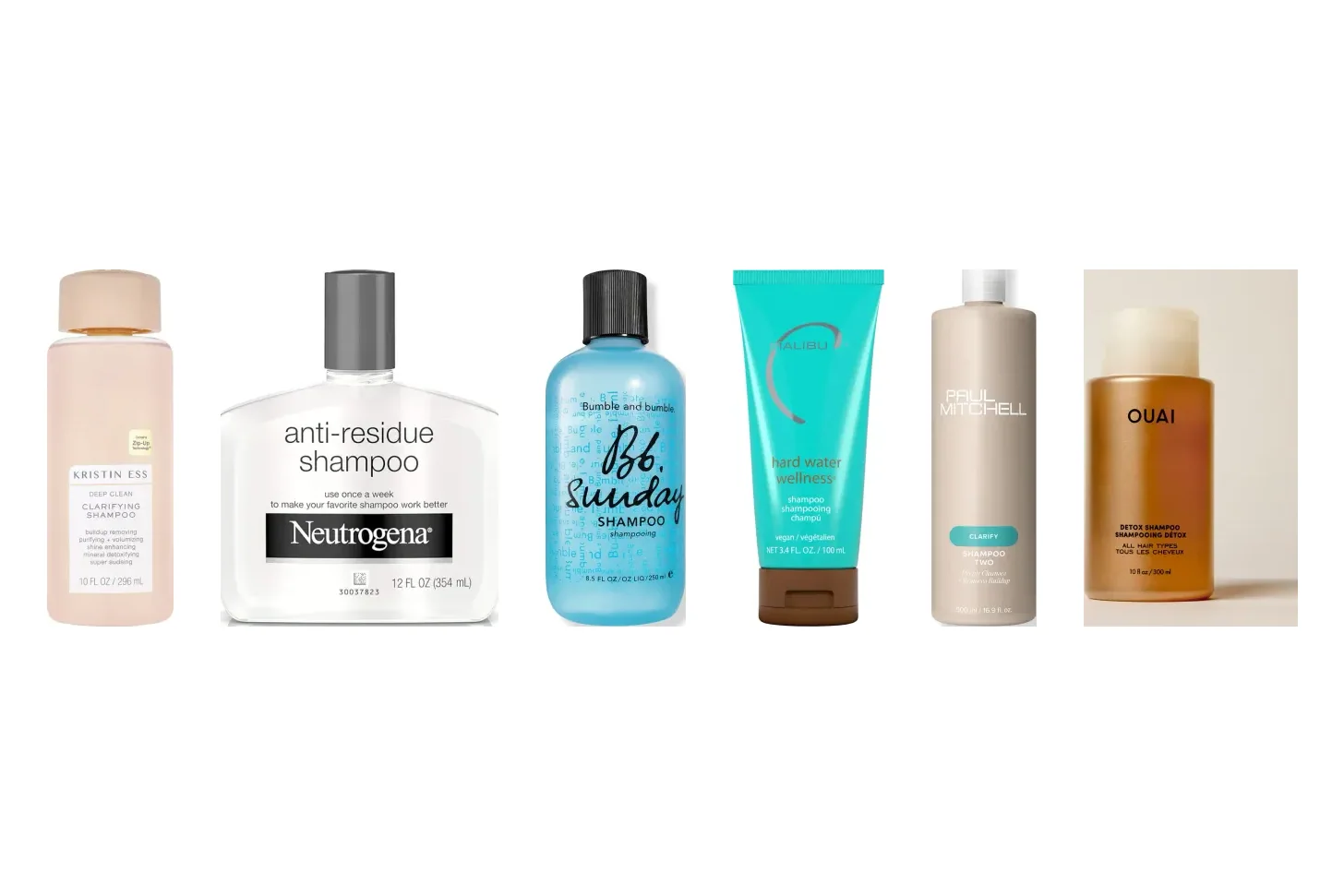
Purple shampoo does nothing for it, because there's no yellow pigment to cancel — there's a film. That one needs a chelating or clarifying wash, and the fix is covered properly in what hard water does to fine hair and in our clarifying shampoo picks.
The ten-second test is timing, not color. How long did the tone last after your last appointment? Six to eight weeks, warming gradually: fade, so tone it. Under two weeks, with dullness and a rough feel: your water, so chelate it. If you're not sure, the full diagnosis lives on the brassy fine hair page, which also settles the blue-versus-purple question in more detail.
When purple shampoo isn't your move
Your hair is going warm again within a fortnight of toning.That's mineral, not fade. A chelating wash and a shower filter fix it; a sixth bottle of violet won't. See hard water and fine hair.
Your ends already feel rough, squeaky or straw-like.Porous hair tones unevenly and holds the deposit patchily. Get the condition right first — dry fine hair — then tone.
The unwanted tone is orange, not yellow.Purple over orange muddies rather than cancels. You want blue, or a proper toner at the salon.
You're trying to fix a color that's genuinely wrong.A shampoo shifts a tone, not a level or a band. If the problem is stripes, patches or a shade you didn't ask for, that's a color correction conversation.
You want shine rather than coolness.Different job entirely. A gloss adds reflectivity and closes the cuticle; purple shampoo only ever removes warmth.
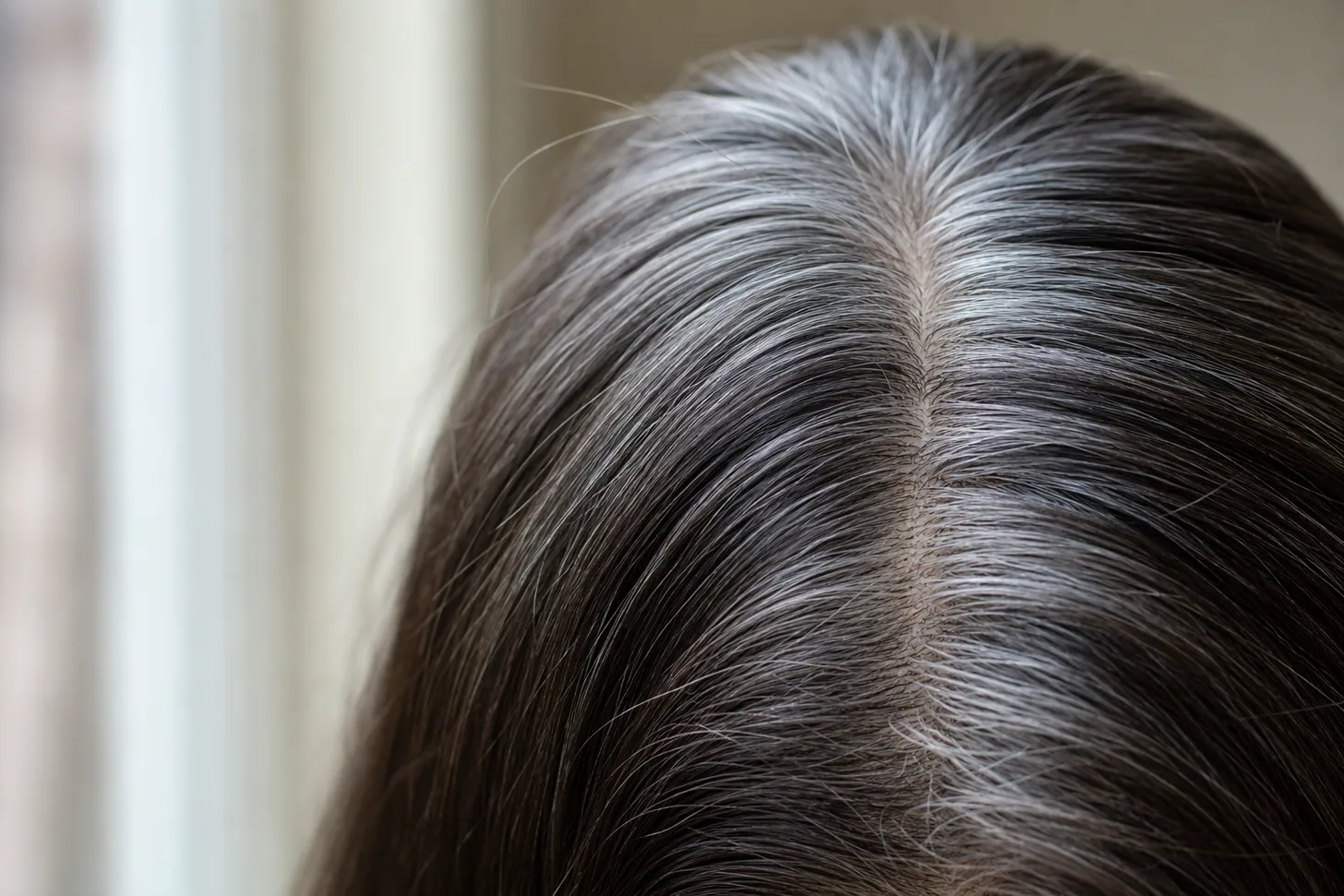
You're natural gray and it's yellowed all over at once.Check your water and your styling products before you buy pigment — white hair picks up staining from both. Going gray with fine hair covers the difference.
Chair-side note
The single most common home-toning mistake I see isn't over-timing — it's applying purple shampoo the way you'd apply any shampoo, which is scalp first, lather down. On fine hair that puts the most pigment on the newest, least porous hair and the least pigment on the ends that actually needed it, and it leaves violet residue at the root, which is where fine hair can least afford to carry anything.
Flip the order. Emulsify the diluted shampoo in your palms, run it through the lengths as though you were conditioning, and only then let your fingertips touch the scalp for the last twenty seconds. Same bottle, same minute on the clock, completely different result — and your roots keep their lift. If flaking rather than brassiness is the scalp complaint, that is a different aisle — dandruff shampoos chosen for fine hair.
PN
— Priya Nair, Master Colorist
FAQ
The pigment isn't the problem. The detergent and the frequency are. Most purple shampoos are built to strip enough of the cuticle surface to let violet pigment sit on it, which means they clean harder than an everyday shampoo. Fine hair has less cortex per strand to buffer that, so it dries out sooner — and dry fine hair is more porous. More porous hair loses toner faster and goes brassy sooner, which sends people back to the purple bottle more often. Used three or four times a week, purple shampoo accelerates the condition it's sold to fix. Used once a week, diluted, on the mid-lengths and ends rather than the roots, it's perfectly safe on fine hair and does exactly what it says.
Once a week is the right starting point for most fine hair, and twice is the ceiling. Every other wash is too much for almost anybody with this hair type, whatever the bottle says. Two things set that limit. Fine hair takes pigment fast because it's thinner and usually more porous after lightening, so the tone you want arrives in one wash rather than three. And the detergent load is the part that actually damages, so the fewer times you run it, the better the hair holds tone between rounds. If your hair goes brassy again within a fortnight of toning, using purple shampoo more often isn't the answer — that timing points at mineral deposit from your water rather than fading color, and it needs a chelating wash, not more violet.
Because porous hair grabs pigment and doesn't let go, and fine, lightened hair is usually the most porous hair in the room. The classic version is purple staining at the ends and nothing at the roots, which people read as the product being uneven when it's actually the hair being uneven. Three things prevent it. Dilute — mix the purple shampoo half and half with your regular shampoo, which several brands now recommend outright for light blondes. Time it — one to three minutes, not the five to ten a bottle designed for salon use will suggest. And place it — mid-lengths and ends, keeping it off the fresher, less porous regrowth at the root. If it's already happened, a clarifying wash or two will usually lift most of the deposit back out.
Look at the unwanted tone, not at your hair color. Purple sits opposite yellow on the color wheel, so it neutralizes yellow. Blue sits opposite orange, so it neutralizes orange. Blonde hair that's faded to a yellow or straw tone wants purple. Brunette, dark blonde or highlighted hair that's faded to orange, copper or red wants blue. Getting this wrong isn't neutral: purple laid over orange doesn't cancel it, it muddies it, and the result reads dull and slightly gray-brown rather than cool. If you're honestly unsure, hold a strand in daylight against a white towel. Whichever word comes to you first — yellow or orange — chooses the bottle.
Usually not, and it is worth knowing why before you buy another bottle. Brown and dark blonde hair does not fade toward yellow the way pale blonde does — it fades toward orange and copper. Purple cancels yellow; it does nothing to orange except sit over it, which reads as dull and slightly muddy rather than cooler. The exception is genuinely light brown hair with pale highlights through it, where the highlighted sections can be yellow enough for purple to help. If your brass looks orange in daylight, a blue toning shampoo is the correct product, and on fine hair it wants the same dilute-and-time discipline as purple.
Wet, and diluted. On dry hair the pigment has nothing to spread through, so it grabs immediately and unevenly, concentrating wherever the hair is most porous — the ends, and any highlighted or previously toned sections. That is how you end up with lilac patches rather than an even tone. On fine hair the margin is smaller again, because there is less strand to carry the same amount of pigment. Wet the hair thoroughly, work the shampoo through diluted, keep it moving, and time it rather than guessing. Applying it dry is a technique for correcting a specific stubborn patch under a colorist, not a home routine.
Yes, and gray hair is where it earns its keep most reliably, because white and silver hair yellows from sun, minerals, smoke and some styling products rather than from faded color. It's also the group that needs the most caution about timing, for a straightforward reason: unpigmented hair has nothing of its own competing with the violet, so it takes the deposit fastest and shows it most. That's where the lilac rinse of a previous generation came from. Start at one minute, not five, and dilute the first time. If your gray has yellowed all over rather than just at the front, check your water before you buy anything — minerals do that, and toning doesn't fix it. Going gray with fine hair has the fuller version.
It can dry it, which on fine hair is the route to damage rather than damage itself. Toning shampoos generally use a more aggressive surfactant system than everyday shampoos, and repeated stripping raises porosity. On fine hair that shows up as static, flyaway ends, tangling and a dull, straw-like feel long before it shows up as breakage. The sequence is worth knowing because you can interrupt it at any point: choose a sulfate-free formula, cut the frequency to once a week, follow with a lightweight conditioner or mask on the ends every single time, and dilute when your hair is very light or very porous. If your hair already feels rough, fix that first and tone afterwards — porous hair tones unevenly anyway.
For a lot of fine hair, yes — and it's the least-known useful thing about this category. A shampoo has to be applied to the scalp to be a shampoo, which means the violet pigment and the detergent both land at the root, where fine hair least needs either. A mask is applied mid-lengths to ends, so it goes exactly where the brass is and nowhere near the roots, and it conditions while it tones instead of stripping while it tones. The trade-off is that a mask deposits less pigment per use, so it's a maintenance tool rather than a rescue tool. The setup that works for most fine hair is a gentle everyday shampoo, a purple mask once a week on the ends, and a purple shampoo kept for the weeks when the brass has genuinely got away from you.
Most likely because the problem was never the kind of brass purple shampoo treats. Brassiness comes from two different places. Warmth from inside the fiber, exposed when color fades, responds to toning. Mineral deposit sitting on the outside of the hair from hard water, well water or a pool doesn't, because there's no pigment to neutralize. The tell is timing, not color: a toner that lasts six to eight weeks and then warms gradually is normal fade, while hair that goes warm again within a fortnight, feels rough and looks dull all over at once is almost always water. That needs a chelating or clarifying wash to remove the minerals, and no amount of violet will do it. Brassy fine hair works through both cases.
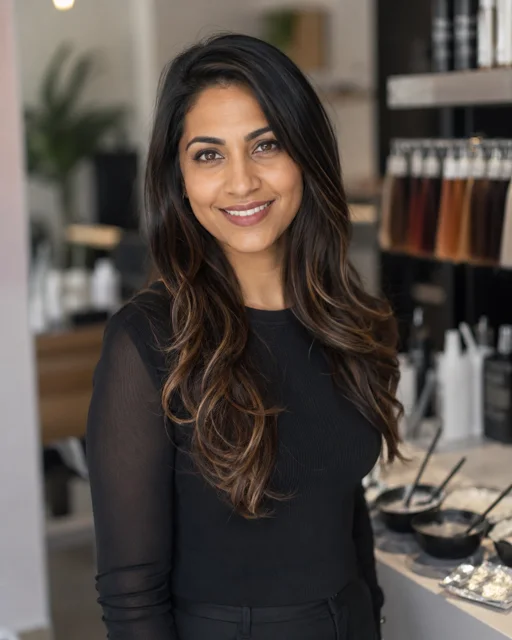
Twelve years coloring fine hair. Priya's rule for toning at home: dilute it, set a timer, and start at the ends — you can always do it again next week.
Images in this article are AI-generated illustrations, not photographs of real clients or results. See our image policy.
Results vary with hair type, density, and growth patterns. This guide is educational and not a substitute for an in-person consultation with a licensed stylist.
Get the good hair intel
One honest, stylist-written guide in your inbox each week. No hype.

 PN
PN