Reviewed by Dr. Rachel Kimura, MD · Updated August 2026 · 9 min read
Two different questions get asked in one sentence here, and they have opposite answers. Does color make each strand narrower? Essentially no — dye and bleach work on the hair shaft above your scalp and never reach the follicle, so what grows in afterwards is the same width it always was. Does color leave you with less hair? It certainly can — by breakage.
Damaged hair snaps partway down its length, and a head full of strands that ended early looks, feels and photographs thinner. The distinction isn't pedantry: nothing you buy will re-thicken a strand, but almost everything about breakage is preventable. Below, what a process actually changes, what it can't touch, and why fine hair pays more for the same appointment.
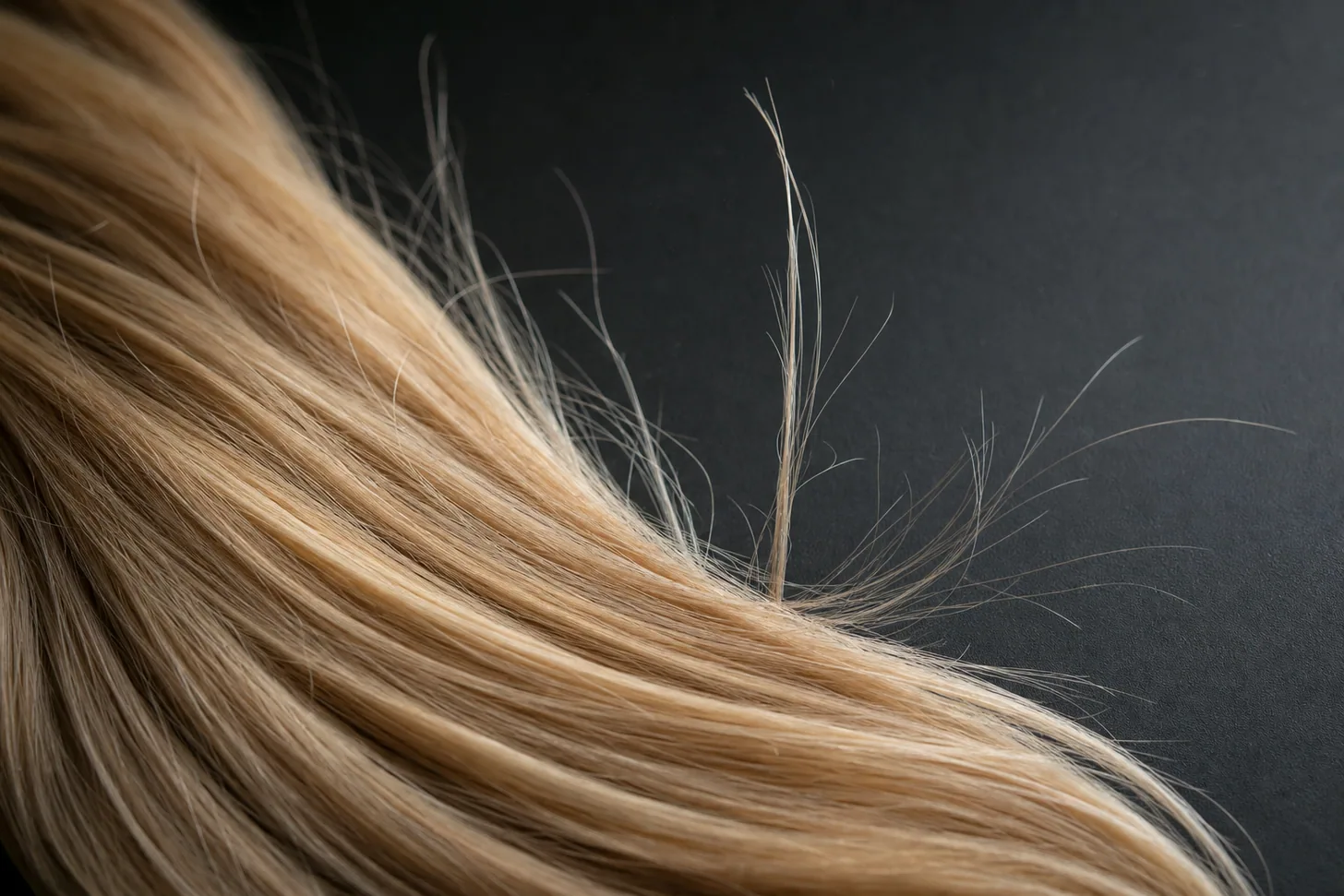
The short flyaway pieces are the tell: color costs length, not width.
Chair-side note
The clients who tell me color thinned their hair almost always show me the same thing without realizing it: a halo of short pieces standing up around the parting, all roughly the same length. That's not new growth and it isn't shedding — shed hairs come out at full length with a bulb on the end.
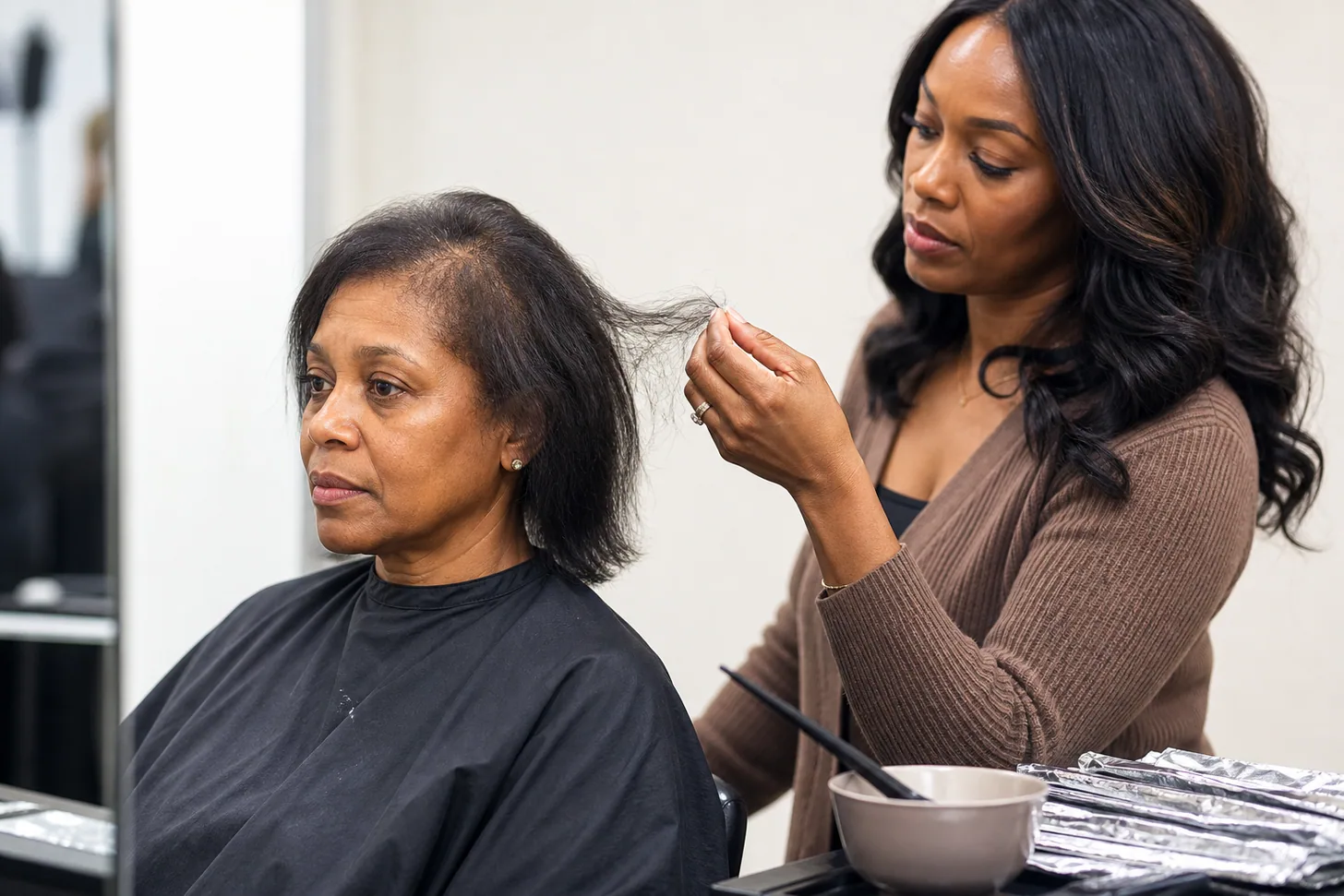
Those are strands that broke at the point where the color line sits, usually where an overlap put bleach on hair that had already been bleached. When I see that halo I stop talking about products and start talking about how we're going to place the next application so it never touches the same inch twice. That single change does more than any bottle in the salon.
PN
— Priya Nair, Master Colorist
The two questions hiding inside one
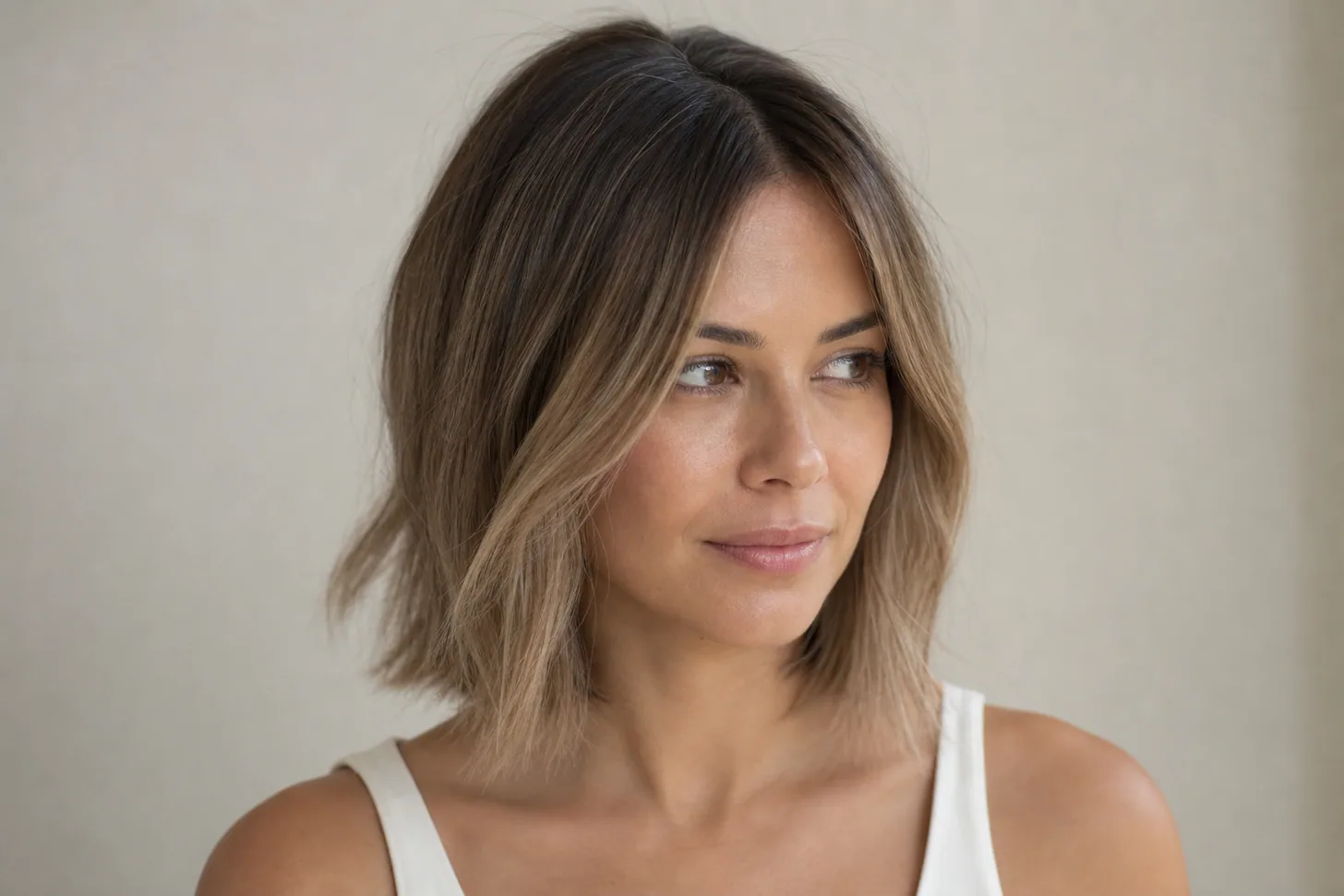
Worth naming the service too, because the answer differs by technique — balayage on fine hair puts far less of the head through a lightener than a full head of foils does, and that difference is most of the risk.
"Thinner" gets used for two entirely different observations, and separating them is the whole answer.
Thinner strands means each individual hair is narrower than it used to be. That's a change in what the follicle produces, and it's driven by genetics, hormones, age and health — not by anything applied to the length. A permanent color or a bleach sits on the shaft, which is dead keratin. It has no route back to the living part.
Less hair means fewer strands, or strands that don't reach as far as they used to. Color can absolutely produce the second version: a strand that breaks at chin level is still growing from a perfectly healthy follicle, but the hair you can see and gather in your hand is a fraction of what it was. Enough of those and the ponytail shrinks, the ends go wispy and the whole head reads thin.
So when someone says bleach thinned their hair, they're usually right about the outcome and wrong about the mechanism — and the mechanism is what tells you what to do next.
What a color process actually does to the strand
Oxidation breaks the sulphur bonds that hold keratin's shape
Both permanent dye and bleach work by oxidation. The disulfide bonds between sulphur-containing amino acids are the cross-links that give keratin its structure, and oxidation converts them into cysteic acid — a change you can measure. A 2024 study in Heliyon tracking repeatedly dyed human hair found the sulphur–sulphur band in the spectrum "damaged by chemical dyeing, leading to conformational changes," with a cysteic acid signal appearing alongside it.
Bleach does more of this than dye, because it has a harder job: dye deposits pigment, bleach dismantles the pigment already there, which takes a stronger oxidizer held on the hair for longer.
One process is enough to erode the cuticle
The cuticle is the overlapping scale layer on the outside of the strand, and it's what makes hair slide rather than catch. The same study measured the height of those scales before and after: one dyeing reduced cuticle step height by about 20 percent, from 430 to 343 nanometers, with surface roughness climbing on every further cycle.
Separately, the review Hair Cosmetics: An Overview notes that permanent dyes strip 18-MEA — the lipid that makes the cuticle water-repellent — leaving the hair hydrophilic, and that the cell membrane complex and endocuticle are "very vulnerable regions to the chemical treatments such as bleaching, dyeing."
A rougher, more absorbent surface is why colored hair tangles more, dries slower after washing, and feels like it needs conditioner constantly. It's also why strands start catching on each other instead of sliding — and catching is where breakage begins.
Damaged hair goes stiffer, not floppier — which is why it snaps
This is the counterintuitive part, and it explains a complaint that sounds contradictory: my hair feels thicker since I've been coloring it, but it keeps breaking.
The same Heliyon team measured the mechanics. After ten dye treatments the elastic modulus rose by 190 percent — the fibre resisted bending nearly three times as strongly as untreated hair — and stiffness rose 10 percent.
Significant mechanical changes appeared once the count passed three to five cycles. Notably, the authors attribute the stiffening mainly to reduced water content in the fibre rather than to bond loss directly, so this is a description of what happens rather than a complete explanation of why.
What matters practically is the direction. A stiff fibre with a roughened surface doesn't stretch and recover when you drag a brush through it; it resists, then fails. That's grip and body in the mirror, and a broken strand on the bathroom floor.
What color can't do
What people believe
What actually happens
"Bleach makes each hair thinner"
The strand's cortex is damaged, not narrowed. New growth emerges at its normal diameter
"Dye kills the follicles"
The chemistry acts on dead keratin above the scalp; follicles aren't reached in normal use
"My hair fell out after coloring"
Almost always breakage along the length, not shedding from the root. Shed hairs come out full-length with a bulb
"It'll never recover"
The damaged length won't, but growth is unaffected — it grows down and gets cut off
"A bond builder repairs it"
It reduces damage during the service and improves handling. It doesn't rebuild what's gone
The exception worth naming, because it's the one that is a scalp problem: a chemical burn from product left sitting on the skin, or an allergic contact dermatitis to a dye ingredient, can inflame the scalp enough to disturb the follicles in that area.
The American Academy of Dermatology is direct about it: if you develop "a rash or redness, swelling, burning or itching," that's an allergic reaction — don't dye your hair, and consult a dermatologist. The patch-test discipline that prevents it is covered in at-home color for fine hair.
Why fine hair pays more for the same appointment
Two things compound, and neither is about the color formula — and a third, which is what happens afterwards, because fine hair is washed more often than average and every wash costs a little of what you paid for. Shampoo for fine color-treated hair is where that side of it is worked out.
There's less structure to spare. A fine strand has a smaller cortex, so an identical percentage of bond damage removes a larger share of what was holding the fibre together. The margin between "processed" and "over-processed" is genuinely narrower, and it isn't a matter of being careful — it's arithmetic.
It processes faster. A narrower strand with a thinner cuticle takes the oxidizer up more quickly, which is why the development time printed on a box, or the time that worked on the person in the chair before you, routinely overcooks fine hair. Shorter processing on fine hair is standard practice, not corner-cutting.
And gray coverage is the schedule that does the real damage. Resistant gray needs full-strength permanent color roughly every three to four weeks, so the overlap onto already-colored lengths accumulates faster than any other kind of coloring — which is why switching from covering to blending is the single most protective decision a fine-haired client with gray can make. The routes are compared in going gray with fine hair.
And the consequence of breakage lands harder at low density. Losing ten strands out of a sparse head shows in a way it doesn't on a dense one. If you're already watching your part widen, read fine hair or thinning before you book anything that lifts — the two problems together are much harder to unpick than either alone.
Five things that genuinely reduce the cost
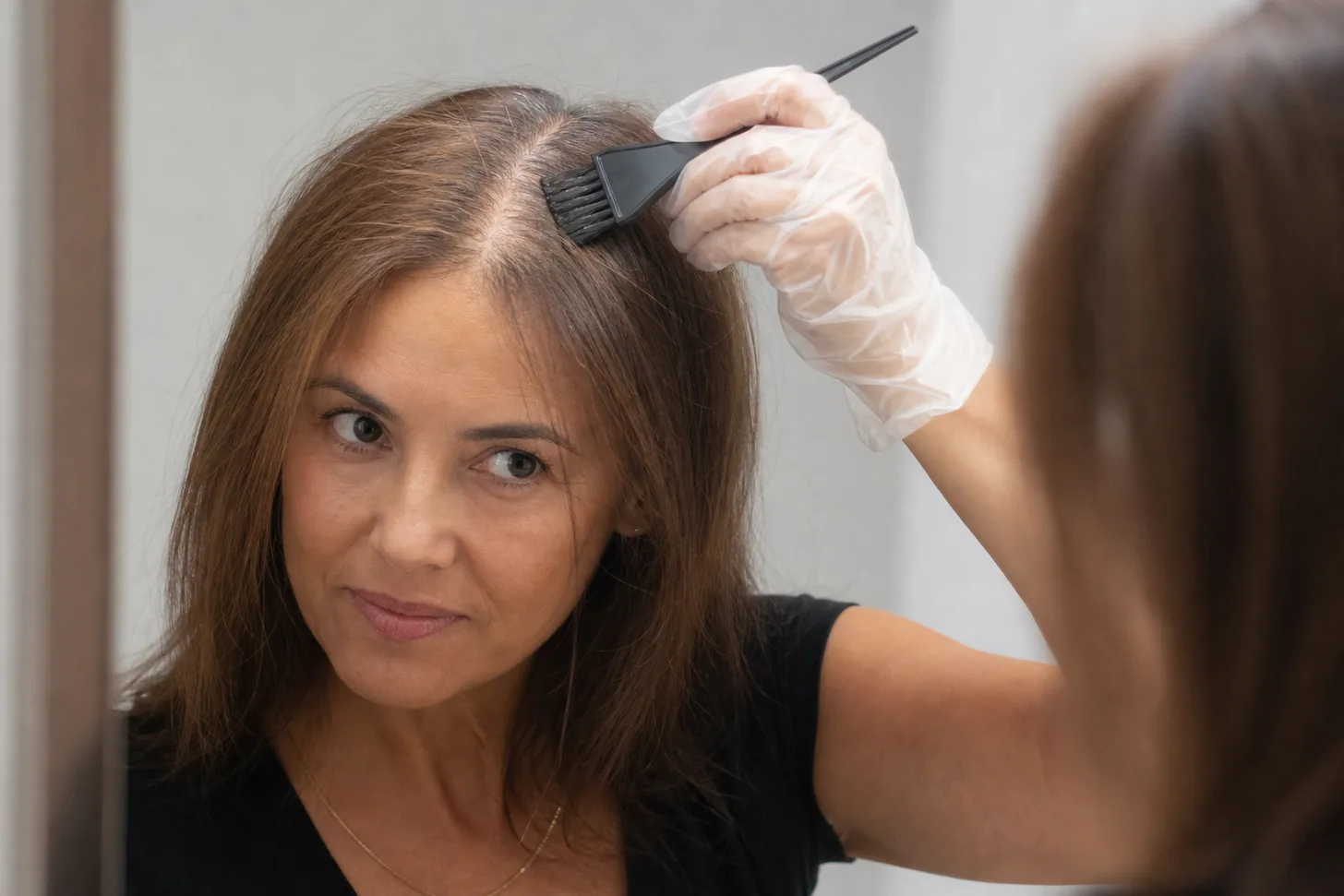
A sixth, if you color at home: use a formula built for the job rather than the strongest one on the shelf. At-home color for fine hair is sorted by job, and balayage on fine hair is the lowest-cost salon route if you want dimension without a full head of lift.
Stay within three shades, and go darker before lighter
The AAD's guidance is unusually specific: choose a dye within three shades of your natural color, and note that "lightening your hair more than three shades requires higher volumes of peroxide, which causes more hair damage." Going darker is the cheaper direction chemically, and on fine hair it also does more for the look of density, because it reduces the contrast between hair and scalp. Shades that add depth covers that side of it.
Never overlap onto hair you've already lightened
This is the single biggest technical lever and the most common failure. Bleach applied to previously bleached hair is a second full process on a fibre that's already spent, and the halo of short broken pieces around a part is nearly always an overlap line. Root-only retouches, or techniques that never place lightener at the same point twice — which is precisely what balayage is for — take the whole problem off the table.
One chemical service at a time, with time in between
The AAD's damage guidance is to have "only one service — a coloring, relaxer, or perm," and to "add more time between touch-ups, especially when the air is dry."
Stacking a smoothing treatment and a lightening service into one month is where most badly damaged fine hair comes from, and a relaxer plus a lift is the same mistake with higher stakes — relaxed hairstyles for thin hair covers the relaxer side of that rule. If you're weighing a smoothing service too, keratin and protein treatments for fine hair is worth reading first.
Use a gloss instead of a process where you can
A demi-permanent gloss deposits tone without needing to lift, so it uses far less peroxide and leaves the cuticle in much better shape. A lot of what people book a full color for — brassiness, dullness, a slightly grown-out look — is a toning problem, and a gloss every six to eight weeks between real appointments keeps the color honest at a fraction of the structural cost.
Change how you handle the hair, not just what you put on it
Once the cuticle is rough and the fibre is stiff, mechanical stress is what finishes strands off. Detangle wet with conditioner in and a wide-tooth comb, ends first; loosen ties and clips; drop the heat setting. The ingredient guide to what actually repairs fine hair is honest about the limits of reinforcement, and a heat protectant stops the two kinds of damage compounding.
When to stop and get an opinion
You develop a rash, swelling, burning or itching after a color service. That's an allergic reaction, not sensitivity to be worked around. Stop coloring and see a dermatologist for allergy testing.
Hair is coming out with a small white bulb on the end. That's shedding from the root, not breakage, and color isn't the cause. Fine hair or thinning covers what is.
Your part is measurably wider than it was a year ago. Deal with the density question first — adding a lightening service on top makes both harder to assess.
The hair stretches like elastic when wet and doesn't spring back. That's severe over-processing. No treatment reverses it; the ends need cutting off, and no further chemical service should go on until they are.
It doesn't make individual strands narrower, and it doesn't change what your follicles produce — dye and bleach act on the shaft above the skin, so hair growing in afterwards emerges at the same diameter it always did. What color does is damage the cuticle and the protein network inside the strand, which leaves the hair more brittle. Brittle hair breaks, and hair that breaks partway down its length leaves you with visibly less hair. So the honest answer is that color can leave you with less hair without making any strand thinner.
Yes, and the difference is the amount of peroxide involved. Permanent dye has to open the cuticle and deposit pigment; bleach has to open the cuticle and dismantle the pigment already there, which takes a stronger oxidizer and longer contact. The American Academy of Dermatology puts a practical number on it: staying within three shades of your natural color keeps peroxide volumes lower, and lightening further than that requires higher volumes, which causes more damage.
Not by the normal mechanism — the chemistry works on the hair shaft, not the follicle, and it isn't absorbed into the scalp in a way that stops hair growing. The exceptions are real but specific: a chemical burn from product left on the scalp, or an allergic contact dermatitis, can inflame the scalp badly enough to disturb the follicles in that area. If you develop a rash, swelling, burning or itching after coloring, that's an allergic reaction and the AAD's advice is to stop and see a dermatologist rather than color again.
Because damaged hair is stiffer, not floppier, and stiffness reads to the hand as body. A 2024 study in Heliyon measuring repeatedly dyed hair found the elastic modulus rose 190 percent after ten treatments — meaning the fibre resisted bending far more than untreated hair — which the authors attributed largely to reduced water content in the fibre. Stiff fibres with a roughened cuticle snap rather than stretch, so the same change that gives you grip and body is the one costing you length.
Measurably more than most people expect, and much less than repeated sessions. In the same Heliyon study, one dyeing reduced the height of the cuticle scales by about 20 percent, from 430 to 343 nanometers, and surface roughness rose with every additional cycle. Significant changes to the mechanical properties of the fibre appeared once dyeing exceeded three to five cycles. In practice that means a single process is survivable for most fine hair, and it's the cumulative count that decides how your hair behaves.
For the same process, effectively yes. A fine strand has less cortex inside it, so the same proportion of bond damage removes a larger share of the structure that was holding it together, and there's less margin before the fibre fails. Fine hair also processes faster, which is why leaving color on for the time printed on the box — or the time that suited the person in the chair before you — routinely over-processes it. A shorter development time on fine hair is a technique decision, not a shortcut.
They reduce damage during the service and improve how the hair behaves afterwards, which is worth having, but nothing returns a broken protein network to its original state. Damage to the hair shaft is permanent because the shaft isn't living tissue and can't heal itself. Treat bond builders as a way to make a process less costly rather than a license to take it further, and treat the ends you already have as something to maintain until they grow out.
Yes, assuming the scalp itself is healthy. Because color never reached the follicle, new growth comes in at its normal diameter and condition, and the damaged length grows down and out over time. Scalp hair grows roughly half an inch a month, so a shoulder-length head takes around two years to replace entirely. Cutting off the most damaged ends speeds up how quickly the hair looks better, even though it doesn't speed up growth.
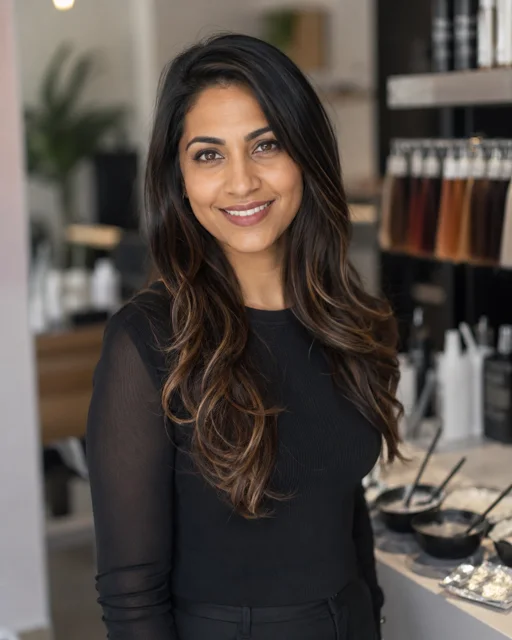
Twelve years coloring fine and thin hair without costing clients length. Priya's rule is that the application map matters more than the formula — no inch of hair should ever be lightened twice.
This article is for general education and is not medical advice. If you are experiencing sudden or patchy hair loss, scalp pain, a reaction to a dye, or other concerning symptoms, see a board-certified dermatologist.
Results vary with hair type, density, and growth patterns. This guide is educational and not a substitute for an in-person consultation with a licensed stylist or colorist.
Hairstyle images in this guide are AI-generated illustrations, not photos of real clients or results. See our image policy.
Get the good hair intel
One honest, stylist-written guide in your inbox each week. No hype.

 PN
PN