The fastest ways to hide thinning hair are moving your part, lifting the roots, and matching the color of your scalp to your hair. None of them takes more than five minutes, and together they hide more than any haircut.
What works depends on where you're thinning: the crown, the part or the hairline. Below are the fixes for each, from free to the most coverage, plus 8 hairstyles that help and when to see a doctor first.
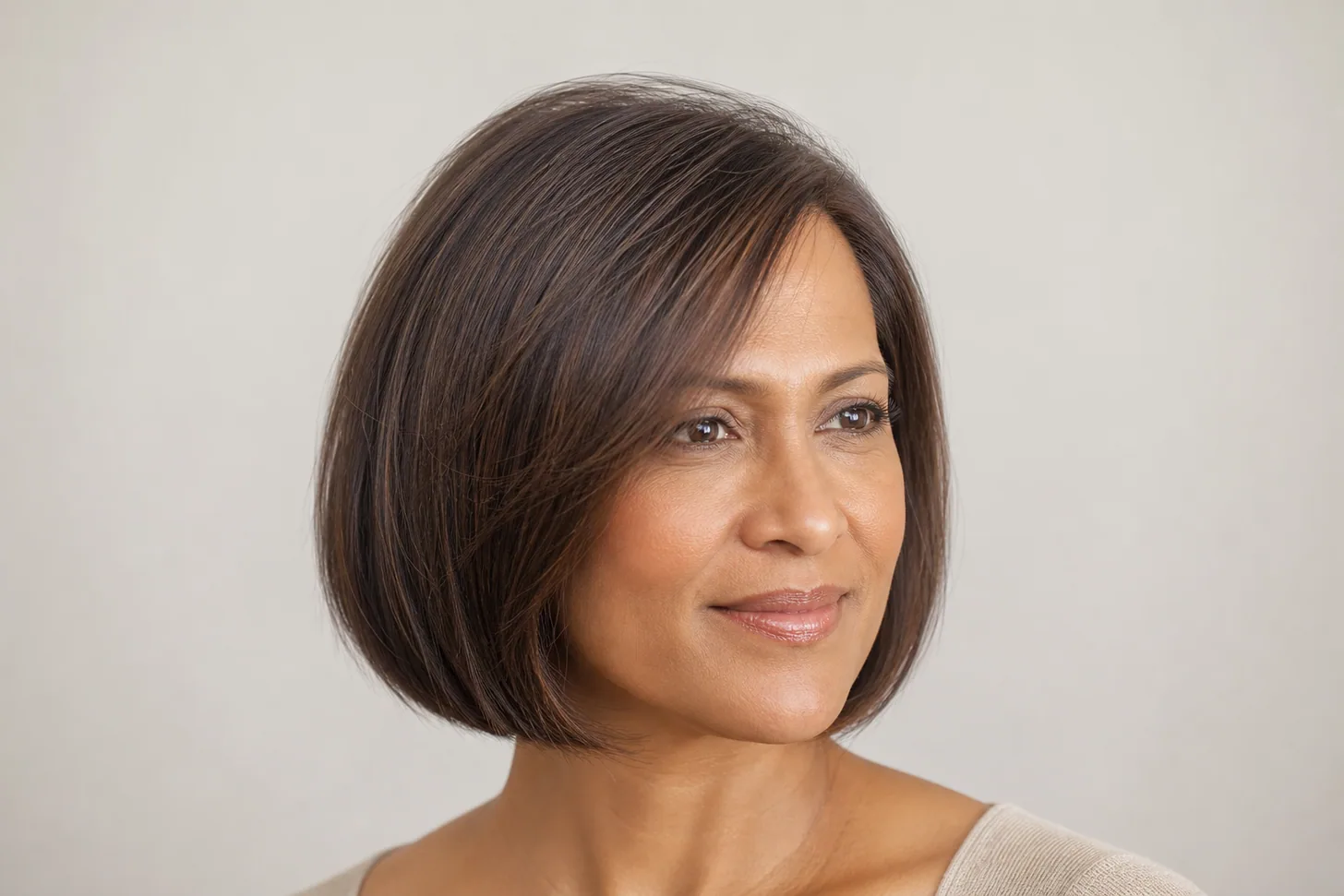
woman with fine medium-brown hair styled with a zigzag part and lifted roots at the crown so the scalp barely shows, shoulder-length soft waves, woman in her 40s, top three-quarter view
Chair-side note
When a client tells me her hair is thinning, the first thing I do is move her part. Most women have worn the same part for twenty years, and the hair there is flattened and trained to split. Moving it an inch can hide more than any product.
Hiding thinning hair is about contrast. Scalp shows where light skin sits next to dark hair, or where flat roots open up a gap. Lift the roots and soften the contrast, and the eye stops seeing it.
SB
— Simone Baptiste, Senior Stylist
First: find where you're thinning
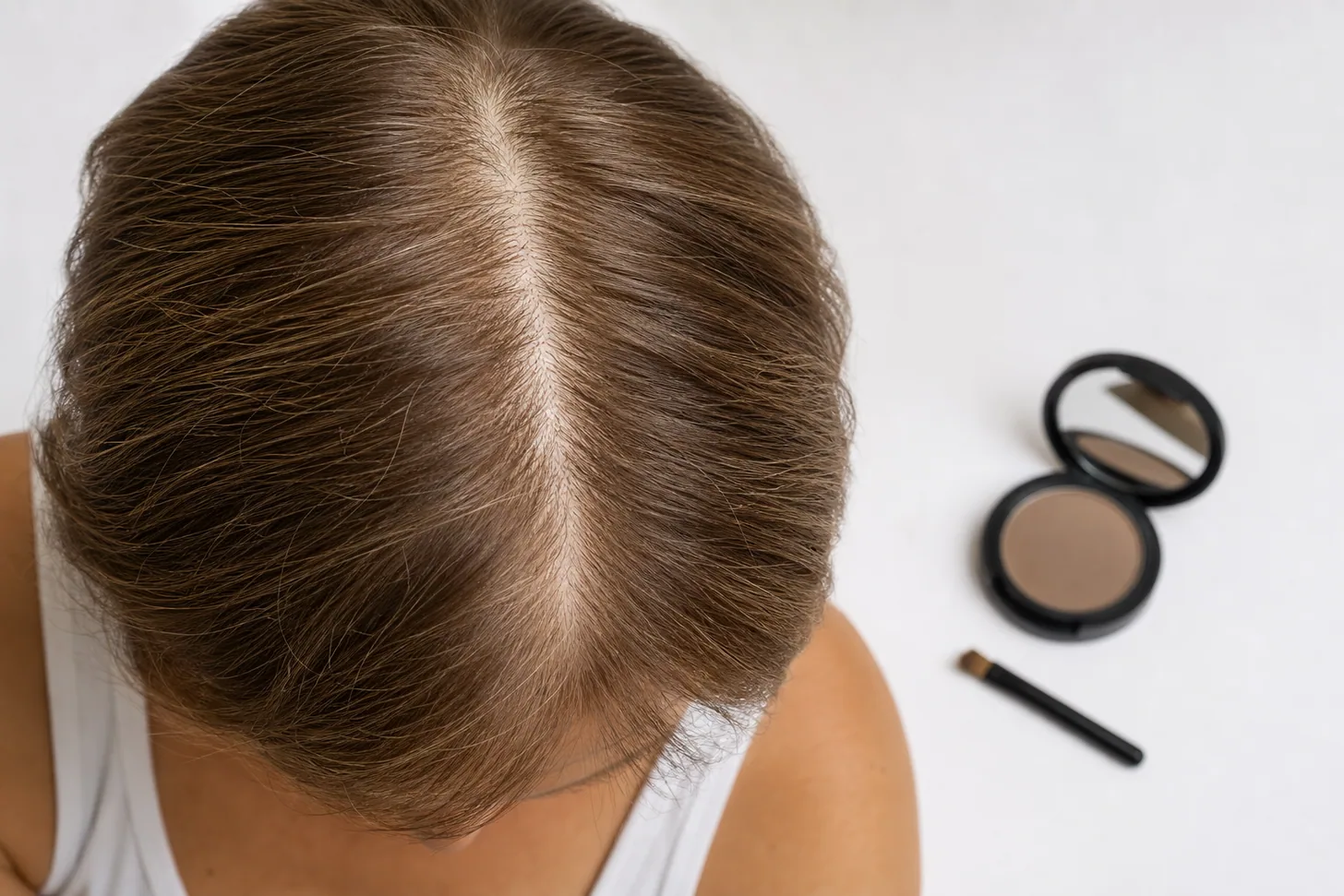
Take two photos in daylight: one straight down at your part, one of your crown using a hand mirror or a friend. Most women see one of three patterns.
A widening part is the most common sign of female pattern hair loss. A thin crown shows as a spot at the back of the head. A thin hairline or temples shows at the front. If you're not sure the hair is thinning at all, see fine hair or thinning hair.
How to hide a widening part
Move it. Shift your part an inch to either side, or try a deep side part. The new part has fresh, unflattened roots on both sides, so it looks narrower. A soft zigzag part breaks the straight line of scalp and is the single best trick for a wide part.
Lift it. Blow-dry your roots in the opposite direction from your part, then flip them back. The roots stand up and cover the line. A root-lift spray helps the lift last. Our guide to the part on fine hair covers every option.
How to hide a thinning crown
The crown is hardest to see and hardest to style yourself. Tease the roots lightly at the crown with a fine comb, then smooth the top layer over them. The teased roots act as a cushion and hold the top layer up.
A half-up style with a small clip at the crown also covers it, as long as the clip sits just above the thin spot. Avoid tight buns and high ponytails, which pull the hair apart at the crown and can cause traction hair loss. For cuts that build weight over the crown, see haircuts for a thinning crown.
How to hide a thinning hairline and temples
A soft fringe is the most natural cover. Curtain bangs cover the temples, and a side-swept fringe covers a hairline that is thinner on one side. Cut the fringe from hair further back on the head, not from the thin hairline itself.
Style the front forward and down rather than back. Slicked-back styles and tight hairlines pull the hair away from the thin areas. For cuts built around this, see haircuts for a thinning hairline.
Use color to soften the contrast
Thinning shows most when dark hair sits on pale skin. Soft highlights or a slightly lighter shade at the roots make the scalp blend in. Root shadow, which keeps the roots darker, does the opposite on a thin part, so ask for a lighter, blended root instead.
A scalp concealer is a tinted powder or spray that colors the scalp to match your roots. It's the quickest fix for a wide part. See the best scalp concealers for fine hair.
Hair fibers are tiny colored fibers that cling to your own hair and add bulk. They work best on a thin crown with hair still left to hold them. See hair fibers for fine hair.
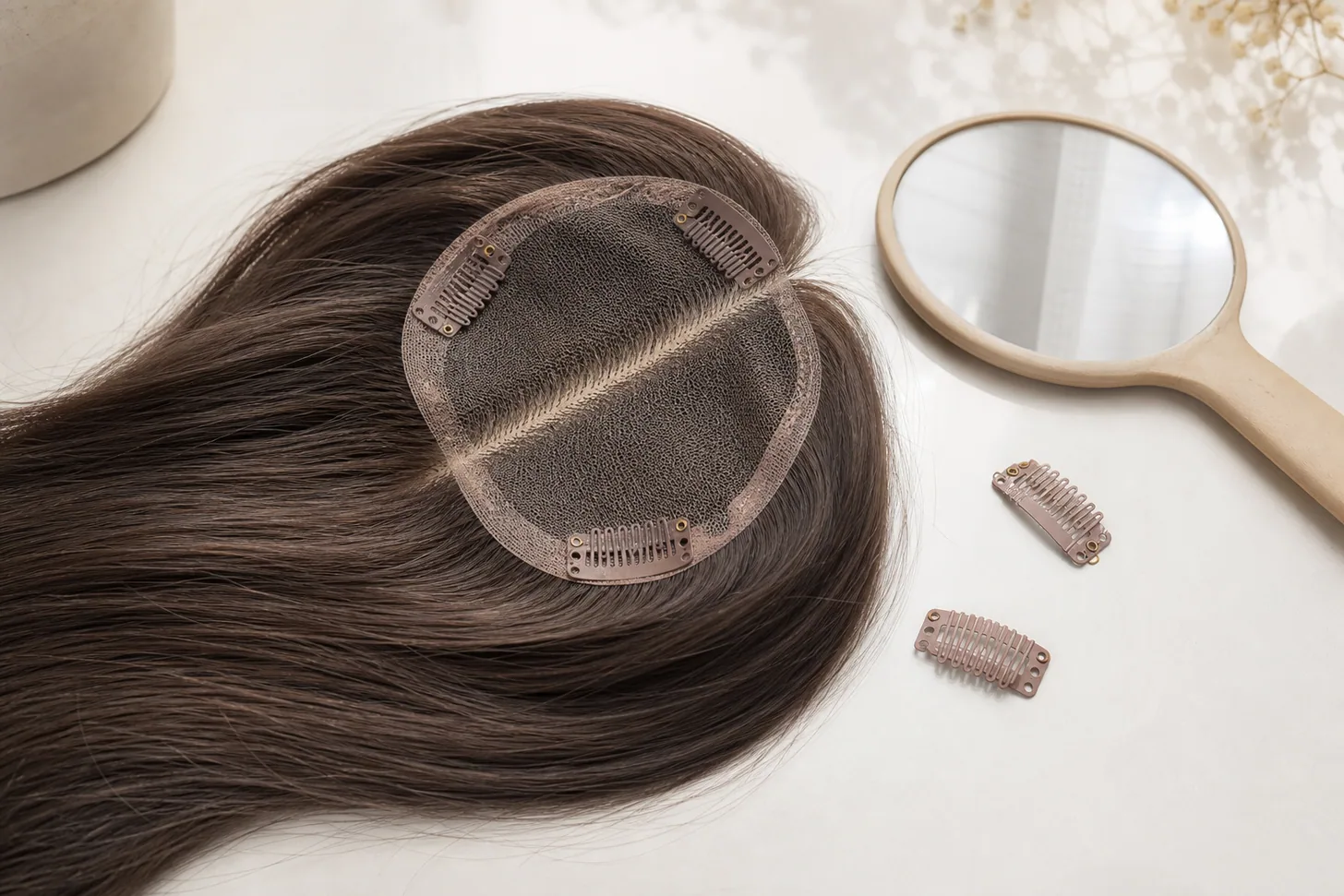
A hair topper is a small hairpiece that clips over the crown or part. It gives the most coverage of anything here and is worth it once the scalp shows clearly. See hair toppers for fine hair.
8 hairstyles that hide thinning hair
These styles use the tricks above. None needs more than ten minutes.
soft zigzag part on fine thinning light-brown hair with lifted roots on both sides, shoulder-length hair, woman in her 40s, top view from slightly above
1
Zigzag part with lifted roots
A soft zigzag instead of a straight line, with the roots lifted on both sides. It breaks up the line of scalp along a wide part.
Draw it with the tail of a comb on damp hair, then blow-dry the roots up.
deep side part with lifted volume swept across the top on fine thinning dark-brown hair, collarbone length, woman in her 50s, front three-quarter view
2
Deep side part with volume
A deep side part sweeps a lot of hair across the top of the head. It covers a thin center part and adds height.
It works best on hair cut with a little length on top.
half-up style with lightly teased roots at the crown smoothed over and a small claw clip just above the crown on fine thinning blond hair, woman in her 40s, back three-quarter view
3
Teased-crown half-up
Lightly teased roots at the crown, smoothed over and held with a small clip. It lifts and covers a thin crown.
Keep the clip small and loose so it doesn't pull.
soft curtain bangs covering thinning temples on fine medium-brown hair, face-framing pieces to the cheekbones, shoulder-length hair, woman in her 50s, front view
4
Curtain bangs over thin temples
A soft, parted fringe that falls over the temples. It's the most natural cover for a thinning hairline.
loose soft waves through fine thinning light-brown hair adding texture and fullness, side part, shoulder-length, woman in her 40s, front three-quarter view
5
Soft waves for texture
Loose waves add texture, which hides gaps that straight, sleek hair shows. Wavy hair also lifts at the root.
A large curling iron or heatless rollers take about ten minutes.
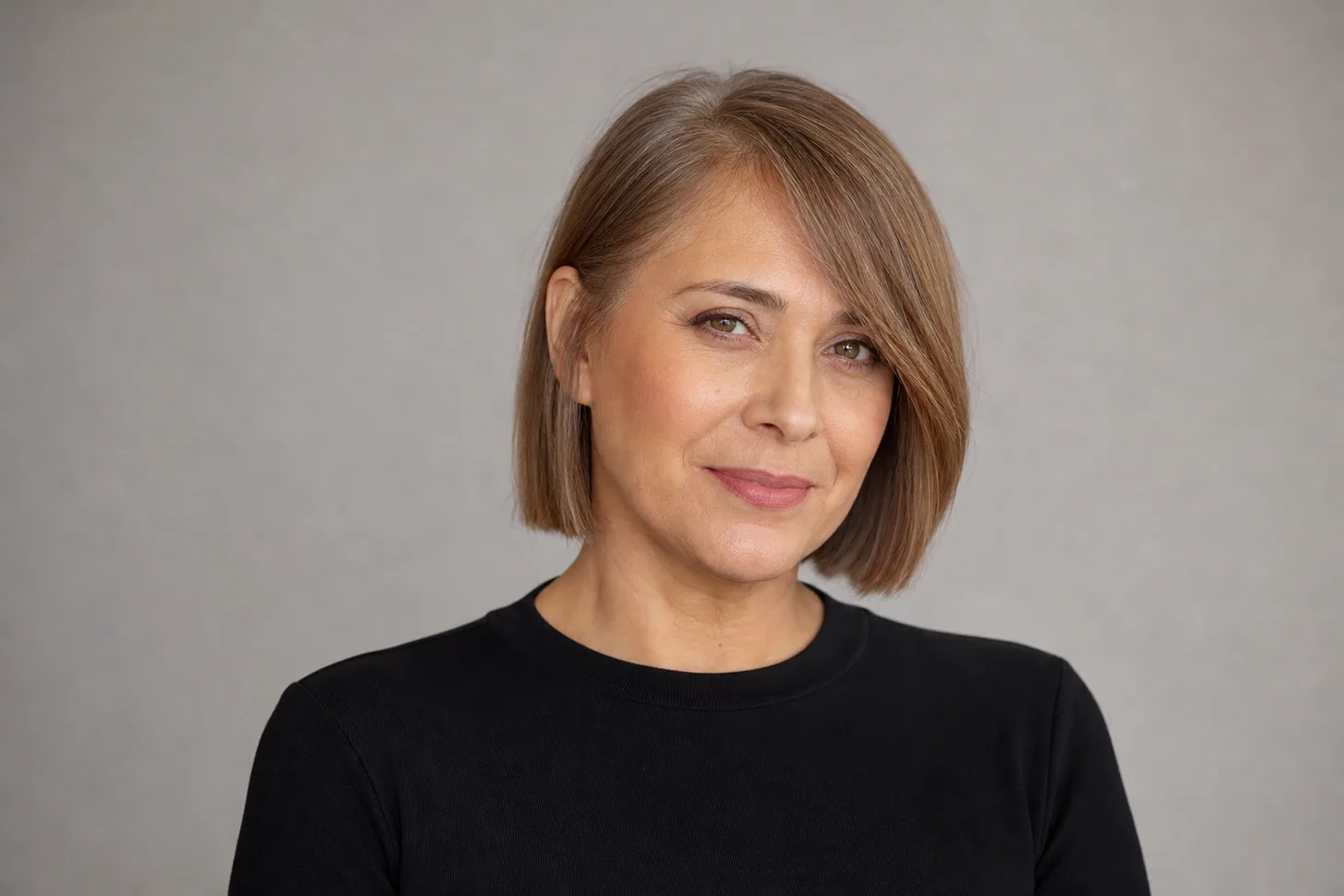
chin-length layered bob with soft volume and lift at the crown on fine thinning gray-blond hair, side part, woman in her 60s, back three-quarter view
6
Layered bob with crown lift
A short cut with soft layers at the crown. Shorter hair weighs less, so the roots stand up over a thin spot.
low loose ponytail at the nape with soft volume on top and face-framing pieces left out on fine thinning dark-blond hair, woman in her 40s, front three-quarter view
7
Low loose ponytail
A soft ponytail at the nape, with the top loosened with your fingers. It keeps volume at the crown, where a tight high ponytail would pull it apart.
Use a fabric scrunchie, never a thin elastic.
wide soft fabric headband placed just behind a thinning hairline with lifted volume behind it on fine medium-brown hair, shoulder-length, woman in her 50s, front view
8
Headband over a thin hairline
A wide, soft headband placed just behind the hairline, with the hair behind it lifted. It covers thin temples on bad days.
Choose a padded or fabric band that doesn't press or pull.
What makes thinning hair look worse
Heavy oils and creams flatten fine hair and make the scalp show. Use them only on the ends. Washing too rarely does the same, so wash every day or two and use dry shampoo in between.
Tight styles, heavy extensions and daily high heat all add stress to thin hair. Sleek, center-parted styles show the most scalp of all. A root-volume routine fixes most of this in a few minutes.
Hiding it is not the same as treating it
Everything on this page hides thinning hair; none of it stops it. Female pattern hair loss, thyroid problems, iron deficiency and many medicines can all cause thinning, and most respond better when they're treated early.
Your hair is falling out in clumps or patches. Sudden or patchy loss needs a diagnosis, not a concealer.
Your scalp is itchy, sore, red or scaly. Scalp conditions can cause hair loss and should be treated.
The thinning started within a few months. Stress, illness, a new medicine or childbirth can all trigger shedding. See why your hair is thinning.
You also feel tired, cold or unwell. These can point to thyroid or iron problems. See blood tests for hair loss.
FAQ
Tease the roots lightly at the crown and smooth the top layer over them, or wear a loose half-up style with a small clip just above the thin spot. Hair fibers and a topper cover more.
Move your part an inch to the side or try a soft zigzag part, then blow-dry the roots up. A tinted scalp concealer along the part hides what still shows.
A soft, layered cut at or above the shoulders with a side or zigzag part. Shorter hair lifts at the root, and layers and waves add texture that hides gaps.
Curtain bangs or a side-swept fringe cut from hair further back on the head cover a thin hairline and temples. Style the front forward rather than slicked back.
Concealer is better for a wide part, because it colors the scalp. Fibers are better for a thin crown with some hair left, because they cling to the hair and add bulk.
Yes, if it's noticeable, sudden, patchy or comes with scalp symptoms. Many causes, including female pattern hair loss and iron or thyroid problems, respond best to early treatment.
Eleven years behind the chair, specializing in short shapes and fine-hair texture. Simone believes the best haircut is the one you can style yourself in ten minutes.
This article is general information, not medical advice. If your hair loss is sudden, patchy or comes with an itchy, sore or scaly scalp, see a doctor or a board-certified dermatologist.
Hairstyle images in this guide are AI-generated illustrations, not photos of real clients or results. See our image policy.
Get the good hair intel
One honest, stylist-written guide in your inbox each week. No hype.

 SB