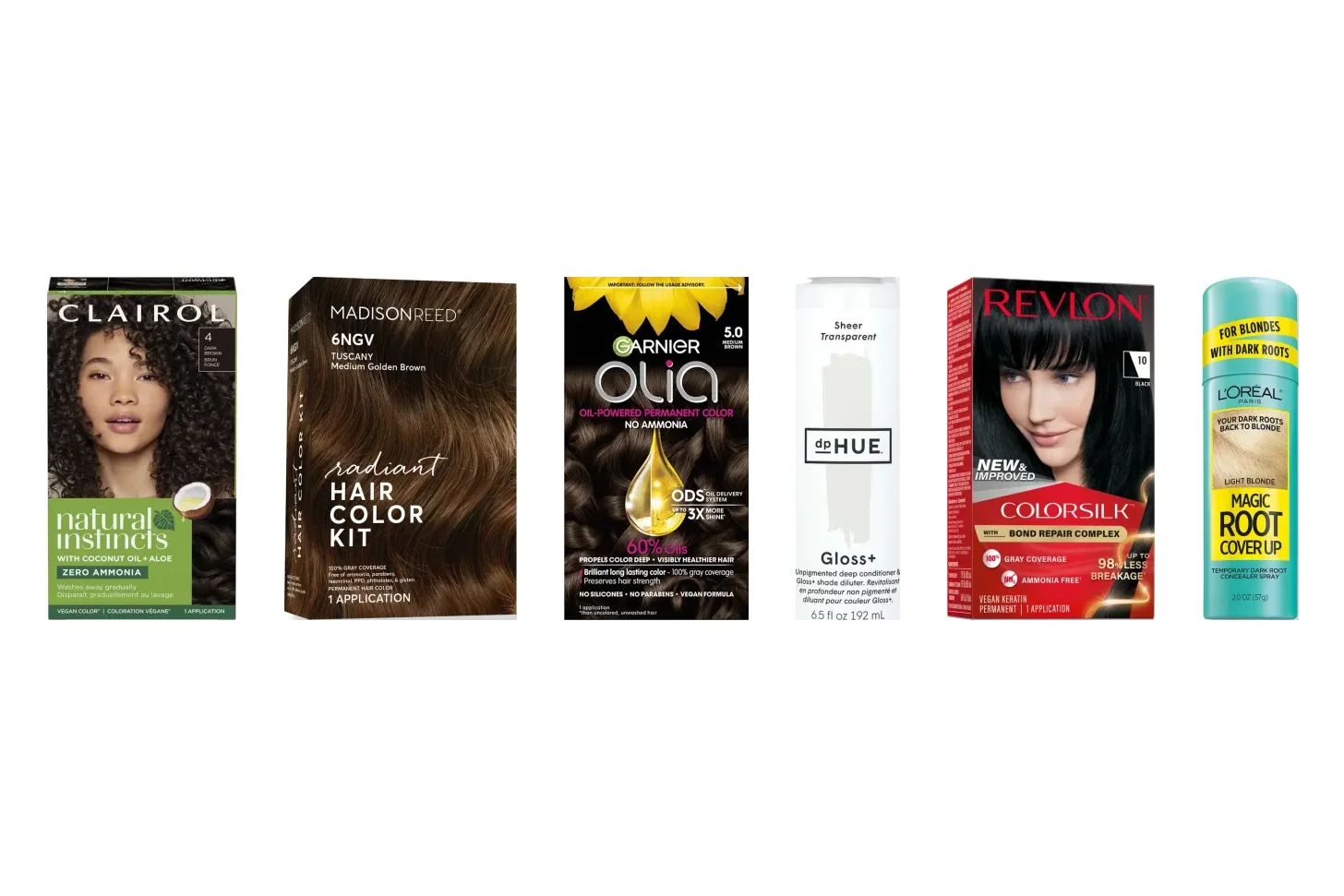
The safest hair color for thinning hair is the one that never touches the scalp, or barely touches it: a gloss or a demi-permanent color with no lift, or lightening done in foils that start away from the root. Permanent color is fine for many people, at the roots only and within three shades of your own.
The real risk for thinning hair is not the dye on the strand. It is an allergic reaction or a chemical burn on the scalp, which can trigger shedding months later. Below is every dye type ranked, the patch test that matters, and the color choices that make a thinning part less visible.
a colorist painting gloss onto the mid-lengths of fine brown hair with a brush, keeping it away from the scalp, salon light
Colorist’s note
When a client with a widening part asks me for color, I look at her scalp before I look at the shade card. Redness, flaking or a sore spot means we wait.
Most of the time we can still color; we just change where the color goes. Gloss on the lengths, permanent only where gray needs covering, and lightener kept in foils off the scalp.
PN
— Priya Nair, Master Colorist
The short answer
Safest: temporary root sprays and powders, then acidic glosses and demi-permanent color, which use about a third of the peroxide of permanent dye and do not lift. Riskier: permanent color on the scalp, and bleach applied directly to the scalp.
If you need gray coverage, permanent color applied to the regrowth only, then a gloss through the lengths, is a reasonable middle ground. For product picks in each category, see the best at-home hair color for fine hair.
Can hair dye cause hair loss?
On the strand, dye and bleach cause breakage, not hair loss from the root. Oxidative color strips the cuticle's protective lipid layer and weakens the protein inside, so the hair snaps more easily; does coloring make hair thinner? explains that mechanism in detail.
The follicle is affected in two less common ways. An allergic reaction on the scalp can trigger a shedding phase called telogen effluvium: in a small 2001 study, four of seven women with confirmed scalp dye allergy began shedding two to four months later.
A chemical burn is the other route. High concentrations of oxidizer on the scalp can destroy follicles, and that scarring loss is permanent. This is rare, but it is the reason bleach should not sit on a thinning scalp.
Every hair dye type, ranked for thinning hair
Ranked from gentlest to harshest on a thinning scalp. "Lift" means lightening, which always needs more peroxide.
Type
Peroxide
Lifts?
Lasts
On thinning hair
Temporary root spray or powder
None
No
Until you wash
Safest. Sits on the surface
Acidic gloss / demi (no lift)
About 2%
No
Up to about 28 washes
Very gentle. Best for tone and shine
Semi-permanent (direct dye)
None
No
6–12 washes
Gentle. Can still contain PPD
Demi-permanent
About 2–4%
No
About 24–28 washes
Good default for gray blending
Permanent, roots only
About 6% (20 vol)
Up to 2 levels
Grows out
Fine for many, within 3 shades
"Ammonia-free" permanent
About 6%
Yes
Grows out
Not automatically gentler (see below)
Bleach in foils, off the scalp
Up to 9% (30 vol)
Yes
Grows out
Acceptable if the scalp is untouched
Bleach or high-lift color on the scalp
High
Yes
Grows out
Highest risk; avoid on a thinning part
Peroxide figures come from manufacturers' professional guides: Redken's Shades EQ gloss uses a 2% processing solution, Wella's Color Touch demi uses 1.9% or 4%, and a standard 20-volume developer is 6%. For what each strength does, see what volume developer to use.
Is ammonia-free hair dye safer for thinning hair?
Not necessarily. "Ammonia-free" permanent dyes usually swap ammonia for ethanolamine (MEA), which smells less but does the same job of raising the pH. A review in the International Journal of Trichology notes that both strip the cuticle's protective lipid.
One 2014 lab study even found more fibre damage with MEA-based formulas than with ammonia, up to 85% more in the most extreme test. The low smell is real; the "gentler" is marketing. A demi-permanent with no lift is the genuinely gentler step.
PPD: the scalp risk that matters most
Para-phenylenediamine, or PPD, is the dye ingredient most often behind allergic reactions, and Cleveland Clinic notes it is in nearly all permanent dyes. Among people referred for patch testing, about 4% are allergic to it; in the general population the estimate is closer to 1%.
You can become allergic after years of uneventful coloring, because sensitivity builds with exposure. The FDA's advice is to do a patch test every time before you dye, even with a product you have used before.
Two traps catch people. A "black henna" temporary tattoo can sensitize you to PPD for years. And "PPD-free" is not a guarantee: a 2026 analysis of 51 best-selling US dyes marketed as PPD-free found PPD in five of them.
Is henna safe for thinning hair?
Pure henna is one of the few hair colors the FDA approves, and true allergy to it is rare. It only gives red-brown to brown tones, and it builds gradually with repeated use.
The problem is purity. A 2019 study of ten henna hair products sold as natural found PPD in all ten. If you choose henna because you react to PPD, ask your dermatologist which product is safe to patch-test, rather than trusting the word "natural".
Keep color off a thinning scalp
Highlights, babylights and balayage done in foils or painted from a little below the root keep lightener off the skin entirely. Redken's own guidance caps lightener at 20 volume when it goes directly on the scalp, against 30 volume in foils.
For gray, a colorist can apply permanent color to the regrowth only and use a gloss on the lengths, which is the method Redken teaches. It means one chemical process at the root instead of two over the whole head. Our highlights for fine hair and balayage for fine hair guides show the placements.
The hair color that makes thinning hair look fuller
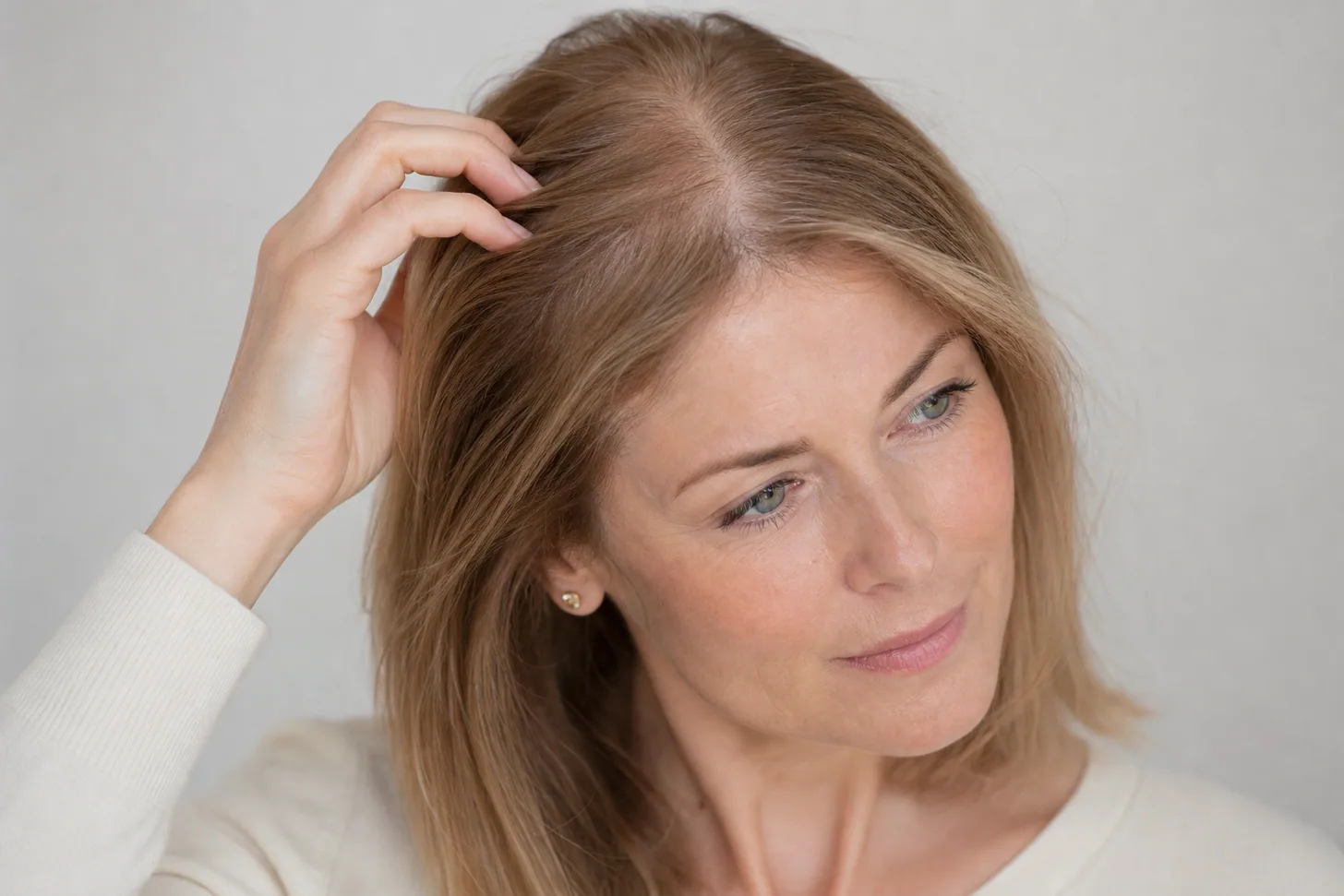
The less contrast between your hair and your scalp, the less a thinning part shows. Very dark hair over a pale scalp, or a stark line of dark regrowth, makes the skin look brighter by comparison.
Soft lowlights or a slightly lighter, warmer shade near the part reduce that contrast. A diffused root shadow hides regrowth for longer, so you color less often. The American Academy of Dermatology suggests staying within three shades of your natural color, which also keeps the regrowth line softer.
The AAD's tips for hair loss include stopping at-home coloring, perming and relaxing, and using a salon whose professionals examine your scalp first, because thinning hair is fragile. If you are mid-shed, a gloss or a root spray can carry you until the shedding settles.
The FDA also advises waiting at least 14 days after relaxing, perming or bleaching before dyeing, and not scratching or brushing your scalp hard for three days beforehand.
Do not color, and see a dermatologist, if
Your patch test causes redness, itching, swelling or burning. That is a possible allergic reaction. A dermatologist can patch-test you properly and tell you which dyes, if any, you tolerate.
Your scalp is already red, flaky, sore or sunburned. The FDA says not to dye an irritated or damaged scalp.
You had itching or a rash after your last color. Reactions often get worse with each exposure, and severe ones have been linked to heavy hair loss.
You started shedding two to four months after a color that itched. That timing fits telogen effluvium after scalp dermatitis. It usually recovers, but stop the dye and get a diagnosis.
You have ever had a "black henna" tattoo. It can sensitize you to PPD for years. Tell your colorist and patch-test carefully.
A safer color routine for thinning hair
Patch-test 48 hours before every color. Choose a gloss or demi for tone and gray blending, and save permanent color for regrowth that needs full coverage. Keep any lightener in foils, a little away from the root.
Space chemical services out, and never stack color with a relaxer or perm in the same week. Between appointments, a hair gloss or a root spray keeps the color fresh without peroxide.
FAQ
A gloss or demi-permanent color with no lift, applied mostly to the lengths, is the safest choice that still lasts several weeks. Temporary root sprays and powders are safer still but wash out. If you need gray coverage, use permanent color on the regrowth only.
Usually it causes breakage, not loss from the root. Hair loss from the follicle is less common and happens after a strong allergic reaction on the scalp, which can trigger shedding two to four months later, or after a chemical burn.
Not necessarily. Most ammonia-free permanent dyes use ethanolamine instead, which also strips the cuticle, and one lab study found more fibre damage with it. A demi-permanent with no lift is the genuinely gentler option.
It is one of the gentler options because it uses no peroxide and does not lift. It can still contain PPD or a related dye, so patch-test it like any other color.
Yes. The FDA recommends a patch test before every color, because you can develop an allergy even to a dye you have used for years.
Pure henna rarely causes allergy and is FDA-approved for hair, but it only gives red-brown tones and many products sold as natural henna have been found to contain PPD. If you react to PPD, choose a product with your dermatologist.
Often, yes, if the lightener is kept off the scalp in foils or painted from just below the root. Highlights can also soften the contrast between hair and scalp, which makes a thinning part less visible.
A shade that reduces contrast with your scalp. Soft lowlights, a slightly lighter or warmer tone near the part and a diffused root shadow all make the scalp show less than very dark, solid color with a sharp regrowth line.
Twelve years coloring fine and thin hair. Priya mixes one developer strength lower than the chart suggests on fine hair, and checks the first strand five minutes early.
This article is general information, not medical advice. If you have had a reaction to hair dye, or your scalp is irritated or shedding, see a board-certified dermatologist before coloring. Sources were checked in October 2026.
Hairstyle images in this guide are AI-generated illustrations, not photos of real clients or results. See our image policy.
Get the good hair intel
One honest, stylist-written guide in your inbox each week. No hype.

 PN