Reviewed by Tara Sullivan · Updated October 2026 · 11 min read
The best flat iron for Black hair that is fine is the one that goes lowest, not hottest. Fine coils straighten at far lower temperatures than most irons default to, and heat damage on a fine coil shows up as a curl pattern that never comes back.
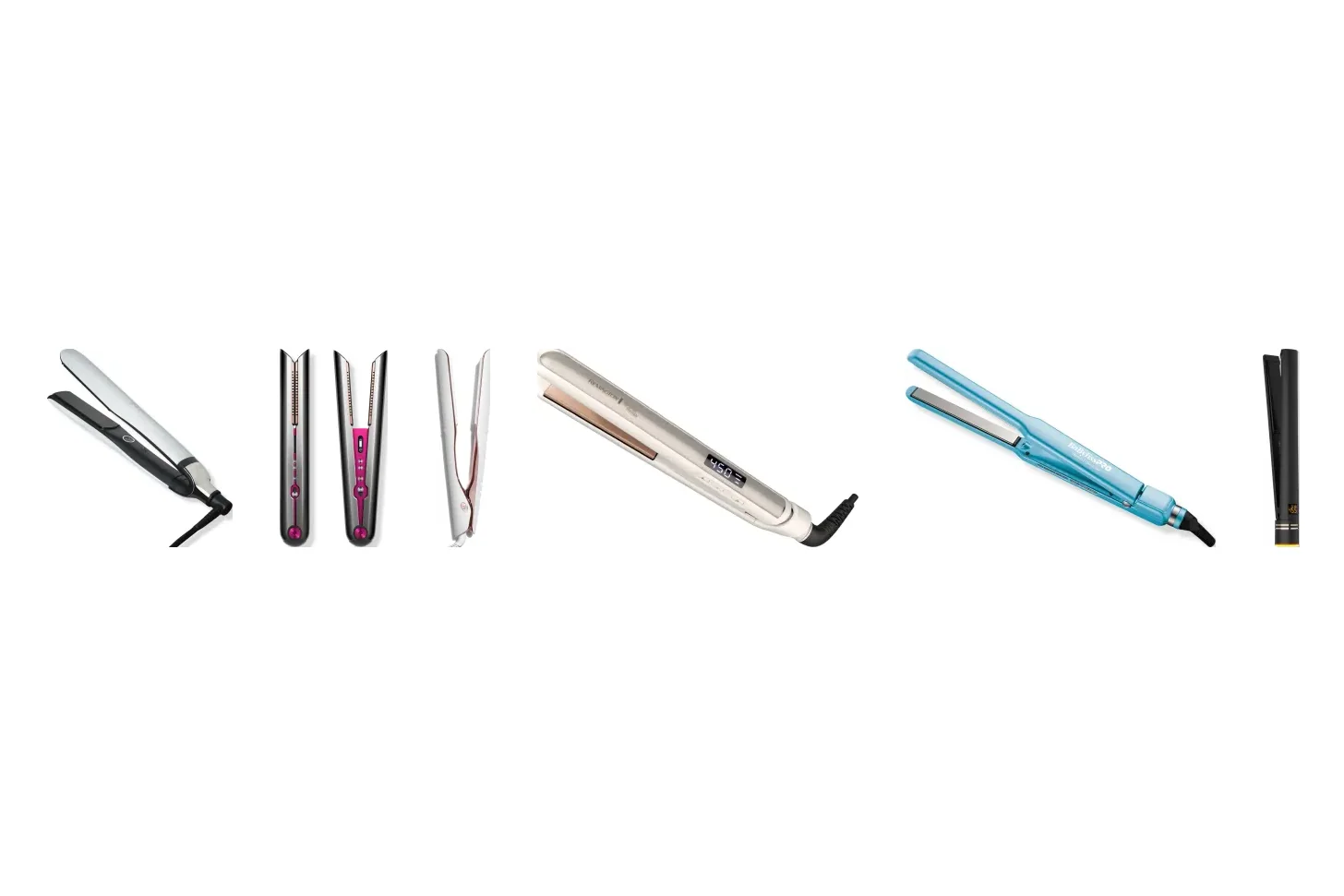
Below are six irons we checked on the brands' own pages, ranked by how well they serve fine natural and relaxed hair, plus the temperature to start at and a silk press method that keeps your curl pattern.
a Black woman with a fresh silk press on fine shoulder-length hair, swinging and smooth, soft daylight
These picks are independent and unpaid. Every spec and price below was checked on the brand's own product page in October 2026, and we link to the brands directly.
Chair-side note
Most of the heat-damaged fine coils I see were pressed at 425°F or 450°F because that is what the iron was set to, or what a video said. The client had no idea her hair would have gone straight at 330°F.
Buy an iron with a low, readable setting, and start at the bottom of it. You can always do a second pass. You cannot undo a damaged curl pattern.
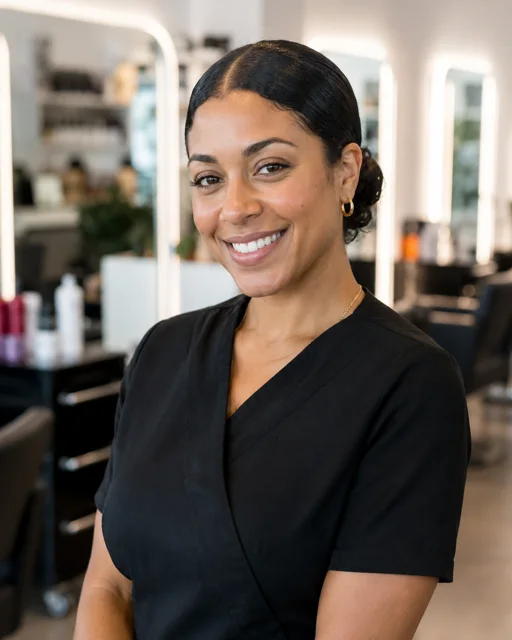
SB
— Simone Baptiste, Senior Stylist
The short verdict
Best overall: the Paul Mitchell Smooth+, the only iron here whose maker publishes a starting band for very fine hair, at 250°F to 290°F. Best digital control: the CHI G2, which starts at 180°F and shows the number.
Best for short natural hair and edges: the FHI Heat Platform, which goes down to 140°F and comes in a ½" plate. The ghd and the Dyson are excellent irons, but neither can go low enough for very fine coils.
What fine natural hair needs from a flat iron
A low minimum you can see. The American Academy of Dermatology advises Black women to straighten with a ceramic iron that has a dial, at the lowest setting that gives the style, no more than once a week. On fine hair the minimum temperature is the spec that matters, not the maximum.
The right plate width. A 1" plate suits most lengths. A ½" plate gets closer to the root on a short cut, a TWA and the edges; a 1.25" plate is faster on longer hair.
Smooth, floating plates. Floating plates flex with the section so you can use less pressure, and smooth ceramic glides through in one pass rather than three. Fewer passes do more for fine hair than any coating.
Fineness is about the width of each strand, not how much hair you have; if you are unsure which you have, fine natural hair explains the difference and the care routine around it.
The best flat irons for Black hair that is fine, ranked
Paul Mitchell Smooth+ ceramic flat iron in taupe with curved plates, product packshot on white
1
Best overall for fine natural hair: Paul Mitchell Smooth+ Ceramic Flat Iron
CeraShine ceramic plates with curved edges, a large digital display and heat up to 410°F. Paul Mitchell's own page gives a temperature guide: very fine hair 250°F to 290°F, fine 290°F to 330°F, medium 330°F to 370°F.
That published low band is why it ranks first; it tells fine-haired users exactly where to start. It has a one-hour auto-off, automatic dual voltage and a 9 ft swivel cord. Price: $130 (1.25"), $140 for the 1.5" XL. Honest limitation: the narrowest plate is 1.25", which is less precise on a TWA or at the edges.
CHI G2 1 inch digital flat iron with titanium-infused plates, product packshot on white
2
Best digital control: CHI G2 1" Professional Digital Hairstyling Iron
Titanium-infused ceramic plates, a digital readout from 180°F to 425°F and colour-coded ranges by hair type. It heats in about 40 seconds and has a one-hour auto shut-off and an 11 ft swivel cord.
The 180°F minimum and the clear number make it easy to repeat a safe setting every press. Model: GF1595A, $142. Honest limitation: CHI does not print the °F values of its colour bands, so set it by the number. Our CHI flat iron for fine hair guide explains why the classic CHI Original is not the one to buy.
FHI Heat Platform Signature Pro Styler 1 inch flat iron with floating ceramic plates, product packshot on white
3
Best for short natural hair and edges: FHI Heat Platform Signature Pro Styler
Floating plates of tourmaline-infused ceramic and an adjustable range of 140°F to 450°F, the lowest minimum here. It comes in ½", 1", 1.25" and 1.75" plates, and the ½" is the one for a TWA, a tapered cut or the edges.
It has a one-hour auto shut-off, dual voltage, a 12 ft swivel cord and a two-year warranty. Model: PF7001 (1"), $150. Honest limitation: FHI publishes no temperature guide by hair type, and the 450°F top end is far above what fine coils need.
T3 SinglePass StyleMax 1 inch flat iron in white, product packshot on white
4
Best for one smooth pass: T3 SinglePass StyleMax 1"
CeraGloss ceramic plates, nine digital heat settings and T3's SinglePass technology, which T3 says matches a setting to your hair texture. It has a one-hour auto-off and automatic world voltage.
The plates glide very smoothly, which helps fine relaxed hair straighten in one pass. Price: $179.99. Honest limitation: T3 does not publish the temperatures behind its nine settings, so you cannot confirm the lowest one is low enough for very fine coils.
ghd Platinum+ 1 inch flat iron in black, product packshot on white
5
Best fixed-heat iron: ghd Platinum+ Flat Iron
1" high-gloss plates held at a single 365°F, which ghd monitors 250 times a second. It has a sleep mode after 30 minutes, universal voltage, a plate guard and a three-year warranty.
The even, constant heat gives a very smooth press on medium-fine relaxed hair. Price: $222.99 (was $319). Honest limitation: you cannot turn it down, and 365°F is above the band Paul Mitchell suggests for very fine hair.
Dyson Corrale cordless straightener in Prussian blue and copper, product packshot on white
6
Best cordless: Dyson Corrale Styler Straightener
Flexing copper-alloy plates that gather the section, three settings of 330°F, 365°F and 410°F, and a cordless battery that lasts up to 30 minutes. It turns off after 10 minutes and has a safety lock.
The flexing plates hold a section with less pressure, and the cord-free design is genuinely easier at the back of the head. Price: $539.99. Honest limitation: its lowest setting is 330°F, too hot for very fine or previously damaged coils, and it is by far the most expensive iron here.
Start at 250°F to 290°F if your strands are very fine, and 290°F to 330°F if they are fine. Those are Paul Mitchell's published bands, and they match what we see at the chair. Only go up in small steps if a section will not stay smooth.
Lab work on flat-ironed hair found keratin starting to break down from about 200°C, which is 392°F. Fine coils have less cortex to absorb heat, so they reach that damage sooner.
The test for heat damage is simple. After your next wash, check whether every section springs back into its curl. A section that dries straight and limp has been damaged, and only a trim removes it.
How to silk press fine 4c hair without losing your curl pattern
Wash with a clarifying shampoo so no product cooks onto the hair, then deep condition. Our best clarifying shampoo for fine hair lists gentle options.
Blow-dry on a medium setting with a comb attachment until the hair is completely dry; an iron on damp hair boils the water inside it. Apply a heat protectant section by section.
Work in small sections, comb-chase with a fine-tooth comb, and make one slow pass, two at most. On fine hair, fewer passes at a lower heat beat many fast passes at a high one.
Flat ironing fine relaxed hair
Relaxed hair has already been weakened by the chemical, so it needs even less heat than natural hair. One pass on a low setting is usually enough, and many fine relaxed clients do better with a roller set.
The AAD suggests no more than once a week. For fine coils, treat a silk press as an occasional event rather than a weekly routine, and wear protective or heat-free styles in between.
A shorter cut also reduces how much heat you need; hairstyles for fine 4C hair has cuts that look full without pressing.
FAQ
An iron with a low, readable minimum temperature. We rank the Paul Mitchell Smooth+ first because its maker publishes a 250°F to 290°F band for very fine hair, then the CHI G2 (from 180°F) and the FHI Heat Platform (from 140°F, with a ½" plate).
Start at 250°F to 290°F for very fine strands and 290°F to 330°F for fine strands, and go up only in small steps if a section will not stay smooth. Most fine coils never need 400°F or more.
For fine natural hair, yes. Lab studies record keratin breaking down from about 392°F, and fine strands have less cortex to absorb heat. 450°F is a setting for very coarse hair, if at all.
A 1" plate suits most lengths. A ½" plate is better for a TWA, a tapered cut and the edges, and a 1.25" plate is faster on longer hair.
The adjustable CHI G2 is, because it goes down to 180°F. The classic CHI Original is fixed at 392°F, which is too hot for fine natural or relaxed hair.
After washing, a heat-damaged section stays straight or loose and limp while the rest springs back into its curl. Conditioning can improve the feel, but only a trim removes the damaged length.
The American Academy of Dermatology suggests no more than once a week. For fine coils, less is better: treat a silk press as an occasional style and use heat-free styles in between.
Sparingly. Relaxed hair is already chemically weakened, so use the lowest setting and one pass. Many people with fine relaxed hair get a smoother, healthier result from a roller set.
Eleven years behind the chair, specializing in short shapes and fine-hair texture. Simone believes the best haircut is the one you can style yourself in ten minutes.
Specs, prices and stock were checked on each brand’s official site in October 2026; models and prices change, so check the listing before you buy. These picks are independent; no brand saw this article or paid for placement.
Images in this article are AI-generated illustrations, not photos of real clients or results. See our image policy.
Get the good hair intel
One honest, stylist-written guide in your inbox each week. No hype.

 SB