

1
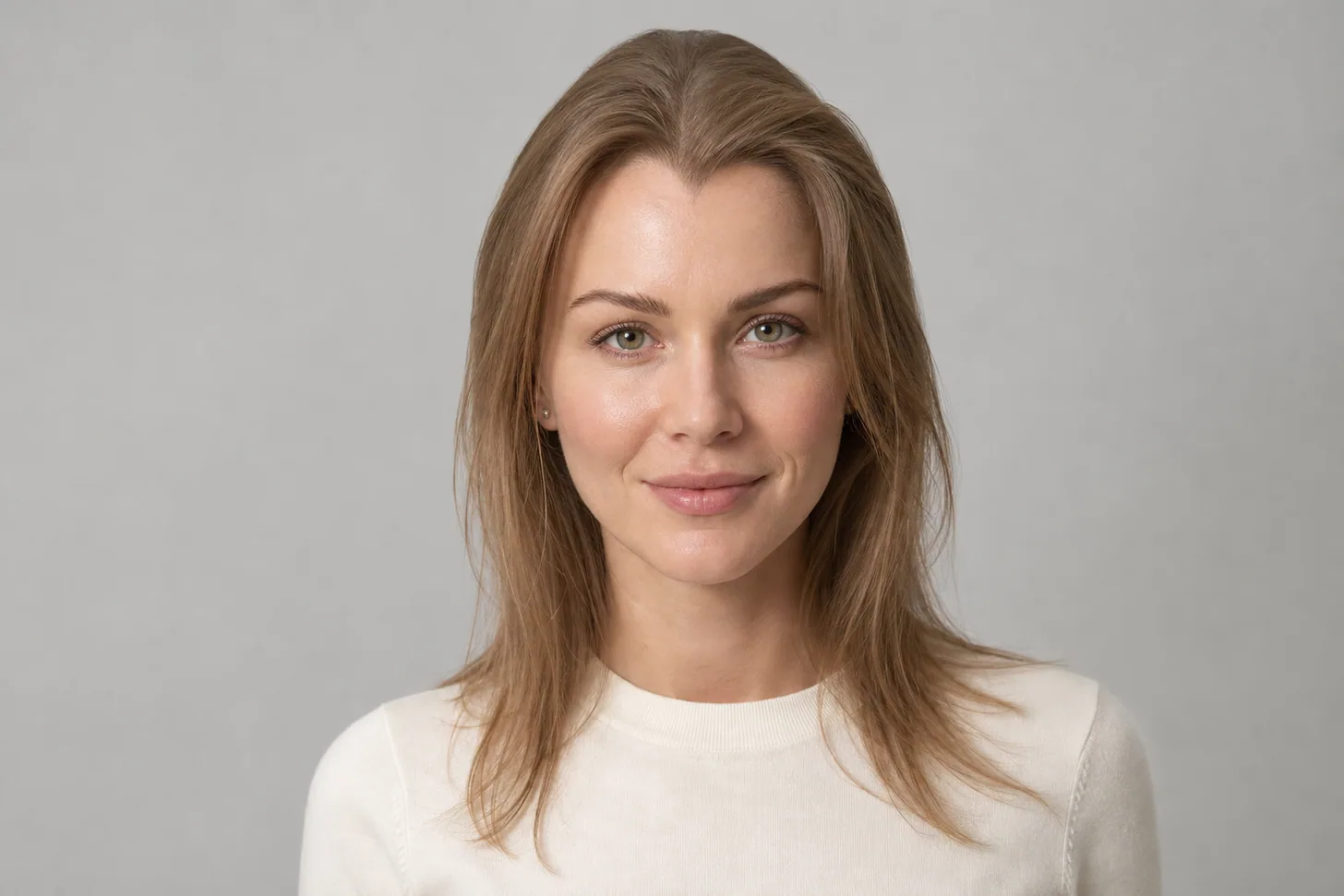
Curtain bangs split at the peak
The split of a curtain bang sits right at the point, so the peak becomes the part line instead of a gap.
It is the fringe I cut most often for a widow's peak. See curtain bangs for fine hair.
 SB
A widow's peak is a V-shaped point in the center of the front hairline, and on thin hair it looks best when the cut moves hair away from the point rather than over it. Hair at a widow's peak grows in a whorl and won't lie flat as a straight fringe, so a heavy blunt bang usually splits and shows scalp.
What works is a part placed to follow the growth, face-framing that starts beside the peak, and enough lift at the roots that the point reads as a feature. Below are 10 cuts for thin hair with a widow's peak, and how to tell a genetic peak from a hairline that is starting to recede.
Before I cut anything near a widow's peak, I wet the front and let it fall. The hair at the point almost always splits in one direction. That is where your part wants to be, and where any fringe has to start from.
Fight it with a straight bang and you get the classic problem: a gap at the center by noon. On thin hair the gap shows scalp, which is why I steer most clients toward curtain bangs, side-swept pieces or no fringe at all.
SBIt is a point in the front hairline, where the hair on each side meets in a V at the center of the forehead. It is usually inherited and present from your teens. On its own it is not a sign of hair loss. On fine or thin hair it can look more noticeable, because there is less hair around it to soften the edges.
A widow's peak has always been there and the hair at the point is as dense as the hair beside it. A receding hairline is new: the temples move back over months or years and the hair at the front gets finer. If the corners beside your peak are thinning, or the point looks more pronounced than it did a few years ago, read thinning hairline in women and the cuts in haircuts for a receding hairline. Tight ponytails and slicked-back styles can also pull the hairline back over time.
Choose pieces that open at the point. These hide less forehead than a full bang but they don't split.
The split of a curtain bang sits right at the point, so the peak becomes the part line instead of a gap.
It is the fringe I cut most often for a widow's peak. See curtain bangs for fine hair.

A long fringe that falls the same way the peak grows. It covers one side of the forehead without a split.
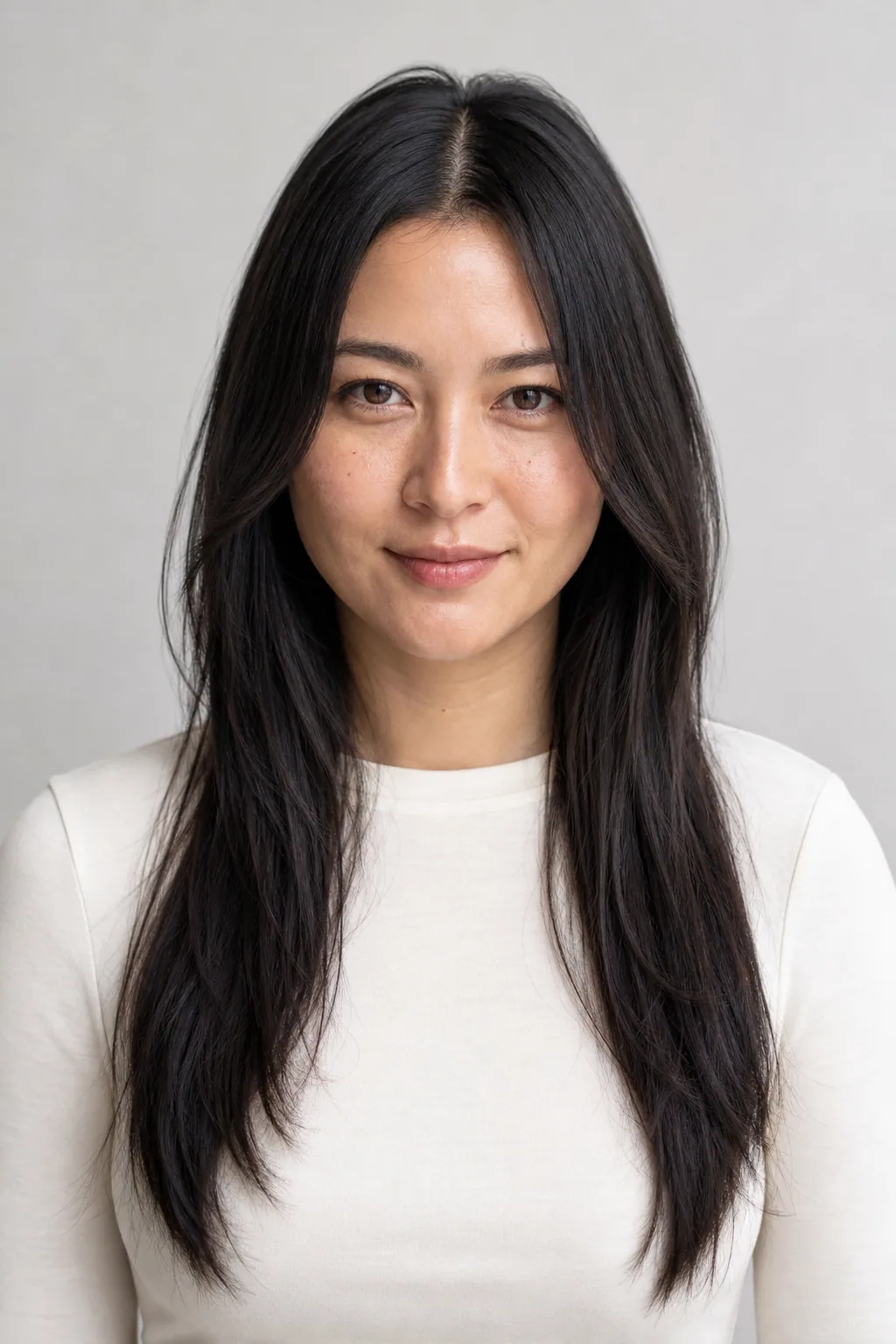
No bangs at all. The layers start beside the peak at the cheekbones, which draws the eye down and out.
The simplest option if you have a strong whorl. See face-framing layers for fine hair.
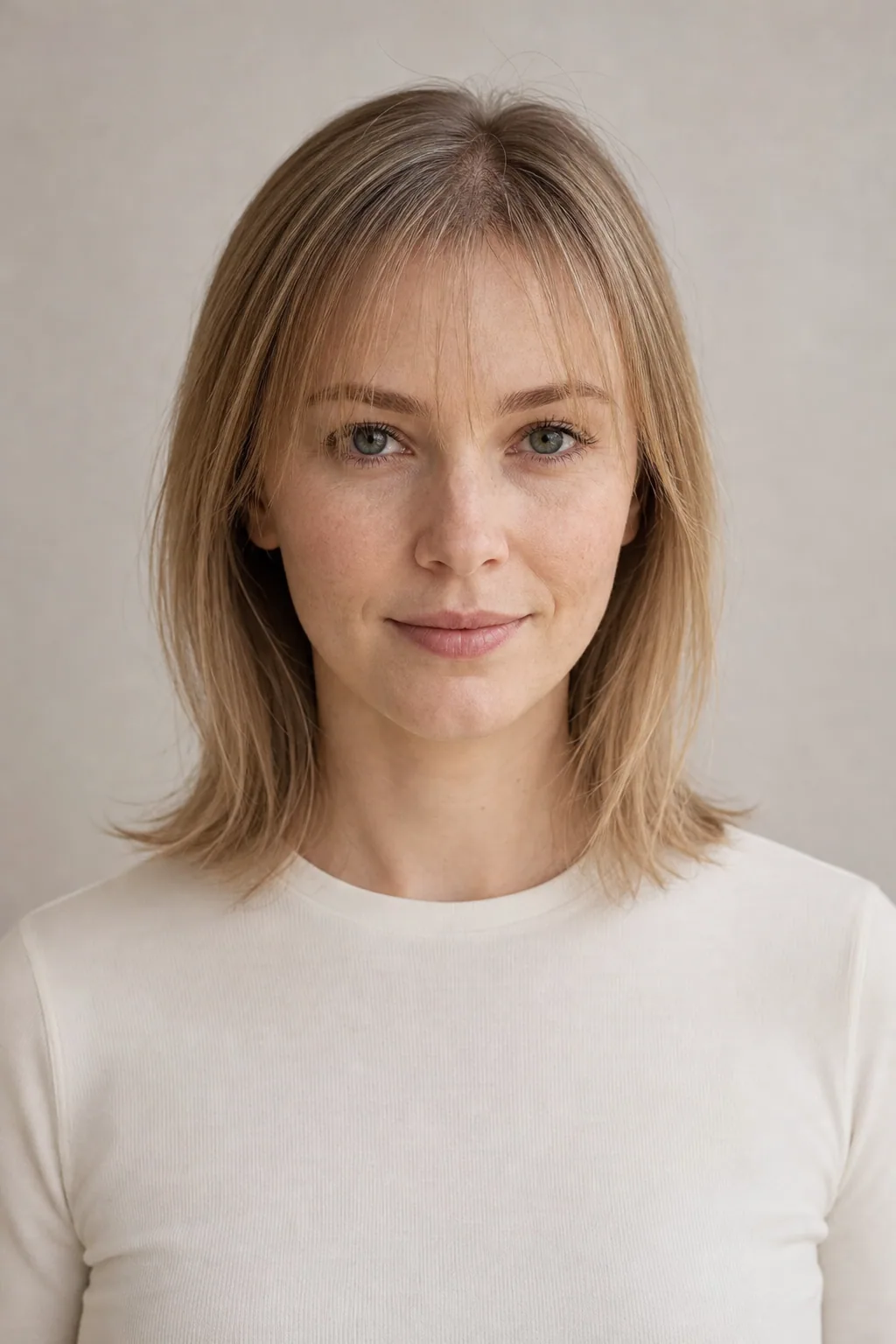
For a mild peak only. A sheer fringe can be pushed slightly to one side if it starts to split.
If you'd rather wear the peak, these cuts put lift behind it so it looks deliberate.
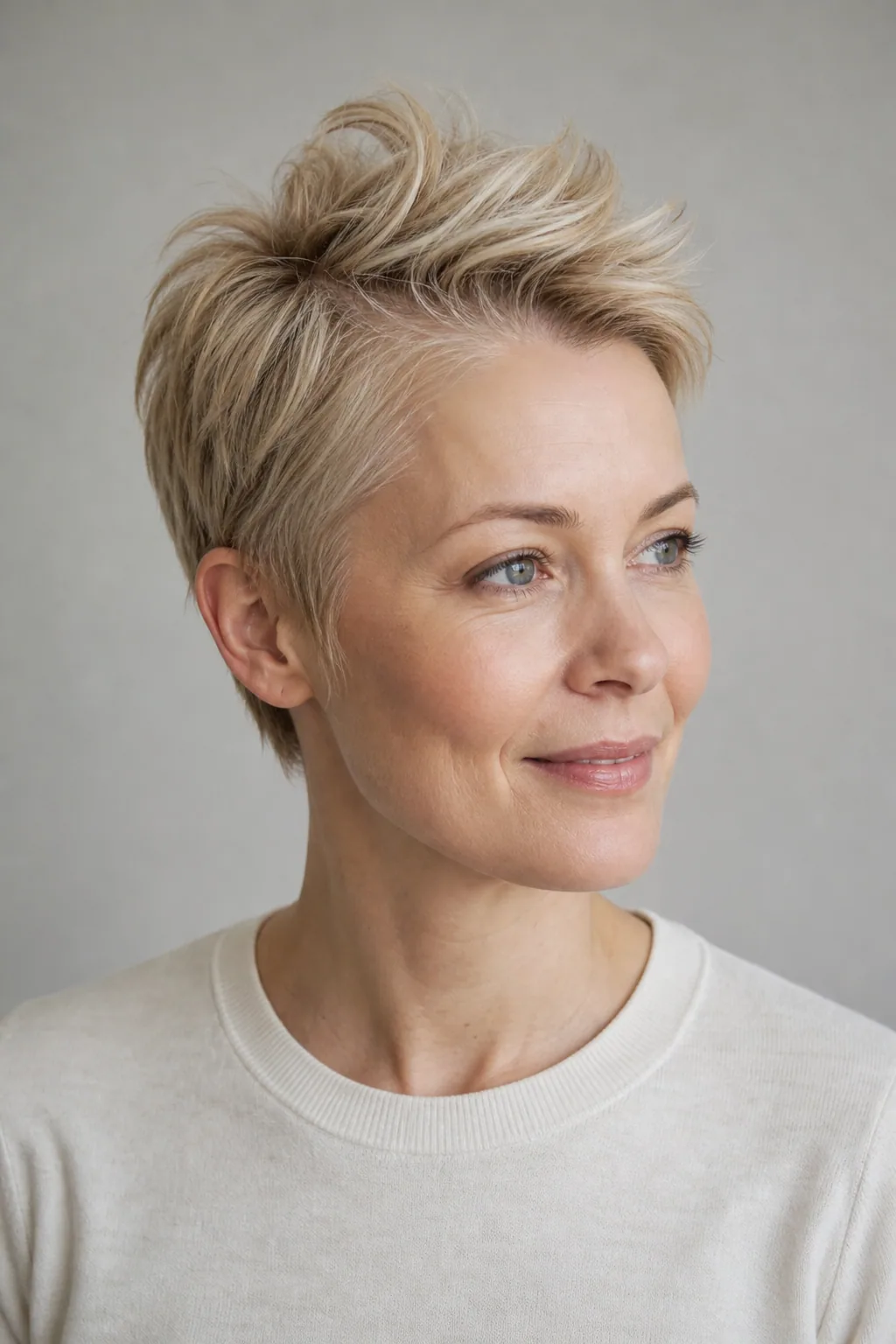
Short hair swept up and to the side makes the point part of the shape.
A pixie also lifts at the crown on its own, which fine hair needs. See the pixie for fine hair.

A deep side part that starts just beside the point sweeps hair across the forehead and adds height on the heavy side.
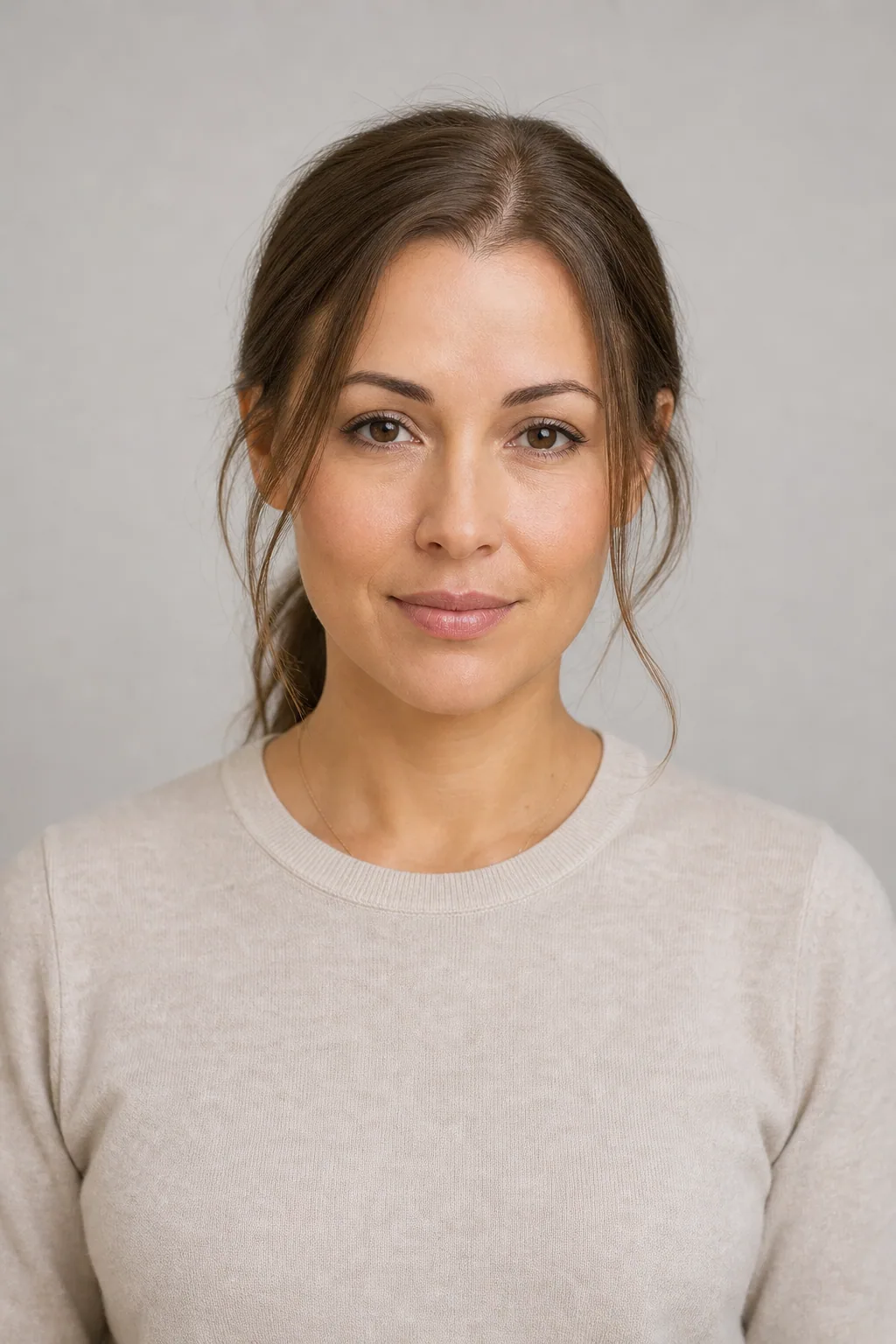
Keep the ponytail low and loose, and leave two pieces out at the temples. A tight high ponytail strains the hairline at the point.
Length pulls attention away from the forehead. Keep it light around the face.
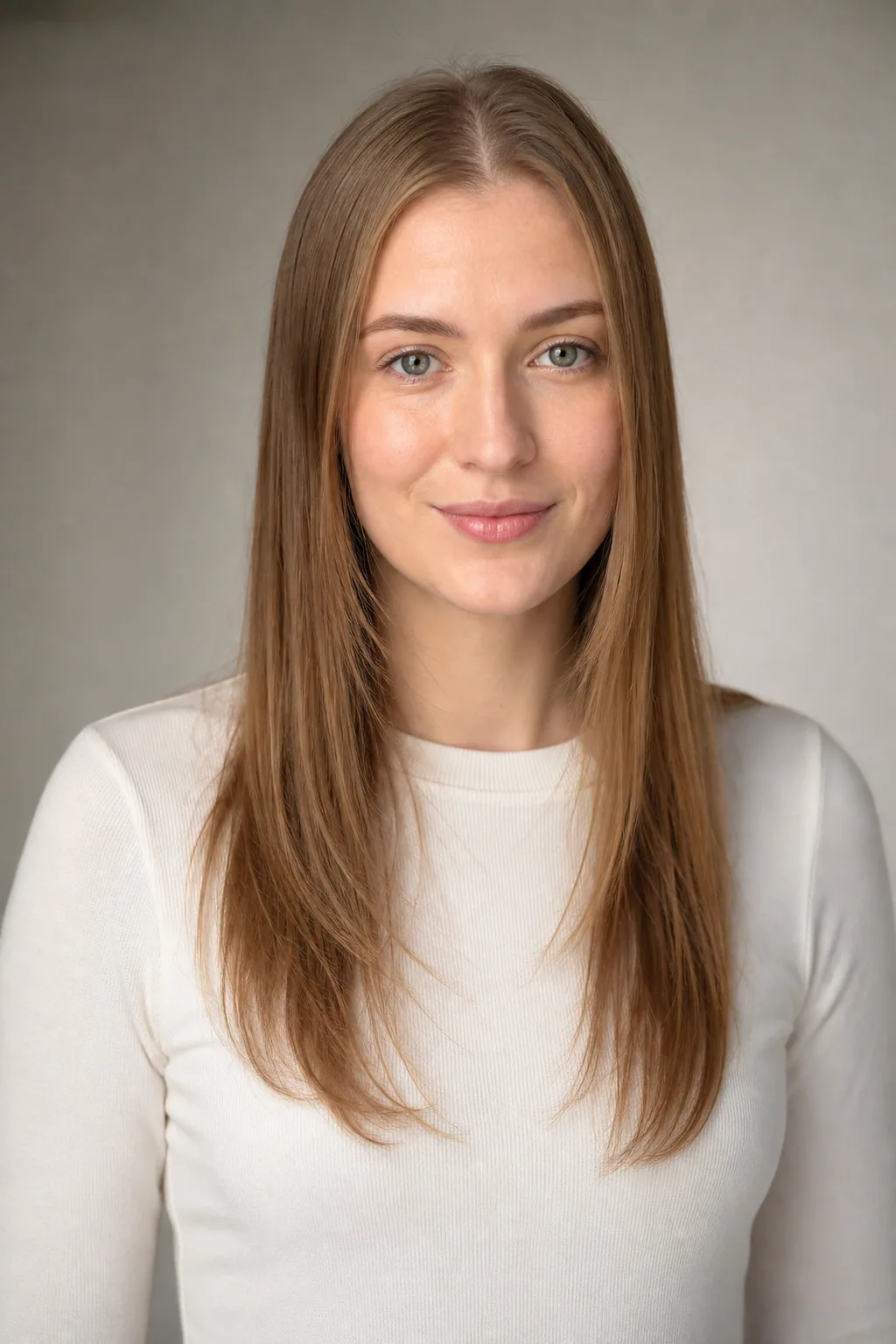
When the peak is centered and grows straight back, a middle part looks symmetrical and natural.
If the roots go flat, lift them with a root spray. See where to part fine hair.
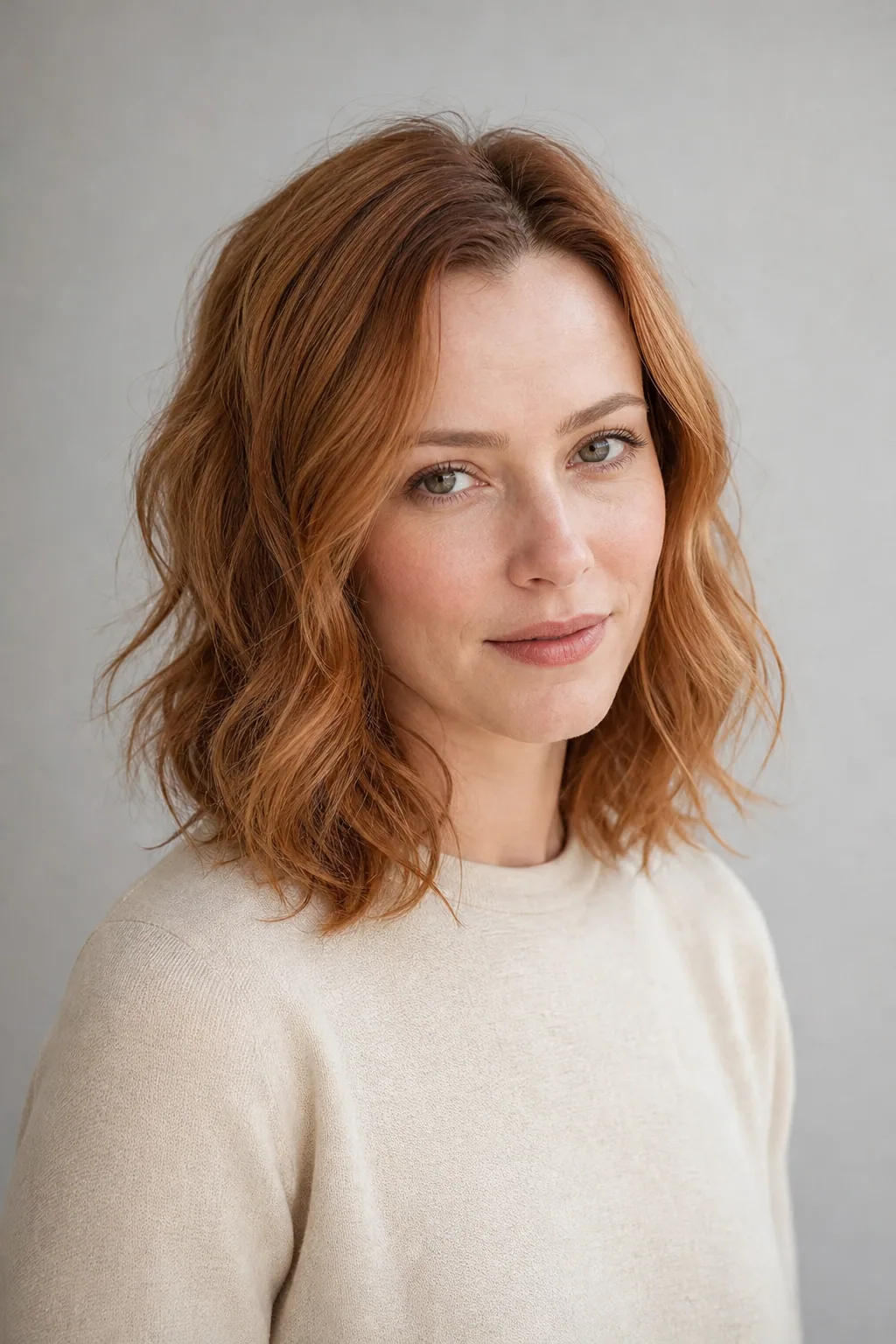
Waves add width at the sides, which balances a strong point at the center.
See fine, wavy hair.
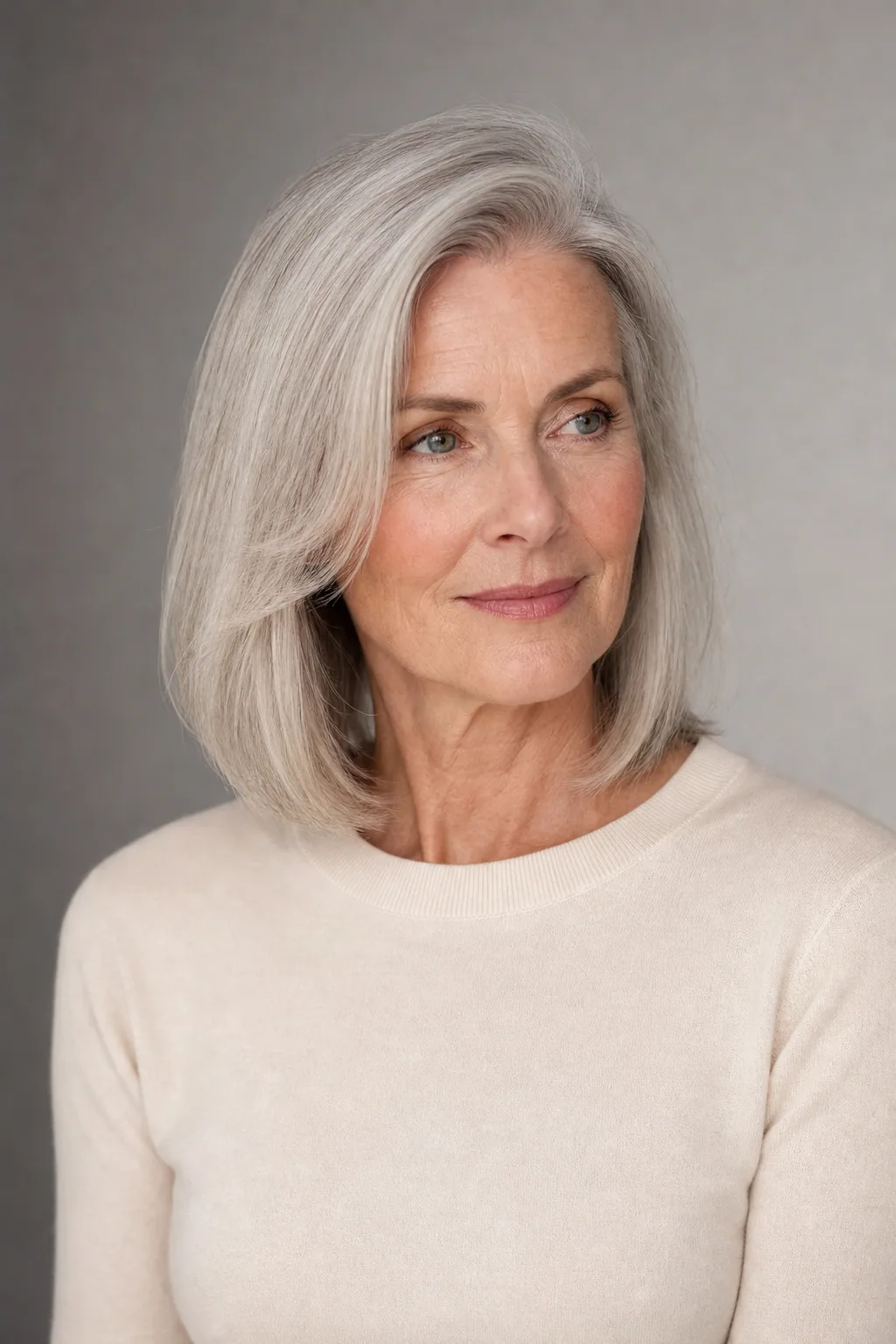
Lift at the root behind the peak softens the hairline as hair gets finer with age.
Say: "I have a widow's peak and fine hair. Please check which way the hair at the point falls when it's wet, and part it there. If we cut a fringe, I'd like curtain or side-swept pieces that open at the point, not a straight bang." Ask them to cut the front dry, so you both see how it sits.
Blow-dry the front first while it is damp. Direct the hair at the point the way it grows, then lift it from the root with a small round brush. A light root lifter keeps it from flattening into a gap. Use a soft scrunchie and a loose tie for ponytails to protect the hairline. See hair ties for fine hair.
Curtain bangs split at the point, side-swept fringes, face-framing layers without a fringe, and swept-back short cuts. Straight blunt bangs usually split and show scalp.
Yes, if they open at the point. Curtain and side-swept bangs work. A straight, heavy bang fights the whorl and splits by midday.
Usually not. It is typically inherited and present from the teens. If the hair beside the point is thinning or the temples are moving back, that is a receding hairline and worth checking.
Wet the front and see which way the point falls. A center part suits a peak that grows straight back; a side part suits one that leans to one side.
Choose curtain bangs or a side-swept fringe that starts at the point, and add lift at the roots. Avoid styles that pull the front tightly back.
Loose ones don't. Tight, high ponytails worn every day put tension on the hairline and can thin it over time.



 SB
Eleven years behind the chair, specializing in short shapes and fine-hair texture. Simone believes the best haircut is the one you can style yourself in ten minutes.
More from Simone →Results vary with hair type, density and growth patterns. Haircut guidance is not a substitute for an in-person consultation with a licensed stylist, and a hairline that is changing is worth raising with a dermatologist.
Hairstyle images in this guide are AI-generated illustrations, not photos of real clients or results. See our image policy.