Reviewed by Tara Sullivan · Updated October 2026 · 11 min read
A pixie is often the easiest haircut for fine hair after 70. Short hair weighs less, so it lifts at the root, and a good pixie needs little more than a towel and your fingers.
The cuts that work best after 70 are softer and a little longer than the cropped pixies in trend roundups. Here are 14 pixie haircuts for women over 70 with fine or thinning hair, and when a pixie isn't the answer.
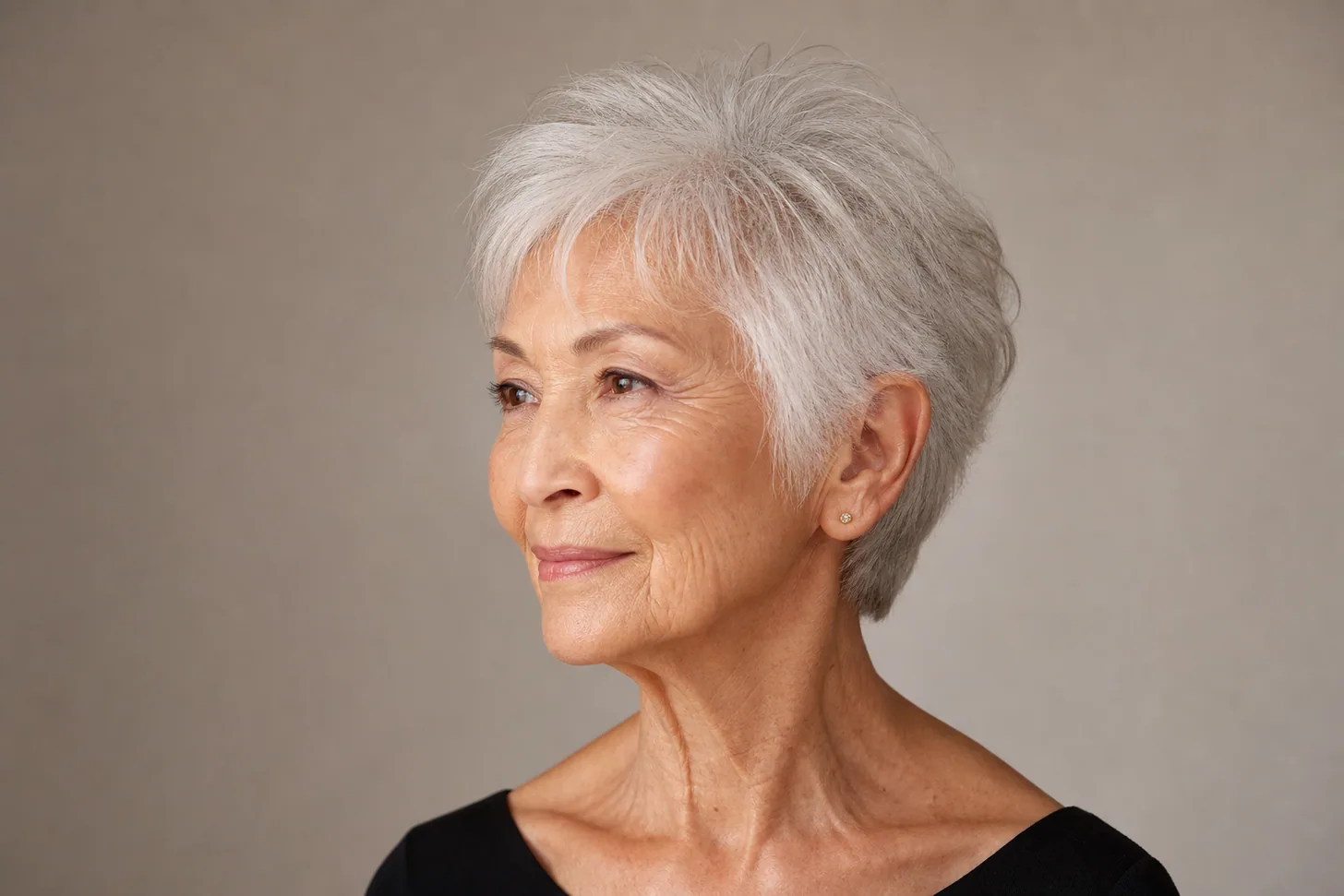
soft long pixie with a full lifted crown and side-swept fringe on fine silver-white hair, woman in her 70s, front three-quarter view
Chair-side note
After 70, fine hair usually gets thinner at the crown and the temples, and it may grow in drier or more wiry if it's gone gray. A pixie can handle all of that. Cut wrong, it shows all of it.
I leave the top longer than most people expect, usually two to three inches. That length is what you style into lift. Cut it too short, and fine hair lies flat against the scalp, which makes it look thinner.
SB
— Simone Baptiste, Senior Stylist
Why a pixie works on fine hair over 70
Short hair is light, so the roots can stand up instead of being pulled flat by the length. A pixie also takes about five minutes to style and dries in minutes, which matters if your arms tire holding a dryer.
The softest shapes, with length on top. These suit most faces and are the easiest to grow out if you change your mind.
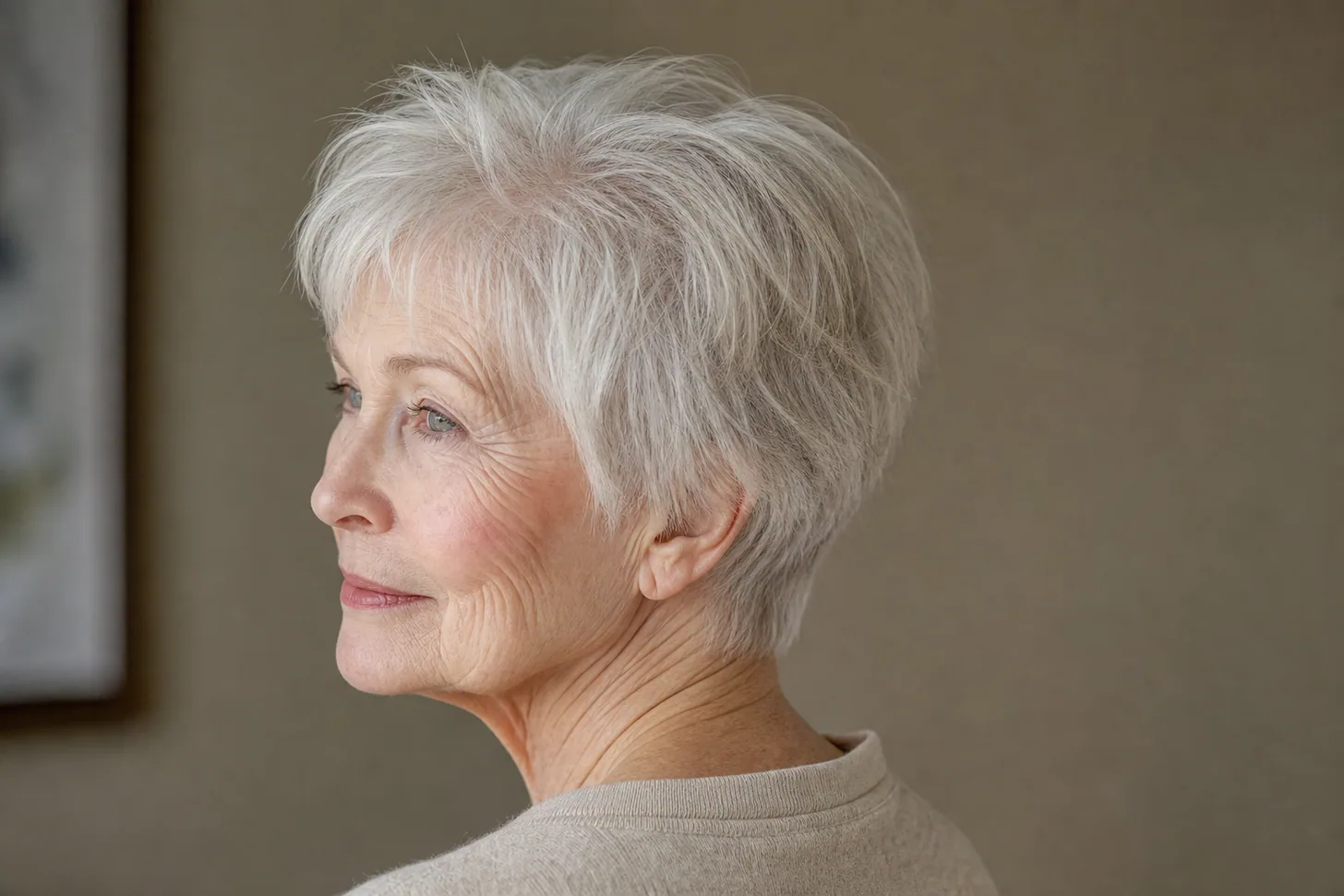
soft rounded long pixie on fine light-gray hair, two to three inches on top, rounded crown, ear-length sides, woman in her 70s, front three-quarter view
1
Soft rounded long pixie
About three inches on top, rounded at the crown, with the sides at the ears. It's the pixie I cut most often for clients over 70.
The rounded crown looks full from every angle.
feathered pixie on fine silver hair, soft feathered layers swept back and away from the face at the sides, lifted top, woman in her 70s, side three-quarter view
2
Feathered pixie swept off the face
Soft, feathered sides swept back from the face. Brushing the hair back lifts the roots and opens up the eyes and cheekbones.
A little mousse and a round brush give the sweep.
pixie with a long soft side fringe sweeping across the forehead on fine white hair, tapered sides, woman in her 70s, front view
3
Pixie with a soft side fringe
A longer fringe swept across the forehead. It softens forehead lines and covers a thinning hairline at the same time.
Texture hides gaps. On fine hair that is thinning all over, a piece-y finish looks fuller than a smooth one.
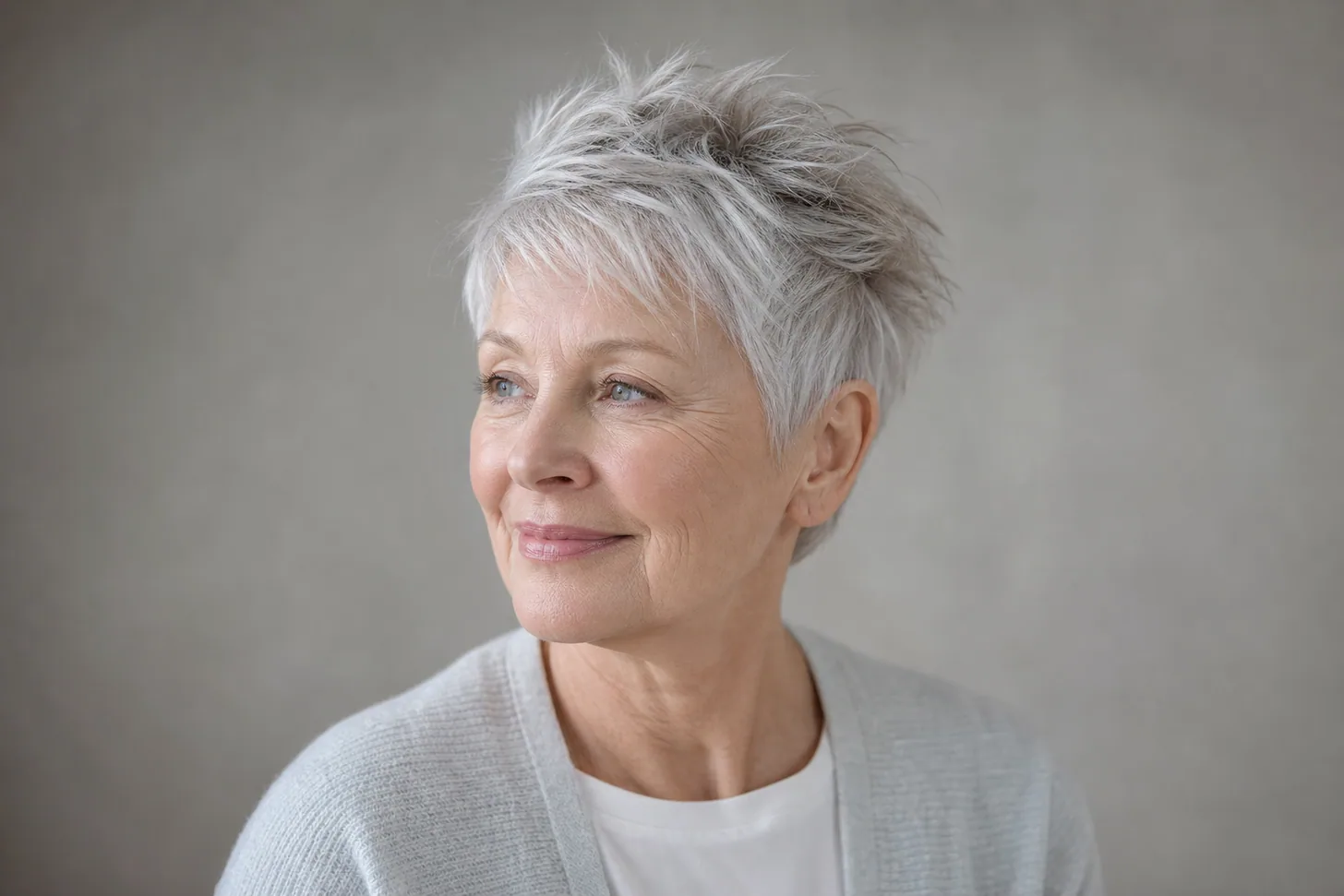
choppy pixie on fine silver-gray hair, short piece-y point-cut layers on top tousled with fingers, short sides, woman in her 70s, front three-quarter view
5
Choppy pixie over 70
Short, piece-y layers on top, tousled with your fingers. The uneven pieces hide the scalp better than a smooth surface.
A pea-size amount of texture spray or paste is all it needs.
wash-and-go textured pixie on fine wavy gray hair, soft natural wave on top left to air-dry, short tapered sides, woman in her 70s, front view
6
Wash-and-go textured pixie
Cut to the natural bend in your hair and left to dry on its own. If your hair turned wavy with age, this uses it.
soft shaggy pixie on fine blond-gray hair, wispy layered top and soft wisps at the nape and around the ears, tousled, woman in her 70s, front three-quarter view
7
Shaggy pixie over 70
Wispy layers on top with softer pieces around the ears and nape. It's a more modern pixie that still looks soft.
The details that matter most after 70: frames, gray texture and where the hair is thinnest.
pixie on fine white hair with the sides cut neatly above and behind the ears clear of the glasses arms, soft lifted top, woman in her 70s wearing tortoiseshell glasses, front three-quarter view
8
Pixie cut around glasses
The sides are cut clear of the arms of your glasses, so the hair doesn't get pushed flat. Bring your glasses to the appointment.
polished pixie on fine bright-silver hair, smooth glossy top brushed into a soft side part, neat tapered nape, woman in her 70s, front three-quarter view
9
Polished silver pixie
A smooth, glossy pixie with a soft side part. Shine makes silver hair look healthy, and a neat shape looks deliberate.
pixie with a longer layered crown section brushed forward and to the side over a thinning crown on fine light-gray hair, woman in her 70s, back three-quarter view
10
Pixie with a longer crown
The crown is left longer and brushed forward, so it covers a thin spot at the back of the head. It's the most useful pixie for a thinning crown.
soft pixie with fuller wispy sides at the cheekbones and a low side fringe on fine silver hair, flatter top, woman with a long face in her 70s, front view
13
Soft pixie for a long face
Fuller, wispy sides and a low fringe, with less height on top. The width at the cheekbones balances a long face.
Towel-dry your hair, then work a golf-ball amount of volumizing mousse into the roots on top. Blow-dry the top with your fingers, lifting it up and back, for about two minutes. Let the rest air-dry.
Finish with a tiny amount of paste rubbed between your fingertips and pinched through the ends. Skip heavy creams and oils, which flatten fine hair. On second-day hair, a little dry shampoo at the roots brings the lift back.
What to ask your stylist
Say: "I'd like a soft pixie with two to three inches on top and a rounded crown. Please keep the sides and nape soft, not clippered, and don't use thinning shears."
Ask for a trim every five to seven weeks. A pixie loses its shape fast, and on fine hair the crown is the first thing to flatten.
When a pixie is the wrong call over 70
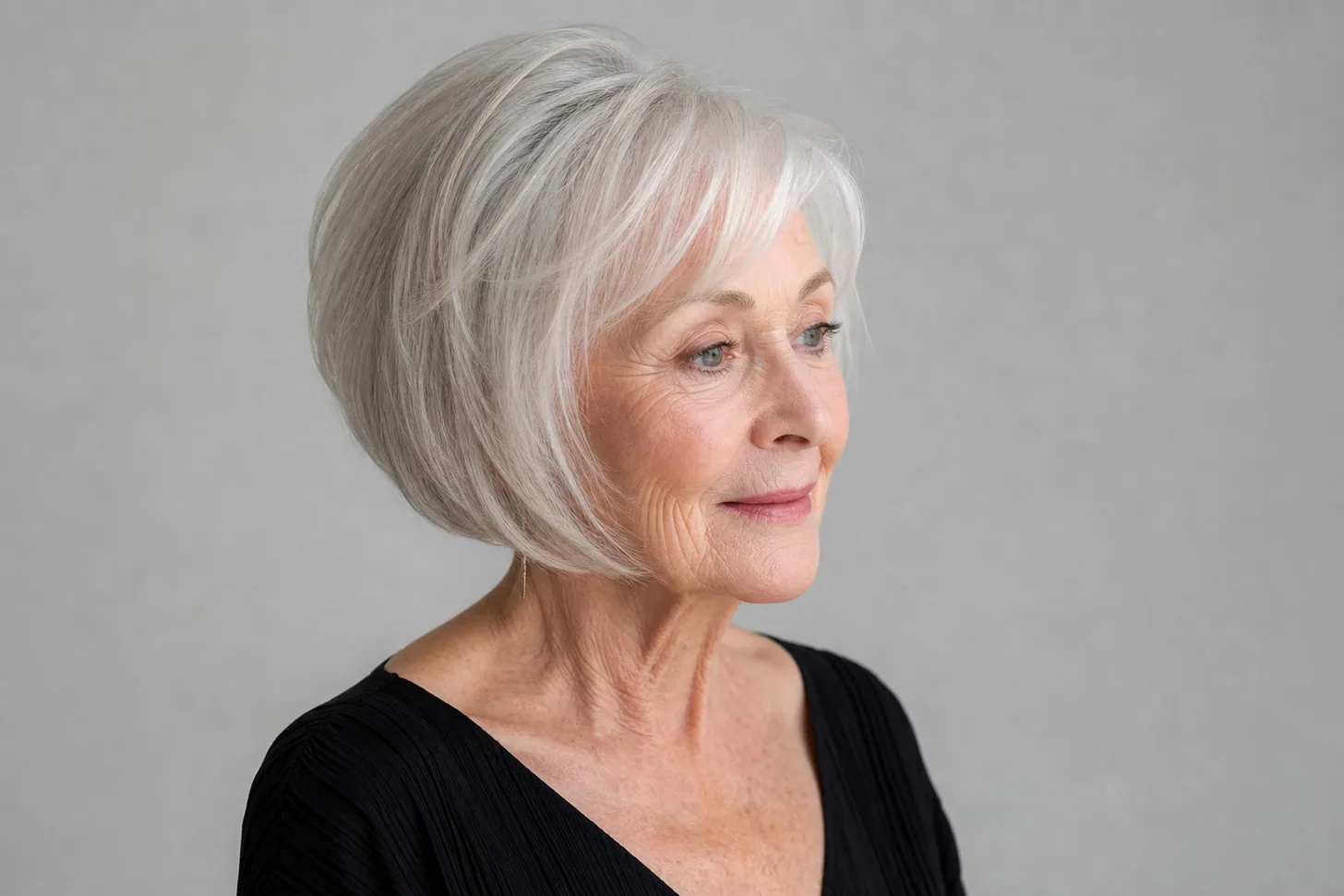
Your scalp shows through all over the top. A very short cut can make it more visible. A longer crown or a soft bob may cover more.
You can't get to a salon every six weeks. A grown-out pixie loses its lift. A soft bob grows out more gracefully.
You like to tie your hair back. A pixie is too short for clips or a small ponytail.
Your hair has thinned suddenly or in patches. Talk to a doctor first. See why your hair is thinning.
You have strong cowlicks at the crown. Very short hair stands up at a cowlick. Ask your stylist to leave weight there.
FAQ
A soft, rounded long pixie with two to three inches on top suits most women over 70. The length on top gives the lift that fine hair needs, and the rounded crown looks full.
Usually, yes. Short hair is light, so it lifts at the root. A longer crown or forward fringe can also cover thin spots. If the scalp shows all over the top, a soft bob may cover more.
No. A soft pixie with some height and texture usually looks fresher than long, flat hair. Very severe, clippered pixies can look harsh, so ask for soft edges.
Every five to seven weeks. A pixie loses its shape quickly, and fine hair at the crown flattens first.
A pixie with the sides cut clear of the glasses arms and a fringe that ends above the frames. Bring your glasses to the appointment so your stylist can check the line.
Use volumizing mousse at the roots and blow-dry the top up and back with your fingers for two minutes. Finish with a little paste on the ends, never heavy cream.
Eleven years behind the chair, specializing in short shapes and fine-hair texture. Simone believes the best haircut is the one you can style yourself in ten minutes.
Results vary with hair type, density and growth patterns. Haircut guidance is not a substitute for an in-person consultation with a licensed stylist, and sudden or heavy hair loss is worth raising with a doctor.
Hairstyle images in this guide are AI-generated illustrations, not photos of real clients or results. See our image policy.
Get the good hair intel
One honest, stylist-written guide in your inbox each week. No hype.

 SB