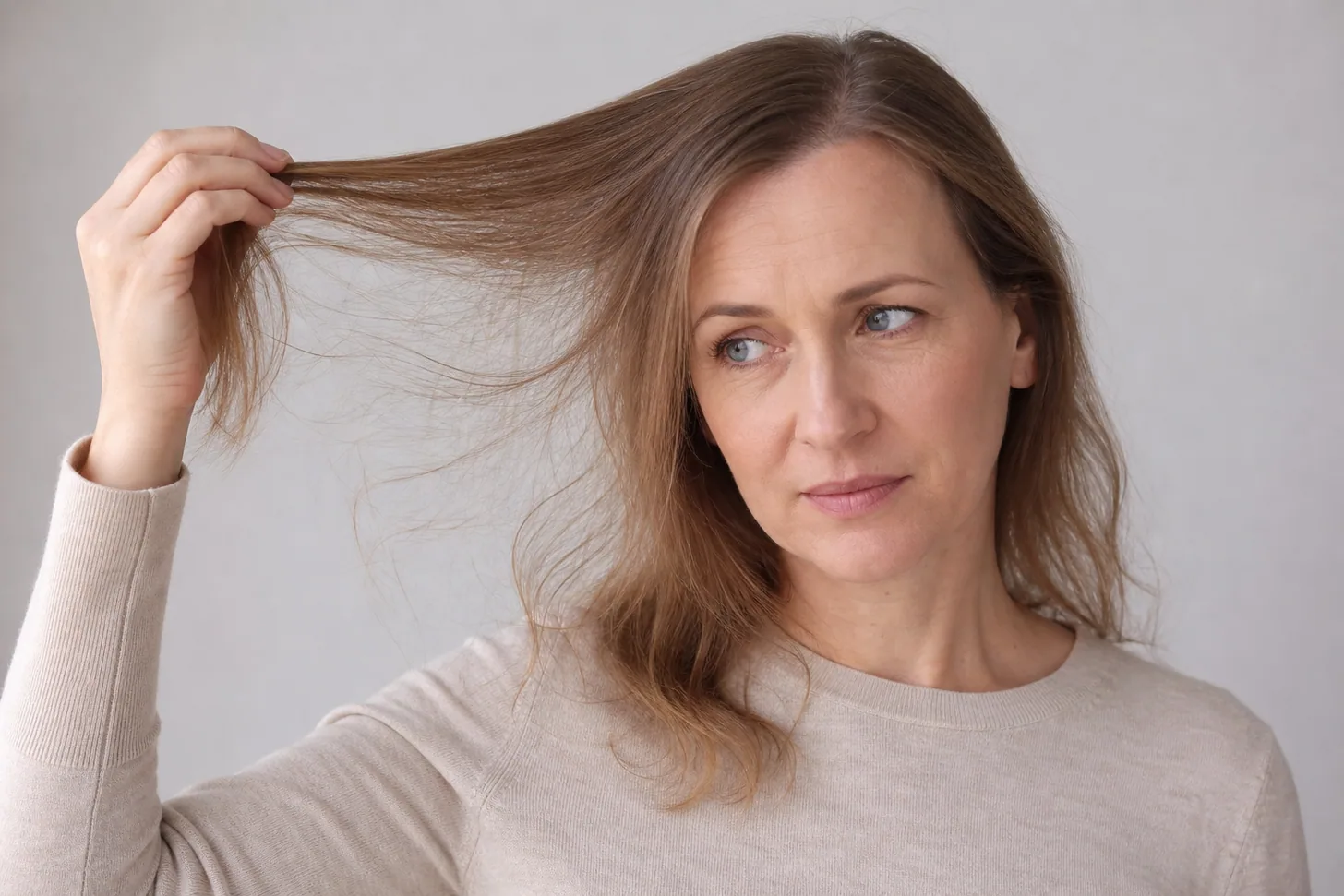
Hair texture changes for eight common reasons: hormones (pregnancy, postpartum, menopause), age, chemical or heat damage, product or mineral buildup, a haircut that changed the weight, a new medication, illness or treatment, and gray hair growing in. Curls that loosen, waves that disappear, or hair that turns suddenly frizzy or wiry usually trace back to one of them.
Some changes are permanent and some reverse. The trick is working out which kind you have before you spend money fixing the wrong one. Below are the causes, the clues for each, and what to do.
8 reasons your hair texture changed
1. Hormones: pregnancy, postpartum and menopause
Hormones affect the size and shape of the follicle, which shapes the hair. In a study of women without hair loss, menopausal status changed hair growth rate, the share of hairs in the growing phase, and hair diameter, most of all at the front of the scalp (Mirmirani, 2011). Many women notice hair turning finer, straighter, curlier or drier in their forties and fifties. See menopause and fine hair and perimenopause.
2. Age
Strands often get finer and drier with age, and density falls. In a survey of postmenopausal women, a quarter reported diffuse thinning (Ali and Wojnarowska, 2011). Finer strands hold less curl, so waves can loosen.
3. Gray hair growing in
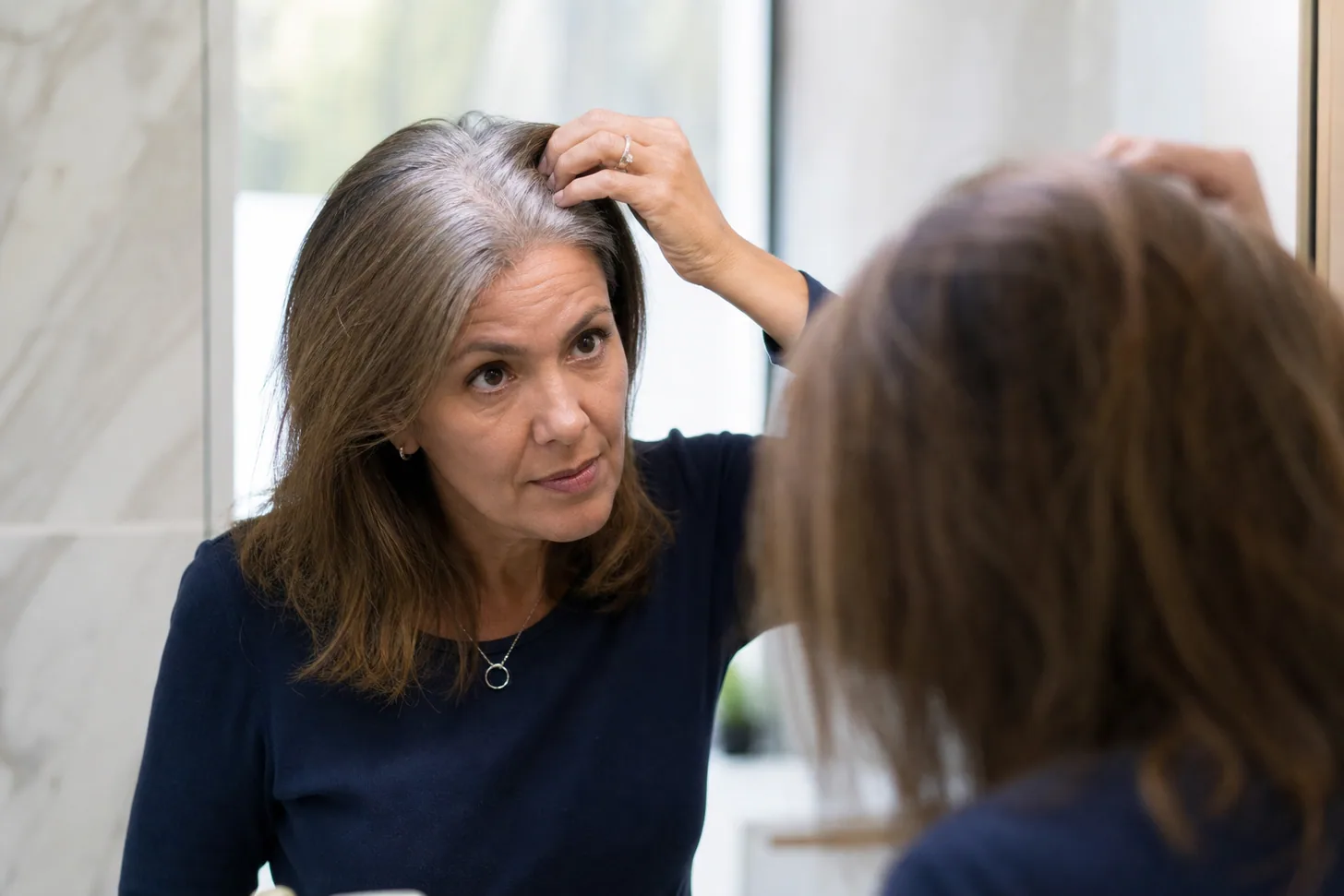
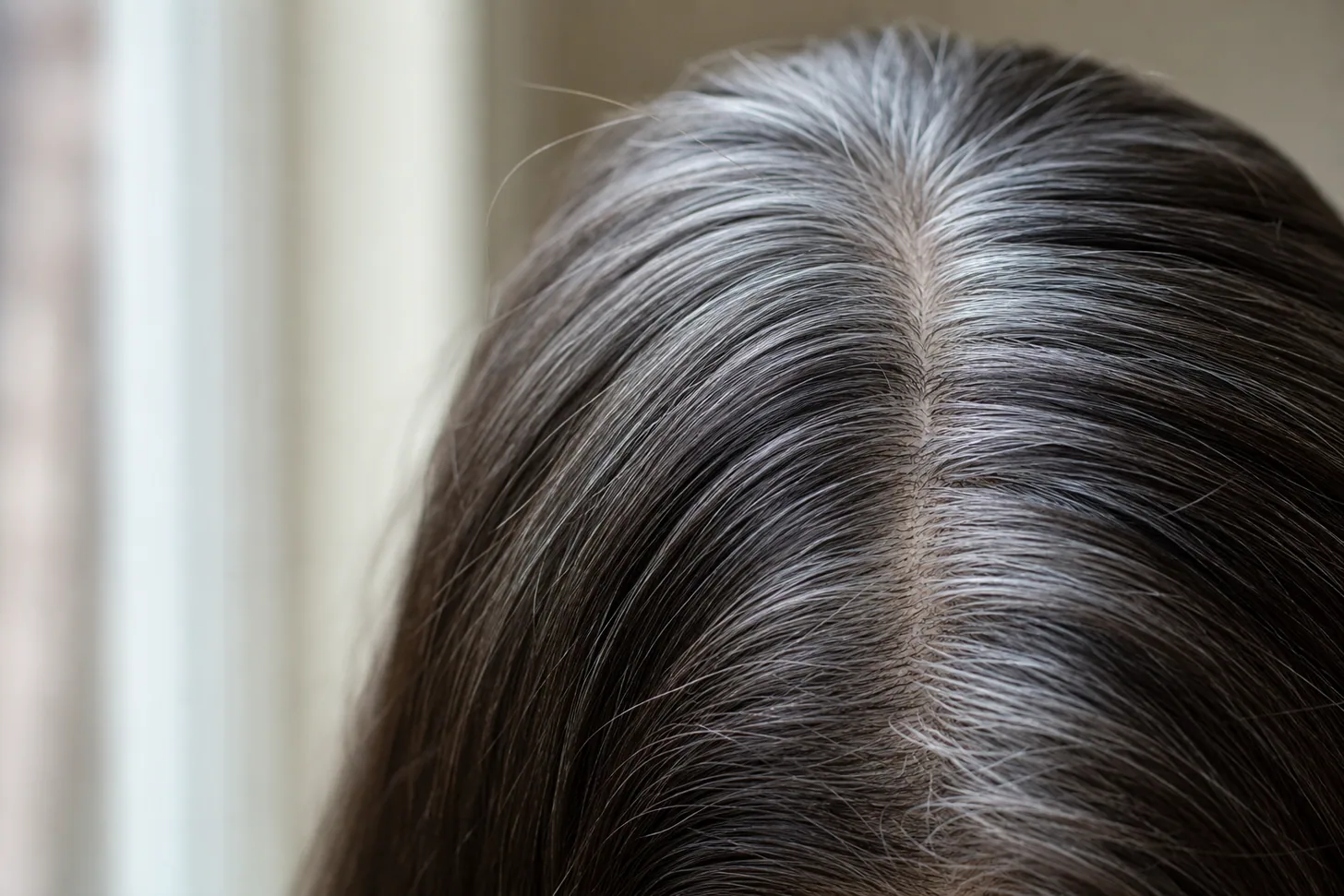
Gray hair can feel coarser or wirier and sit differently from pigmented hair. See going gray with fine hair.
4. Heat and chemical damage
Bleach, frequent straightening and hot tools break down the hair's structure. Damaged hair loses its curl pattern, turns frizzy, or feels gummy when wet. The change shows from the damaged point down, not at the roots. See hair breakage on fine hair.
5. Buildup from products or hard water
Silicones, oils and minerals coat fine hair, weighing it down and making waves drop. Hair feels heavy, dull or waxy. A clarifying wash usually brings the texture back. See hard water and fine hair and clarifying shampoo.
6. A new haircut
Length weighs a wave down; taking weight off can bring curl back, and adding length can pull it straight. Heavy thinning or layering can leave ends frizzy. See over-thinned fine hair.
7. Medication, illness and treatment
Some medicines, thyroid problems, and chemotherapy can change texture. After chemo, the National Cancer Institute notes new hair can grow back curlier, straighter or a different color. See hair after chemo.
8. Shedding and regrowth
After heavy shedding, the short new hairs can look and feel different from the rest until they catch up in length. See telogen effluvium.
Chair-side note
My first test is to look at the roots. If the new texture starts at the scalp, the cause is inside the body: hormones, age, health. If the roots are the same and the change starts halfway down, it is damage or buildup, and that part can be fixed or cut off.
MH
— Megan Holloway, Editor-in-Chief
What to do about it
Clarify once. It is cheap and rules out buildup.
Trim off the damaged part if the change starts mid-length.
Cut for your new texture. Hair that has gone straighter often looks fuller in a blunt cut; hair that has turned wavy may need weight taken out. See what to ask your stylist.
Change your products. Lighter formulas for hair that has become finer; a light curl cream for new waves. See fine, wavy hair.
See a doctor if the change comes with shedding, fatigue, weight change or other symptoms. Thyroid and iron checks are simple. See blood tests for hair loss.
Get it checked if
The change comes with heavy shedding or a widening part. Ask your doctor about iron and thyroid tests.
Your hair turns brittle and dry along with tiredness, feeling cold or weight change. Those can be signs of an underactive thyroid.
It started after a new medication. Ask your doctor or pharmacist before stopping anything.
FAQ
The most common reasons are buildup, heat or chemical damage, a cut that added weight, hormonal changes and age. Look at whether the change starts at the roots (internal) or partway down (damage or buildup).
Yes. Pregnancy, postpartum and menopause can all change hair diameter, growth and curl.
Strands often get finer with age and density falls. Finer hair holds less curl, so waves can relax.
Changes from buildup, damage or a haircut can be reversed or cut out. Hormone and age changes may be partly permanent, but texture after pregnancy or chemo often moves back over time.
Length and layers change how much weight sits on the hair. Removing weight can bring curl back; adding length or over-thinning can make hair straighter or frizzier.
Mineral buildup can make fine hair feel heavy, dull or rough. A clarifying or chelating shampoo usually removes it.
This article is for general education and is not medical advice. If texture changes come with shedding, scalp symptoms or other health changes, see your doctor or a board-certified dermatologist.
Results vary with hair type, density and growth patterns.
Images in this guide are AI-generated illustrations, not photos of real clients or results. See our image policy.
Get the good hair intel
One honest, stylist-written guide in your inbox each week. No hype.

 MH