
1
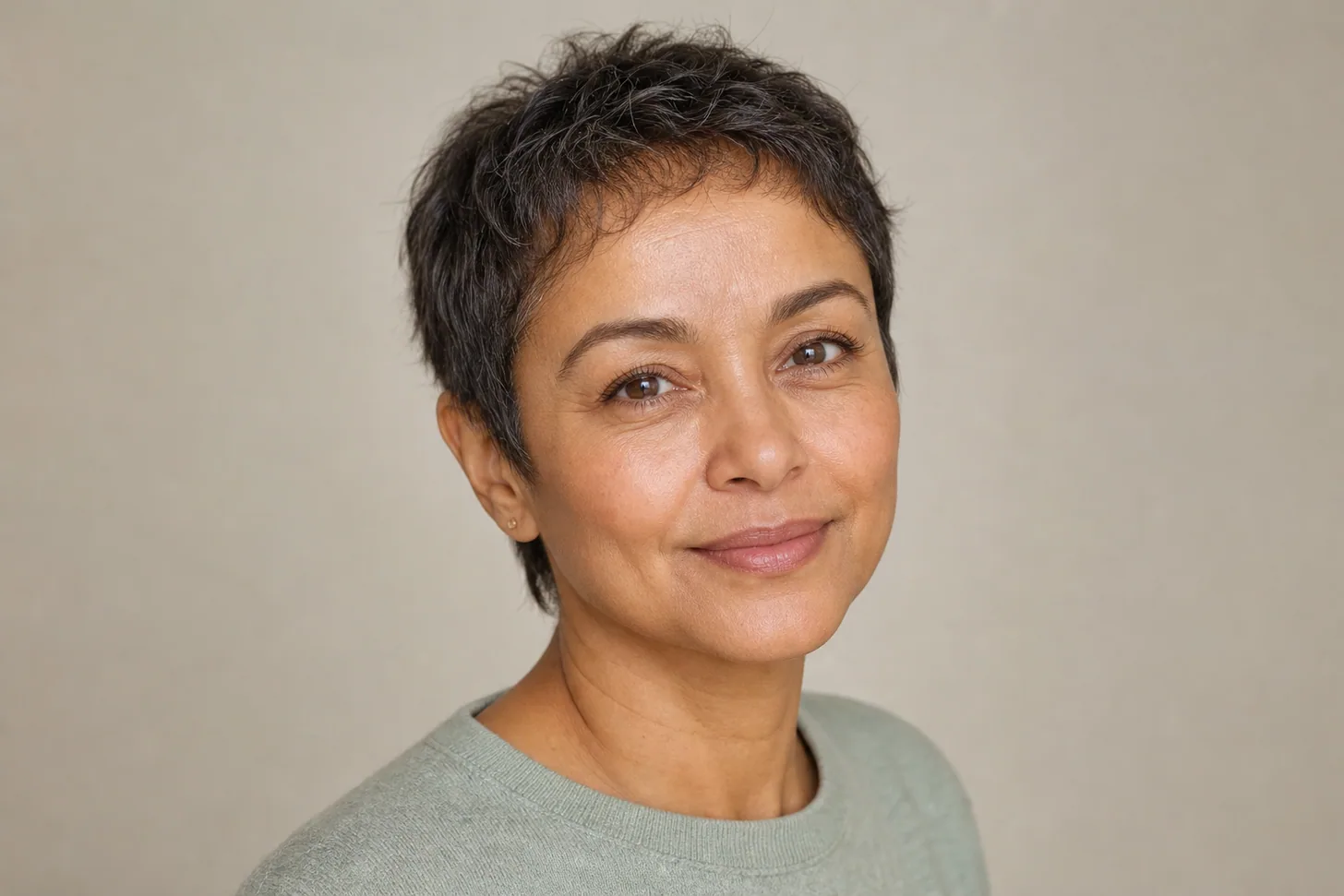
Soft close crop
The first stage. Nothing to cut yet, but a clean edge at the nape and around the ears makes it look deliberate.
A pair of statement earrings or glasses frames the face while the hair fills in.
 MH
Hair usually starts to grow back within two to three months after chemotherapy ends, according to the National Cancer Institute. The first growth is very fine and soft, and it can come in curlier, straighter or a different color than before.
That makes new hair behave like fine hair, even if yours was thick. It needs gentle handling, light products, and cuts that tidy the shape while it fills in. Below is what to expect at each stage, how to look after the new growth, and six short styles that suit it.
I have cut a lot of first haircuts after chemo, and the most useful thing I can tell you is that the first cut is a tidy-up, not a style. We shape the nape and around the ears so the growth looks intentional, and leave the top alone so it can catch up.
Clients are often surprised by how soft and fine the new hair feels, and sometimes by curls they never had. Treat it like the finest hair you have ever handled, and it settles down.
MHThe NCI says hair often grows back two to three months after chemotherapy ends. After radiation to the head, it can take three to six months, and very high doses of radiation can leave hair thinner, or stop it growing back, in the treated area. Your own timing depends on the drugs, the doses and your hair, so your oncology team is the best guide.
A rough picture of what most people see:
The growth cycle behind this is explained in the hair growth cycle.
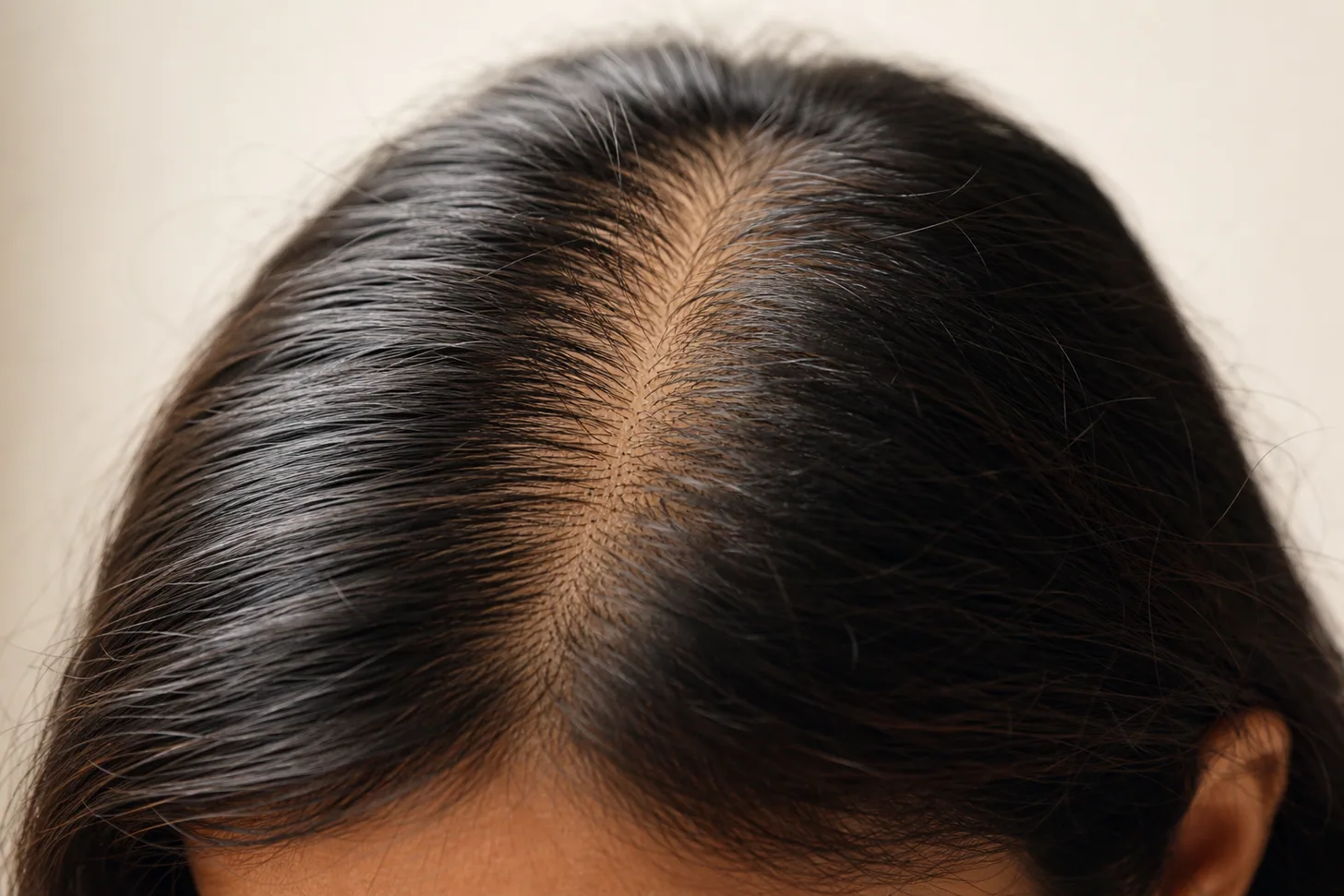
Chemotherapy affects fast-dividing cells, including those in the hair follicle. As the follicles recover, the first hair they make is often thinner in diameter, and the shape and pigment can differ. The NCI notes new hair can be curlier or straighter, or a different color. For many people the hair moves back toward its old texture as it grows, but it can take a year or more, and some changes can stay.
The NCI advises being gentle with new hair and avoiding too much brushing, curling and blow-drying. In practice that means:
Skip heavy oils and butters, even though they are often recommended for "nourishing" regrowth. On hair this fine they sit on the scalp and make the new growth look flat and sparse. A light leave-in spray is plenty.
MHEach of these works with what the hair is doing at that point, instead of waiting for it to reach a length.
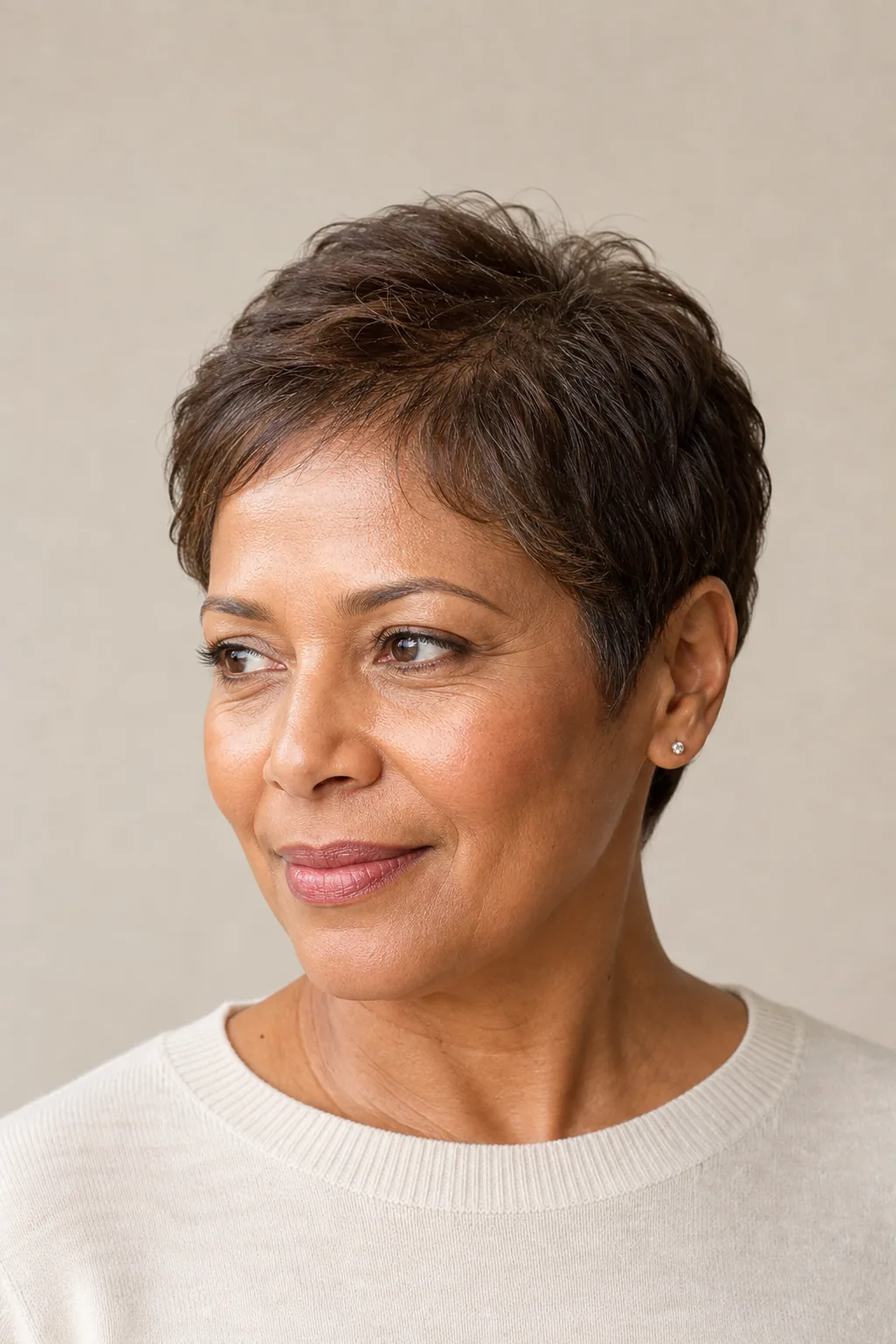
The first stage. Nothing to cut yet, but a clean edge at the nape and around the ears makes it look deliberate.
A pair of statement earrings or glasses frames the face while the hair fills in.
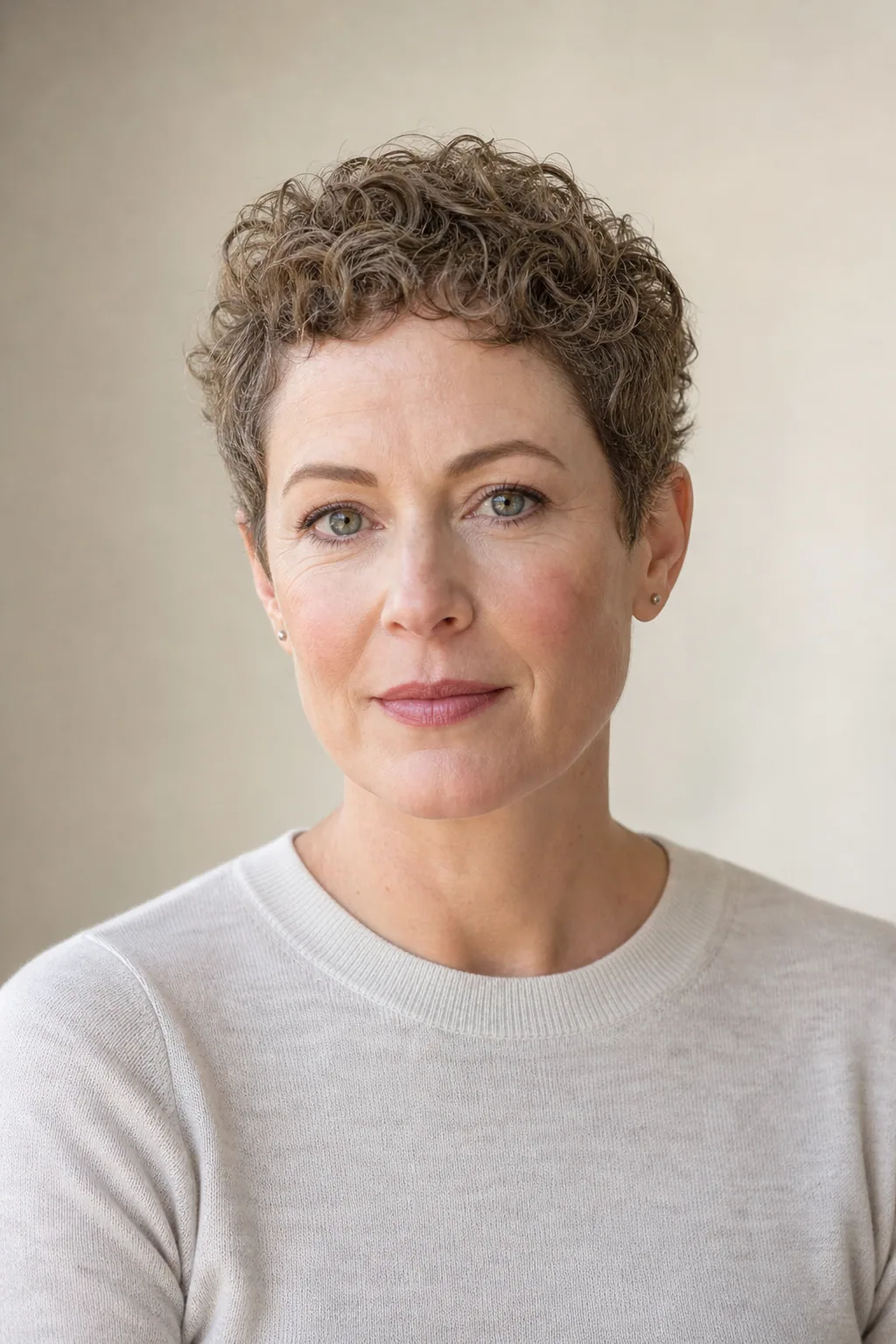
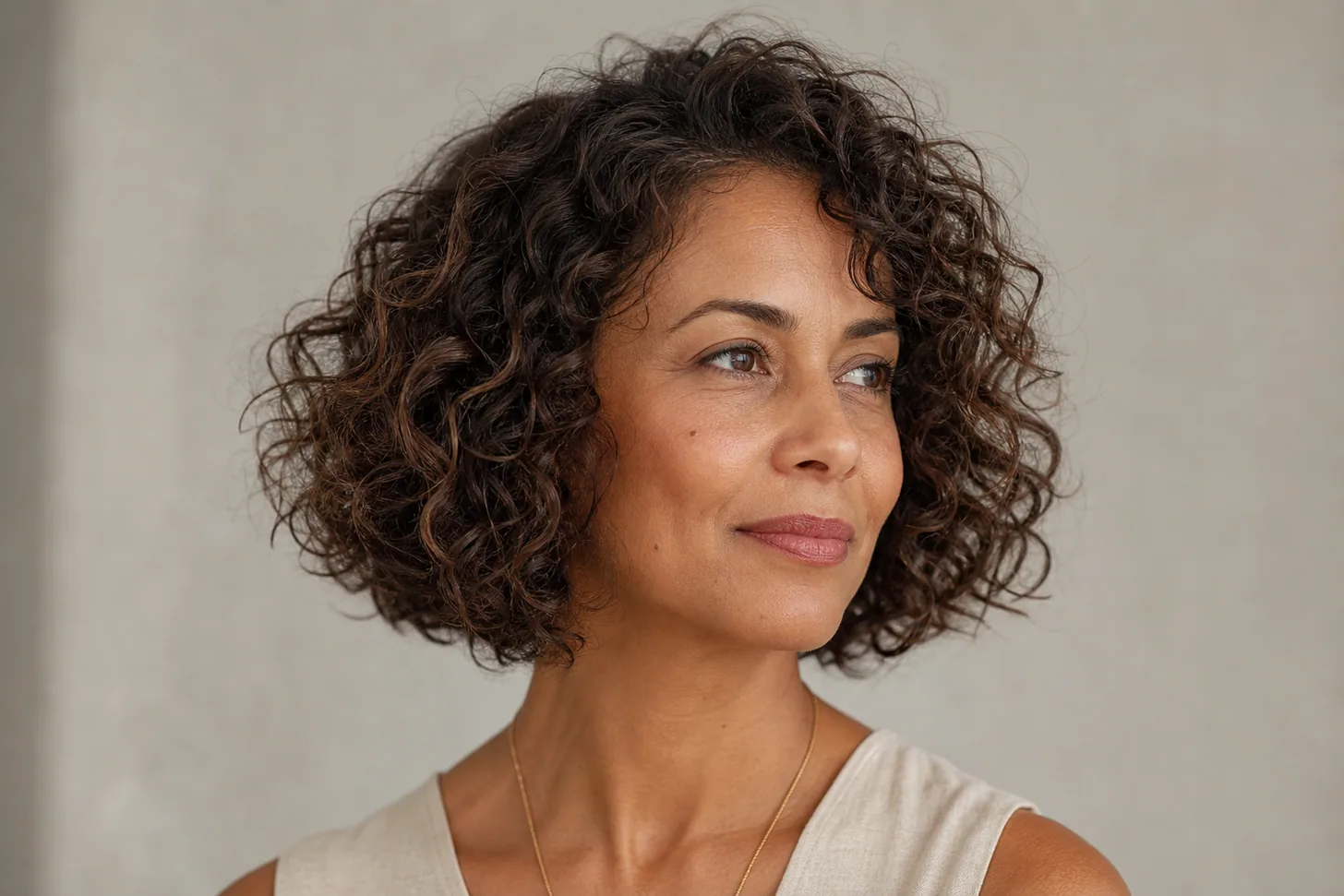
When regrowth comes in curly, keep it short and let the curl do the shaping.
A pea-size amount of light curl cream on damp hair is enough. See thin, curly hair.
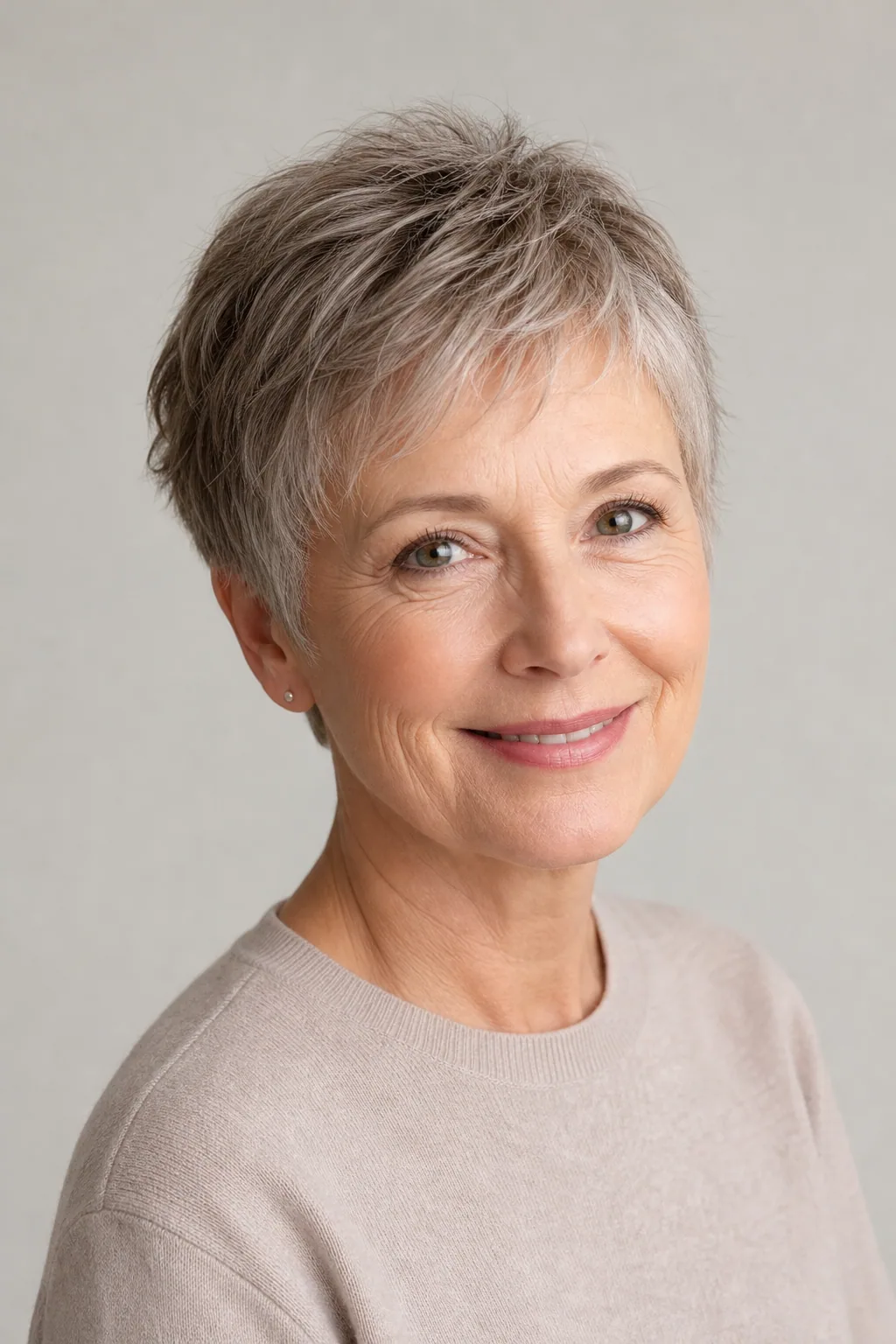
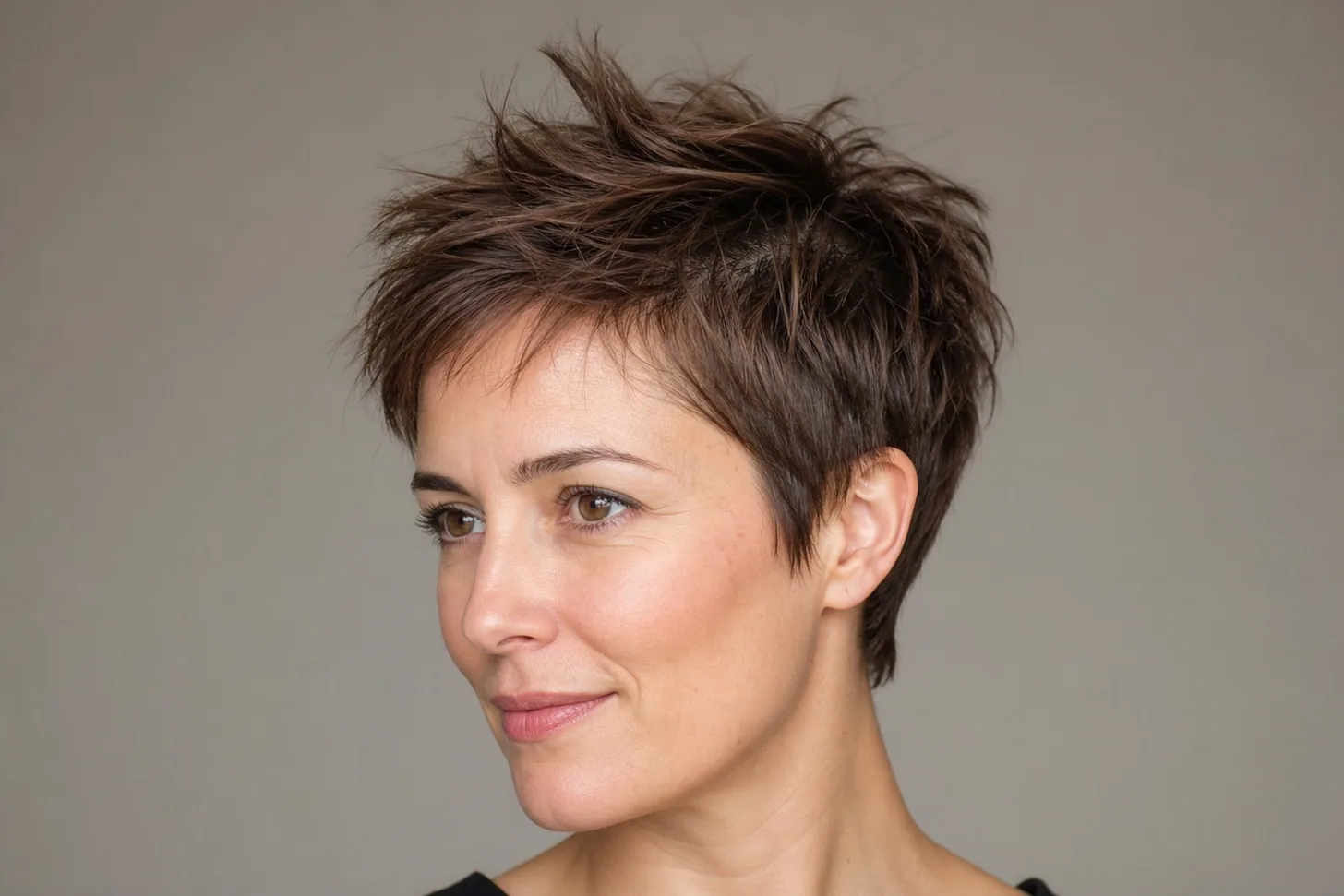
At around two inches, a pixie can be shaped. Brushing the top forward hides an uneven hairline.
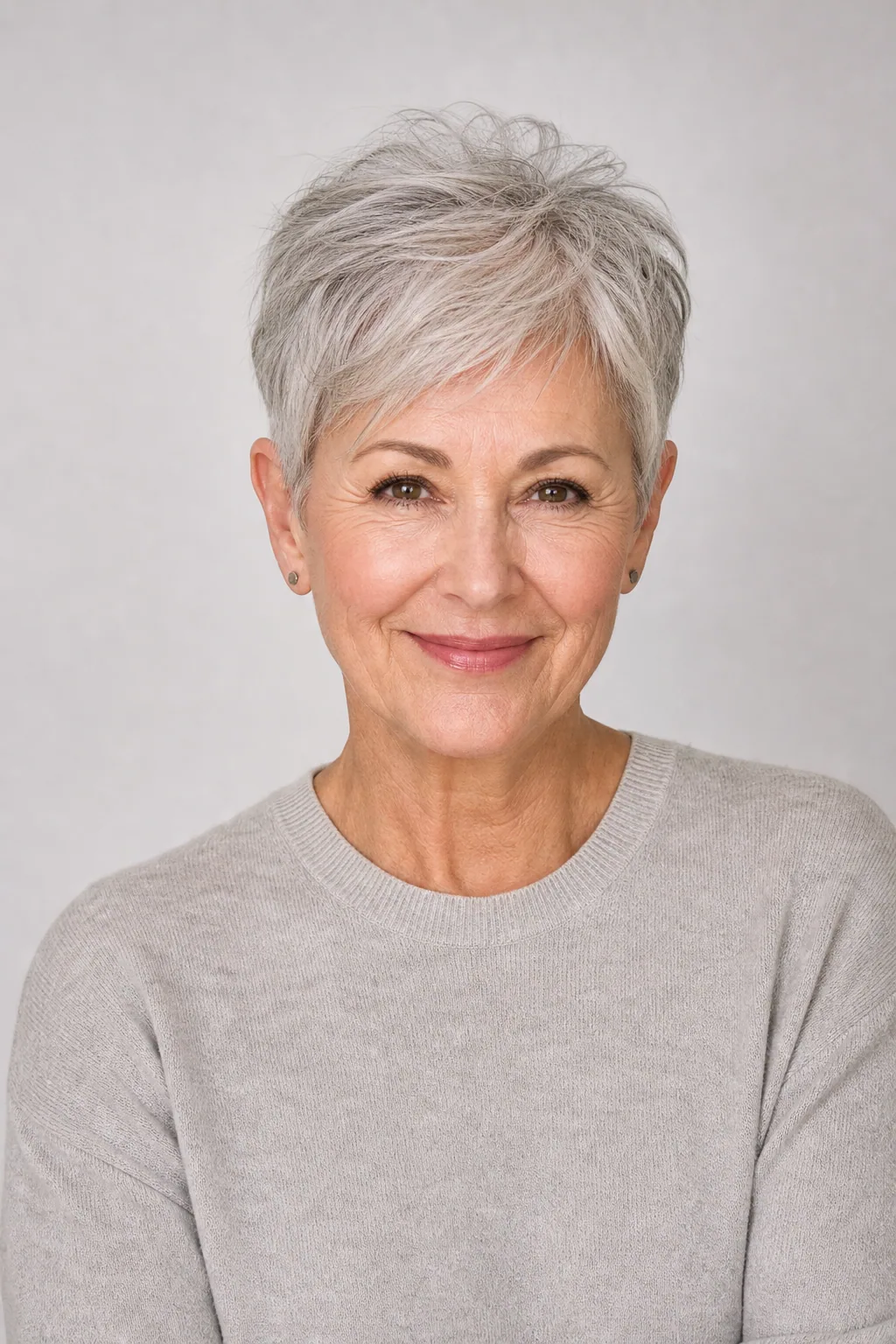
Many people find their hair grows back grayer. Some keep it, and a short cut shows it off.
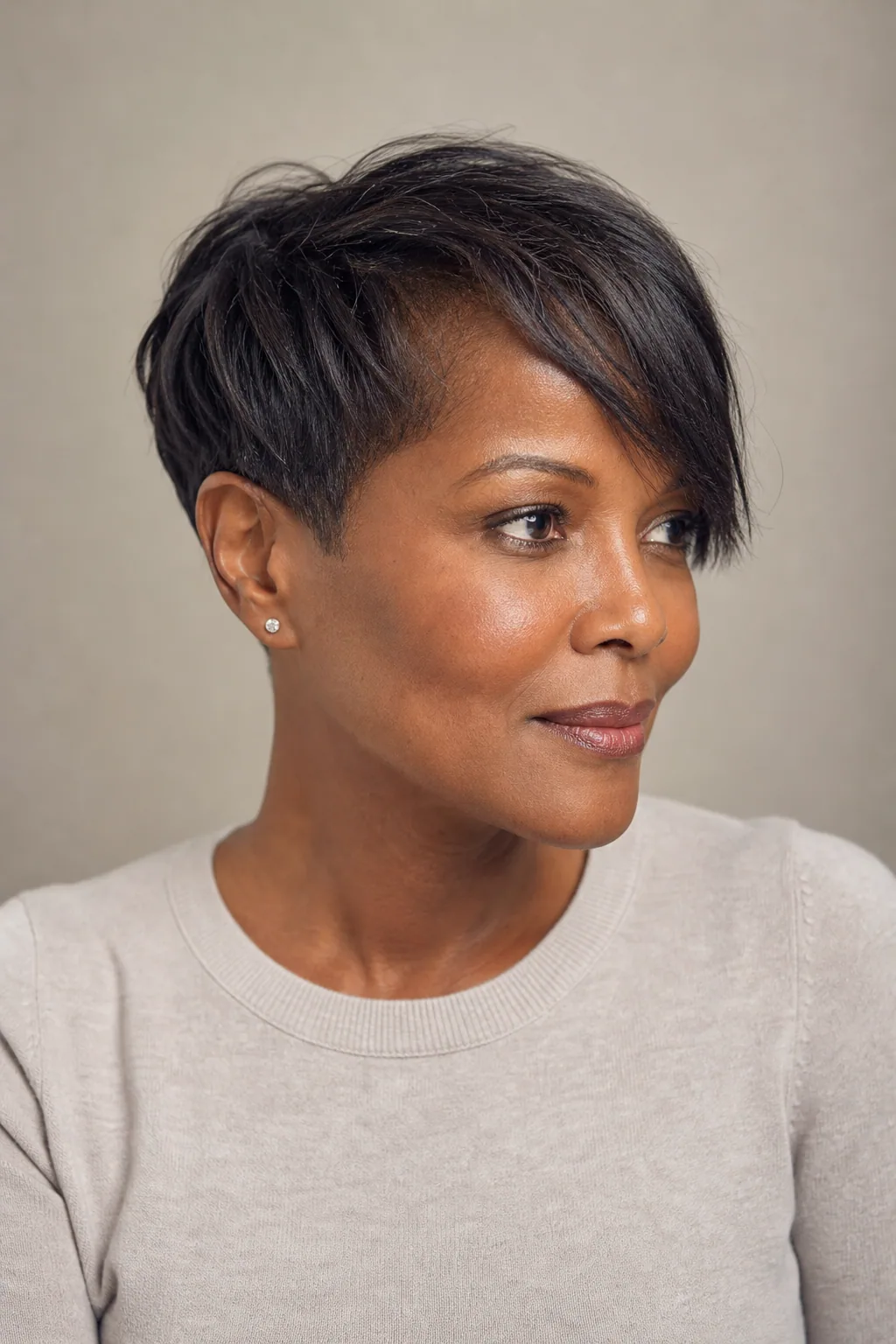
Keeping the sides short while the top grows evens out patchy regrowth.
This is the stage to start growing toward a bixie or bob, if you want to.
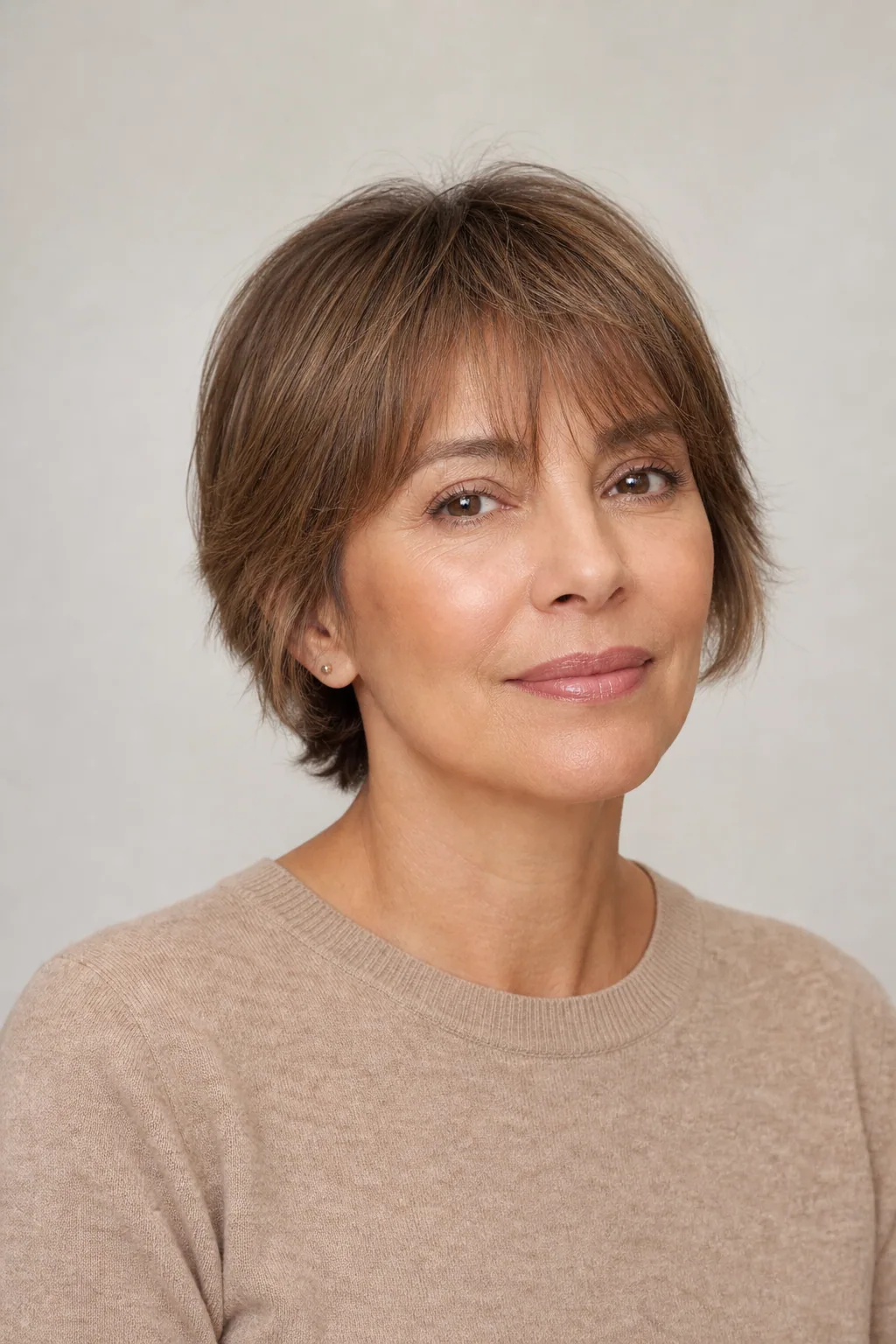
Around nine to twelve months, many people reach this in-between length.
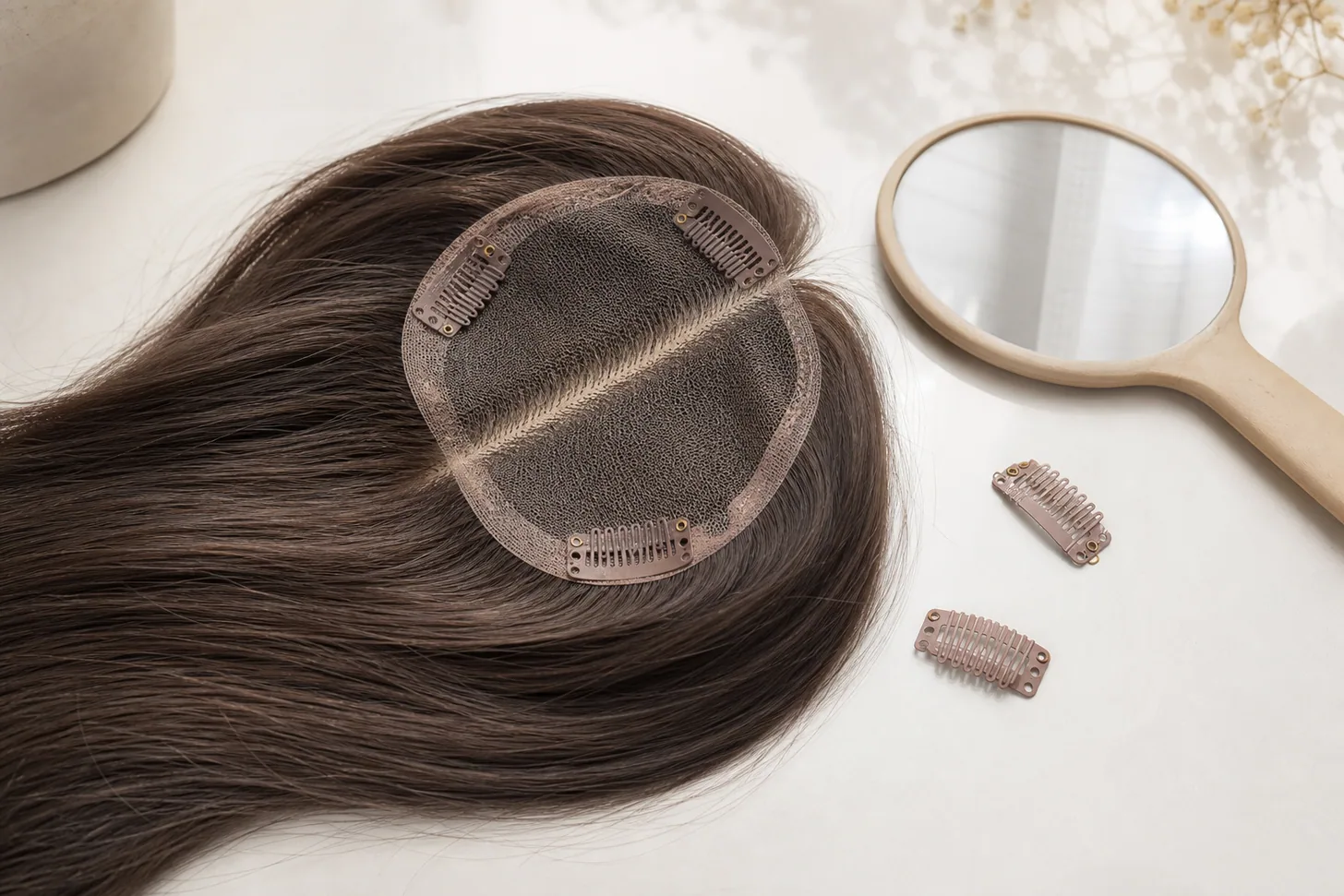
Many people wear a wig or scarf through the early months and switch to a hair topper once there is some hair to clip to. Choose clips that grip without pulling, and give the scalp breaks. A soft cotton liner under a wig is kinder to sensitive skin.
According to the National Cancer Institute, hair often starts growing back two to three months after chemotherapy ends. Getting back to a short haircut usually takes several months.
New hair from recovering follicles is often finer than before. It usually thickens as it grows, but it can take a year or more.
Chemotherapy can change the shape of the hair the follicle makes. Many people get softer curls or waves that relax over time, but some changes stay.
Ask your care team. Most suggest waiting until the hair has some length and the scalp is healthy, and doing a patch test first.
A short crop that is tidied around the nape and ears, then a pixie as it grows. Cutting the edges while the top grows makes regrowth look even.
Heavy oils can weigh down fine new hair and make it look sparse. A light leave-in spray is gentler and easier to wash out.
 MH
Fourteen years in fine-hair care, eight of them behind the chair. Megan's rule for hormonal thinning: photograph the part, not the drain.
More from Megan →This article is for general education and is not medical advice. Always follow the guidance of your oncology team about hair care, color and any treatment during and after cancer care.
Results vary with hair type, density and growth patterns. Styling guidance is not a substitute for an in-person consultation with a licensed stylist.
Images in this guide are AI-generated illustrations, not photos of real clients or results. See our image policy.