Reviewed by Tara Sullivan · Updated September 2026 · 10 min read
Fine hair on a man goes flat because each strand is thin and light, so it cannot hold itself up — not because there is too little of it. The fix is a short, textured cut, two minutes with a hairdryer pointing the roots up, and a small amount of matte product instead of a shiny one.
Most men with fine hair are using the products and routine designed for thicker hair: a scoop of glossy pomade, a towel-dry and out the door. On fine hair that combination collapses by midmorning. This guide covers why, the cut that helps, the routine that fixes it, and when "flat" is actually thinning.
Fine, thin or thinning: which one you have
These three get used as if they mean the same thing, and they need different answers.
Fine hair means each strand has a small diameter. Roll a single hair between your finger and thumb: if you can barely feel it, it is fine. You can have fine hair and plenty of it. Thin hair means low density — fewer hairs per square inch, so scalp shows through. Thinning hair means density is dropping, usually at the temples or crown.
A fine strand is light and flexible, so it bends under its own weight instead of standing up. Anything that adds weight makes that worse.
Oil is the first culprit. Scalp oil spreads down fine strands quickly because there is so little surface to absorb it, which is why fine hair can look greasy a day after washing. Heavy products are the second: pomades, waxes and gels made for thick hair coat each strand and pull it down. Air-drying flat is the third — hair that dries lying against the scalp sets in that position.
None of these is fixed by more product. Fine hair needs less weight, not more hold.
Chair-side note
The most common thing I see on men with fine hair is a thumb-sized scoop of pomade, applied to wet hair, combed through. It looks fine for twenty minutes. By ten o'clock the weight has pulled it flat and the shine has separated it into strands.
Swap to a pea-sized amount of matte clay on dry hair and the same haircut holds all day.
SB
— Simone Baptiste, Senior Stylist
The cut: short, with texture on top
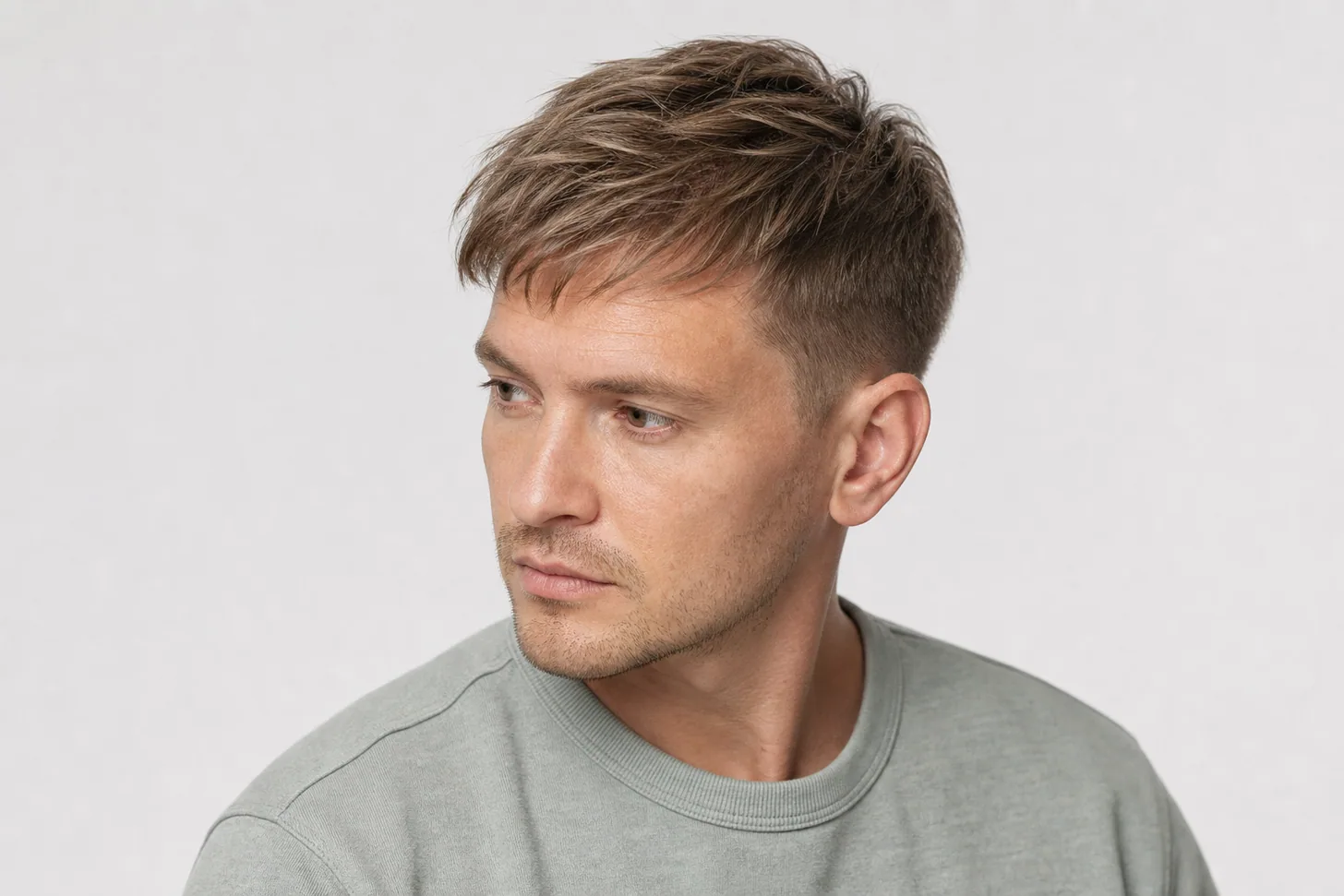
Fine hair holds its shape best short. Each strand has less length to bend under, so it stands up by itself. One to three inches on top, with the sides shorter, is the range that works for most men.
The detail that matters is how the top is cut. Point cutting — the barber snipping into the ends vertically — breaks the top into uneven pieces that lean on each other for support. A blunt top lies down as one sheet. Ask for texture cut with scissors, and turn down thinning shears and razors on the top: they remove bulk that fine hair cannot spare.
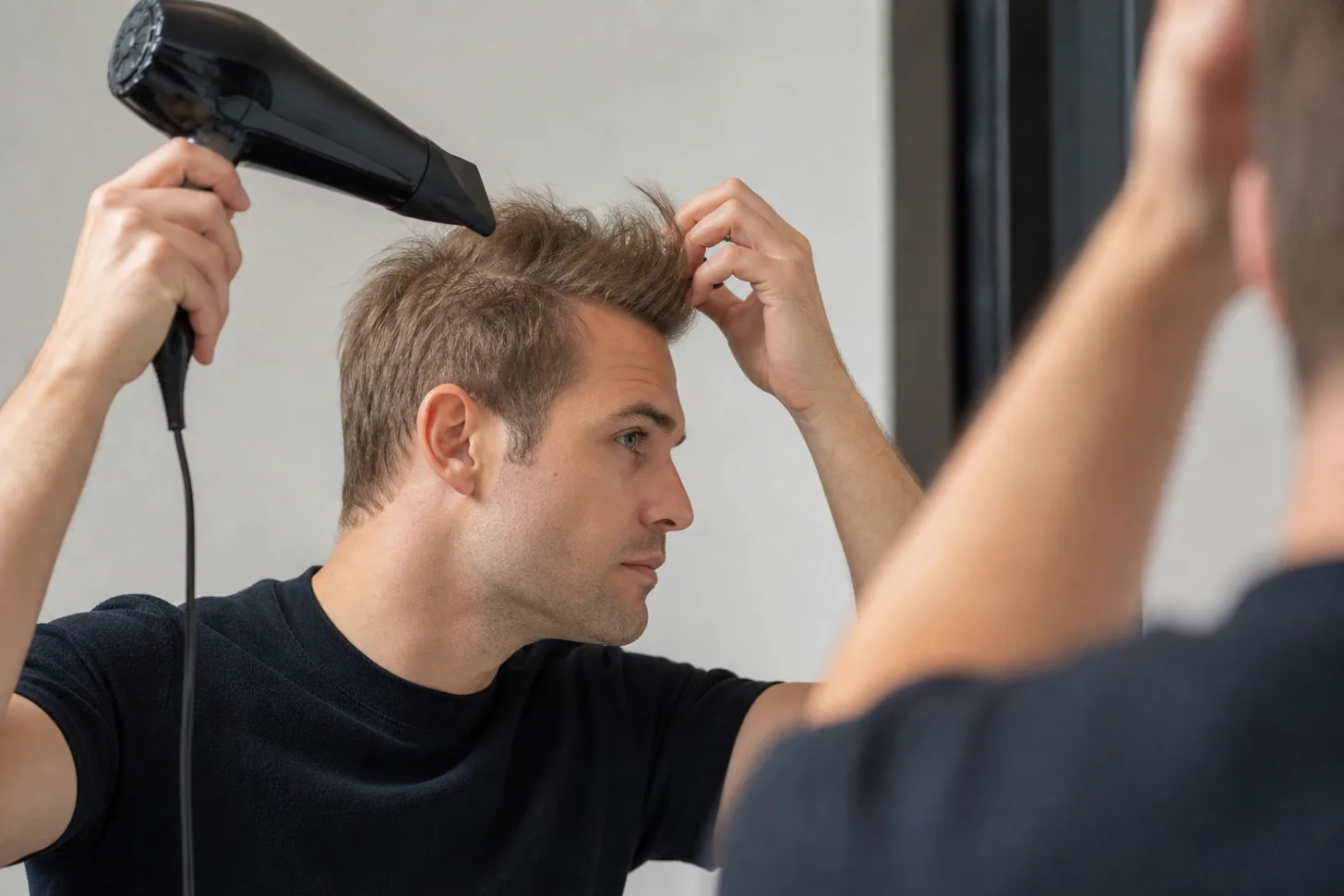
Heat is what sets fine hair in a lifted position, and it is the step most men skip. You do not need a brush or any skill — just a hairdryer and your fingers.
Towel-dry gently until damp, not wet. Press rather than rub, which roughens fine strands.
Mist a light volumizing or texture spray into the roots — three or four sprays, or a small puff of mousse. This is what the heat sets.
Dry the roots in the opposite direction to how you'll wear them. If you wear it forward, blow it back first; if you wear it swept back, blow it forward. Lift the roots with your fingers as you go.
Flip it into place and finish on cool. Ten seconds of cool air locks the shape; hot hair left to cool on its own drops.
Add product last, to dry hair. A pea-sized amount of matte clay, warmed in the palms, worked in from the back of the head forward.
That is under two minutes on short hair. Medium heat is enough; fine hair does not need the highest setting. If you want the long version, how to blow-dry fine hair for volume goes step by step.
Products: what to use and what to skip
For fine hair, the finish matters more than the hold. Matte products add grip and separation without weight; shiny products add weight and make strands clump together.
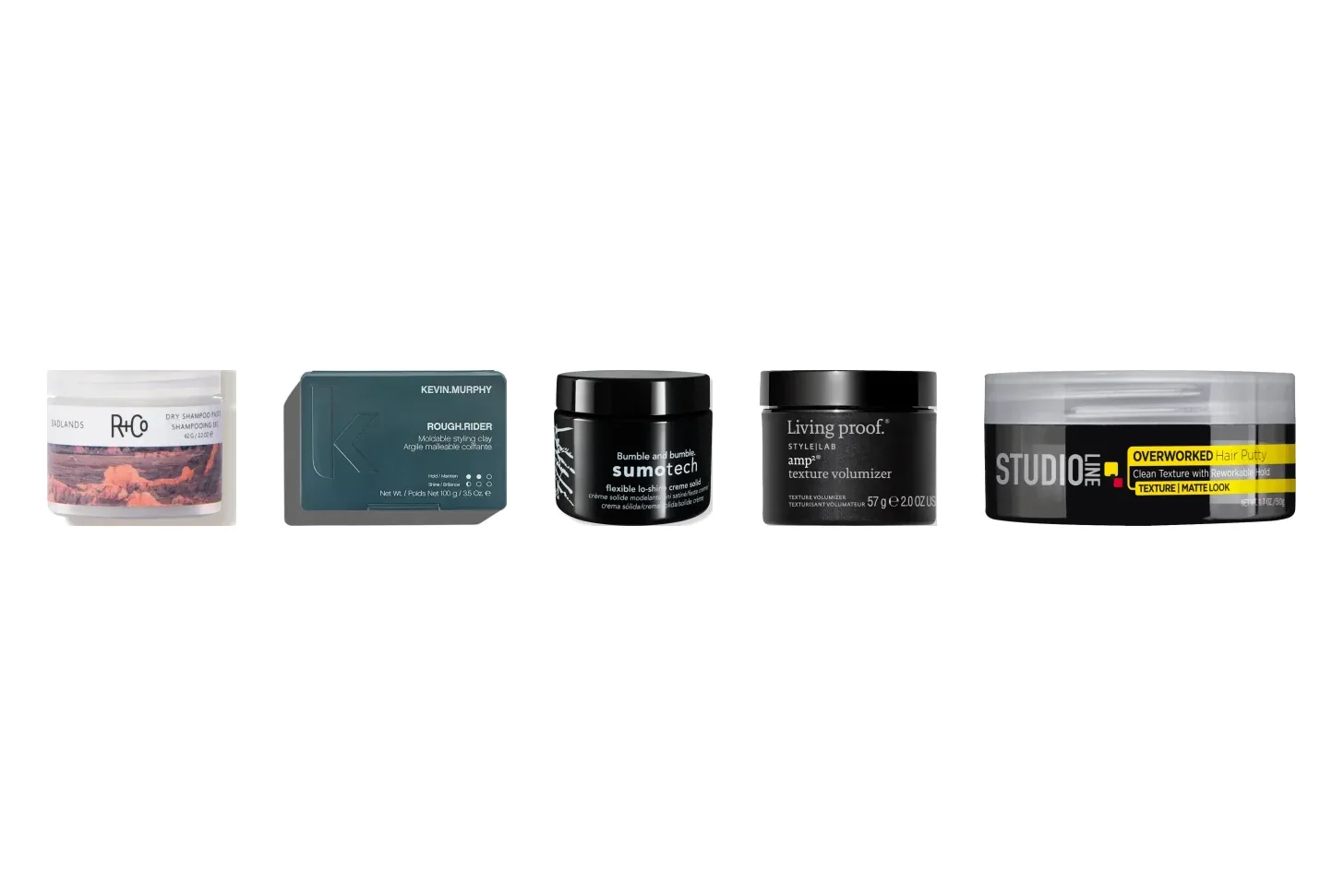
Use: matte clay or a light paste for shape; sea salt spray for loose, tousled texture; texture spray on dry hair for grip; a volumizing spray or light mousse on damp roots before drying; dry shampoo on day two.
Skip: high-shine pomade, wax, heavy cream and wet-look gel; leave-in conditioner and hair oil on short hair; two-in-one shampoos with heavy conditioning agents.
If you already own a pomade, you can still use it — just use a quarter of the amount, on dry hair. Our pomade, paste and clay guide for fine hair explains which finishes hold without flattening.
Washing fine hair
Fine hair usually looks best washed often, because oil flattens it so quickly. Daily or every other day with a light shampoo is fine for most men. What matters is using a gentle, lightweight formula and rinsing thoroughly.
On short hair, you can often skip conditioner entirely or use a light one only when hair feels rough. Anything labelled "smoothing," "hydrating" or "for thick hair" is likely to be too heavy. If your scalp gets oily by the afternoon, our routine for fine, oily hair explains how to balance it, and how often to wash fine hair covers the frequency question in detail.
Keeping it up through the day
Fine hair often looks best in the morning and flattest by afternoon. Two small habits help. Keep your hands out of it — touching hair transfers oil. And if it drops, a quick spray of dry shampoo or texture spray at the roots, roughed in with your fingertips, brings back the grip.
Hats flatten fine hair more than thick hair. If you wear one, a short cut recovers faster when you take it off; run damp fingers through the roots and push them back into place.
Chair-side note
Men often tell me their hair "won't hold anything." When I ask them to style it in front of me, the problem is almost always that they are putting product on soaking-wet hair and letting it dry flat. The same product on hair that has been blow-dried up holds perfectly. The hairdryer is doing the work; the product is only finishing it.
SB
— Simone Baptiste, Senior Stylist
When styling will not fix it
You can see more scalp than you used to, especially at the temples or crown. That is thinning, not fine hair, and no product changes it. Read fine hair or thinning and speak to a doctor or dermatologist if it is changing.
Your hair is shedding noticeably more than usual. Stress, illness, rapid weight loss and some medicines can all trigger shedding. A doctor can help identify the cause.
Your scalp is itchy, flaky or sore. A scalp condition such as dandruff or seborrheic dermatitis can make hair look worse and needs its own treatment.
You want your hair long. Fine hair can be worn long, but it will lie flatter the longer it gets. If you want length, keep the ends blunt and accept a softer, looser shape.
FAQ
Blow-dry the roots in the opposite direction to how you wear them, using a light volumizing spray or mousse on damp hair, then flip the hair into place and finish with cool air. Add a pea-sized amount of matte clay to dry hair last. A short, textured cut with point-cut pieces on top helps the hair stand up on its own.
A short cut with texture on top: a textured crop, a short quiff or a crew cut, with one to three inches on top and shorter sides. Ask for the top to be point-cut with scissors so it breaks into pieces that support each other, and avoid thinning shears or a razor on the top, which remove bulk fine hair cannot spare.
A matte clay or light paste used in a pea-sized amount on dry hair. Matte products add grip without weight. Sea salt spray, texture spray and volumizing spray also suit fine hair. Avoid high-shine pomade, wax and heavy gel, which weigh fine strands down and make them clump.
Fine strands are light and flexible, so they bend under any added weight. Scalp oil spreads down fine hair quickly, heavy products coat each strand, and hair that air-dries lying flat sets in that position. Washing often, using lightweight matte products and blow-drying the roots up all help.
Many can. Fine hair often looks flat and greasy within a day because oil spreads down the strands so easily, so washing daily or every other day with a gentle, lightweight shampoo is usually fine. On short hair, conditioner can often be skipped or kept very light.
No. Fine hair describes a small strand diameter, and you can have fine hair with normal density. Thinning means you are losing density, usually at the temples or crown, so more scalp shows over time. If your hair has changed recently, see a doctor or dermatologist.
Eleven years behind the chair, specializing in short shapes and fine-hair texture. Simone believes the best haircut is the one you can style yourself in ten minutes.
Results vary with hair type, density, and growth patterns. This guide is educational and not a substitute for an in-person consultation with a licensed stylist or barber. If your hair is shedding or thinning, see a doctor or board-certified dermatologist.
Hairstyle images in this guide are AI-generated illustrations, not photos of real clients or results. See our image policy.
Get the good hair intel
One honest, stylist-written guide in your inbox each week. No hype.

 SB
SB