Reviewed by Tara Sullivan · Updated September 2026 · 10 min read
The best fade for thin hair is usually a low fade or a low taper: short and clean around the ears and neckline, with enough length left on the sides that the top still looks like the fullest part of the head.
A fade is not the enemy of thin hair. The height is. Below is the one rule that decides which fade will work for you, ten fades grouped by how high they go, and the version to skip.
Chair-side note
The fade I undo most often is a high skin fade someone got on a thin top because it looked good on a friend. The friend had thick hair.
On thick hair a high fade makes the top look bigger. On thin hair it makes the top look like it is all that is left. Same cut, opposite effect.
SB
— Simone Baptiste, Senior Stylist
The one rule: the fade can only rise as far as the top comes down
Thin hair looks thin when there is a strong contrast between the hair and the scalp. A fade creates contrast on purpose, taking the sides down to skin. The question is where that contrast sits.
A low fade keeps the contrast at the very bottom of the head, away from the top. A high fade brings bare skin right up to the edge of the top, so a sparse top sits directly against it and looks sparser.
So match the height to the length on top. Two inches or more on top: low fade or low taper. About an inch: a mid fade is fine. Buzzed short on top: the fade can go as high as you like, because there is no long, thin section left to contrast with.
Fade, taper, drop, burst: what the words mean
A taper shortens the hair gradually only at the edges — the sideburns and the neckline — and leaves the rest of the sides with some length. A fade takes a larger area of the sides down, often to skin.
Low, mid and high describe where the fade starts: just above the ear, at the temple line, or near the top of the head. A drop fade curves down behind the ear toward the nape. A burst fade is a semicircle around the ear only, leaving the back longer.
Low taper and low fade haircuts for thin hair
The safest choices for thin hair with any length on top. They look clean without moving the contrast up.
1
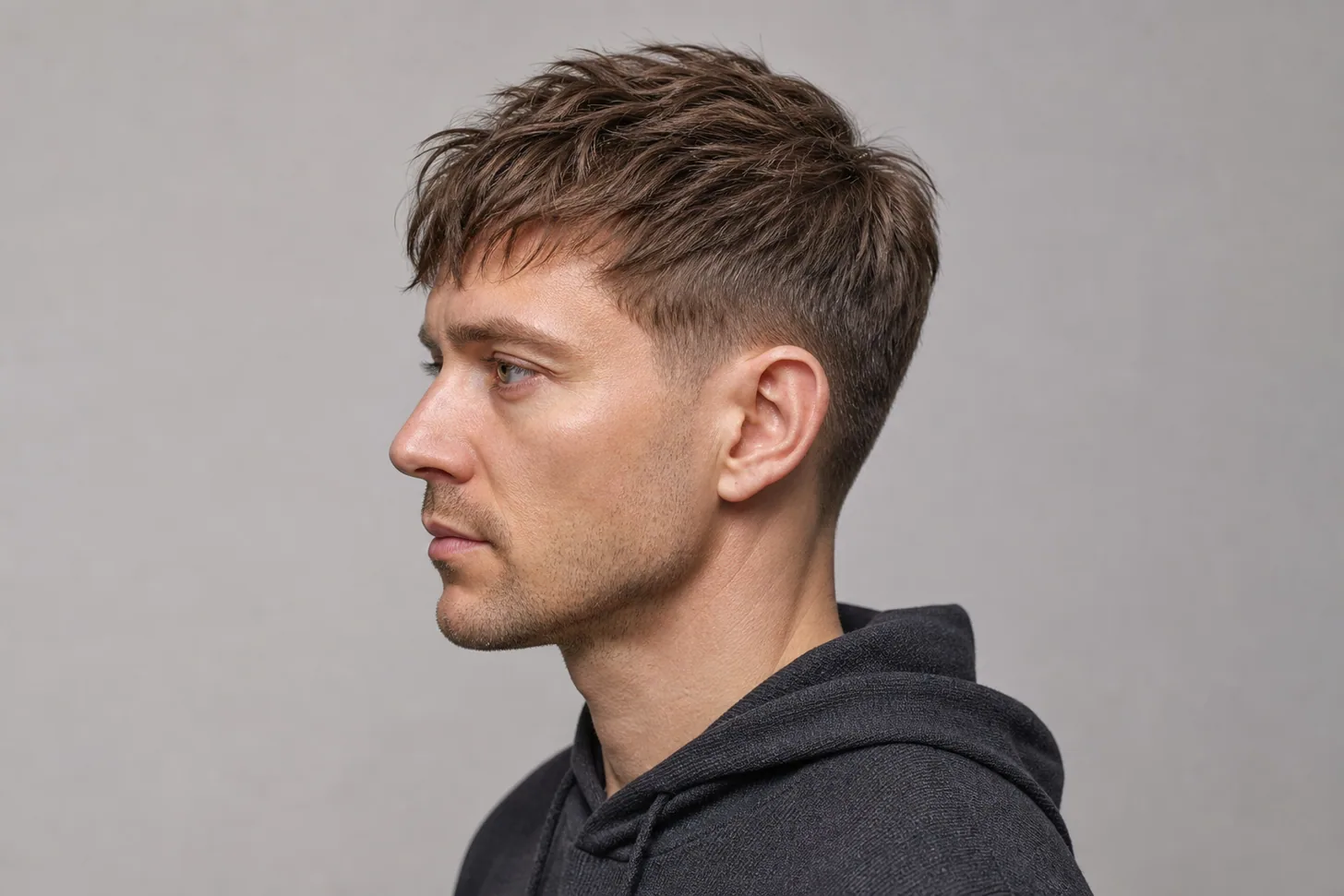
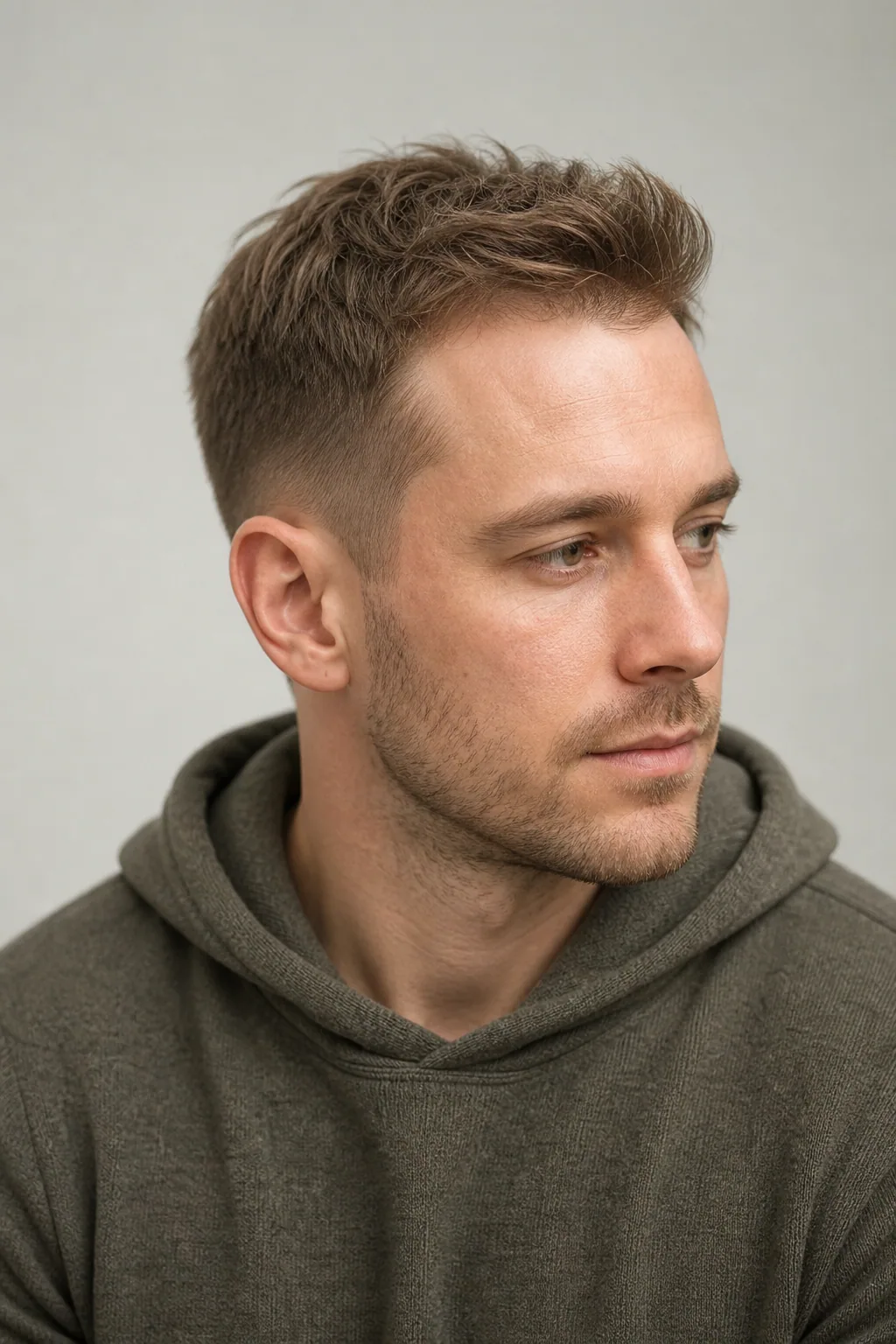
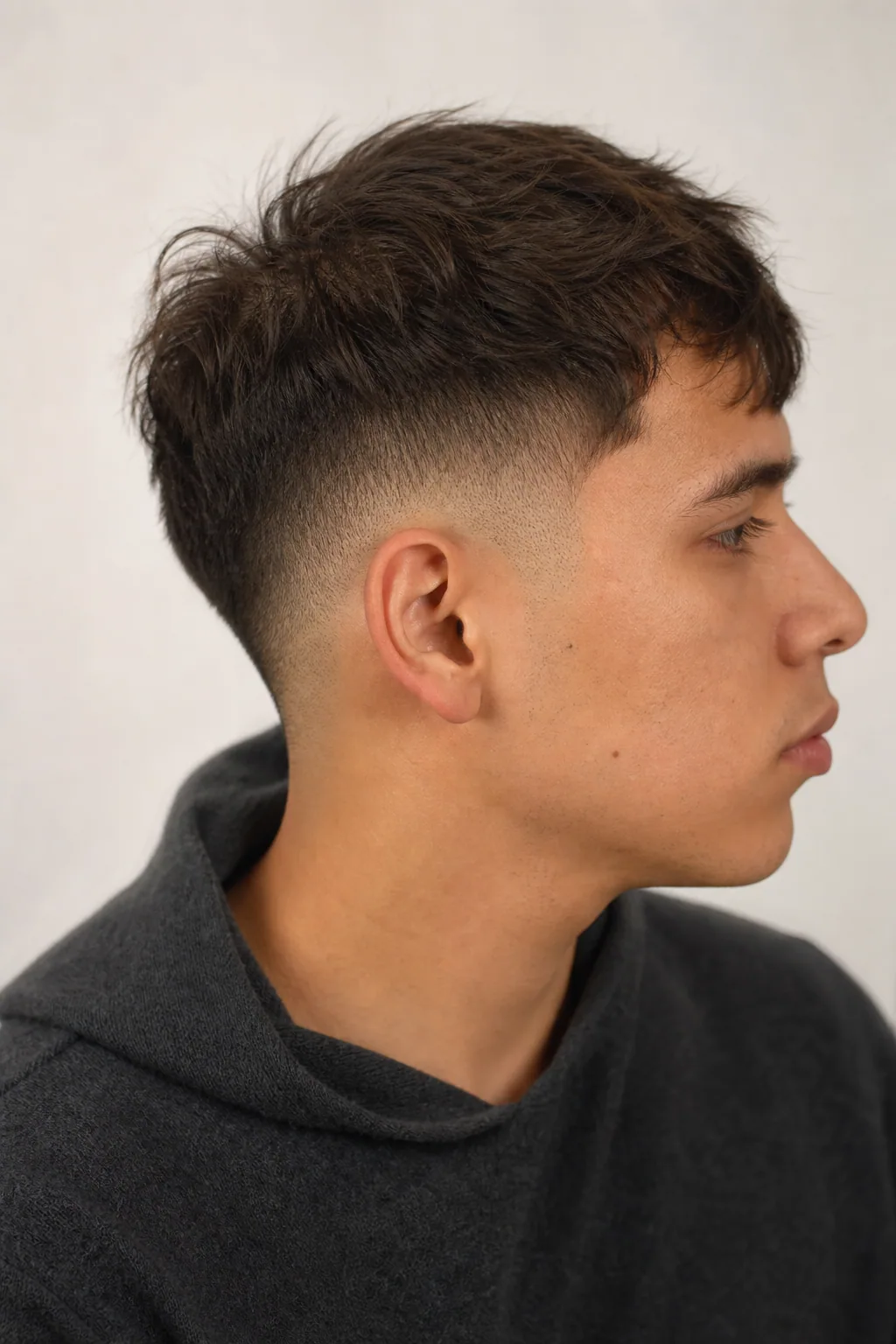
Low taper fade with a textured crop
The taper only cleans up the sideburns and neckline. The rest of the sides keep some length, so the textured top has something to blend into instead of sitting on an island.
Ask for "a low taper, just the sideburns and neckline." It is the most useful sentence in this article.
2
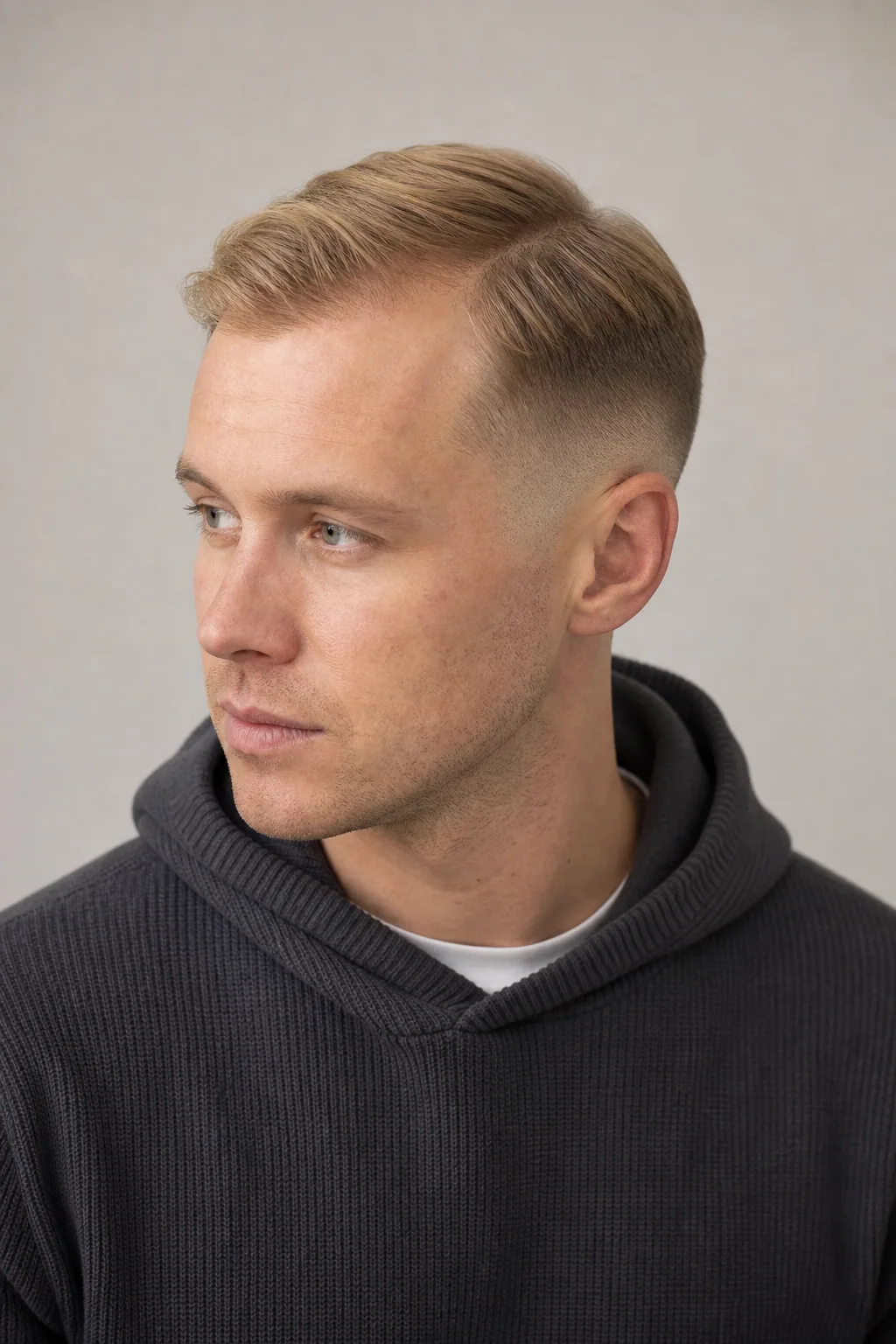
Low fade with a short side part
A classic side part keeps its length on top, so the fade has to stay low. Starting it just above the ears gives the clean outline of a fade without taking skin anywhere near the part.
Keep the part soft. A shaved hard part adds a stripe of scalp right where the hair is thinnest.
3
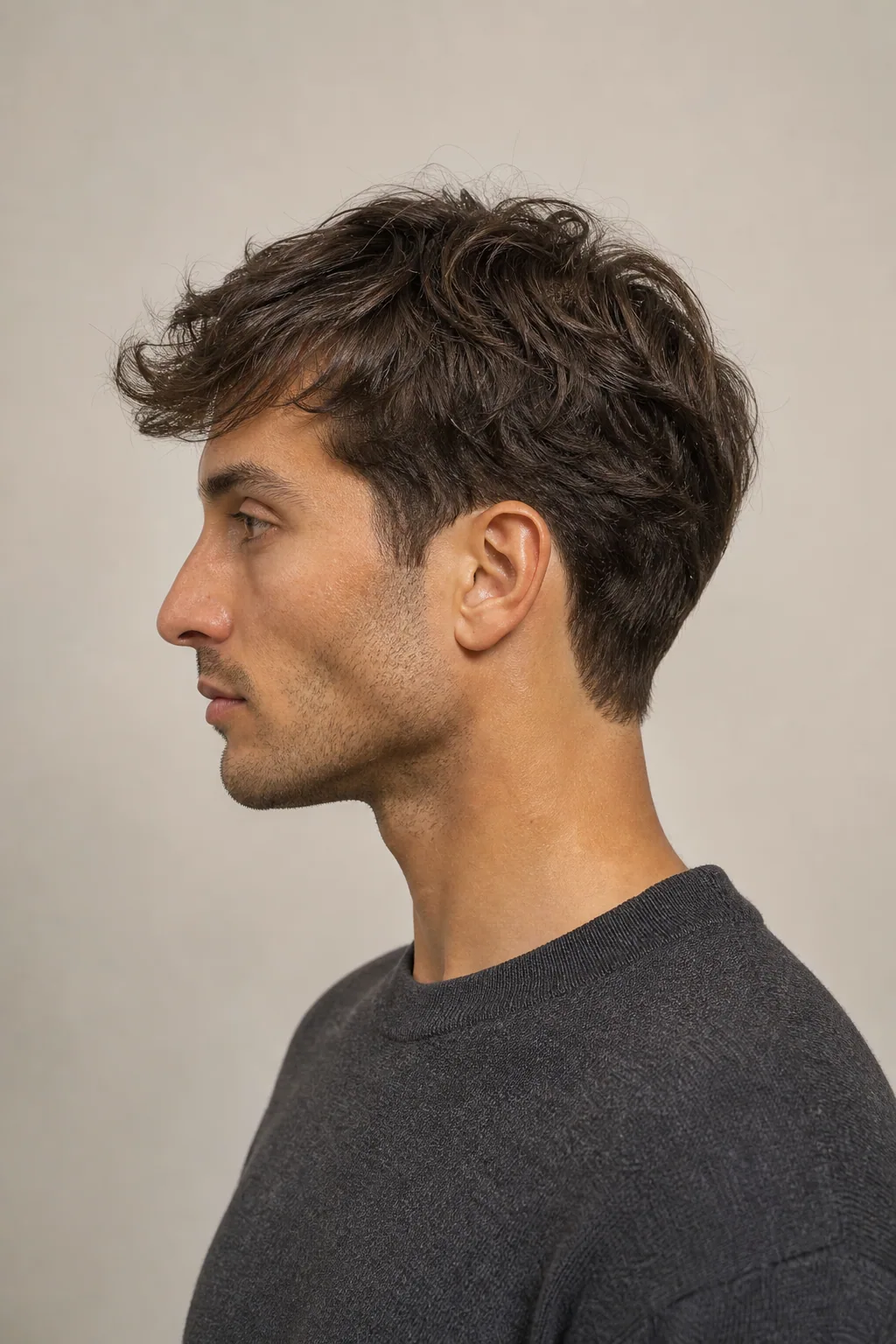
Low taper on thin wavy hair
Waves add movement that makes thin hair look fuller, and a low taper keeps the sides tidy without flattening that effect. A higher fade would make the waves look like they are perched on top.
Scrunch the waves with a little cream while damp and let them dry without touching them.
4
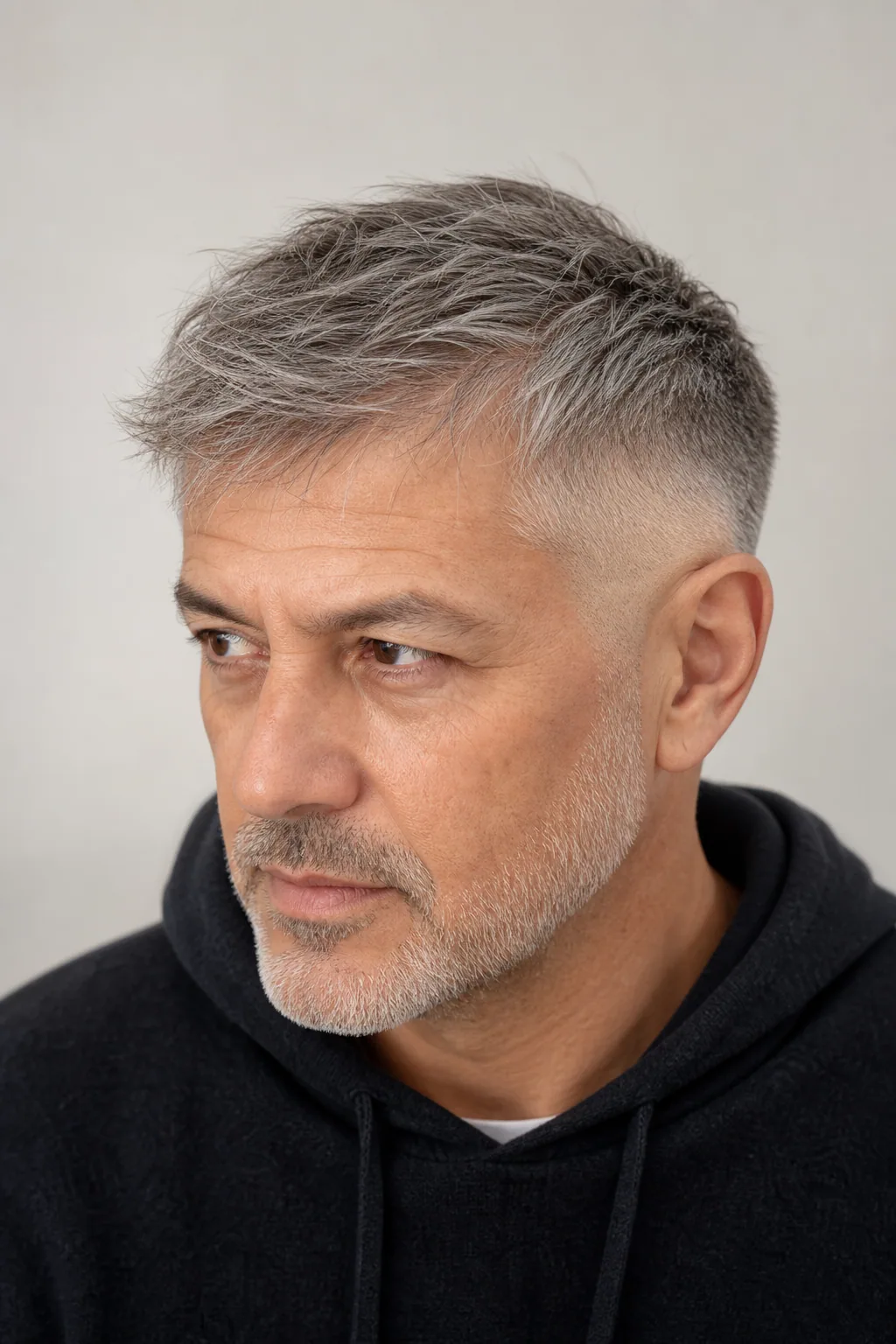
Low fade on thin grey hair
Grey and silver hair shows less contrast against the scalp than dark hair, so a low fade on a grey head looks especially soft. The short, loosely forward top keeps it modern rather than military.
Ask for the fade to be blended with scissors over comb at the top of the sides. A hard clipper line reads harsher on grey.
Mid fades: for about an inch on top
Once the top is short enough to stand up on its own, a mid fade stops being a risk. The top is dense-looking because it is short, not because it is long.
5
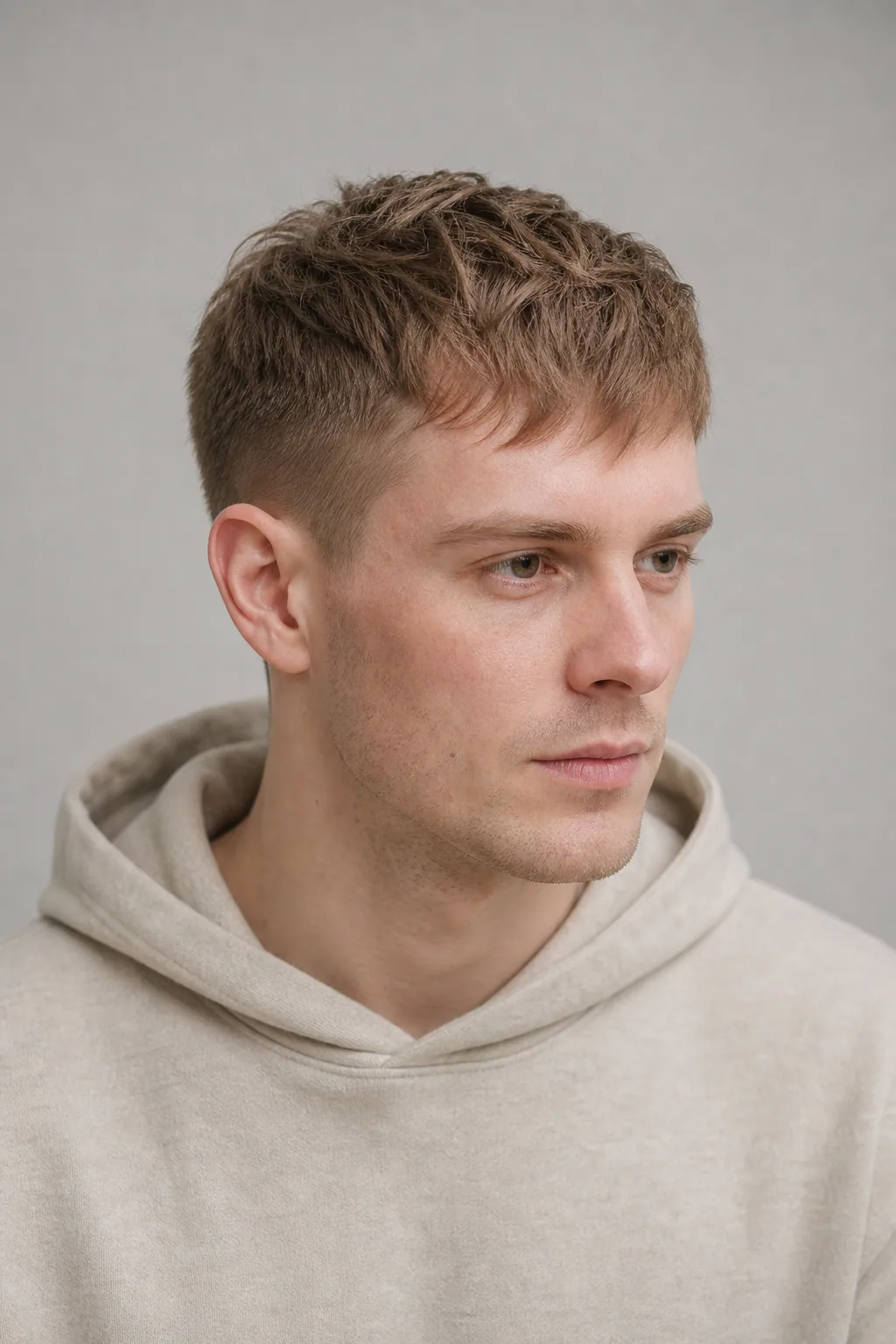
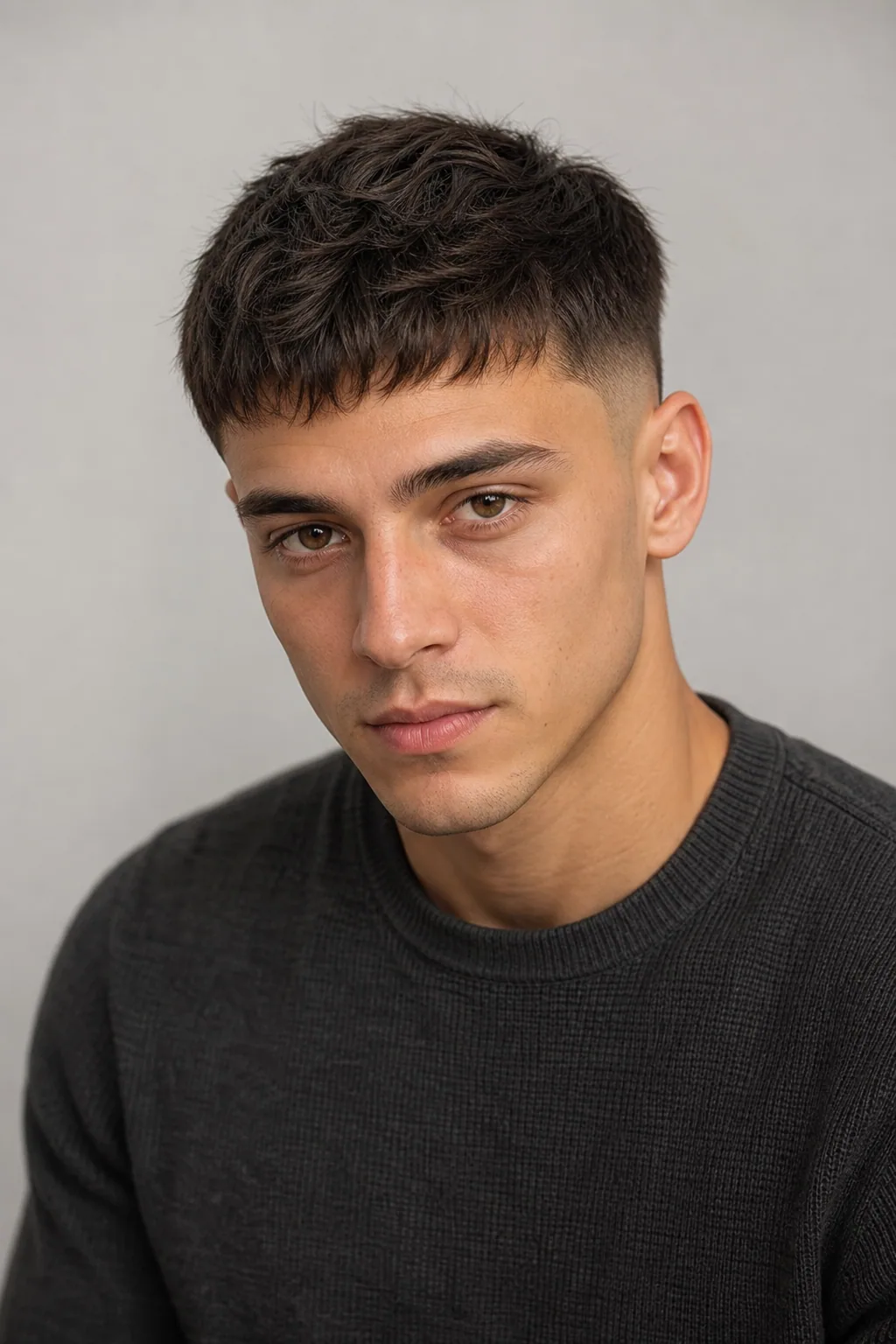
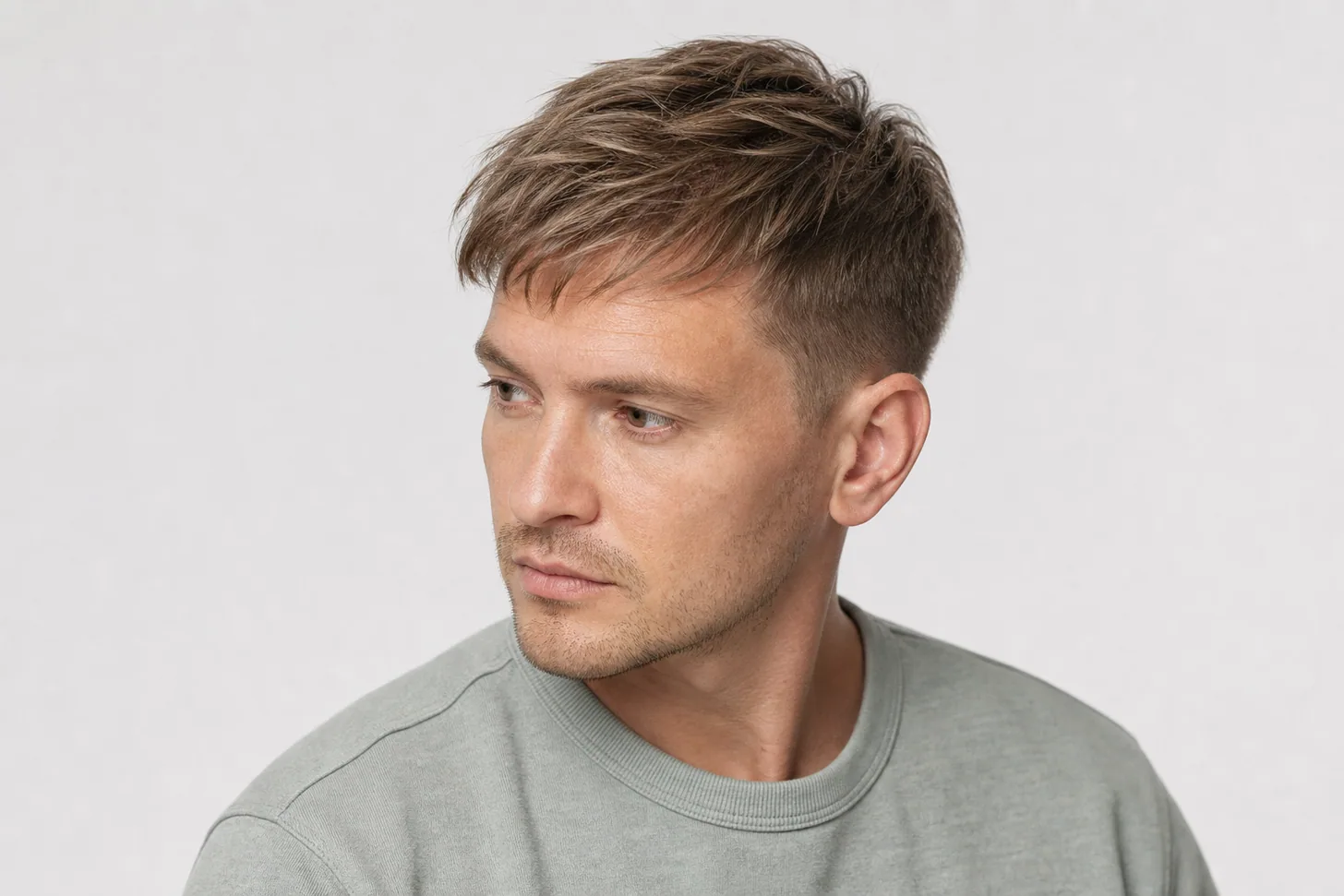
Mid fade under a French crop
A French crop keeps the top to about an inch with a short forward fringe. At that length the top is already packed close, so a mid fade underneath it looks sharp rather than sparse.
Ask for the fringe to be textured, not straight across.
6
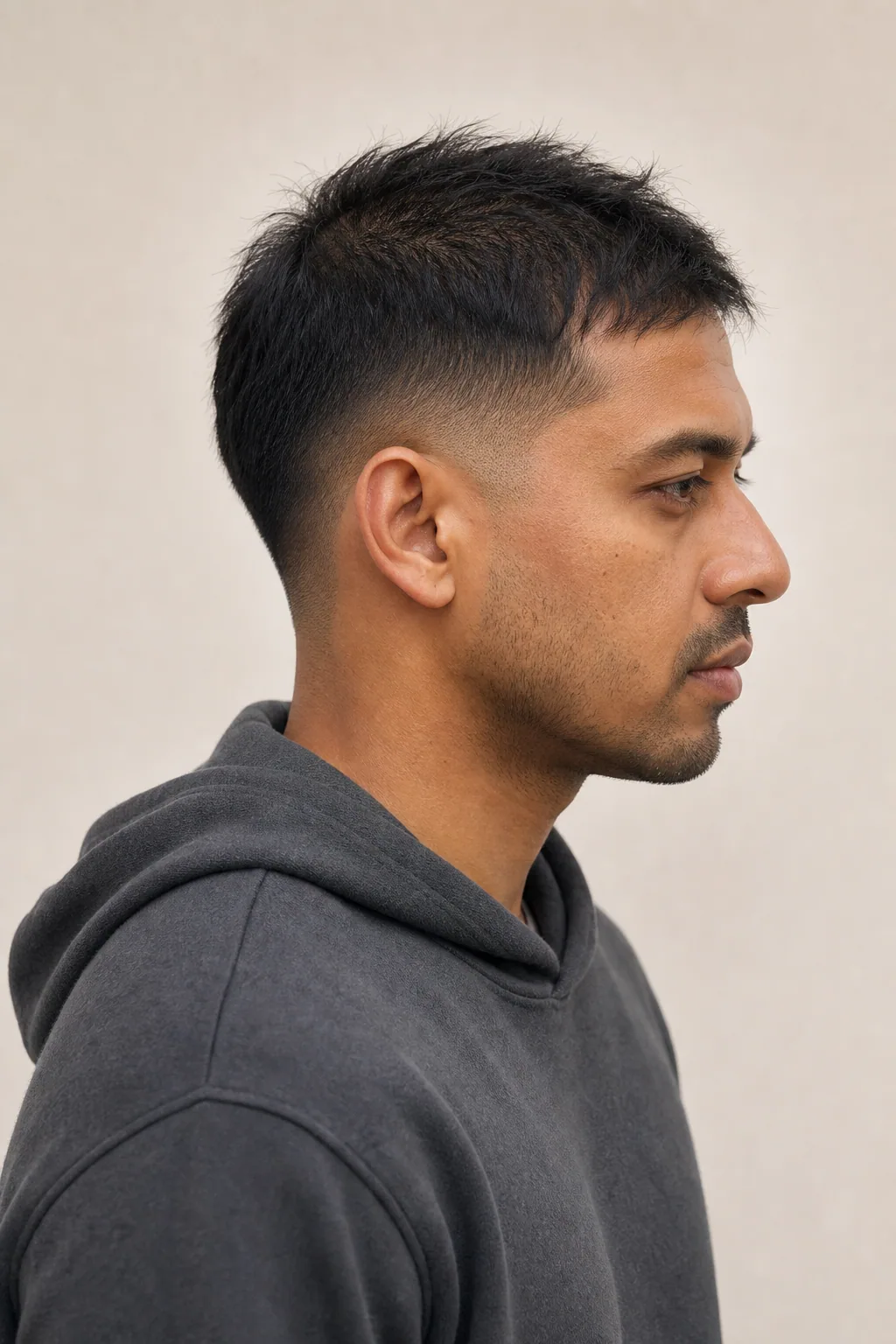
Mid drop fade
The fade curves down behind the ear, so the back keeps a little more hair than a straight fade would leave. More hair at the back means the crown sits on a fuller base.
It is a good choice if your crown is the thinnest part, because a straight mid fade leaves the crown exposed from behind.
7
Mid taper fade with a short quiff
A taper at mid height with a short, lifted quiff. The quiff is kept short so it stands up rather than flopping, and the taper leaves enough length on the sides to keep the balance.
Keep the quiff under two inches. Longer, it needs more hair than thin hair has to hold its shape.
Burst fades
A burst fade only curves around the ear, so it leaves the back and crown with more length than most fades. On thin hair that is useful, because the crown is where a fade most often exposes thinning.
8
Burst fade with a textured top
The fade is a semicircle around the ear, and the back stays fuller. You get the sharp look of a skin fade at the side without taking the back of the head down to the crown.
On curly or wavy thin hair, the burst also lets the texture at the back stay, which adds bulk where it helps.
9
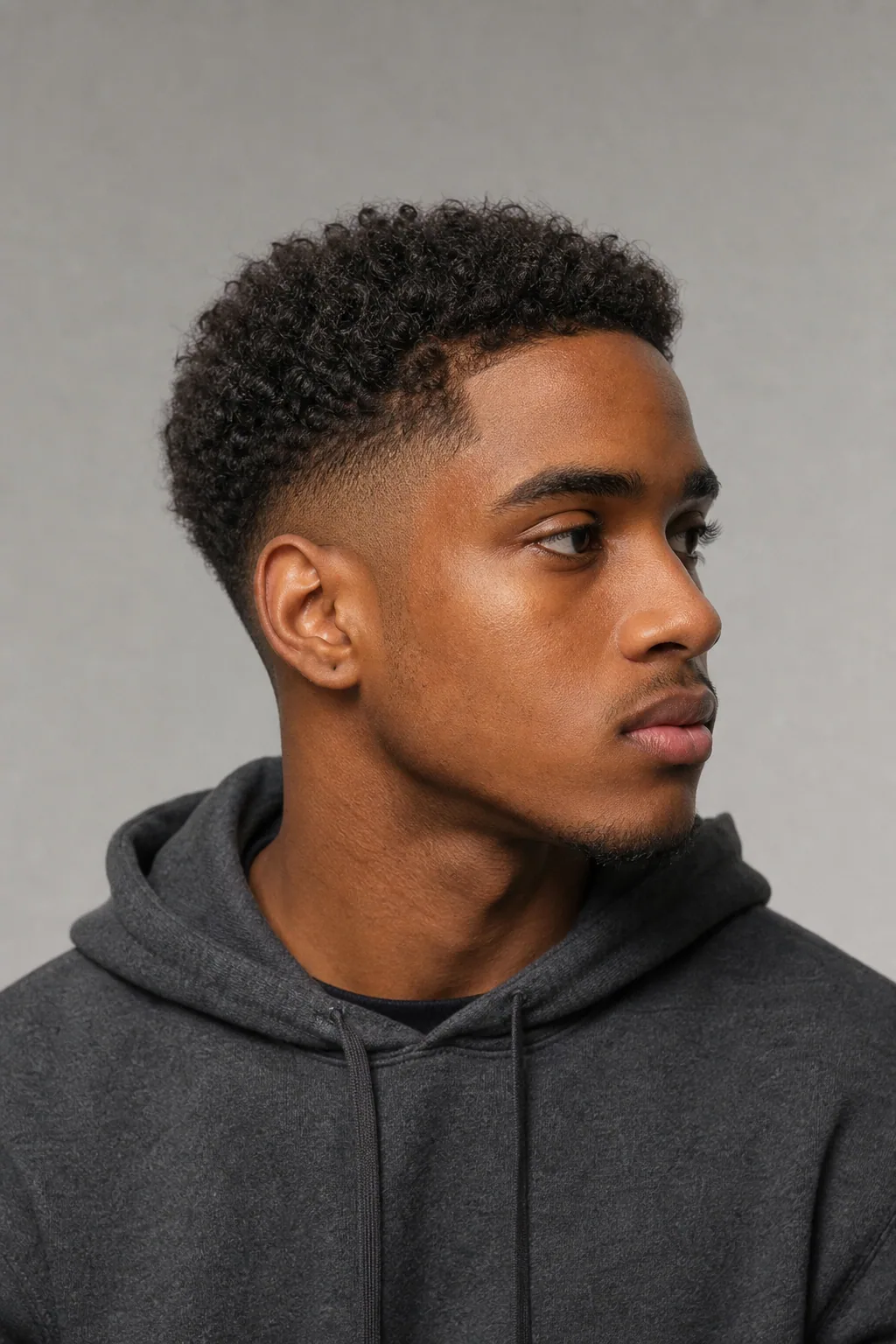
Burst fade on thin curly hair
Curls hide the scalp better than straight hair at the same density, and a burst fade frames them without cutting away the fuller back. It is one of the best fades there is for thin curly hair.
Define the curls with a light cream on damp hair. Heavy butters weigh fine curls down and separate them.
High and skin fades: only with a short top
These are the fades that ruin thin hair with length on top, and they work well once the top is short too.
10
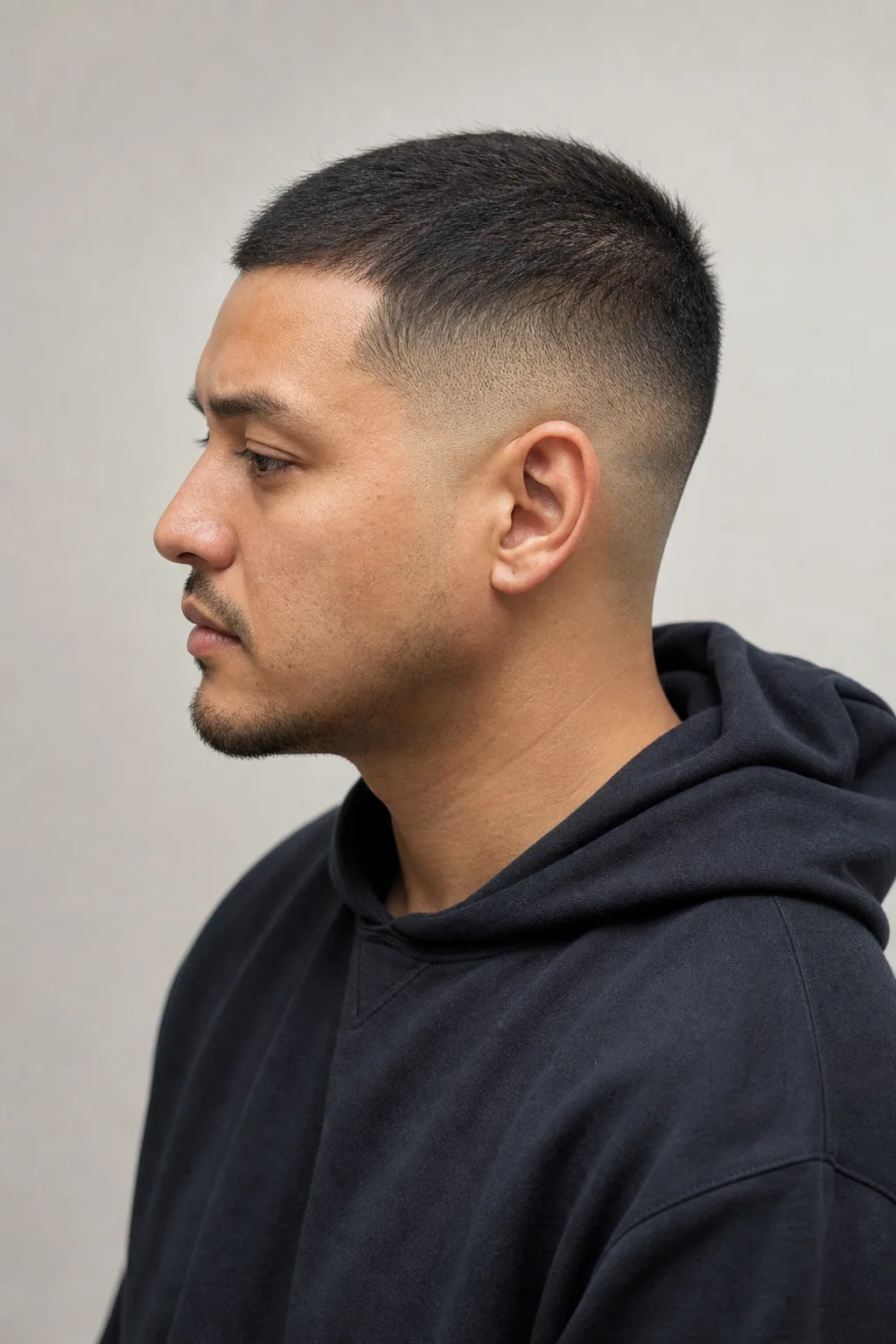
High skin fade under a buzz
With the top buzzed to a number 2, there is no long, sparse section left for the skin to contrast with. The fade just sharpens the outline of a short head of hair.
It needs a touch-up every two weeks. A grown-out high fade loses its shape fast. Our guide to the buzz cut for thinning hair covers which guard to use on top.
The fade to skip: a high skin fade under a long, thin top
Two or three inches of thin hair on top, with the sides taken to skin up to the temples. The top has nothing around it, so every gap in it shows against bare skin, and it looks like a small patch of hair on a large head.
If you want that sharp, clean-sided look, you have two honest options: take the top shorter to match, or bring the fade down to a low taper. Both work. The combination does not.
Your skin and hair colour change how high you can go
Contrast is what makes a fade look sharp, and it is also what makes thin hair look thin. Dark hair against light skin shows the most contrast, so on that combination keep the fade lower than you would otherwise.
Light hair on light skin, or dark hair on deep skin, shows less contrast, and a fade can sit a little higher before the top starts to look sparse.
If your hair is thinning, not just thin
The same rule applies, with one addition: the fade should go lower as the thinning goes further, until the top is short enough to go the other way. Receding temples especially look worse under a fade that climbs to the temple line.
Say: "My hair is thin on top, so I want the fade low — start it just above the ears and keep some length on the sides so the top doesn't look isolated. No hard part, and please don't use thinning shears on the top."
Bring a photo of a fade on someone with hair like yours, not someone with thick hair. The same fade looks different on different density.
FAQ
Yes, if the fade is low. A low fade or low taper cleans up the sides and neckline while leaving enough length for the top to still look like the fullest part of the head. A high skin fade under a long, thin top is the version to avoid, because it puts bare skin right against the sparse top and makes it look sparser.
A low taper fade is the safest choice for thin hair with any length on top. It only shortens the sideburns and neckline. With about an inch on top, a mid fade or mid drop fade also works. A burst fade is good for thin curly hair because it leaves the back fuller. A high fade only works when the top is buzzed short too.
It does when there is length on top. A high fade takes the sides to skin up near the top of the head, so a long, thin top sits directly against bare skin and every gap shows. If the top is cut almost as short as the fade, there is no contrast and a high fade looks fine.
A low taper shortens the hair gradually only at the sideburns and neckline, leaving the rest of the sides with some length. A low fade takes a larger area of the sides down, often to skin, starting just above the ears. For thin hair the taper is the gentler option, because it leaves more hair on the sides.
A low fade can be, and it should get lower as the thinning progresses, because a fade that climbs to the temples makes receding corners more obvious. Once the top is thin enough to buzz, a higher fade works again because the top and sides are both short. Match the fade height to how much length is on top.
Every two to three weeks for a low taper or low fade, and every two weeks for a high or skin fade. As a fade grows out, the sides get bulkier and the contrast with a thin top can change. A quick clean-up of the neckline and sideburns between full cuts keeps it looking intentional.
Eleven years behind the chair, specializing in short shapes and fine-hair texture. Simone believes the best haircut is the one you can style yourself in ten minutes.
Results vary with hair type, density, and growth patterns. Hairstyling guidance is not a substitute for an in-person consultation with a licensed barber or stylist.
Hairstyle images in this guide are AI-generated illustrations, not photos of real clients or results. See our image policy.
Get the good hair intel
One honest, stylist-written guide in your inbox each week. No hype.

 SB
SB