Reviewed by Tara Sullivan · Updated September 2026 · 9 min read
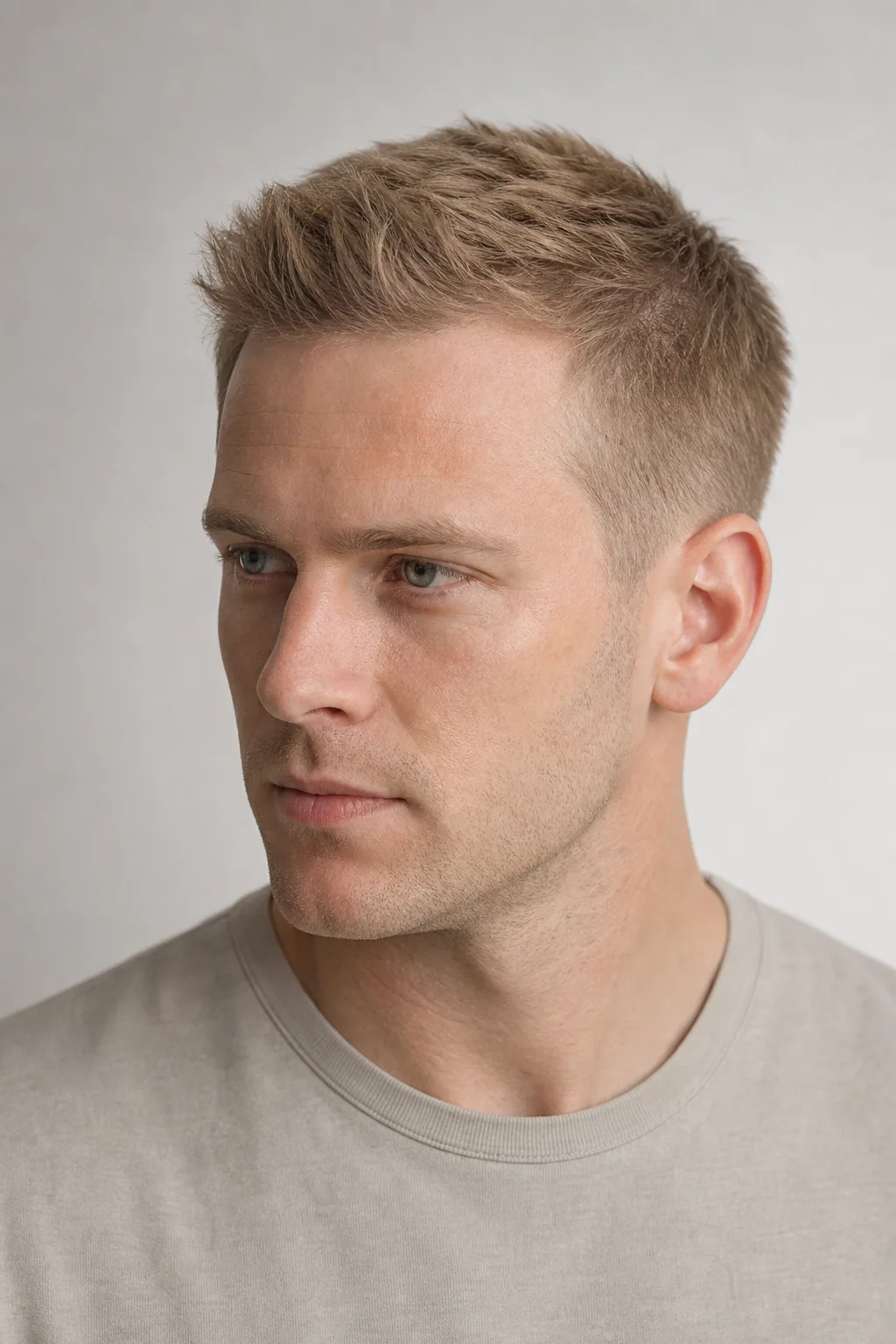
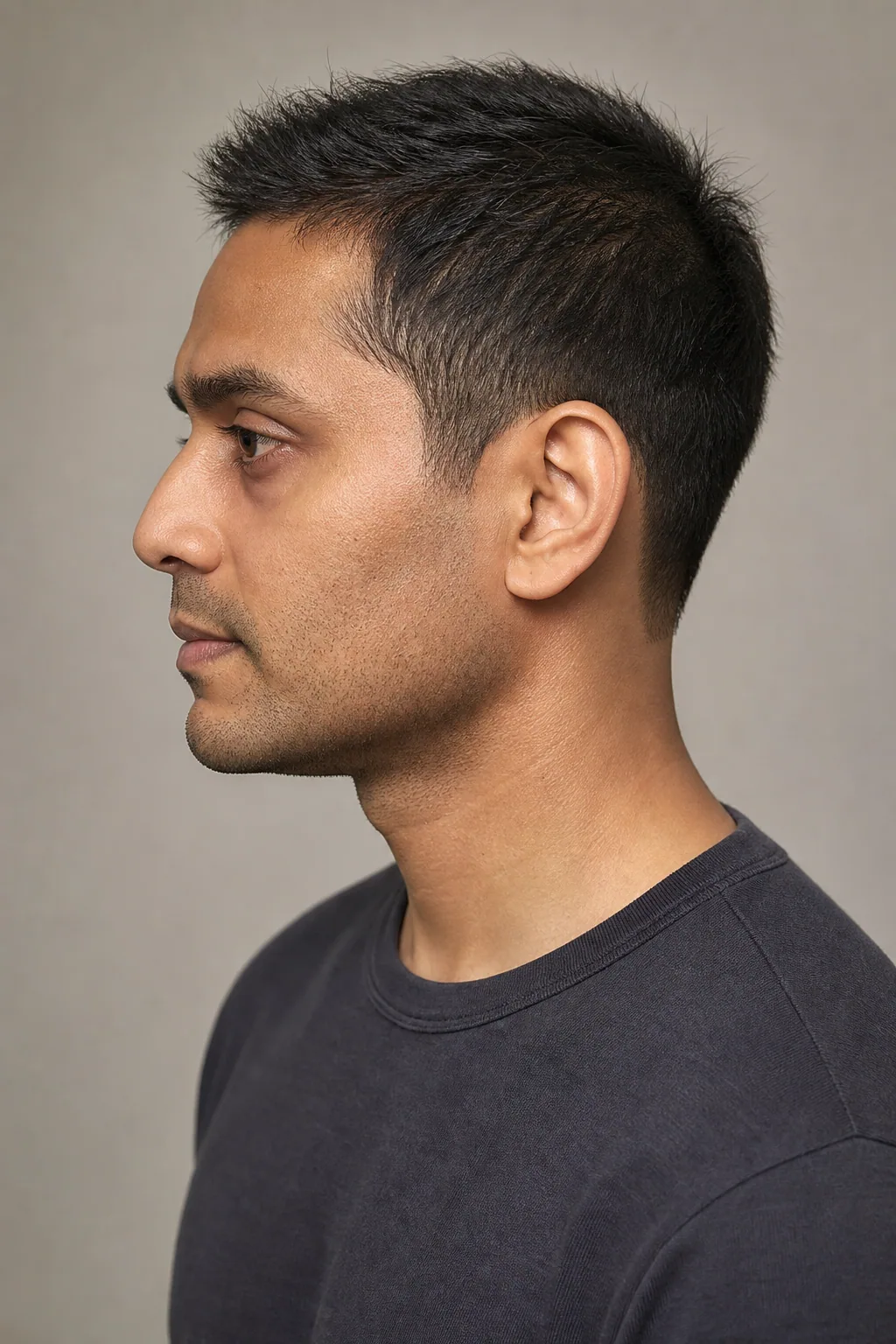
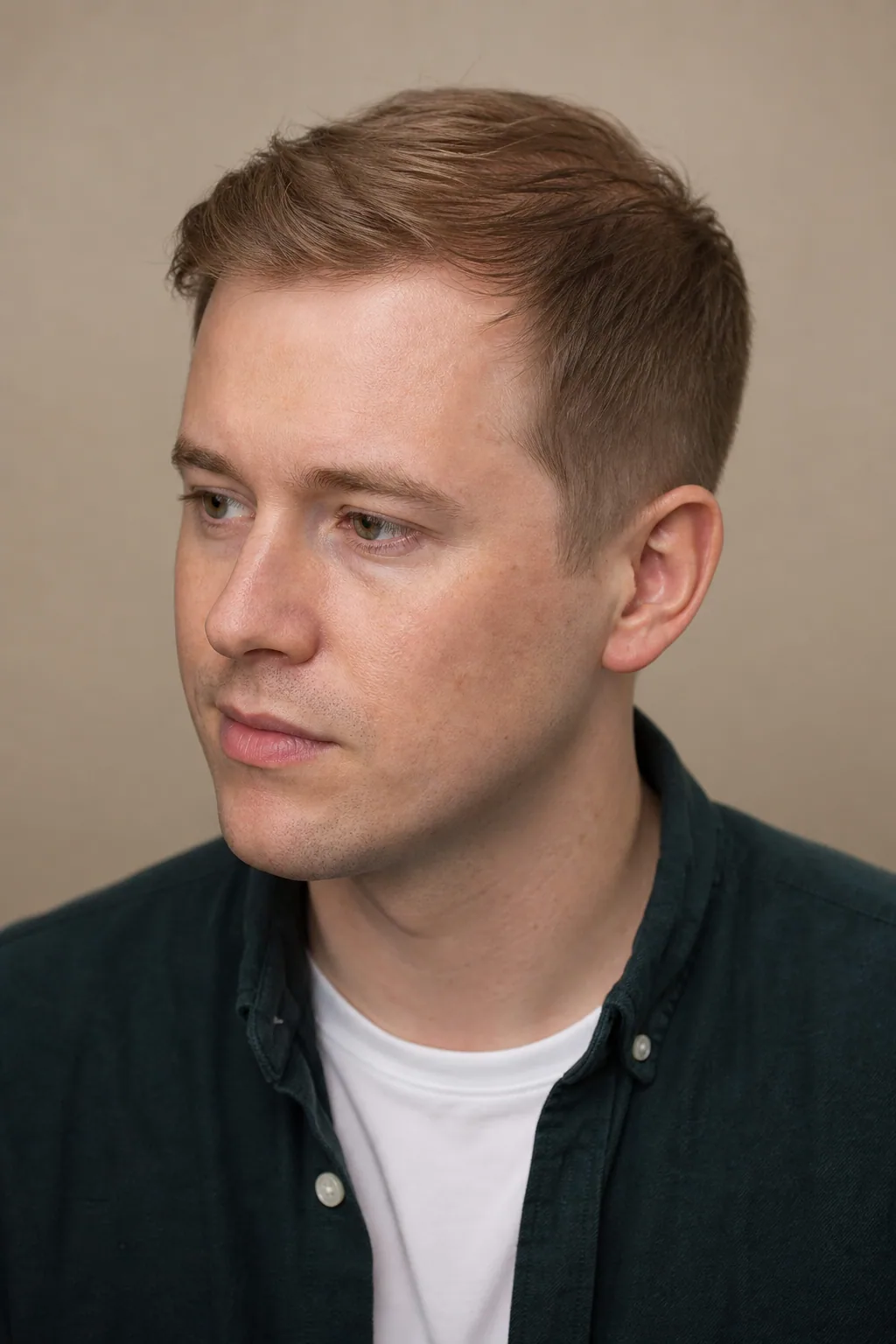
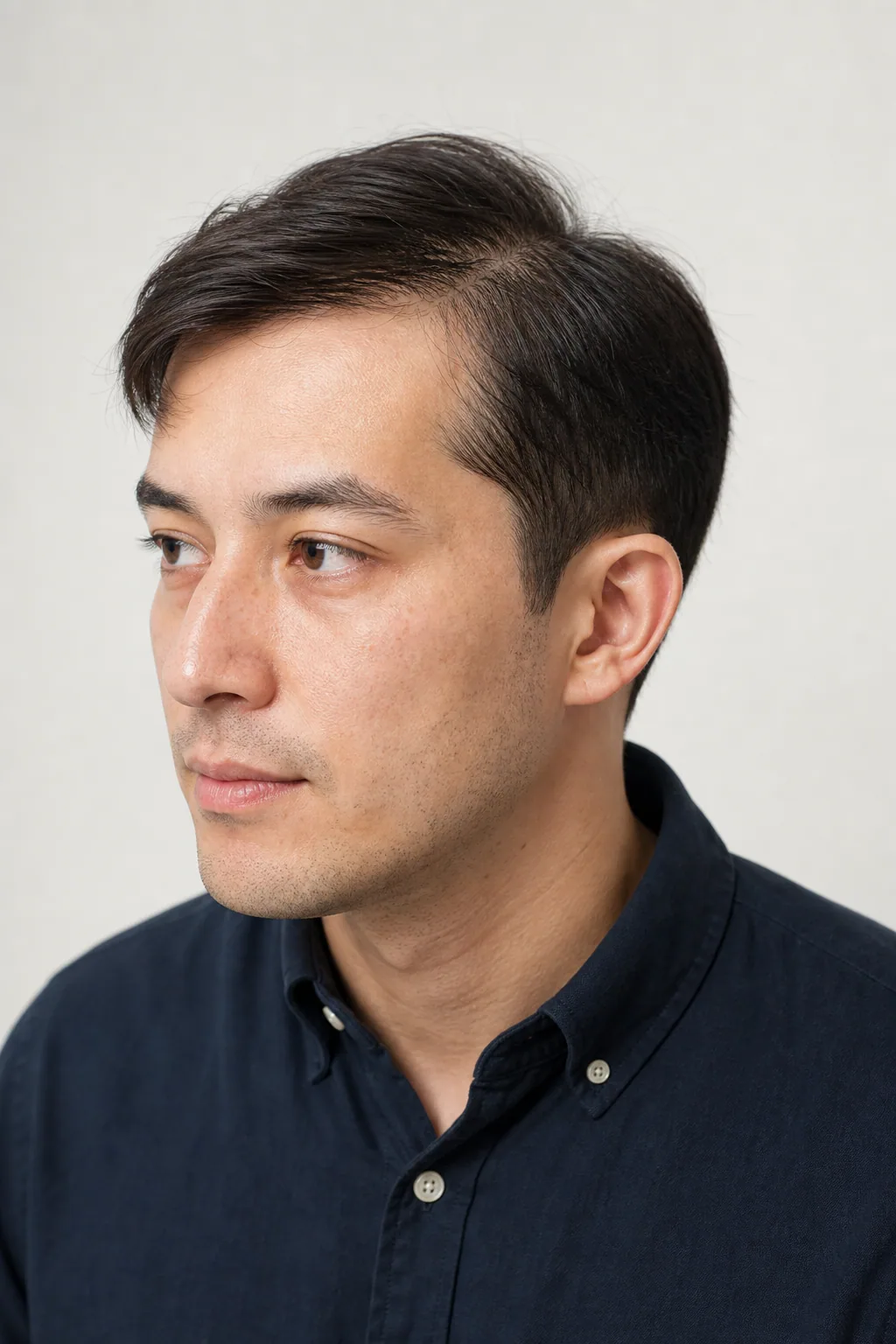
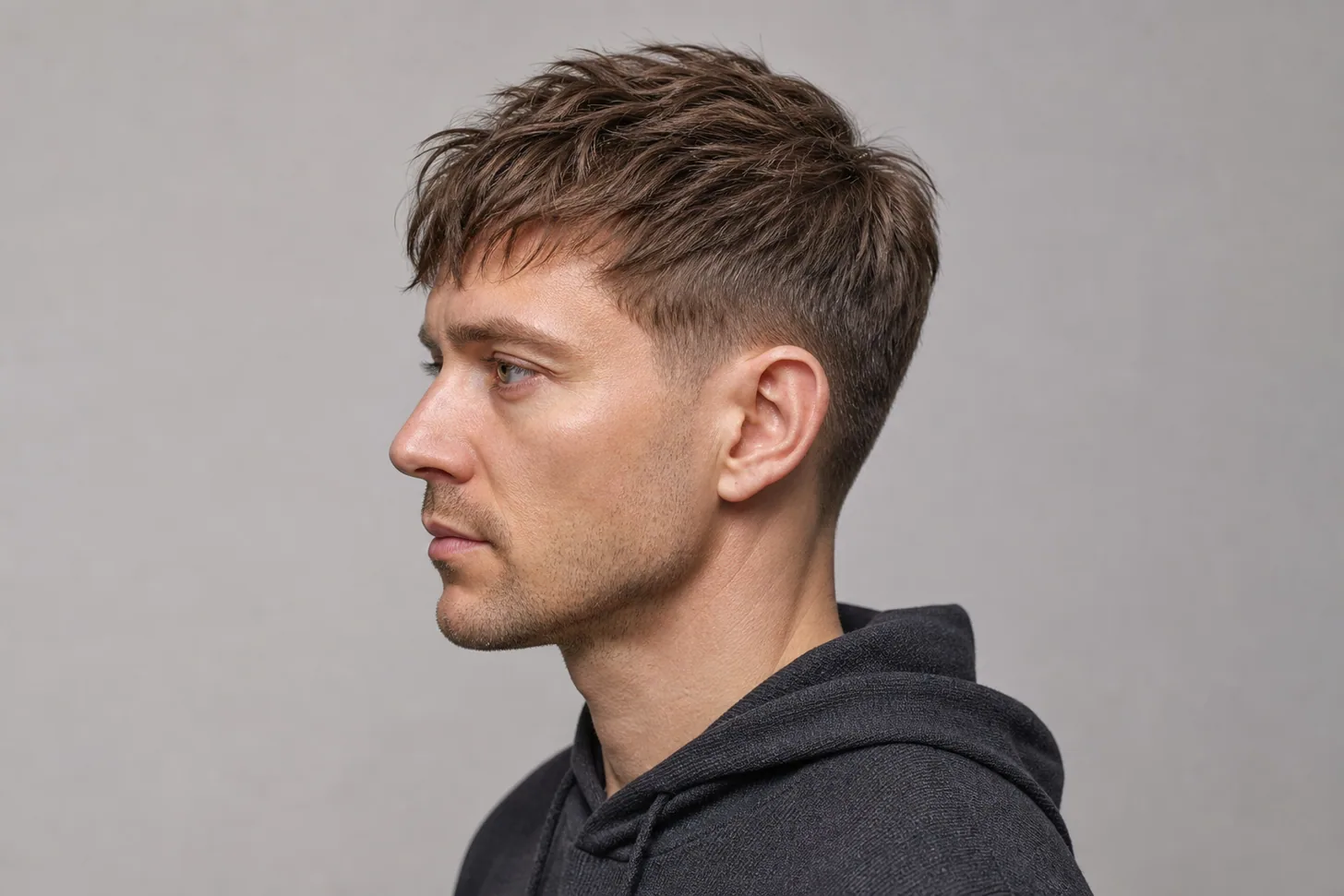
A crew cut works on thin and thinning hair because it keeps the length where the hair is fullest and takes it away where it is not. The front stays a little longer, the top tapers shorter toward the crown, and the sides stay close.
The one thing to get right is how much length the front carries. Too much over a receding hairline and it separates and shows the gaps. Below are eight crew cuts matched to how far the thinning has gone, the modern comb over, and what to say to your barber.
Chair-side note
The crew is the cut I give most often to men who say "I just want something normal." On thin hair it is quietly clever, because it grades the length from front to back.
Tell me where your hair is thinnest before I pick up the clippers. That decides how long I leave the front, and the front is the whole cut.
SB
— Simone Baptiste, Senior Stylist
Why a crew cut works on thin hair
A crew cut is short on the sides and back and a little longer on top, with the top graduated: longest at the front hairline, shortest at the crown. That grading is what makes it suit thin hair.
Most men thin first at the crown or the temples. A crew keeps the crown short, where longer hair would part and show scalp, and puts the length at the front, where it frames the face. The sides stay close so there is no full frame around a thinner top.
It is also forgiving. A crew grows out into a slightly longer crew, not into a shapeless mop, so it can go four to five weeks between cuts.
The rule: the front can only be as long as the hairline can hold
With a full hairline and fine hair, the front can carry about an inch and look fuller for it. With receding temples, it should come down to half an inch, so it sits up instead of falling forward and splitting at the corners.
Once the top itself is thin, the crew turns into a butch: nearly the same short length all over. At that point the grading no longer hides anything, and matching the top to the sides does the work instead.
Crew cuts for thin hair with a full hairline
For hair that is fine or low in density but not receding. Here the crew can keep its classic shape, and the front length is an asset.
1
Classic crew with a textured front
The textbook crew: about an inch at the front, grading down to half an inch at the crown, with the sides at a number 2. The front is pushed up with a little matte clay so it stands rather than lies flat.
Ask for the top to be point-cut rather than clipper-cut. Point-cut ends separate into small pieces, which reads as more hair than a flat, blunt top.
2
Long crew, pushed forward
A longer crew brushed forward rather than up. On thin hair with a full hairline, a forward direction covers more of the forehead and makes the top look denser from the front.
Keep the fringe above the eyebrows and choppy at the ends. A heavy, straight fringe on thin hair separates into strands by lunchtime.
3
Crew cut with a low taper
A low taper tidies only the edges: the sideburns and the neckline. The sides above stay at an even short length, so there is no bare band of skin next to the top.
This is the version to ask for if you want the crew to look neat for longer. For why height matters, see fade haircuts for thin hair.
Crew cuts for thinning hair
For receding temples or a thinning crown. The crew still works, but the front gets shorter and the grading gets steeper.
4
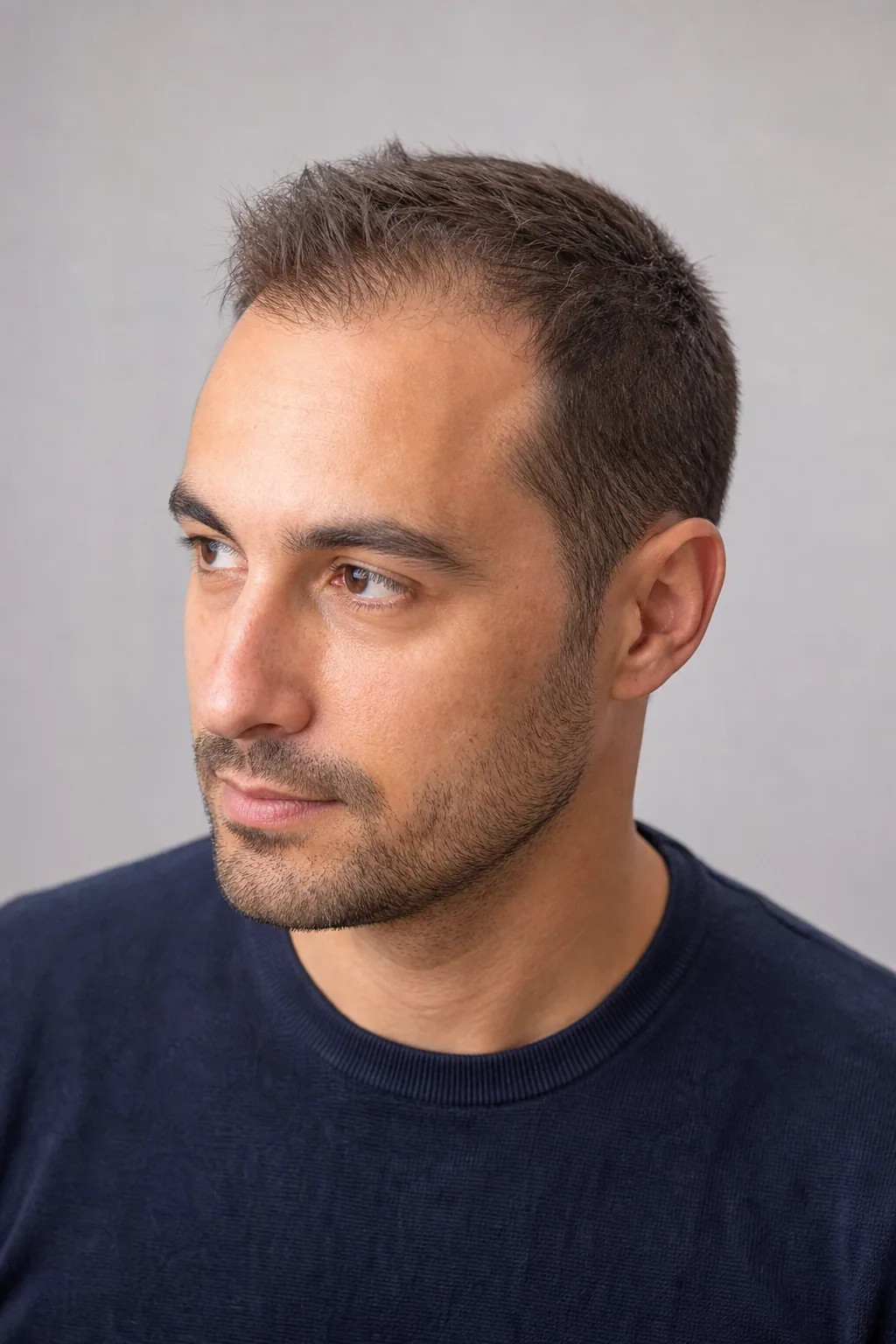
Short crew for receding temples
Half an inch at the front is short enough to stand up on its own, so it does not fall into the gaps at the temples. The sides at a number 2 bring the full hair down close to the density of the corners.
Ask for no line-up at the front. A sharp, edged hairline draws the recession in ink.
5
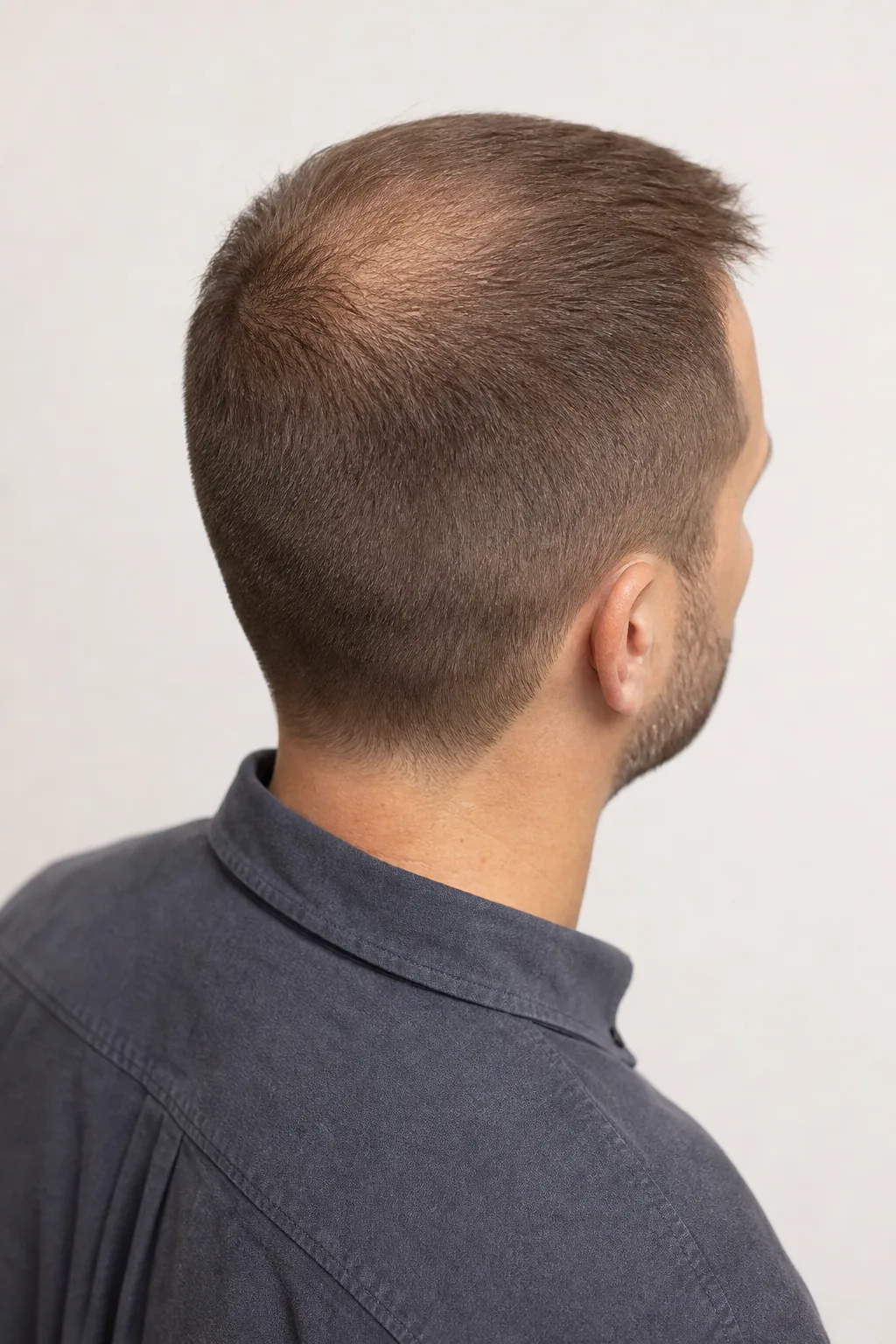
Crew with a short crown
For a thinning crown, the crew's grading is the fix. The crown is taken down to a number 3 or so, level with the sides, and the length builds toward the front where the hair is thicker.
Longer hair at the crown lies flat and parts around the thin spot. Short hair stands up and covers it better.
6
Butch cut
When the top is thin all the way back, the crew becomes a butch: close to one short length everywhere, with only a hint more at the front. It is the crew at its most practical.
If you like it, the next step down is a buzz. Our buzz cut for thinning hair guide explains which guard to use.
Thin hair comb over: the short version that works
There are two comb overs, and they are opposites. The old one grows long hair on one side and lays it across a bald top. It depends on the hair staying put, and wind, rain and swimming all undo it.
The modern comb over is a longer crew with a side part: short tapered sides and about two inches on top, combed across. On hair that is thin but still covers the top, it is a clean, classic cut. It stops working once the part has to cover bare scalp, and at that point shorter is always better.
7
Ivy League
A crew left just long enough at the front to part. Keep the part soft and a little off-center, pushed with fingers rather than a fine comb, so it does not show a clean stripe of scalp.
It is the most formal crew, and the one that suits a suit.
8
Modern comb over with a low taper
The short comb over: two inches on top, swept across, with low-tapered sides. Blow-dry the top in the direction you will comb it and finish with a matte product, never a shiny one.
Shine makes thin hair clump into lines, and the lines show scalp. If the part has started to widen year on year, move down to one of the shorter crews above.
Crew cut, buzz cut or Caesar?
All three are short and all three suit thin hair. They differ in where the length goes.
Say "a crew cut, about an inch at the front, grading shorter to the crown, number 2 on the sides, no line-up." Then adjust the front length to your hairline: an inch for a full hairline, half an inch for receding temples.
Ask for texture on top by point cutting, not thinning shears. Thinning shears remove bulk that thin hair cannot spare. Book every four to five weeks; past six, the crown grows long enough to part.
Styling a crew cut on thin hair
Towel-dry, then blow-dry the front up or forward with your fingers for thirty seconds. Hair dried in a direction stays there; hair left to air-dry lies flat.
Finish with a pea-sized amount of matte clay or paste, worked through your palms first and then into the front only. Our styling routine for fine hair on men covers the two-minute version.
When a crew cut is the wrong call
The top is mostly scalp. A graduated front with nothing behind it draws attention to the gap. A buzz or a shaved head will look fuller.
Your hair is thick and coarse, not thin. A crew still works, but you will need thinning out that fine hair never should. This page is written for the opposite problem.
Yes. A crew keeps the most length at the front, where most men's hair is fullest, and takes the crown and sides short, where longer hair would part or frame a thin top. Point-cut texture on top makes it look denser. It is one of the most reliable cuts for thin and thinning hair.
About an inch at the front if your hairline is full, and about half an inch if your temples are receding, grading shorter to the crown. The sides are usually a number 2. Once the top is thin all the way back, go shorter still into a butch or a buzz.
A buzz cut is one length all over. A crew cut is graduated: longer at the front and shorter toward the crown, with short sides. The crew suits a thinning crown with a fuller front; the buzz suits thinning on top, where there is no fuller area left to keep long.
A short, modern comb over is, as long as the hair still covers the top. It is a longer crew with a side part and tapered sides. The old comb over, which lays long hair across a bald area, is not: it moves in wind and rain and draws attention to what it is covering.
A butch cut is a very short crew, close to the same length all over the top and sides, usually around a quarter inch with a hint more at the front. It is a practical choice for thinning on top, because there is almost no difference in length between the thin areas and the full ones.
Every four to five weeks. Past about six weeks, the crown grows long enough to lie flat and part, and the sides start framing the top. A short butch needs a trim every two to three weeks to keep the lengths even.
Eleven years behind the chair, specializing in short shapes and fine-hair texture. Simone believes the best haircut is the one you can style yourself in ten minutes.
Results vary with hair type, density, and growth patterns. Hairstyling guidance is not a substitute for an in-person consultation with a licensed barber or stylist.
This article is not medical advice. If your hair loss is sudden, patchy, or accompanied by an itchy, sore or scaly scalp, see a board-certified dermatologist.
Hairstyle images in this guide are AI-generated illustrations, not photos of real clients or results. See our image policy.
Get the good hair intel
One honest, stylist-written guide in your inbox each week. No hype.

 SB
SB