Fine-hair care · Getting answers

Hair Shedding vs Hair Loss (vs Breakage): How to Tell Which You Have

Hair shedding means more whole hairs than usual are falling out, usually a few months after a trigger like illness, childbirth or stress, and it stops on its own. Hair loss means something is stopping hair from growing back, such as pattern thinning or alopecia areata, and it continues until the cause is treated. That is how the American Academy of Dermatology separates them.

There is a third thing that looks similar on fine hair: breakage, where hairs snap partway along the strand. Below is how to tell all three apart at home, and which one needs a doctor.
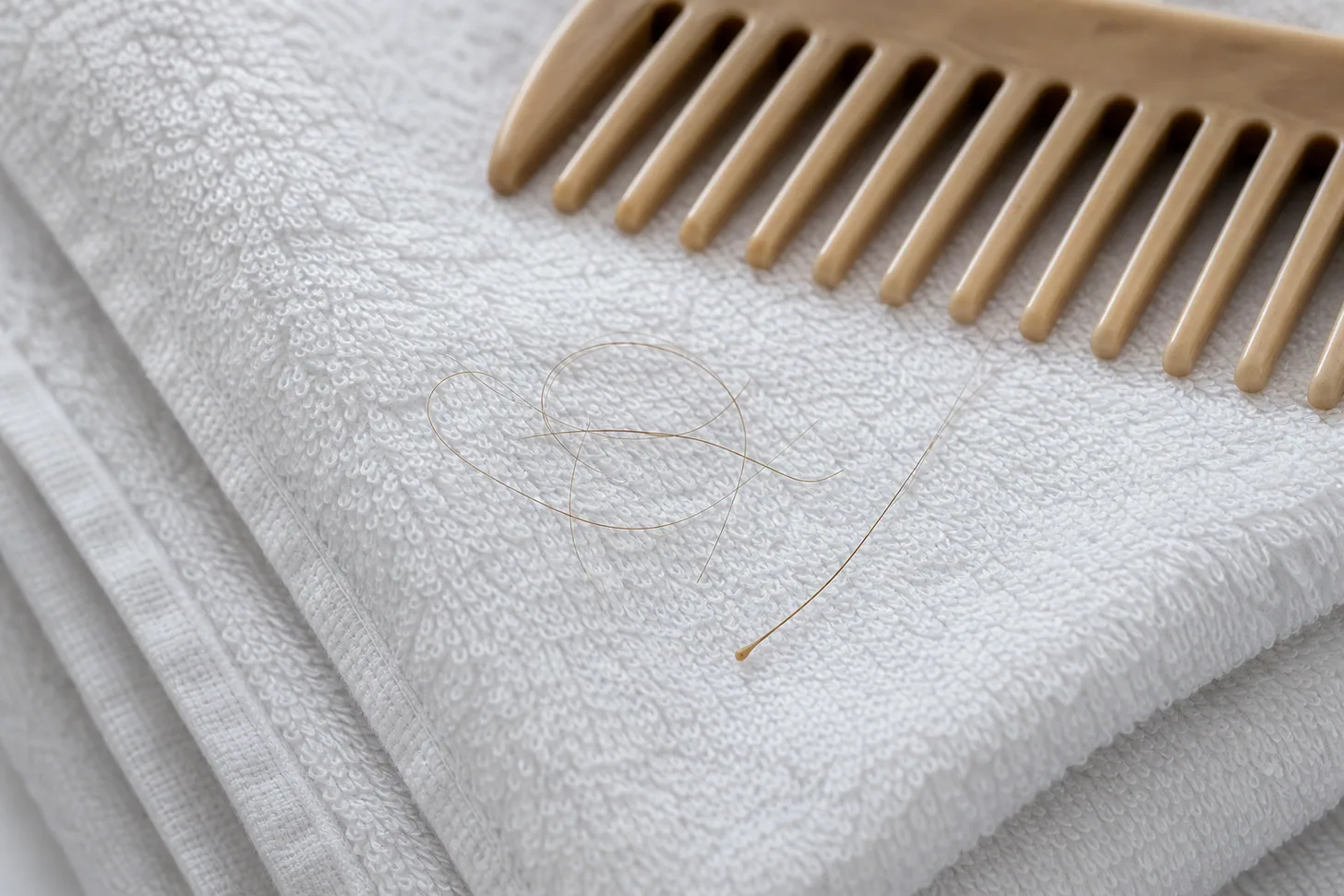

Loose shed hairs on a white towel beside a wide-tooth comb

Shedding, loss and breakage at a glance

  • Shedding: full-length hairs with a small white bulb at the root. Starts suddenly, all over the head, two to three months after a trigger. Usually recovers within six to nine months. See telogen effluvium.
  • Hair loss: the hair that grows back is finer and shorter, or doesn't grow back. Gradual, often a widening part. Continues until treated. See first signs of hair thinning.
  • Breakage: short pieces with no bulb, often from the ends or mid-lengths. Caused by heat, bleach, tight ties or rough brushing. See hair breakage on fine hair.

How much shedding is normal?

The AAD says it is normal to shed 50 to 100 hairs a day. You often see more on wash days, because hairs that loosened between washes come out together. If you go several days between washes, a bigger clump in the shower is expected.

Three checks you can do at home

1. Look at the end of the hair

A shed hair is long and has a small white or clear bulb at one end. A broken hair is short, with a blunt or frayed end and no bulb.

2. Think back three months

Shedding usually starts about two to three months after a fever, operation, birth, big weight loss, stopping the pill, or a period of stress. If you can name a trigger, shedding is likely.

3. Look at the pattern

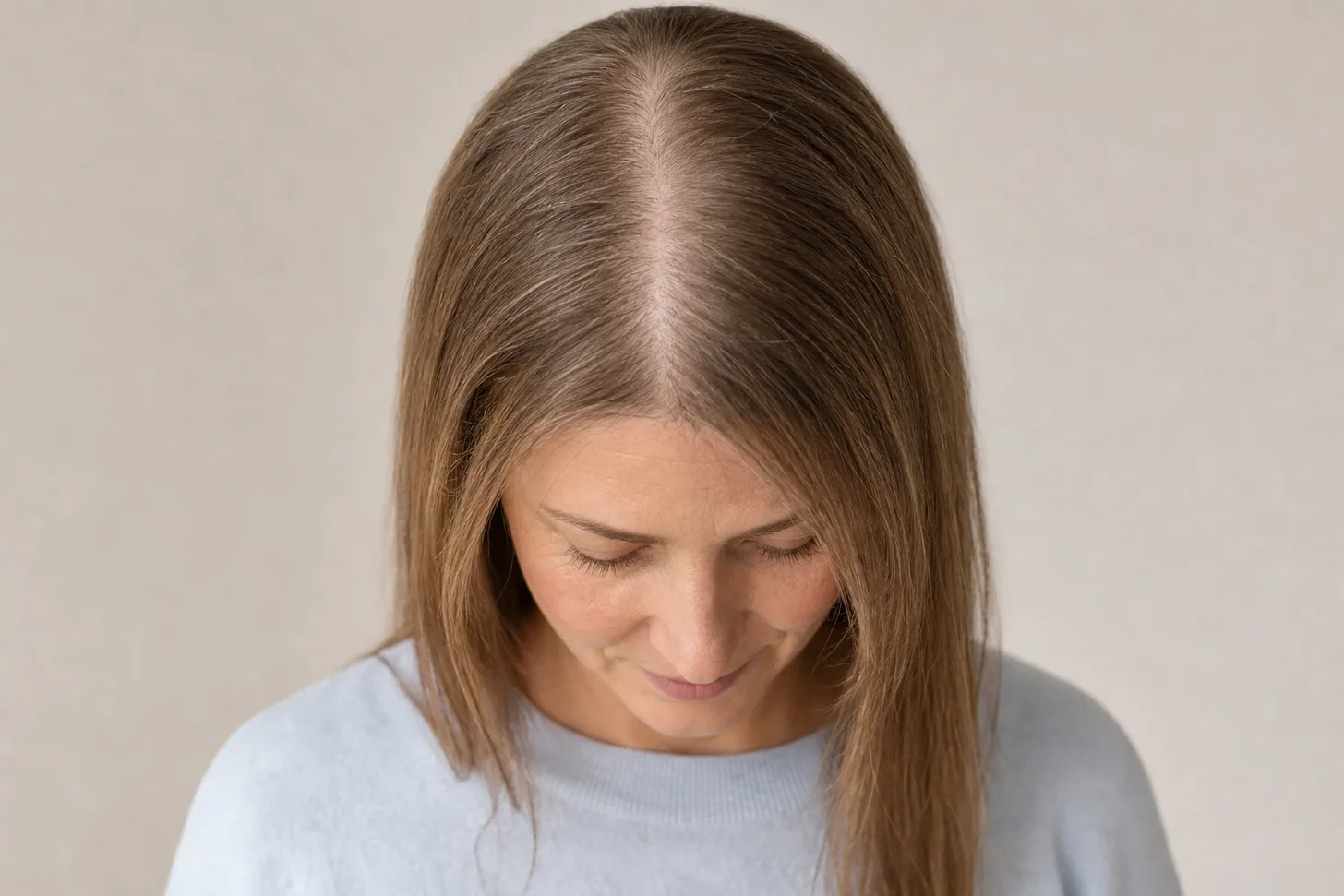
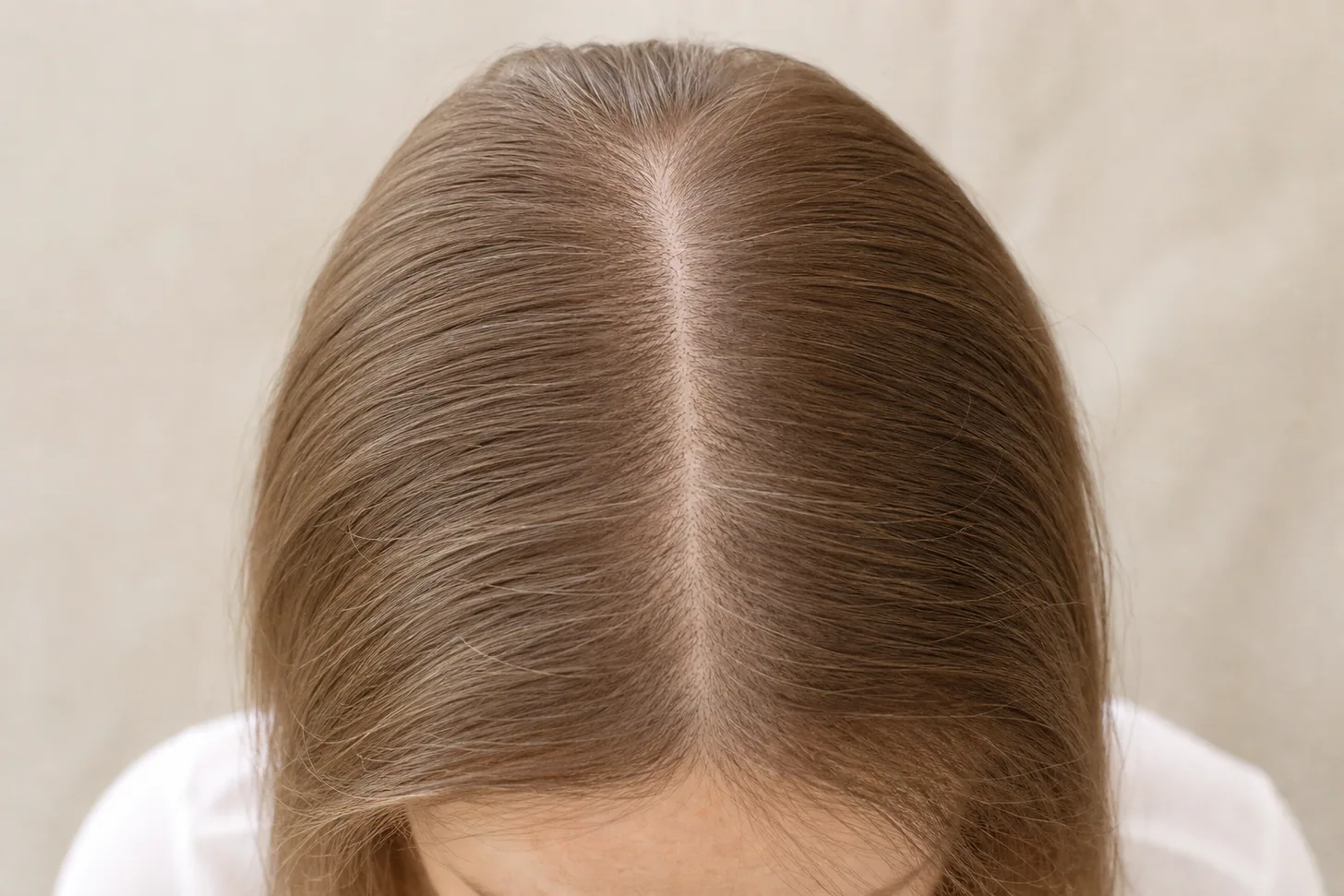
Shedding thins hair all over. Pattern loss shows first as a wider part and a thinner crown. Patchy loss in round spots is different again, and needs a dermatologist. See which pattern of thinning is it?

Chair-side note

I ask clients to bring me a few hairs from their brush in a sandwich bag. If most are long with a bulb, it's shedding. If they're short and blunt, it's breakage, and that's a care problem, not a medical one. Fine hair breaks easily, so it's often the answer.

Megan HollowayMH
— Megan Holloway, Editor-in-Chief

What to do for each

You can have more than one at once, such as shedding after an illness that reveals pattern thinning that was already starting.

See a dermatologist if

  • Shedding continues beyond six months. Chronic shedding often has a cause that is still there.
  • You see round, smooth bald patches. That can be alopecia areata.
  • Your scalp is red, scaly, painful or scarred. Scalp disease needs a diagnosis.
  • Your part keeps widening. That suggests pattern hair loss, which responds best to early treatment.

FAQ

Shedding is extra hair falling out after a trigger, and it stops on its own. Hair loss means hair is not growing back normally, and it continues until the cause is treated.

About 50 to 100 hairs a day, according to the American Academy of Dermatology. Wash days often show more.

Look at the end of the hair. A shed hair is long with a small white bulb at the root. A broken hair is short with no bulb.

Yes. After a shedding phase, hair usually returns to normal fullness within six to nine months.

Yes. Major stress is a common trigger, and the shedding usually starts two to three months later.

If it lasts more than six months, comes with bald patches or scalp symptoms, or your part keeps widening, see a dermatologist.

Related reads

Megan HollowayMH
Megan Holloway
Editor-in-Chief · Licensed Cosmetologist & Certified Trichology Practitioner

Fourteen years in fine-hair care, eight of them behind the chair. Megan's rule for hormonal thinning: photograph the part, not the drain.

More from Megan →

This article is for general education and is not medical advice. If you are worried about hair loss, see your doctor or a board-certified dermatologist.

Images in this guide are AI-generated illustrations, not photos of real clients or results. See our image policy.