Yes, low iron can cause hair loss, usually as extra shedding all over the head rather than a bald patch. The number that matters is ferritin, which measures your iron stores. It can be low long before a blood count shows anemia. Correcting a real deficiency is one of the few hair-loss fixes that treats the cause. The evidence is mixed, though, and iron does not reverse female pattern thinning on its own.
Below: what iron-related shedding looks like, what the studies say about low iron and pattern thinning, who is most likely to be low, how it's treated, and how long the hair takes to come back.
How low iron affects hair
Hair follicles are some of the fastest-dividing cells in the body, and iron is needed to make new cells. The exact mechanism isn't proven. The usual theory is that when stores run low, the body shifts iron to essential jobs, and more follicles move into the resting (telogen) phase at once. A few months later those hairs fall out together.
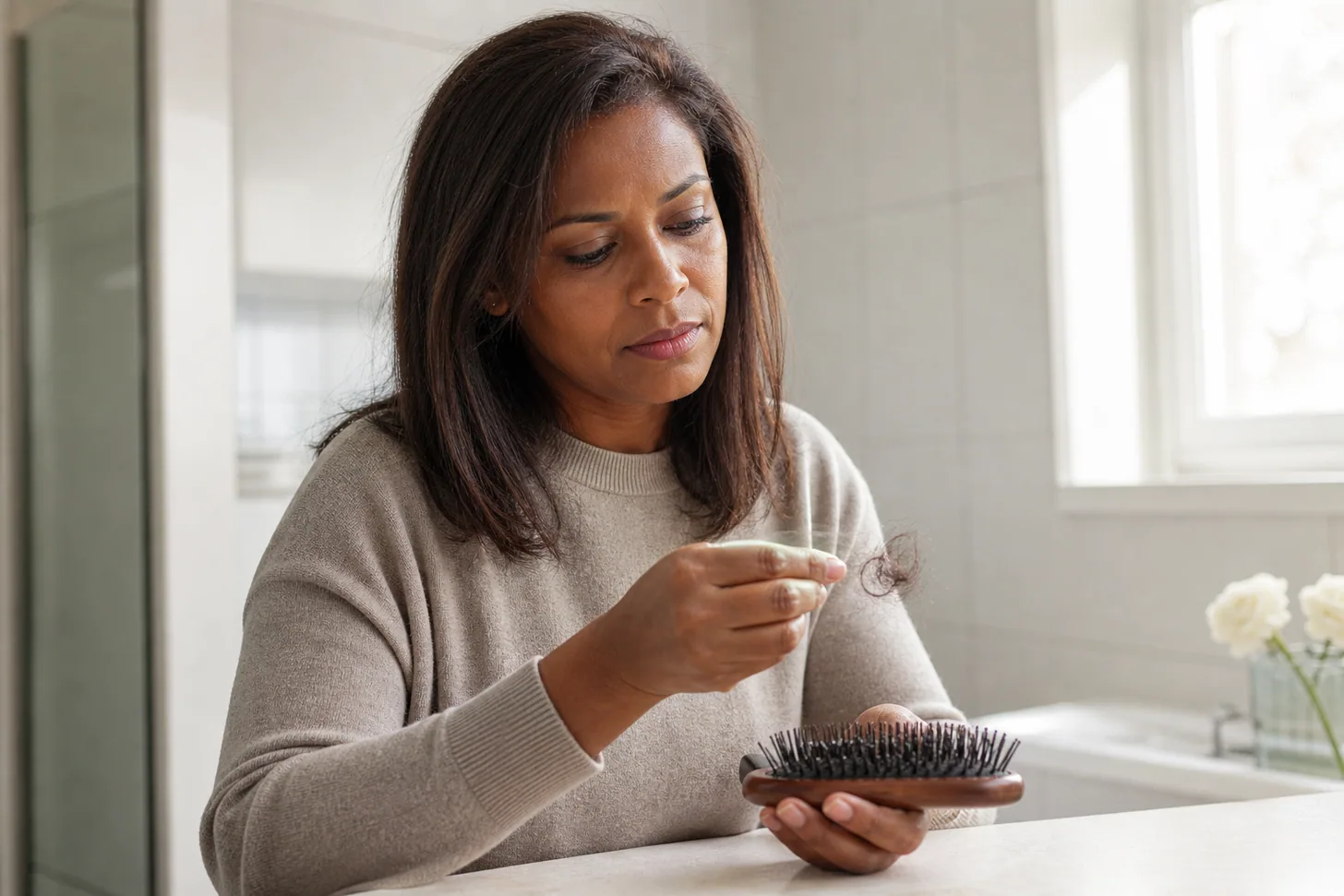
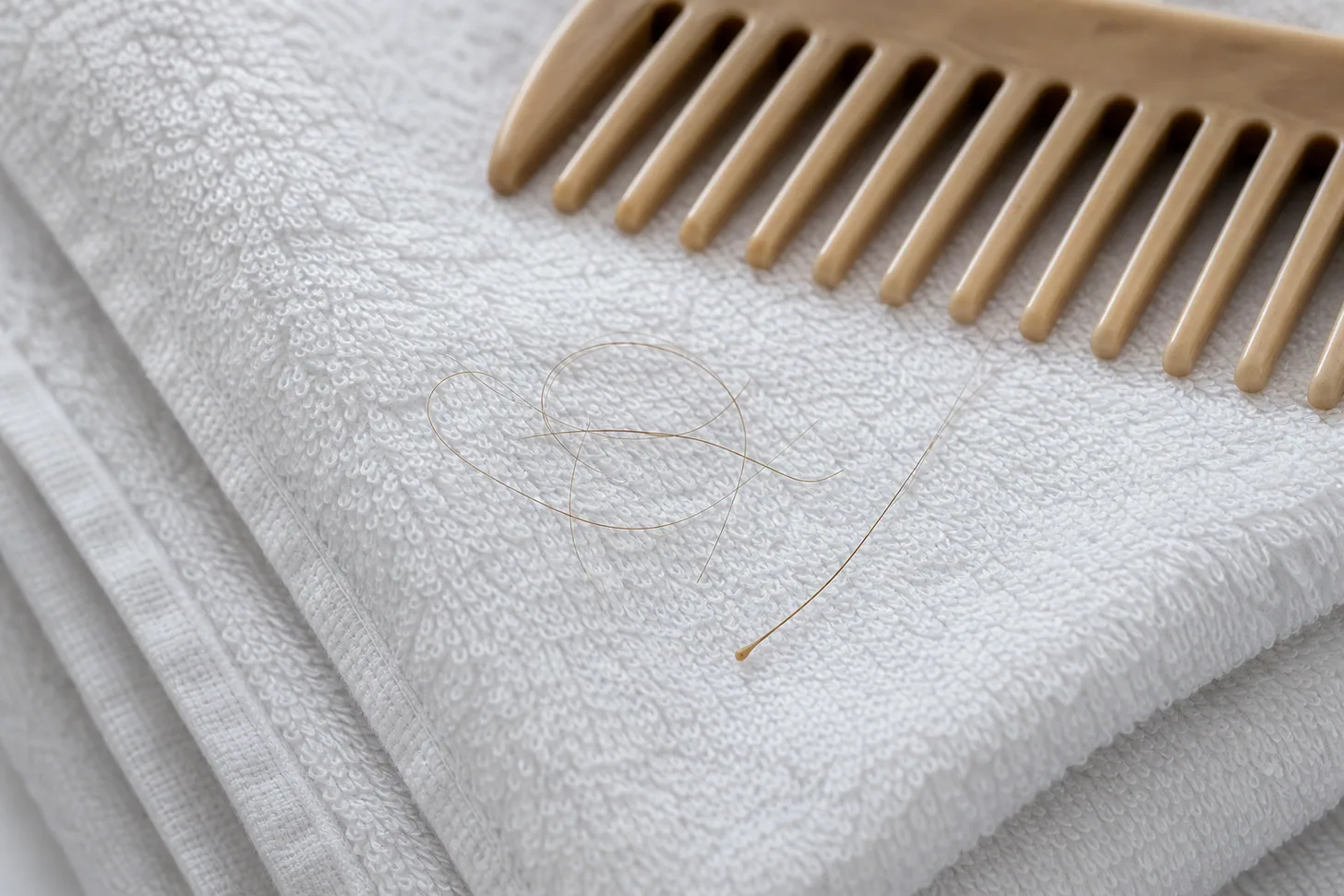
That's why iron-related hair loss usually shows up as diffuse shedding: more hair in the shower drain and the brush, and a ponytail that feels thinner, spread evenly over the scalp. It tends to build gradually rather than arriving all at once after a single trigger, though the two can overlap. Hair shedding vs hair loss explains how to tell a shed from ongoing thinning.
Signs your hair loss could be low iron
Shedding all over, not just at the part or crown.
Heavy or long periods, a recent pregnancy, or a diet with little red meat.
Other signs of low iron: tiredness that sleep doesn't fix, breathlessness on the stairs, pale skin or inner eyelids, feeling cold, brittle or spoon-shaped nails, restless legs at night, or craving ice.
Fine hair shows it sooner. With narrow strands there's less to lose before it's visible, so you may notice before a doctor finds anything dramatic. See fine hair or thinning.
None of these prove low iron. Only a blood test does.
Iron deficiency and female pattern hair loss: what the studies show
This is where the research disagrees. Several studies find lower iron stores in women with pattern thinning, and one careful study found no difference.
381 women with pattern hair loss or chronic shedding vs 76 controls
Iron deficiency was common in every group but no more common in women with hair loss
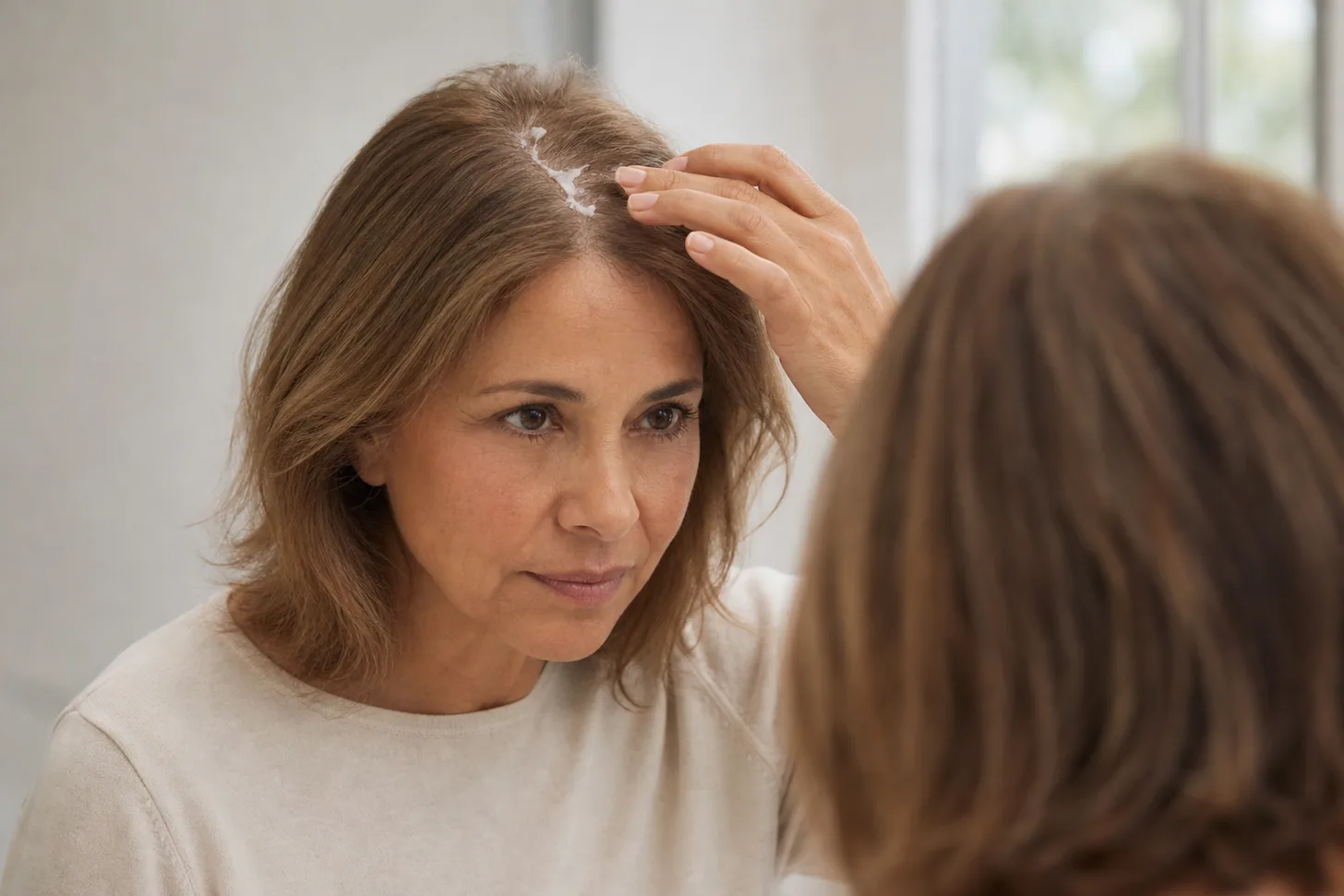
What this means for you: low iron doesn't cause female pattern hair loss. Pattern thinning is driven by genes and hormones, and follicles shrink gradually. Low iron can sit on top of it and add a layer of shedding, though, especially before menopause. A woman with both has two problems and needs both treated. Correcting her iron can make the shedding settle, but her part won't close unless the pattern thinning is treated too, usually with minoxidil.
The doctors who wrote the main review on iron and hair loss found the evidence too thin to recommend testing everyone with hair loss, or giving iron when stores are low without anemia (Trost, 2006). Their own clinic tests every hair-loss patient anyway and treats low iron with or without anemia, because they find hair treatment works better. That's the approach most hair specialists take.
What ferritin level causes hair loss?
No single number does, and that's why a "normal" result can still matter. Laboratory ranges are built to catch anemia. Hair researchers have defined iron deficiency anywhere from a ferritin of 15 or less up to below 70, and some recommend keeping it above 40 for women with hair loss (Almohanna, 2019). Ferritin also rises during infection or inflammation, so a single reading can look better than your stores really are.
The tests worth asking for, and how to read them, are in blood tests for hair loss. In short: ask for ferritin plus iron studies and a full blood count, and ask for the number, not just "normal."
Chair-side note
I keep a note of clients' ferritin numbers when they're happy to share them. A result of 18 can come back flagged "normal" and the shedding still won't settle. When their doctor treats it and the number climbs, the brush is usually the first thing to change, a few months later. The ponytail takes much longer. I tell people to judge it by the drain first and the mirror second.
MH
— Megan Holloway, Editor-in-Chief
Who is most likely to have low iron
Women with heavy periods. This is the most common cause before menopause, along with pregnancy, according to the Trost review. Heavy bleeding often gets worse in perimenopause.
Vegetarian and vegan diets, and anyone eating very little after rapid weight loss. Plant iron is absorbed less well than iron from meat.
Frequent blood donors and endurance athletes.
Gut conditions that affect absorption, such as celiac disease, and people who have had weight-loss surgery.
Men and women after menopause: low iron here needs investigating. The review says the doctor should look for a source of blood loss, especially in the gut.
Treating iron deficiency hair loss
Treatment means fixing the deficiency and its cause, under a doctor's care.
Find out why you're low. Heavy periods can often be treated, and that matters as much as the iron itself.
Iron tablets are the usual treatment. Your doctor chooses the type, dose and schedule. Absorption is better with vitamin C (a glass of orange juice works) and worse with tea, coffee, milk and calcium supplements taken at the same time.
Side effects are mostly digestive: constipation, nausea, stomach pain and dark stools. Ask your doctor about a different form or schedule if they bother you rather than quietly stopping.
Infusions are used when tablets don't work or aren't absorbed.
Diet supports it: red meat, shellfish, beans, lentils, tofu, dark leafy greens and fortified cereals. Food alone rarely refills very low stores quickly.
Recheck the level. Your doctor will usually repeat ferritin after a few months to make sure it's rising.
Don't take high-dose iron without a test. The adult upper limit is 45 mg a day from all sources (NIH Office of Dietary Supplements). For comparison, the daily requirement is 18 mg for women aged 19–50 and 8 mg after 50. Too much iron causes overload, and people with hereditary hemochromatosis can be seriously harmed. A hair supplement with a little iron is unlikely to correct a real deficiency, and hair supplements explains why most of the rest of the label won't help either.
Does hair grow back after iron deficiency?
Usually, yes. Iron-related shedding doesn't damage the follicle, so once stores recover, follicles return to normal cycling. The timeline is slow:
The first two to three months of treatment: shedding often carries on, because those hairs had already stopped growing.
Around three to six months: shedding settles, and short new hairs appear along the part and hairline.
Six to 12 months and beyond: fullness returns gradually. Hair grows about a centimetre a month, so the new hairs take a long time to reach the length of a bob.
If the shedding stops but your part is still wide, low iron probably wasn't the only cause. Pattern thinning may be underneath. See thinning hair treatment for women.
Styling fine hair while it recovers
A shorter cut with a blunt or lightly point-cut line makes the ends look thicker while new growth catches up.
You haven't had a blood test. Iron when you aren't deficient doesn't help hair and can cause harm.
You're a man, or past menopause, and your iron is low. The cause needs finding, especially blood loss from the gut.
You have a family history of hemochromatosis. Iron supplements can be dangerous for you.
Your hair is coming out in patches, or your scalp is red, scaly or sore. That points to a different kind of hair loss.
You're pregnant. Iron needs change, and your midwife or doctor should guide the dose.
FAQ
Yes. Low iron stores are linked with diffuse shedding in women, often before anemia shows on a blood count. The research isn't unanimous, but correcting a real deficiency is standard practice for hair specialists.
There's no agreed number. Labs often flag ferritin as low only below about 15, while hair researchers suggest that women with hair loss keep it above 40, and some say 70. Ask your doctor for your actual number.
No. Pattern hair loss is driven by genes and hormones. Several studies find lower ferritin in women with it, so low iron may add shedding on top. One large study found no difference, though. Iron alone won't close a widening part.
Usually, yes. The follicles aren't damaged. Shedding typically settles a few months after stores recover, and fullness returns over six to 12 months or more.
Often about three to six months. Shedding can continue for the first couple of months because those hairs had already entered the resting phase before treatment began.
Only after a blood test shows you're low, and with your doctor's guidance on the dose. Iron when you aren't deficient won't help your hair, and too much can cause iron overload.
Usually thinning all over rather than a patch, with more hair in the brush and drain and a thinner ponytail. Tiredness, pale skin, brittle nails or heavy periods often come with it.
This article is for general education and is not medical advice. Have your iron levels checked and treated by your doctor, and don't take iron supplements without a blood test.
Images in this guide are AI-generated illustrations, not photos of real clients or results. See our image policy.
Get the good hair intel
One honest, stylist-written guide in your inbox each week. No hype.

 MH