Fine-hair care · Scalp health

Itchy Scalp but No Dandruff? 9 Causes and What Actually Helps

An itchy scalp with no flakes is most often a reaction to something you put on it. A new shampoo, a fragrance, a preservative or hair dye are the usual triggers. Next most common are a dry scalp, product buildup and a sweaty scalp. Less often it's head lice, hives, early psoriasis or eczema, or a nerve-related itch. The American Academy of Dermatology lists ten causes of scalp itch, and only one of them is dandruff.

Below are the causes in order of how often I see them in the chair, how to tell each one apart, and what to try first.

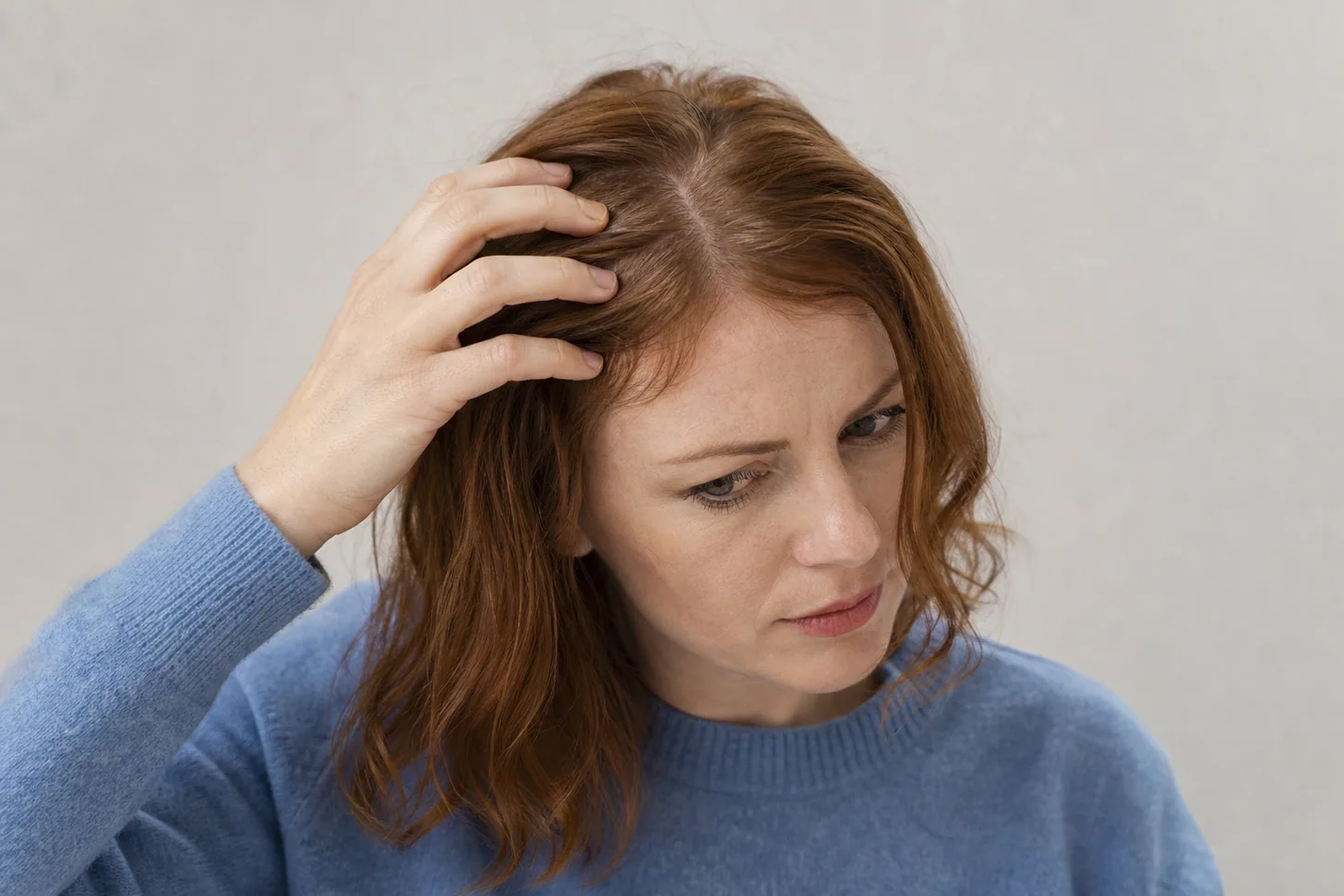
Woman with fine wavy auburn hair touching an itchy spot on her scalp

9 causes of an itchy scalp without dandruff

1. A reaction to a hair product

This can be irritation, where the scalp stings or burns soon after using a product, or an allergy, where an itchy rash appears a day or two later. Fragrance, preservatives and some foaming agents are common triggers. Shampoo left in from a quick rinse can cause irritation too. The clue is timing: it started after a new product, or it flares on the days you use a particular one.

2. Hair dye allergy

The AAD singles out hair dye as a frequent cause of allergic contact dermatitis on the scalp. Para-phenylenediamine (PPD) in permanent dark shades is the classic trigger. It itches along the hairline, the ears and the back of the neck, often a day or two after coloring. If your face or eyelids swell, get medical help the same day. See at-home color on fine hair, which covers the patch test.

3. A dry scalp

It's tight and itchy with little or no visible flaking, especially in winter, after hot showers, or with a stripping shampoo. See dandruff vs dry scalp.

4. Buildup and sweat

Dry shampoo, styling spray and sweat trapped under a hat or a tight ponytail can all itch. This is common on fine hair because it gets washed less to "save" the blow-dry. A thorough wash usually settles it. See how to exfoliate your scalp and workout hair for fine hair.

5. Head lice

An itchy scalp is the most common symptom of lice, according to the AAD, and adults catch them from children. Look for tiny eggs (nits) stuck close to the scalp behind the ears and at the nape. Unlike flakes, they don't brush off. Lice can be treated at home.

6. Hives

Itchy, raised welts that come and go within hours, sometimes on the scalp as well as elsewhere. Most settle on their own. If they last more than six weeks, see a dermatologist.

7. Early scalp psoriasis or eczema

Psoriasis can itch before the thick, silvery scale appears, typically at the hairline and behind the ears. Atopic dermatitis (eczema) can affect the scalp too, especially if you've had eczema elsewhere. Both need a treatment plan rather than a new shampoo. The AAD notes that some people with scalp psoriasis get relief from medicated shampoos.

8. Fungal infection or scabies

Scalp ringworm (tinea capitis) causes itchy, scaly patches, often with broken hair. Scabies causes intense itch that is worse at night. Both need prescription treatment.

9. Nerve-related itch, and itch with hair loss

Sometimes the scalp itches, burns or tingles with nothing visible at all. This can be a nerve-related itch, which can be linked with neck problems, or it can come with stress. The AAD also notes that scarring hair loss can damage nerves and cause intense itch. An itch or burning that sits exactly where your hair is thinning, with shiny or red skin, is a reason to see a dermatologist promptly. See why does my hair hurt?

Chair-side note

When a client tells me her scalp itches but there's no dandruff, my first question is "what changed in the last month?" A new shampoo, a box dye, a new dry shampoo, a new workout or a new hat. Nine times out of ten the answer is in that list. Go back to a plain, fragrance-free shampoo for two weeks, and add things back one at a time.

Megan HollowayMH
— Megan Holloway, Editor-in-Chief

What helps an itchy scalp without dandruff

  1. Strip the routine back. Use one gentle, fragrance-free shampoo and a light conditioner on the ends only, for two weeks.
  2. Rinse for twice as long as you think, especially with fine hair, which traps lather close to the scalp.
  3. Use lukewarm water, not hot.
  4. Wash after sweating, or at least rinse the scalp. See how often to wash fine hair.
  5. Pause dry shampoo and styling sprays at the root.
  6. Don't scratch. Press or tap instead. Scratching breaks fine hair and inflames the skin. See hair breakage on fine hair.
  7. Avoid oiling the scalp to soothe it. Oil can make several of these causes worse. See hair oiling on fine hair.

If you suspect a product allergy and can't find the culprit, a dermatologist can do patch testing to identify the ingredient.

See a dermatologist if

  • The itch hasn't improved after two to three weeks of a stripped-back routine. The AAD advises a diagnosis when you can't find the cause.
  • Your face, eyelids or scalp swell after coloring. Get medical help the same day.
  • You see scaly patches, broken hairs or patches of hair loss. Ringworm and scarring hair loss need a diagnosis.
  • The itch is intense at night, or others in your home itch too. That suggests scabies, which needs prescription treatment.
  • A sore, rough or bleeding spot doesn't heal. The AAD lists skin cancer among the causes of scalp itch.

FAQ

The most common causes are a reaction to a hair product or dye, a dry scalp, buildup and sweat. Less often it's lice, hives, early psoriasis or eczema, a fungal infection, or a nerve-related itch.

Yes. Fragrance, preservatives and some foaming agents can irritate the scalp or cause an allergy, and shampoo left in after a quick rinse can itch too.

Stress can make itch feel worse and can trigger flares of eczema, psoriasis and dandruff. If your scalp itches with nothing visible, rule out a product reaction first.

Itch itself doesn't, but scratching breaks fine hair. Some conditions that cause itch, such as psoriasis, ringworm and scarring hair loss, can also cause hair loss and need a diagnosis.

If buildup or sweat is the cause, wash more. If your scalp is dry and tight, wash gently with lukewarm water and a mild shampoo.

Start by removing possible triggers and using a gentle, fragrance-free shampoo. Avoid heavy oils. If it continues, a dermatologist can prescribe a treatment for the specific cause.

Related reads

Megan HollowayMH
Megan Holloway
Editor-in-Chief · Licensed Cosmetologist & Certified Trichology Practitioner

Fourteen years in fine-hair care, eight of them behind the chair. Megan's rule for hormonal thinning: photograph the part, not the drain.

More from Megan →

This article is for general education and is not medical advice. If your scalp is swollen, painful, or you are losing hair, see your doctor or a board-certified dermatologist.

Images in this guide are AI-generated illustrations, not photos of real clients or results. See our image policy.