Fine-hair care · Scalp health

Dandruff vs Dry Scalp: How to Tell Which One You Have, and Why They Need Opposite Fixes

Dandruff is an oily-scalp problem. A dry scalp is a water problem. Dandruff flakes are larger, slightly greasy and often yellowish, and they get better right after you wash. Dry-scalp flakes are small, white and powdery, the scalp feels tight, and washing with a harsh shampoo makes it worse. The American Academy of Dermatology separates them the same way. Dandruff is linked with a yeast that lives on the skin, and dry skin happens when the skin loses too much water.

Telling them apart matters more on fine hair than on any other type. The usual fix for one is the usual cause of the other, and fine hair shows the flakes and the oil within a day.
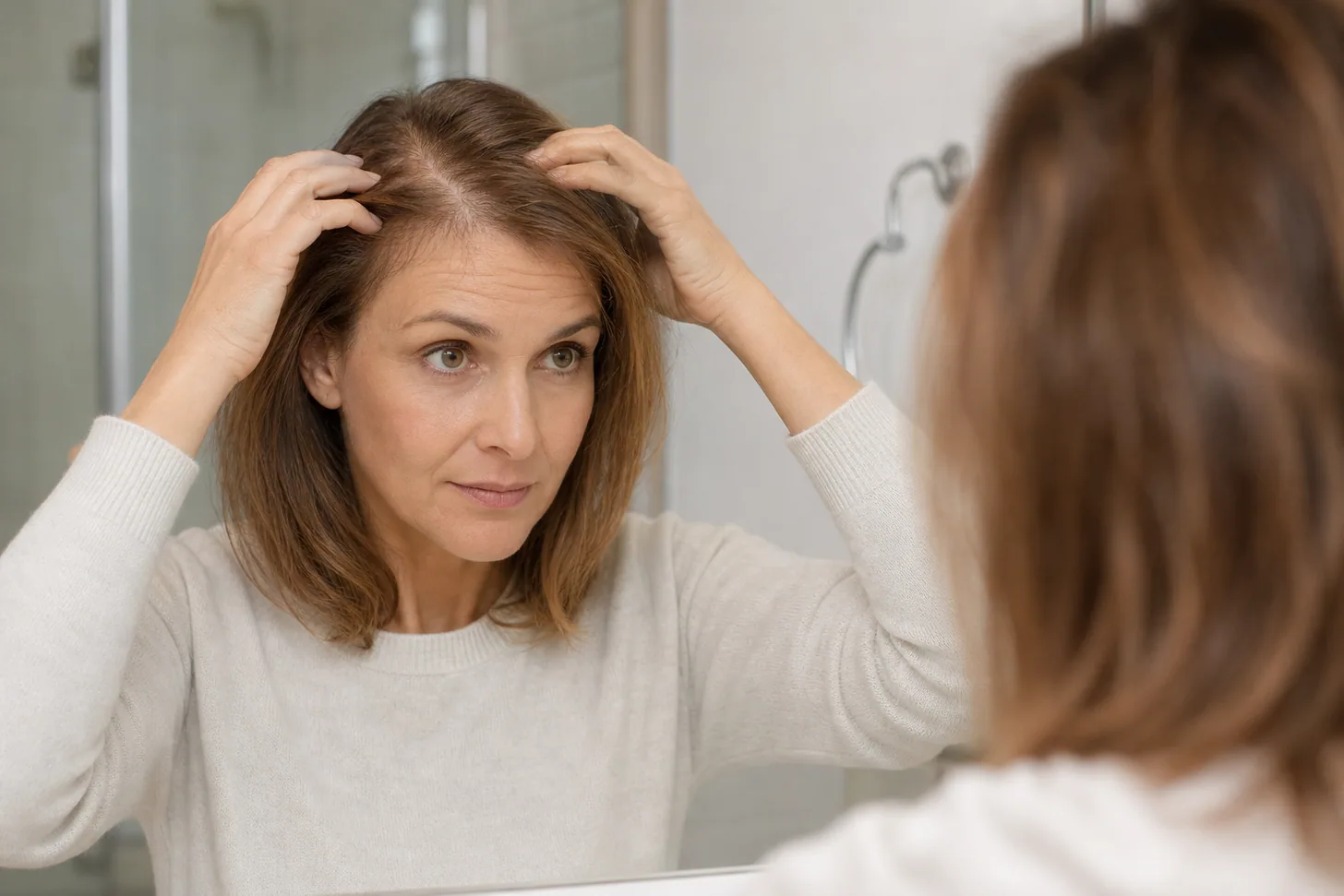
Woman with fine light-brown hair checking her scalp along the part in a mirror

Dandruff vs dry scalp, side by side

  • Flakes. Dandruff: larger, slightly oily or yellowish, clumping near the part and crown. Dry scalp: fine, white and powdery, falling like dust.
  • How the scalp feels. Dandruff: oily at the root, sometimes pink underneath. Dry scalp: tight, and often worse after washing.
  • Itch. Both itch. Dandruff itch tends to build as the days between washes go on. Dry-scalp itch tends to peak after a shower or in heated rooms.
  • Timing. Dandruff comes and goes, and stress and cold can set it off. Dry scalp follows the weather, the heating and harsh products.
  • The rest of your skin. Dry scalp usually comes with dry skin on the shins, hands or face. Dandruff can come with flaking at the eyebrows, the sides of the nose or behind the ears.
  • What fixes it. Dandruff: a medicated shampoo used more often. Dry scalp: a gentler shampoo, used less aggressively.

Why they are different problems

Dandruff isn't dryness, even though it looks like dry skin. The scalp produces oil, a yeast called Malassezia breaks that oil down, and in people who are sensitive to the by-products the skin turns over too fast and sheds in clumps. Lab work on dandruff scalps finds a weakened skin barrier with disorganised lipids and low-grade inflammation, not simply a lack of moisture (Turner and colleagues, 2012). At the more inflamed end of the same spectrum sits seborrheic dermatitis, with redder, greasier patches.

A dry scalp is skin that has lost water: winter air, hot showers, and shampoos that strip more oil than your scalp makes. There is no yeast story and no extra oil. That's why moisturising helps it and doesn't help dandruff.

Chair-side note

The fastest way to tell is the one-wash test. Wash with your normal shampoo and look again the next day. If the flakes are clearly better for a day or two and creep back as the oil returns, it's dandruff. If the scalp feels tighter and the flakes are no better, or worse, it's dryness or a shampoo that's too harsh.

On fine hair, I'd add one thing. Look at the root, not the flake. A waxy, flat root with flakes sitting on it is dandruff almost every time.

Megan HollowayMH
— Megan Holloway, Editor-in-Chief

Why fine hair makes both look worse

Fine hair has less cover over the scalp, so flakes along the part are easier to see. It also shows oil within a day. That makes the classic mistakes look sensible.

  • Washing less to "stop drying the scalp out". If it's dandruff, this feeds the yeast and makes it worse. The AAD actually advises people with oily hair and dandruff to wash more often. See how often to wash fine hair.
  • Oiling a flaky scalp. It soothes a dry scalp and inflames dandruff, and it flattens fine roots either way. See hair oiling on fine hair.
  • Scrubbing harder. Fine hair breaks, and an over-scrubbed scalp gets drier and itchier. See how to exfoliate your scalp for a gentler version.

If it's dandruff

  • Use a medicated shampoo on the scalp. Look for zinc pyrithione, selenium sulfide, ketoconazole, salicylic acid or coal tar, and leave the lather on for about five minutes, as the AAD suggests. See dandruff shampoo for fine hair.
  • Wash more often, not less. Two or three medicated washes a week, with a light shampoo in between.
  • Condition the lengths only. Keep conditioner and leave-ins off the scalp.

For the full routine, see dandruff on fine hair.

If it's a dry scalp

  • Switch to a gentle, non-medicated shampoo, and use lukewarm rather than hot water.
  • Don't add a dandruff shampoo. Some medicated shampoos dry the scalp further.
  • Use a humidifier if the flaking arrives with the heating. See fine hair in winter.
  • If your water is hard, mineral film can make a dry scalp feel worse. See hard water and fine hair.
  • Use a light scalp serum rather than a heavy oil, applied to the scalp only and at night.

It may be neither if

  • You have thick, silvery scale on raised red patches, or it burns. The AAD lists these as signs of scalp psoriasis, which needs its own plan.
  • Scaly patches come with patches of hair loss or broken hair. That pattern suggests tinea capitis, a fungal infection that needs prescription medicine.
  • A rough, sandpaper-like spot sits on a sun-exposed part line. Have it checked. The AAD flags these as possible actinic keratoses.
  • It itches badly and there are no flakes at all. See itchy scalp but no dandruff.
  • Nothing over the counter has helped after a month. See a board-certified dermatologist for a diagnosis.

FAQ

Dandruff flakes are larger, oily and often yellowish, and they improve after washing. Dry-scalp flakes are small, white and powdery, with a tight scalp that feels worse after washing.

Yes. A harsh dandruff shampoo can dry the scalp while the dandruff is still active. Keep the medicated shampoo on the scalp, rinse well, and use a gentle shampoo on other days.

No. Dandruff is linked with scalp oil and a yeast that lives on the skin. Washing more often usually helps, which is the opposite of what a dry scalp needs.

Usually not. Oils and rich creams can feed the yeast linked with dandruff. A medicated shampoo is the first step.

Often, yes. Cold outdoor air and indoor heating both pull water from the skin, and hot showers add to it.

Neither damages the follicles directly, but scratching breaks fine hair and inflamed seborrheic dermatitis can add to shedding. See our guide on whether dandruff causes hair loss.

Related reads

Megan HollowayMH
Megan Holloway
Editor-in-Chief · Licensed Cosmetologist & Certified Trichology Practitioner

Fourteen years in fine-hair care, eight of them behind the chair. Megan's rule for hormonal thinning: photograph the part, not the drain.

More from Megan →

This article is for general education and is not medical advice. If your scalp is red, painful or not improving, see your doctor or a board-certified dermatologist.

Images in this guide are AI-generated illustrations, not photos of real clients or results. See our image policy.