Fine-hair care · Scalp health

Does Dandruff Cause Hair Loss? What Dermatologists Say, and What Actually Helps

Ordinary dandruff doesn't cause hair loss. It is a flaking of the scalp's surface, and the follicles underneath keep working normally. But when dandruff becomes inflamed seborrheic dermatitis, with red, itchy, greasy patches, the inflammation and constant scratching can add to shedding and breakage. The American Academy of Dermatology describes dandruff as the mildest form of seborrheic dermatitis.

Seborrheic dermatitis also often shows up alongside pattern hair loss, so one can be mistaken for the other. Below is how to tell them apart and what to do.
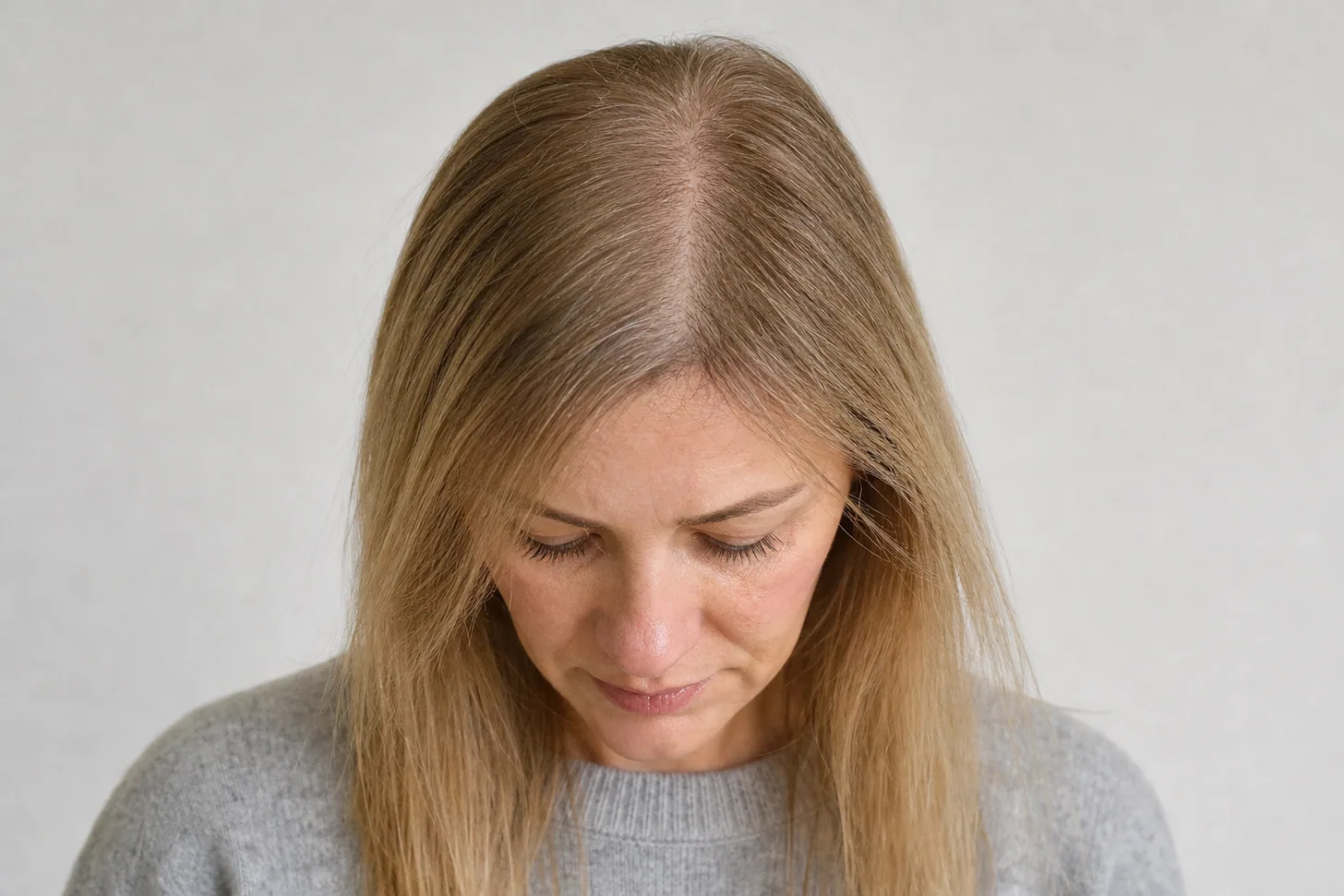
Close-up of a part in fine dark-blond hair with a few light dandruff flakes

Mild dandruff: no direct link

White flakes on your shoulders mean faster skin turnover on the scalp. That doesn't damage the follicles. Seeing flakes and loose hairs together is usually a coincidence of timing.

Seborrheic dermatitis: inflammation can add to shedding

Seborrheic dermatitis causes inflammation that dandruff doesn't. Inflamed skin around the follicles can contribute to shedding, and treating the scalp usually settles it. The hair grows back once the inflammation is controlled, because the follicles are not destroyed.

Scratching breaks fine hair

An itchy scalp gets scratched, and fine hair breaks easily. That shows as short, broken pieces rather than whole shed hairs. See hair breakage on fine hair.

It often coexists with pattern hair loss

Seborrheic dermatitis is found in an estimated 40 to 50% of people with androgenetic (pattern) hair loss, and the two may share causes such as excess oil and scalp inflammation (Zhu and Hu, 2026). So a flaky scalp and a widening part can appear together without one causing the other.

Chair-side note

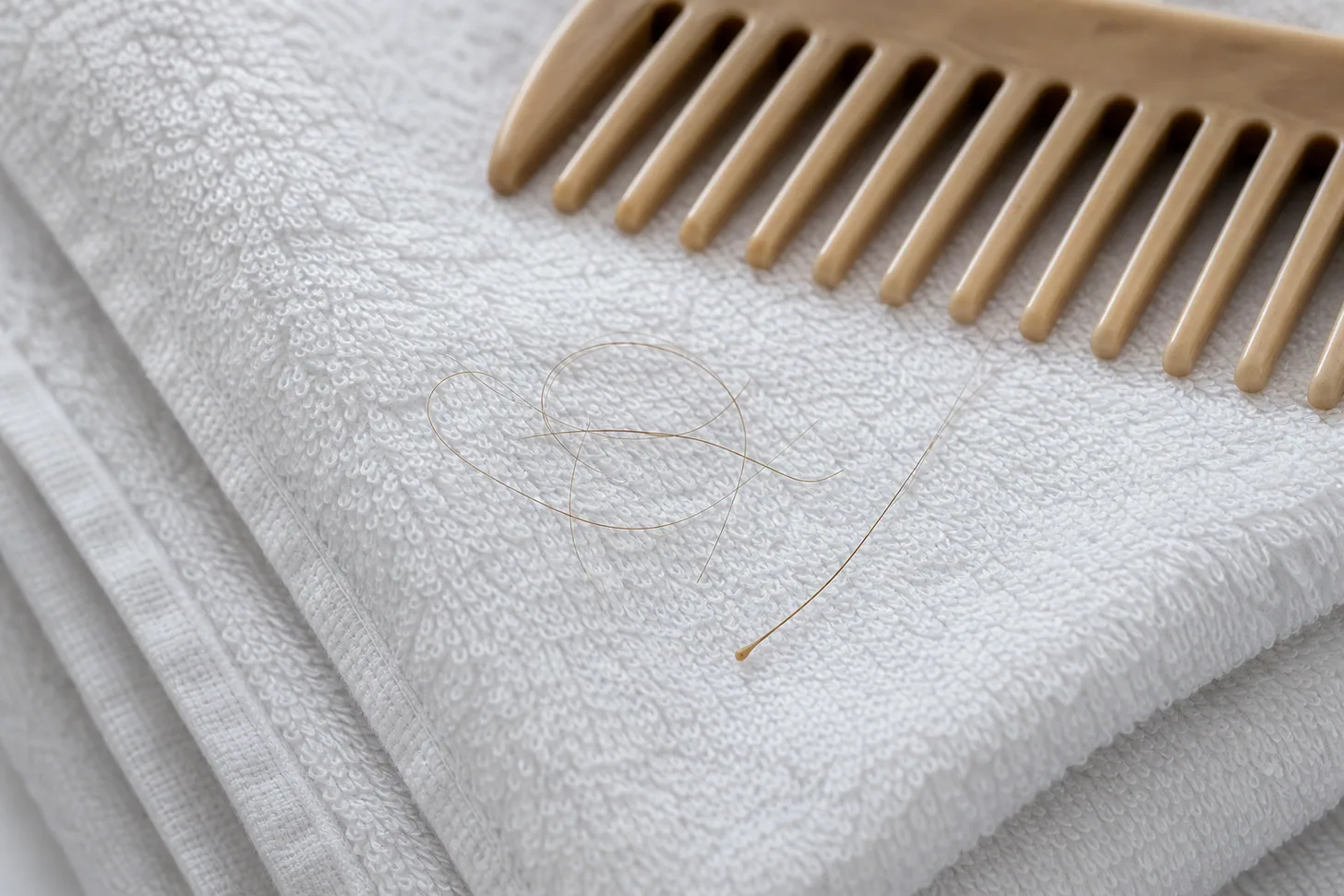
On fine hair, I can usually tell the difference by looking at what's on the towel. Long hairs with a small bulb are shedding. Short broken pieces with flakes on the scalp are scratching. Calm the scalp first, then see whether the thinning is still there.

Megan HollowayMH
— Megan Holloway, Editor-in-Chief

What helps

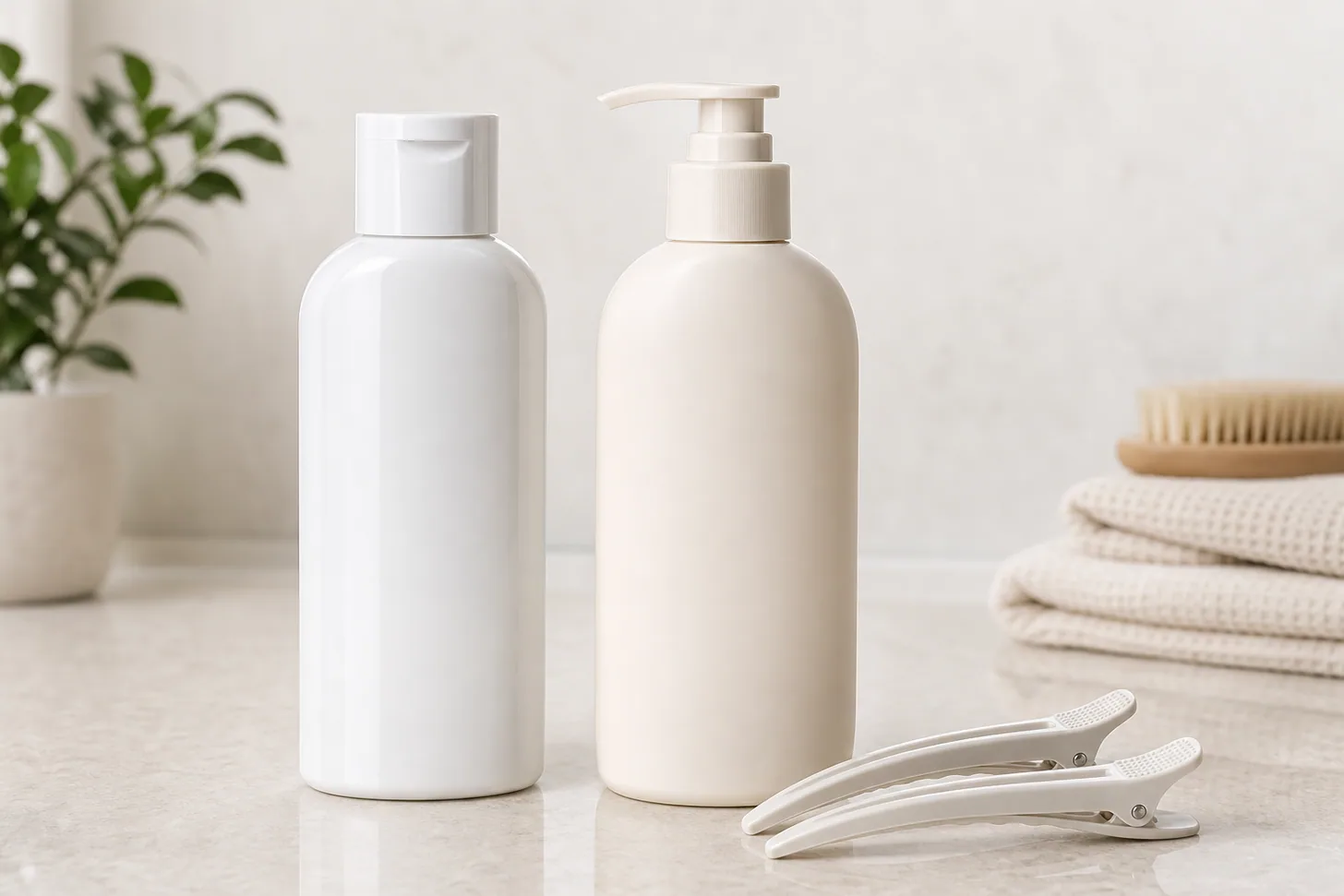
  • Use a medicated shampoo. The AAD recommends dandruff shampoos with ingredients such as zinc pyrithione, selenium sulfide, ketoconazole, salicylic acid or coal tar, and suggests leaving the lather on for about five minutes. See dandruff shampoo for fine hair.
  • Wash more often. Oil feeds the yeast linked with dandruff, and fine hair gets oily fast. See how often to wash fine hair.
  • Condition the ends, not the scalp, so medicated shampoo doesn't leave fine lengths flat or dry.
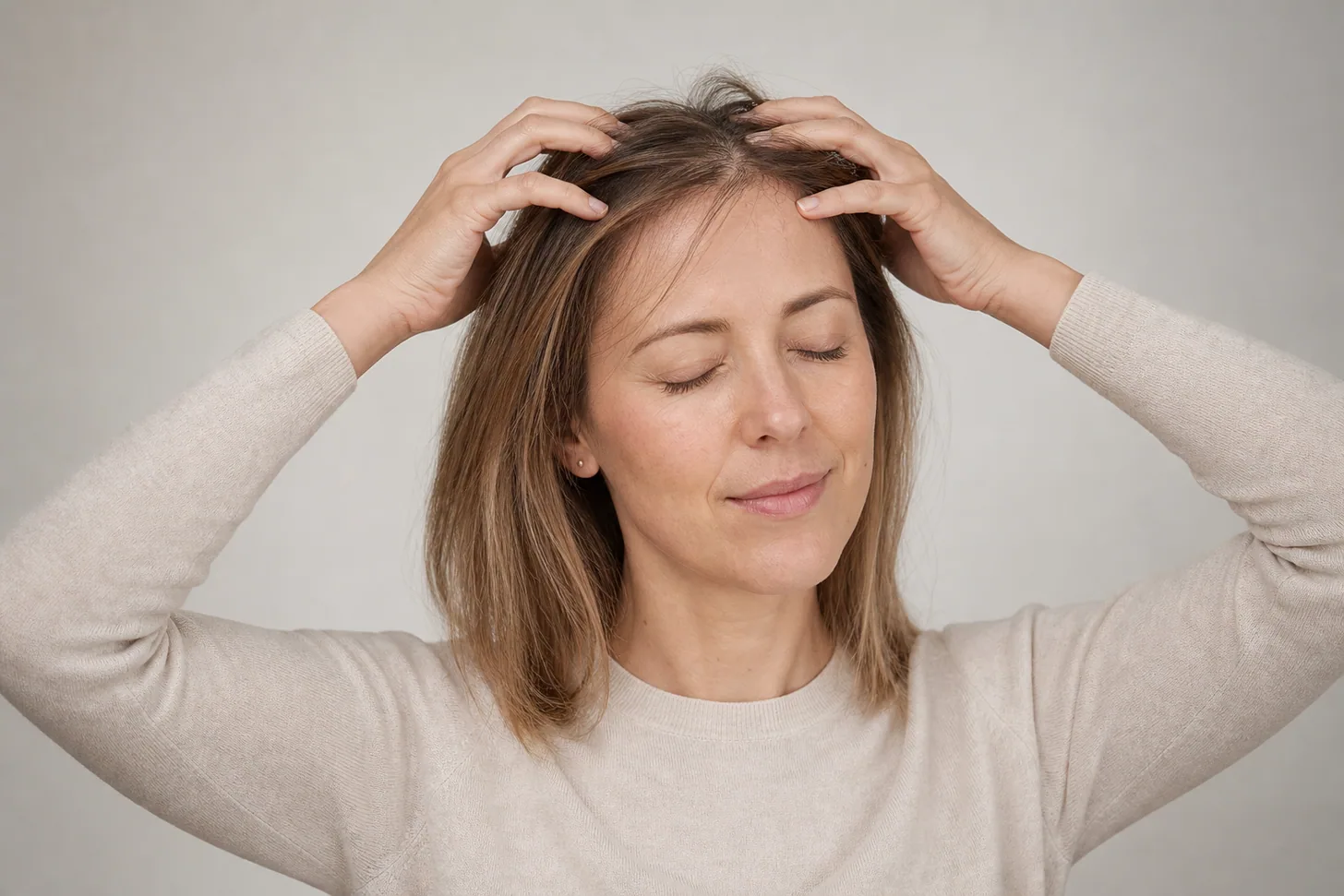
  • Don't scratch. Massage with fingertips instead.
  • Skip heavy oils on the scalp. They can make seborrheic dermatitis worse. See hair oiling on fine hair.

For the dry-scalp versus dandruff question, and a full routine, see dandruff and fine hair.

See a dermatologist if

  • Medicated shampoo hasn't helped after a month. You may need a prescription-strength treatment, or it may be psoriasis or eczema.
  • The scalp is very red, crusted, weeping or painful. See why does my hair hurt.
  • You have patches of hair loss or scarring. That needs a diagnosis.
  • Your part keeps widening once the scalp is calm. That suggests pattern hair loss. See first signs of hair thinning.

FAQ

Mild dandruff doesn't. Inflamed seborrheic dermatitis and scratching can add to shedding and breakage, which usually improves once the scalp is treated.

Usually, yes. Shedding linked with an inflamed scalp generally recovers once the inflammation is controlled.

It can contribute to shedding through inflammation and scratching. It also often occurs alongside pattern hair loss, which needs its own diagnosis.

Not when used as directed. Some medicated shampoos can dry fine hair, so condition the ends and rinse well.

Dandruff flakes tend to be larger and oily, often with itching. Dry scalp flakes are small and white, with a tight feel. See our guide to dandruff and fine hair.

It treats dandruff and seborrheic dermatitis, and some studies suggest a small benefit for pattern thinning, but it is not a main hair-loss treatment.

Related reads

Megan HollowayMH
Megan Holloway
Editor-in-Chief · Licensed Cosmetologist & Certified Trichology Practitioner

Fourteen years in fine-hair care, eight of them behind the chair. Megan's rule for hormonal thinning: photograph the part, not the drain.

More from Megan →

This article is for general education and is not medical advice. If your scalp is inflamed or you are losing hair, see your doctor or a board-certified dermatologist.

Images in this guide are AI-generated illustrations, not photos of real clients or results. See our image policy.