Reviewed by Tara Sullivan · Updated October 2026 · 10 min read
The best haircuts for men with a big forehead and thin hair bring some hair forward onto the forehead and keep the sides short. A textured crop with a fringe is the most reliable choice.
What to avoid is just as clear: slicked-back styles and tall quiffs make a big forehead look bigger, and they show thin hair. Below are 12 cuts that balance a big forehead on thin hair, and how to tell if it's a high hairline or a receding one.
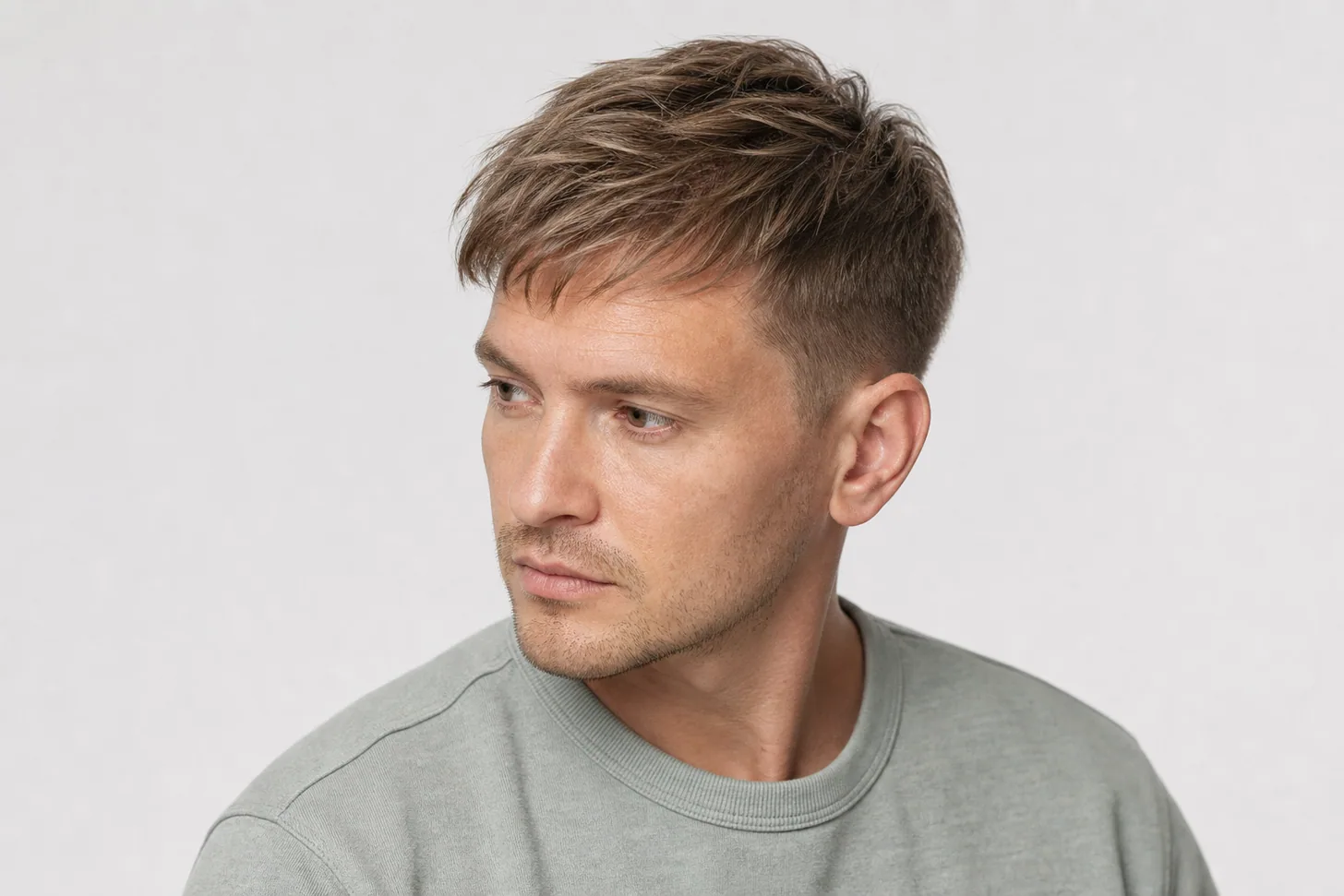
textured French crop with a short choppy fringe falling onto the forehead and a low fade on a man with fine dark-brown hair and a high forehead, front three-quarter view
Chair-side note
A big forehead on its own is easy to balance; a fringe does it. Thin hair makes it harder, because the hair you'd push forward is the hair you have least of.
So I cut the fringe from further back on the head, and I keep the top short and textured. Short, choppy hair stands up and looks like more than it is. Long hair on top just lies flat and splits.
SB
— Simone Baptiste, Senior Stylist
Big forehead or receding hairline?
A big forehead, or high hairline, is how you were built: the hairline is high but even, and it hasn't moved. A receding hairline is moving back, usually at the temples first, into an M shape.
Compare a photo from five years ago. If the hairline is in the same place, it's a high forehead, and every cut below will work. If the temples have moved back, see haircuts for thinning hair in men, which has cuts built for receding temples. Not sure if your hair is fine or thinning? See fine hair or thinning.
Three rules for a big forehead and thin hair
Bring hair forward. A fringe or a forward-brushed top covers part of the forehead. Keep the sides short. Wide, full sides make the forehead look wider and the top look thinner. Keep the top short and textured. Height and long, slicked hair show both the forehead and the scalp.
Fringe cuts for a big forehead
These cover the most forehead. They suit thin hair with a full hairline best.
textured French crop with a short blunt-textured fringe on the forehead and a mid taper on a man with fine light-brown hair and a high forehead, front view
1
Textured French crop
A short, textured top with a fringe that sits on the forehead. It's the most reliable cut for a big forehead and thin hair.
Ask for the fringe to be point-cut, not blunt, so it doesn't look heavy.
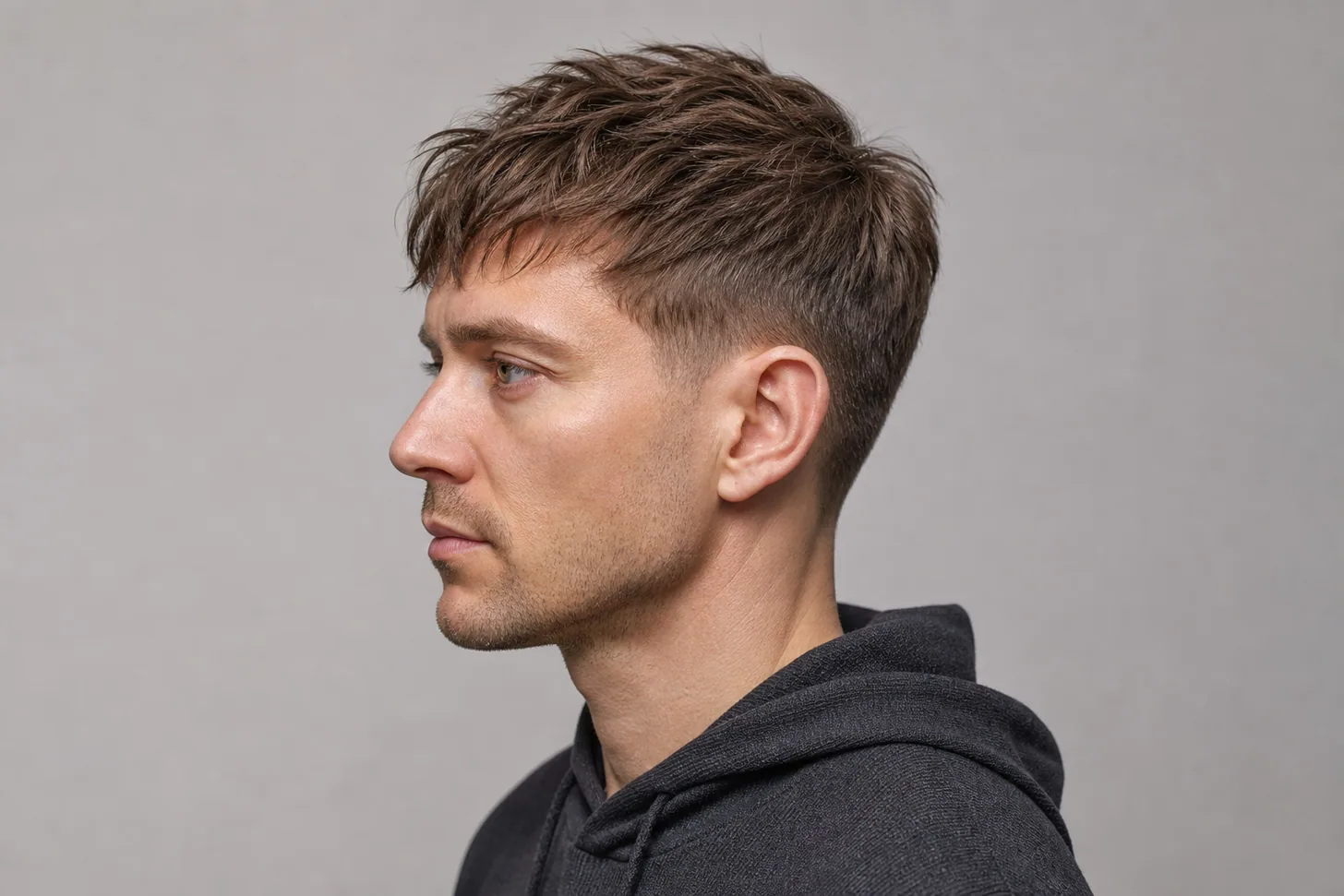
messy choppy fringe pushed forward and slightly to the side with a low fade on a man with fine dark-blond hair and a high forehead, front three-quarter view
2
Messy fringe with a low fade
A choppy fringe pushed forward and a little to the side. The messy texture covers the forehead and hides thin spots.
angled fringe swept diagonally across a high forehead on a man with fine black hair, short tapered sides, front three-quarter view
3
Angled side fringe
A fringe swept diagonally across the forehead. The diagonal line breaks up a tall, wide forehead.
A little matte cream holds it in place.
short Caesar cut with a straight short forward fringe on a man with fine medium-brown hair and a high forehead, even short top, tapered sides, front view
4
Caesar cut with a forward fringe
An even, short top brushed forward into a short, straight fringe. It's neat, needs no styling and covers part of the forehead.
If you don't want a fringe, keep the top short and brushed forward or to the side, never straight back.
short textured crop with the top brushed forward and lightly messed, short tapered sides, on a man with fine light-brown hair and a high forehead, front three-quarter view
5
Forward-brushed textured crop
A short, textured top brushed forward rather than up. The hair ends partway down the forehead without a defined fringe.
It's the best everyday cut for thin hair.
low side part with the top swept diagonally across the forehead with soft low volume, scissor-cut sides, on a man with fine dark-brown hair and a high forehead, front three-quarter view
6
Low side part with soft volume
A low side part with the top swept across, not back. It keeps a classic look while covering the corner of the forehead.
Keep the volume low; a tall side part shows more forehead.
short crew cut with the front left slightly longer and pushed forward, short faded sides, on a man with fine light-brown hair and a high forehead, front view
7
Short crew cut with a forward front
A crew cut with the front left a little longer and pushed forward. It's short and tidy, and the front softens the forehead line.
short wavy crop with natural loose waves falling forward into a soft fringe, short sides, on a man with fine wavy brown hair and a high forehead, front three-quarter view
8
Wavy crop with a fringe
Natural waves falling forward into a fringe. Waves add bulk, so thin hair covers more of the forehead.
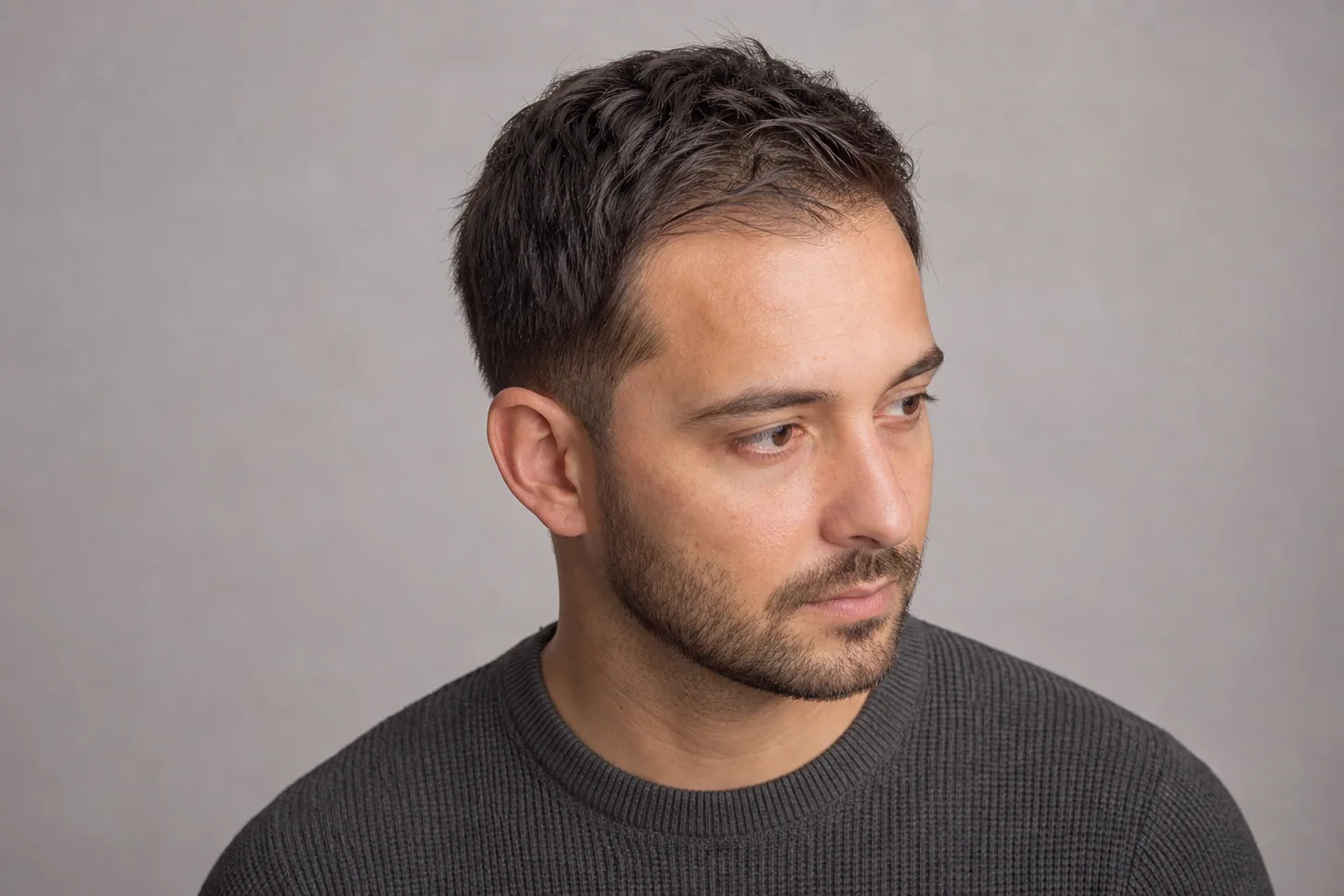
very short textured crop with a short forward fringe on a man with fine thinning light-brown hair and a high, slightly thinning hairline, close faded sides, front three-quarter view
10
Short crop for a high, thinning hairline
A very short crop with a short forward fringe. If the hair at the front is thinning too, short hair hides it better than long.
medium-length textured top falling into a loose middle-parted curtain fringe on the forehead, tapered sides, on a man with fine light-brown hair and a high forehead, front view
11
Medium textured top with a curtain fringe
A longer top falling into a loose, parted fringe. It covers a lot of forehead, but needs a full hairline and some density to work.
short taper haircut with a short messy textured top pushed forward on a man with fine black hair and a high forehead, front three-quarter view
12
Short taper with a messy top
A short taper with a messy top pushed forward. The taper keeps the sides tight, so the forehead looks narrower.
Matte clay holds it without shine.
Cuts to avoid with a big forehead and thin hair
Slicked-back hair and tall quiffs or pompadours lift the hair off the forehead and show more of it. On thin hair they also show the scalp. Center parts without a fringe split the hair and frame the forehead. Long, full sides make the head look wider at the temples.
How to style it
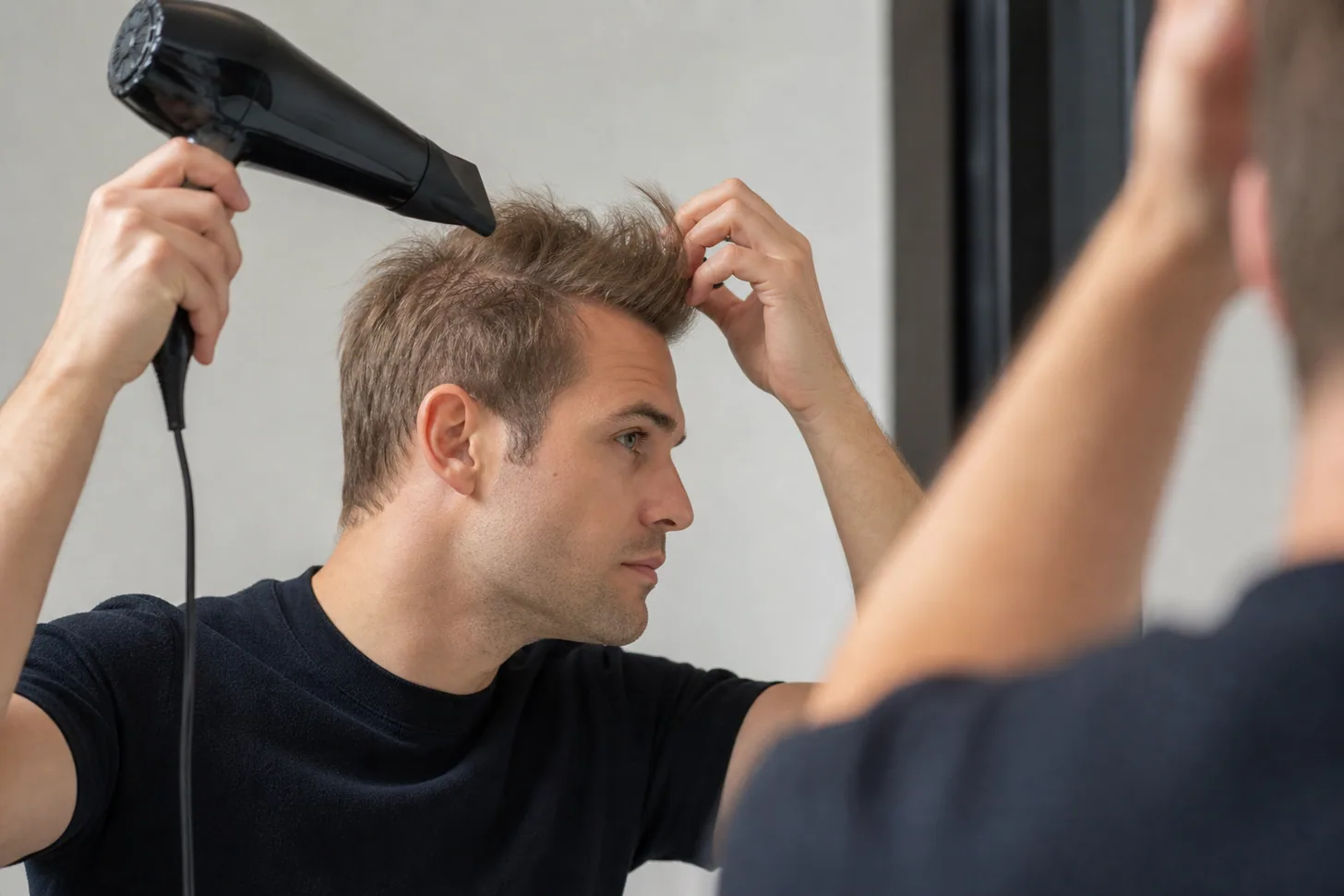
Towel-dry, then blow-dry the top forward with your fingers for a minute, so the roots stand up in the right direction. Finish with a small amount of matte clay or paste. Skip gel and shiny pomade, which clump thin hair and show the scalp. Our guide to hair products for thin hair has the right ones.
What to ask your barber
Say: "I have a high forehead and fine hair. I'd like a textured crop with a short forward fringe cut from further back on my head, a low taper on the sides, and no thinning shears on top."
The crown is thinning as well. Very short cuts all over hide both better than a fringe.
The hair loss is fast or patchy. See a doctor or dermatologist; early treatment works best.
FAQ
A textured crop with a short forward fringe and short sides. The fringe covers part of the forehead, and the short, choppy top makes thin hair look fuller.
Yes, a short, textured fringe is the easiest way to balance a big forehead. On thin hair, ask for it to be cut from further back on the head so it has enough hair.
Slicked-back hair, tall quiffs and pompadours, and center parts without a fringe. They lift hair away from the forehead and show more of it.
No. A big forehead is a high but stable hairline. A receding hairline moves back over time, usually at the temples first.
It can, especially with a beard. A buzz makes the forehead part of the head shape instead of a feature, and a beard balances the face.
Blow-dry the top forward with your fingers, then use a little matte clay. Avoid gel and shiny pomade, which clump thin hair.
Eleven years behind the chair, specializing in short shapes and fine-hair texture. Simone believes the best haircut is the one you can style yourself in ten minutes.
Results vary with hair type, density, and growth patterns. Hairstyling guidance is not a substitute for an in-person consultation with a licensed barber or stylist.
This article is not medical advice. If your hair loss is sudden, patchy, or accompanied by an itchy, sore or scaly scalp, see a board-certified dermatologist.
Hairstyle images in this guide are AI-generated illustrations, not photos of real clients or results. See our image policy.
Get the good hair intel
One honest, stylist-written guide in your inbox each week. No hype.

 SB