

1
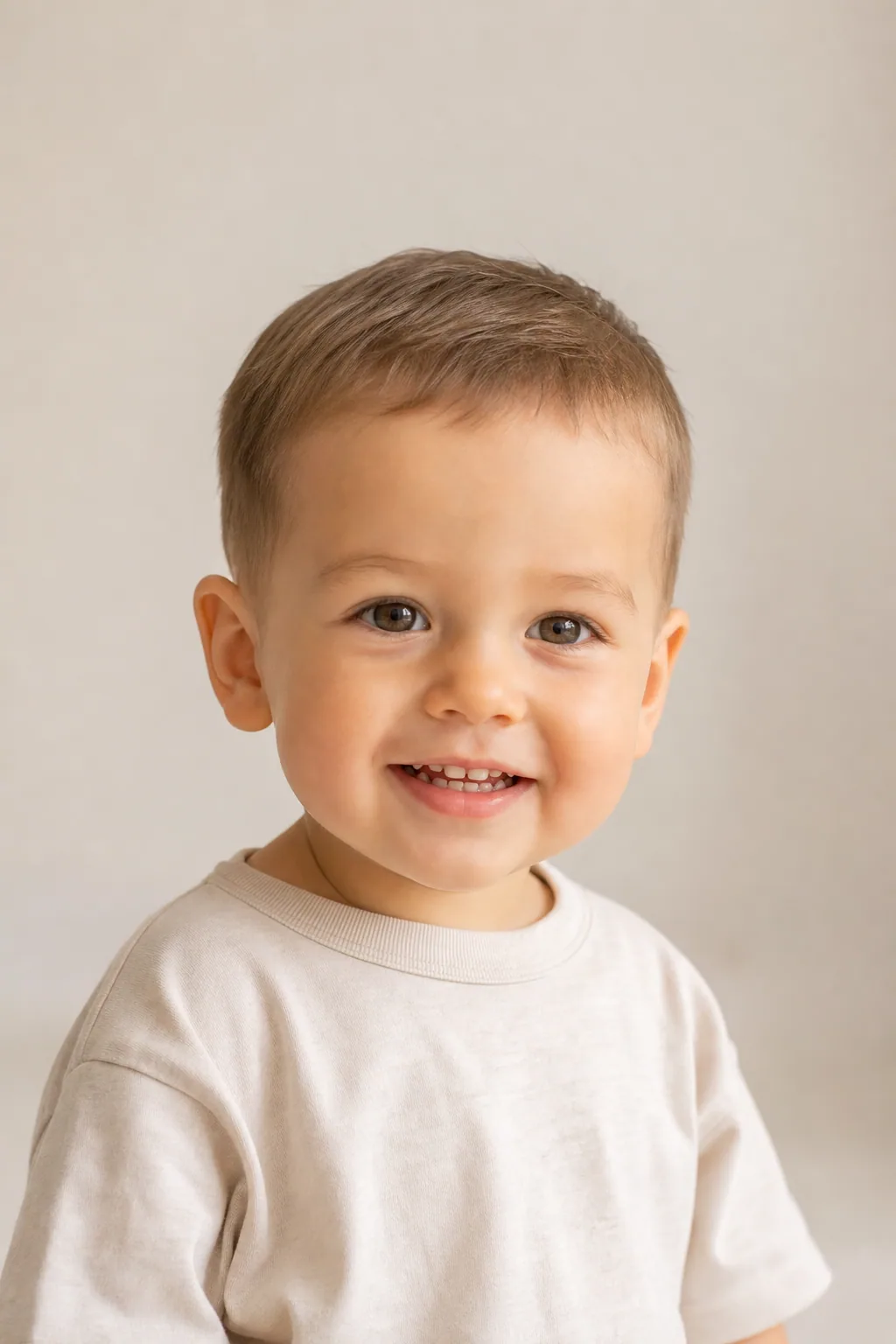
Short soft crew cut
A little length at the front, shorter toward the crown, and rounded sides. It keeps a boyish shape with almost no styling.
Ask for the sides to be cut with scissors or a longer clipper guard so the edges stay soft.
 SB
SBThe best haircuts for a toddler boy with thin hair are short and even, with a soft edge rather than a sharp one: a short crew, a soft buzz, or a short back and sides with a little more on top. Short, even hair sits closer together and looks fuller than longer wisps that separate.
Fine, thin hair is normal in toddlers. Most children's hair becomes fuller and a little coarser through early childhood, so a cut at two is solving a temporary problem. Below are 11 cuts from the simplest to the longest, how to handle cowlicks and patchy regrowth, and what to ask for at the first haircut.
Parents often bring in a toddler with wispy hair and ask me to "let it grow to fill in." Longer baby-fine hair does the opposite: it separates into strands, sticks to the forehead and looks thinner.
A short, even cut makes the same hair look thicker straight away, and it grows out evenly while the hair itself fills in.
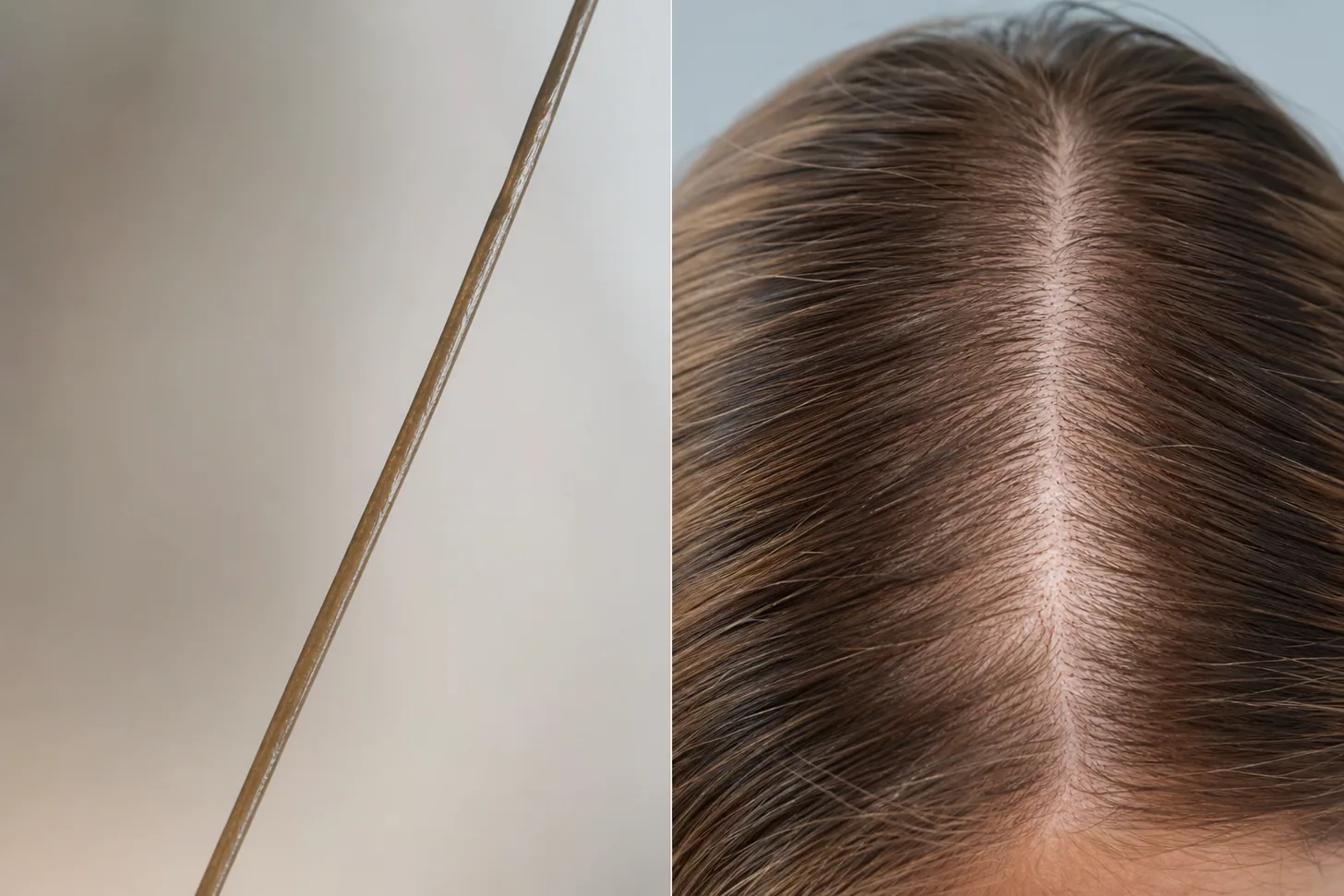
SBToddler hair is usually both fine, meaning each strand is narrow, and thin, meaning there are fewer strands than an adult has on the same area of scalp. It tends to fill out gradually over the first few years.
Because each strand is so light, it lies flat and separates easily. Keeping it short and cutting it to an even length gives the strands support from each other, so the head looks covered rather than wispy. A soft, slightly textured edge also grows out better than a sharp line, which matters when you are not planning a haircut every three weeks.
If you want the adult version of the same principle, what fine hair actually is explains the difference between fine and thin, and haircuts for men with thin hair uses the same logic for grown-ups.
These three are the easiest to maintain and the most forgiving on very fine hair.
A little length at the front, shorter toward the crown, and rounded sides. It keeps a boyish shape with almost no styling.
Ask for the sides to be cut with scissors or a longer clipper guard so the edges stay soft.
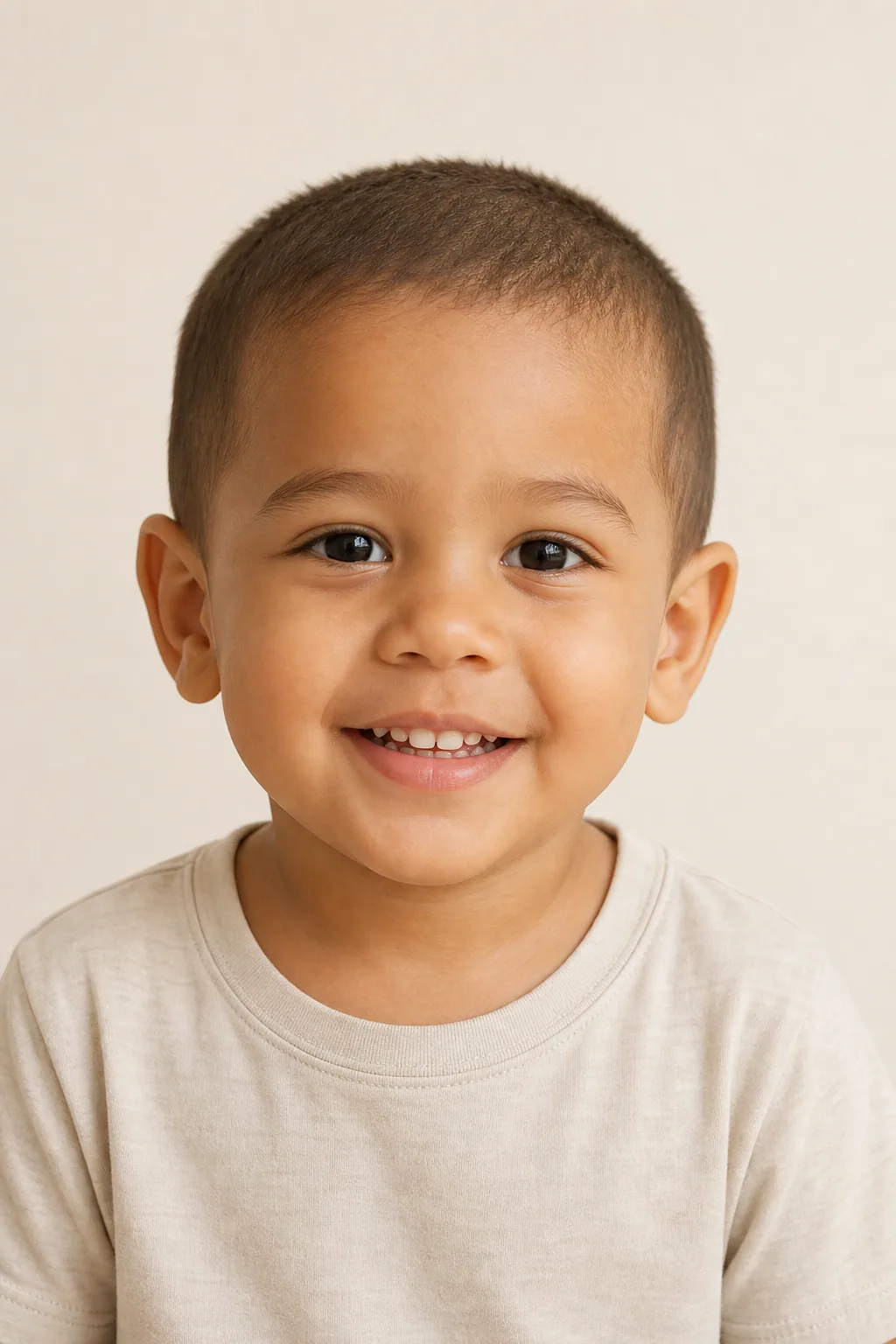
One even length all over, usually at a longer guard such as a number 4 to 6. It removes the difference between patchy and fuller areas completely, and it is ideal in summer.
Many toddlers dislike the buzz of clippers. If yours does, a scissor-over-comb version gives a similar result more quietly.
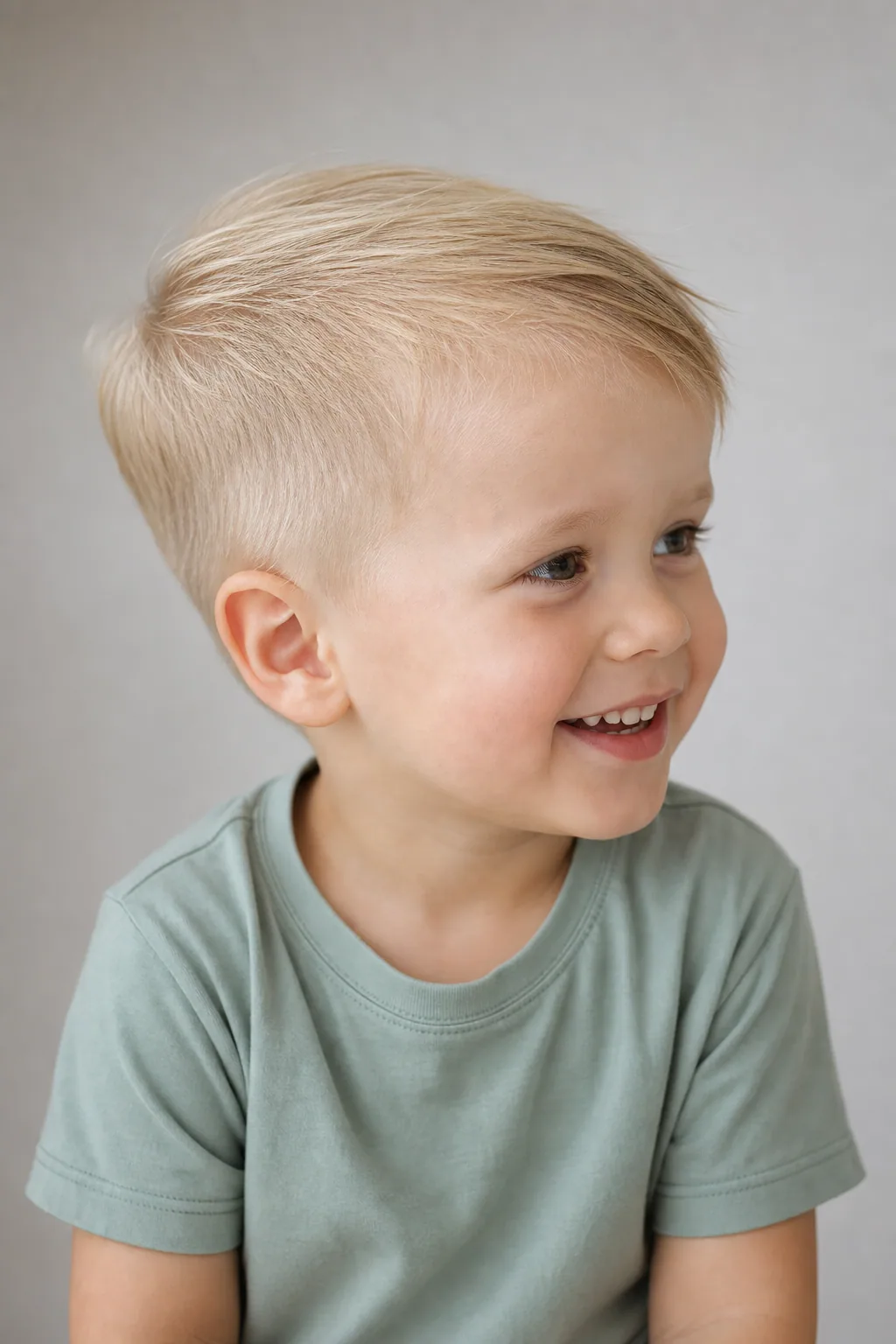
The sides and back are kept short and the top is left around an inch and a half so it can be brushed to the side. It looks neat for photographs and still grows out gently.
On fine hair, ask for the top to be lightly textured so it does not sit as one flat sheet.
If you would rather keep some length, these four work on fine hair that is not too sparse. Keep the edges blunt: a blunt line looks thicker than a feathered one.
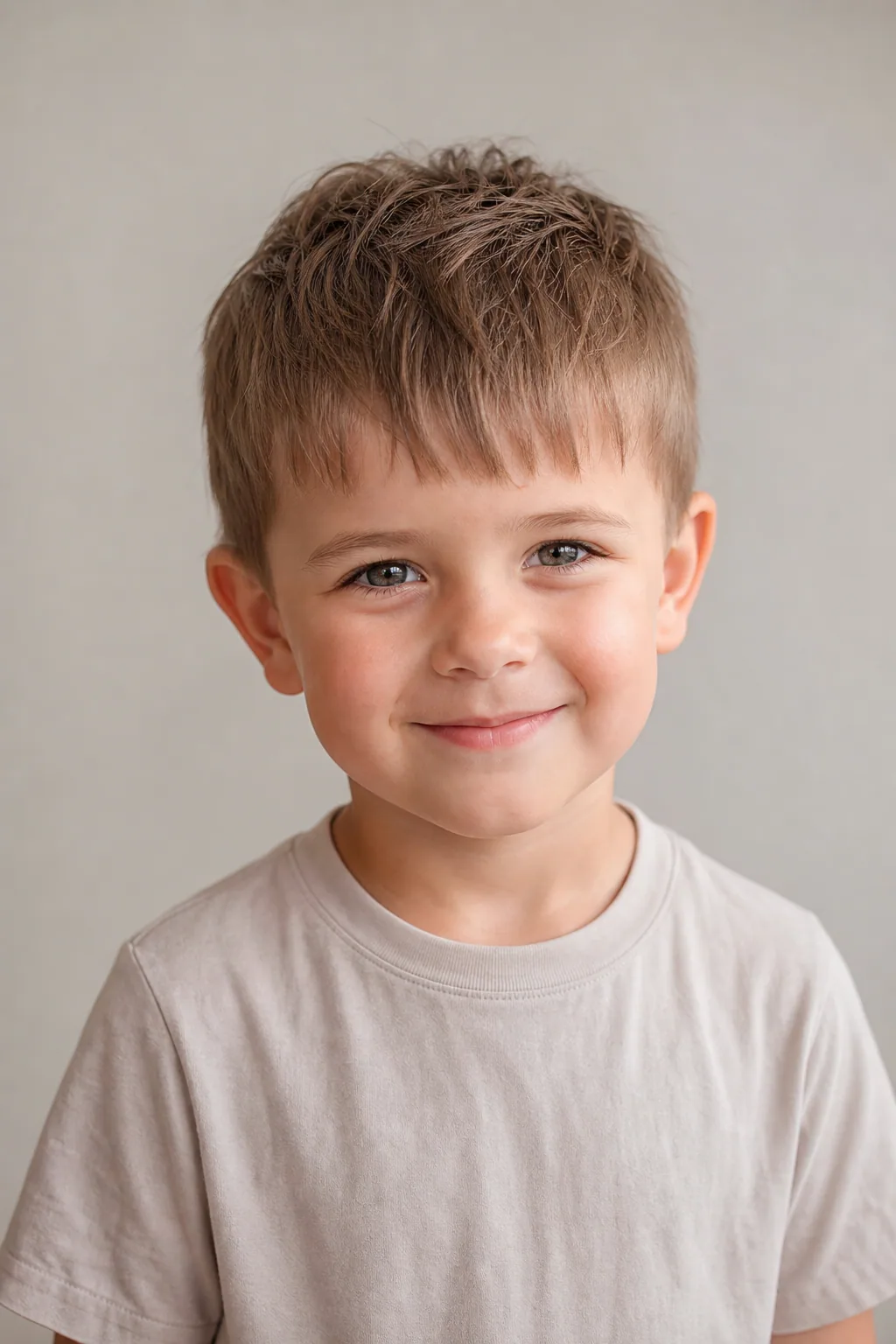
The top is cut into short, slightly uneven pieces and falls forward into a fringe. The unevenness helps the strands overlap, which makes fine hair look fuller.
This is a good cut for a child whose hair is starting to fill in but still separates at the front.
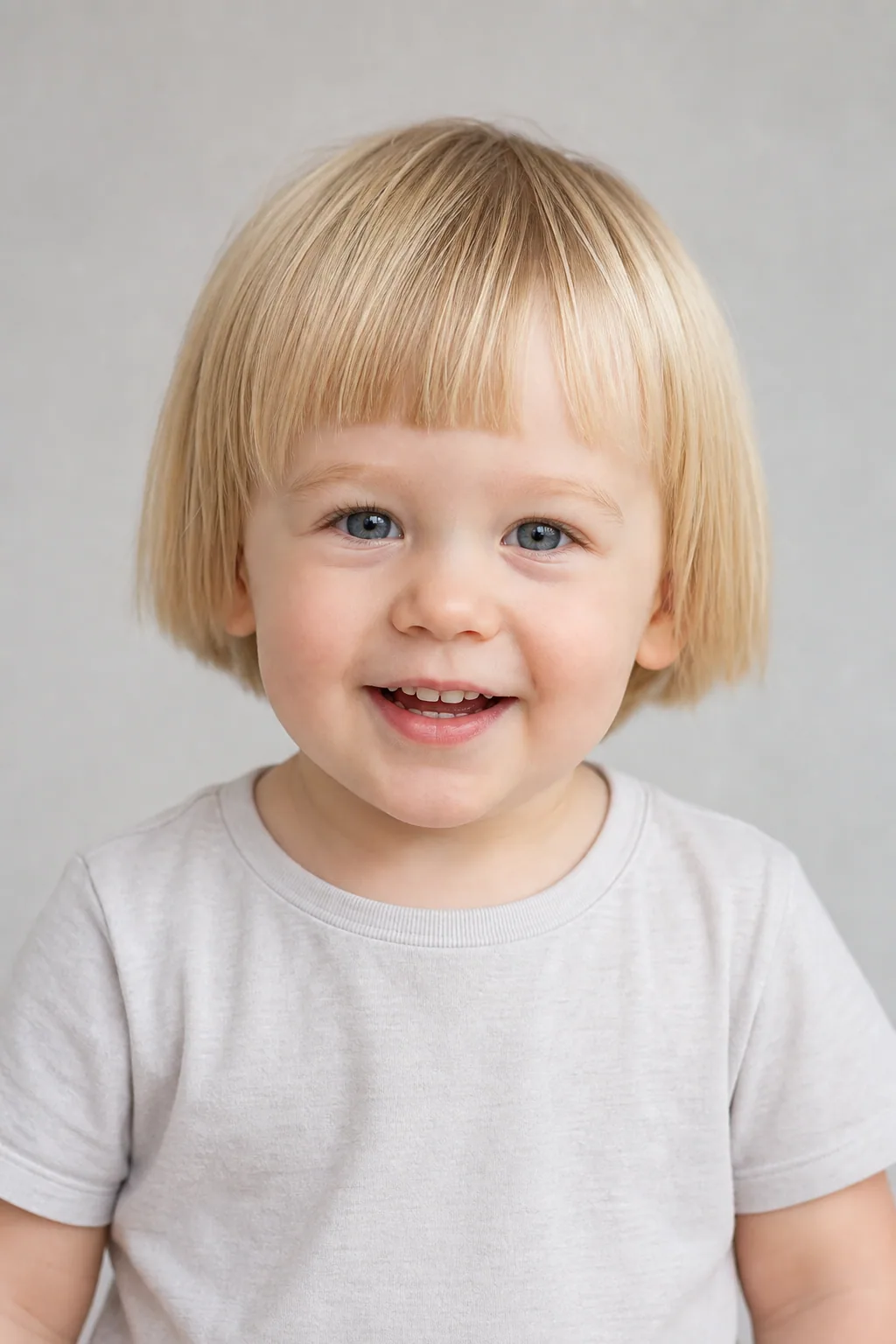
Fine, straight hair lies smoothly into a rounded shape, and the blunt edge all the way round makes it look thicker than it is. It is one of the few longer cuts that genuinely suits baby-fine hair.
Keep the fringe above the eyebrows and the sides at mid-ear so it stays out of the eyes.
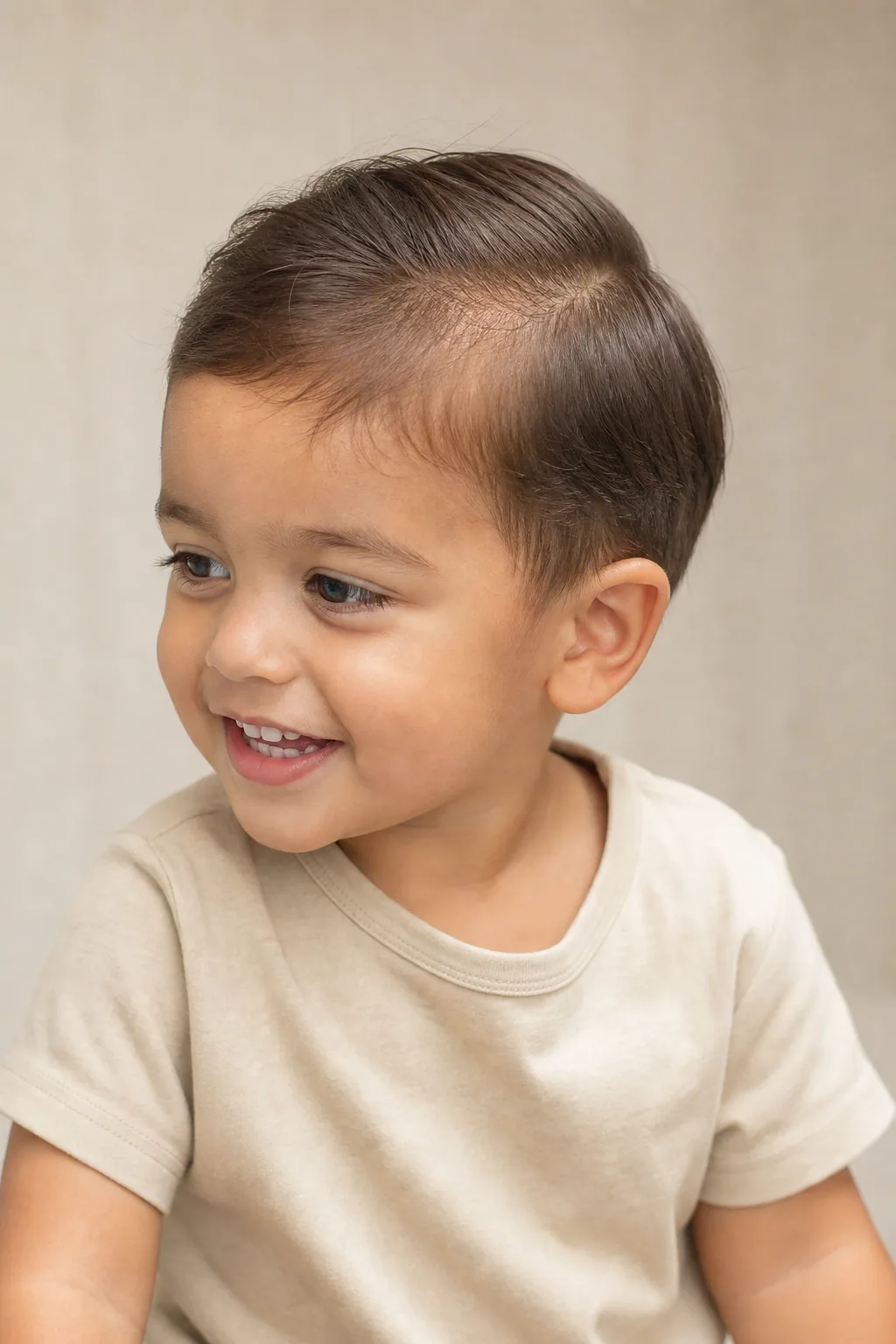
A short, traditional side part for weddings and family photos. On fine hair, keep the part soft and brushed into place with damp fingers rather than drawn with a comb, which leaves a clear line of scalp.
A tiny amount of water is all the styling it needs.
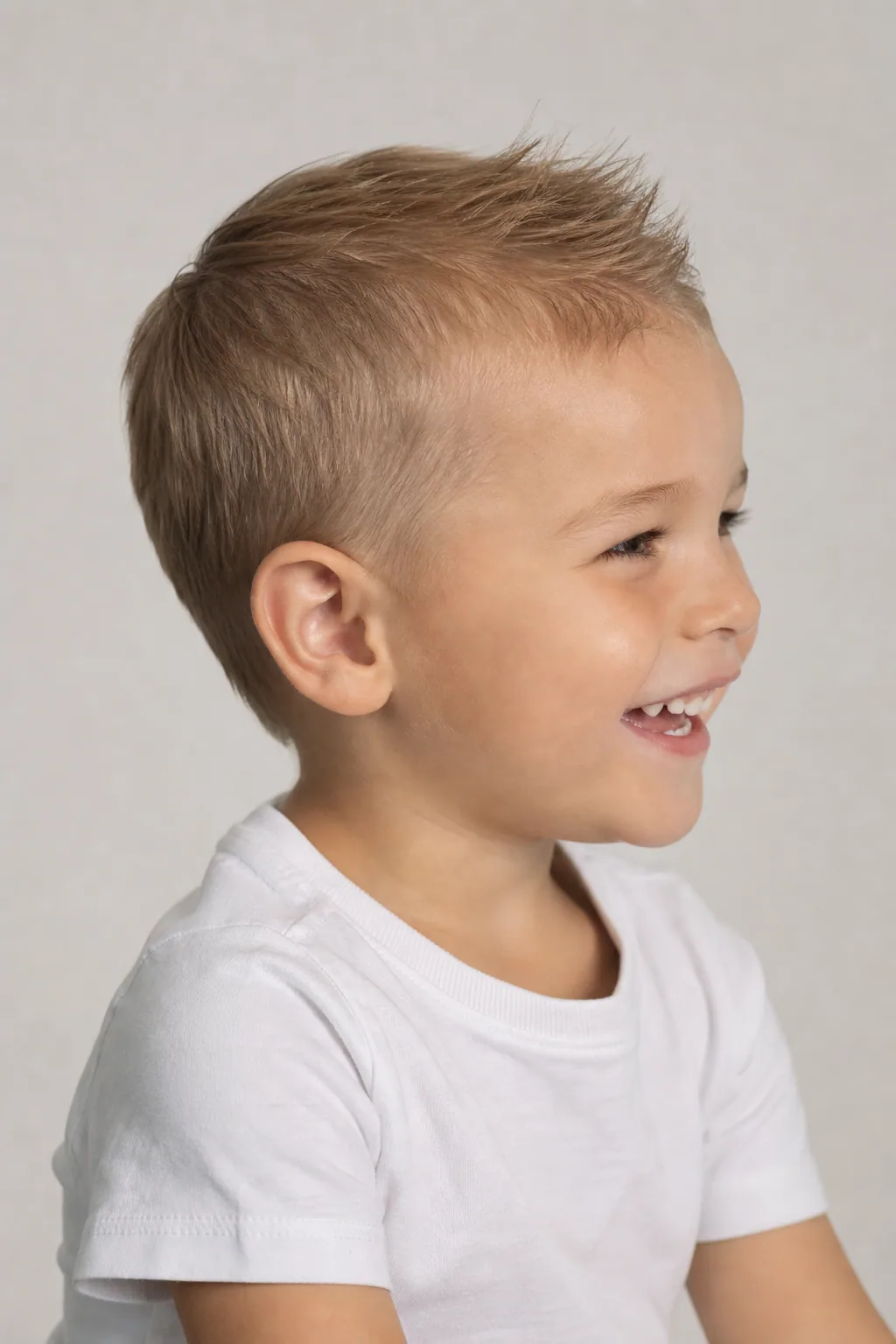
About an inch on top, brushed upward with damp fingers so it stands up rather than lying flat. Upright hair covers more scalp than flat hair.
For older kids who like a styled look, a tiny amount of light, water-based children's styling product is enough. Keep adult waxes and gels away from very young children.
Cowlicks — patches where hair grows in a swirl — are very common in toddlers, and on fine hair they are more visible. The trick is to cut with the swirl rather than against it.
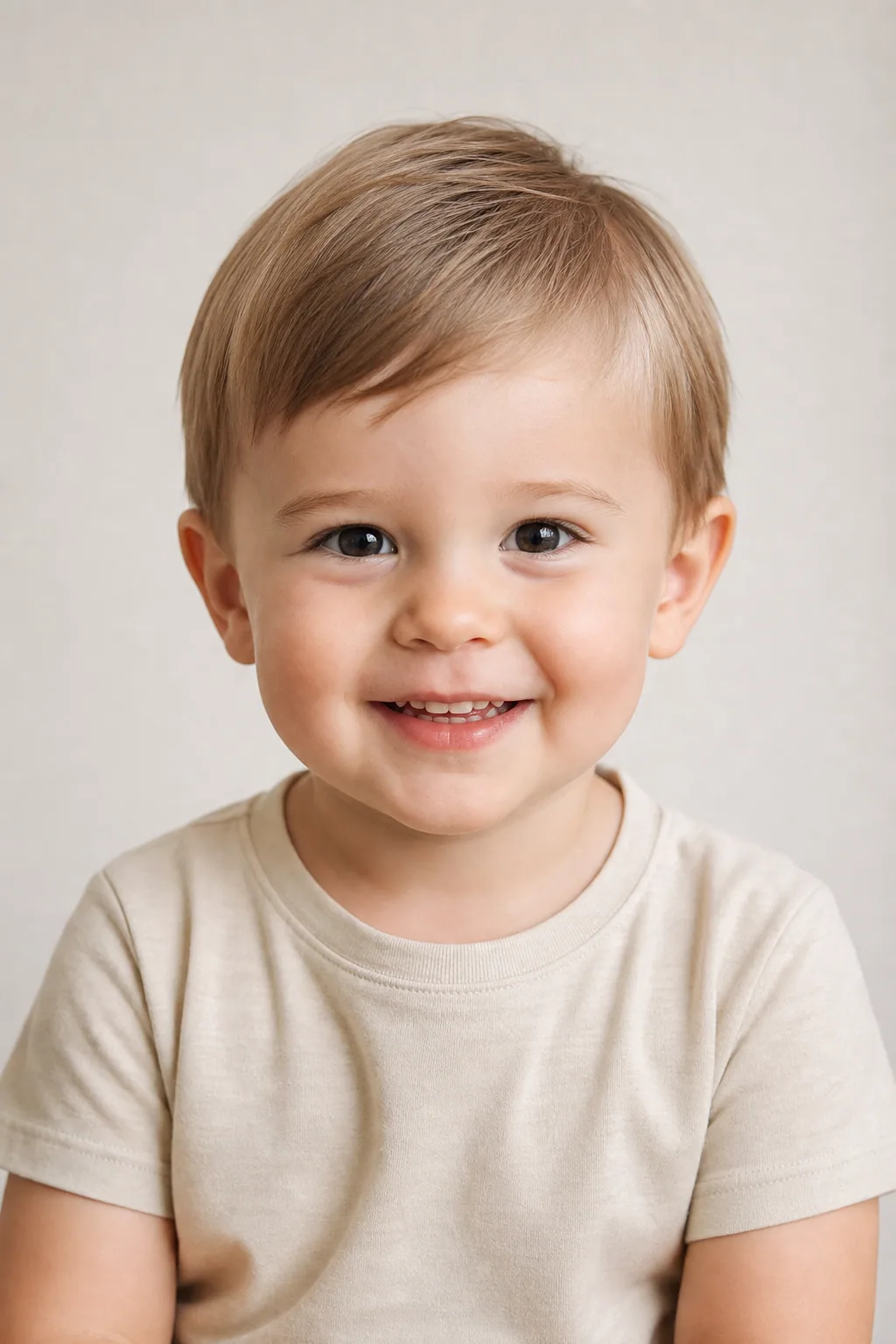
A front cowlick makes a straight fringe stick up. Left slightly longer and angled in the direction the hair wants to go, the fringe lies down.
Cutting a cowlick very short usually makes it stand straight up. Our cowlick guide explains why in more detail.
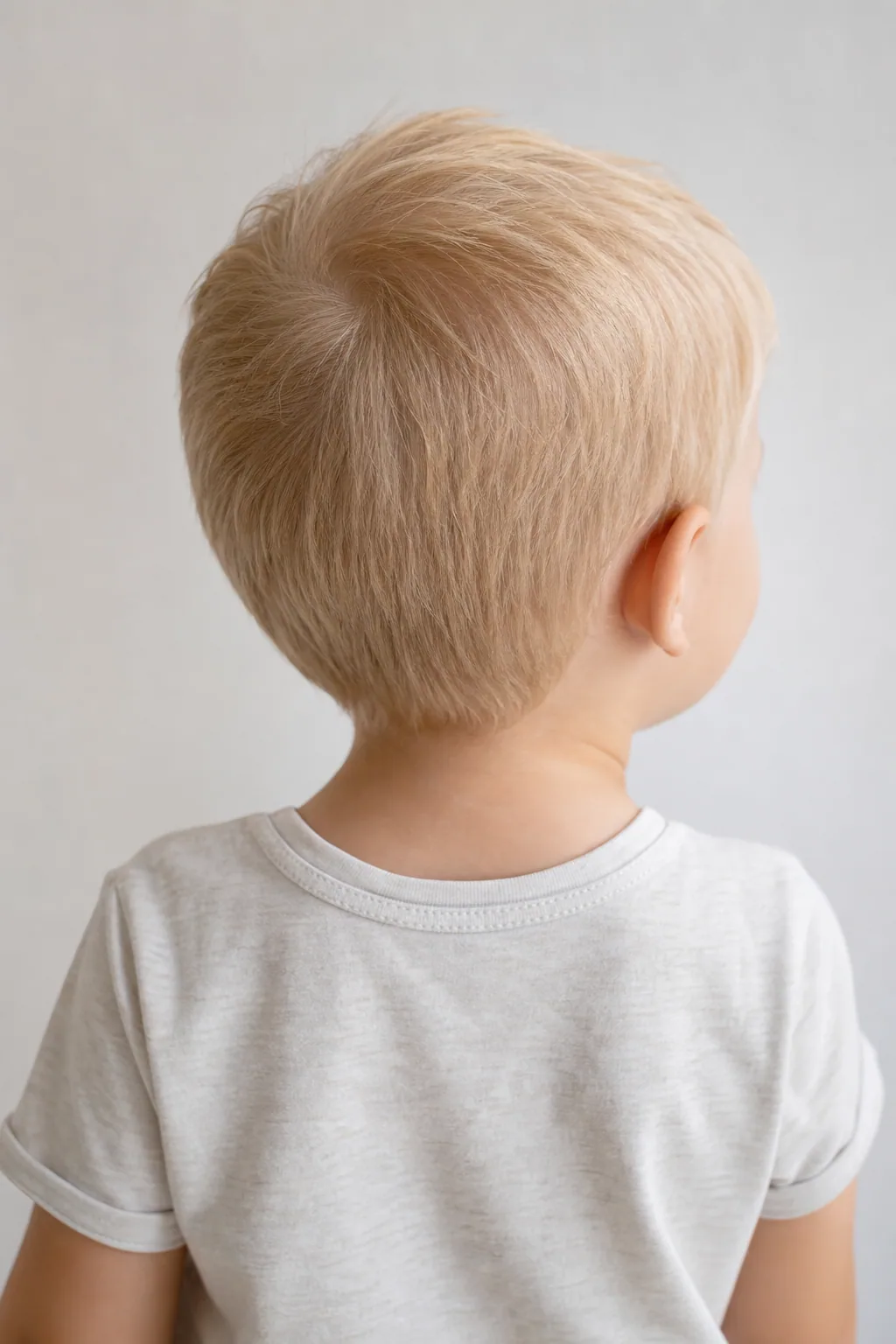
A double crown has two swirls, and fine hair left long there sticks up and separates. Keeping the crown short lets both swirls lie flat.
The top can stay a little longer so the shape still looks soft.
Longer styles are possible on fine hair, but they need blunt ends and regular trims or they turn wispy.
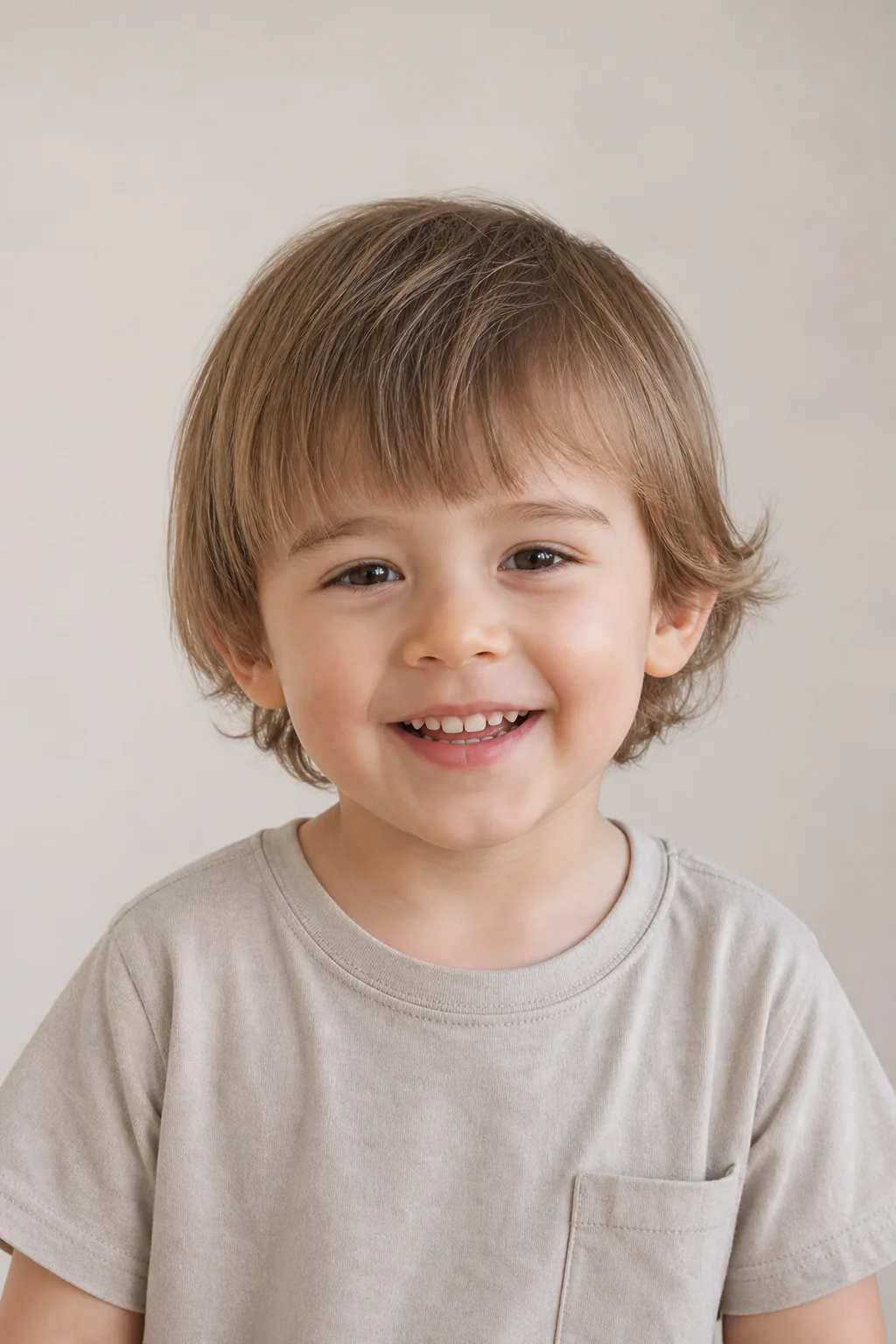
A soft, tousled shape around the ears, very popular for toddlers. On fine hair, ask for just a little layering and keep the ends blunt, or it becomes wispy strands.
Trim every five or six weeks to keep the fringe out of the eyes.

For children who want longer hair, a single length to the ears with blunt ends looks the fullest. It can be tucked back and needs no styling.
Skip heavy layering and thinning at this length; it removes the bulk that makes fine hair look thick.
There is no right age for a first haircut; do it when the hair gets in the eyes or looks uneven. Many parents wait until around the first or second birthday.
Choose a time when your child is rested and fed, bring a favorite toy or a tablet, and let them sit on your lap if it helps. Ask the stylist for scissors on the top and a clipper only if your child is comfortable with the noise. Keep the first cut simple — a light trim to even the length is enough.
Babies often have a bald or thin patch at the back of the head from lying down. That usually fills in once they spend more time sitting and standing. Uneven regrowth after the baby hair sheds is also normal.
What is not typical is a round, smooth bald patch, a scaly or flaky patch, broken hairs, or hair loss that is spreading. See your pediatrician for any of those.
Say: "His hair is very fine, so please keep it short and even, with soft edges rather than a sharp line. Cut with his cowlick rather than against it, and keep the ends blunt — no thinning shears."
A short cut on a toddler needs a trim every four to six weeks. Longer styles can go six to eight.
A short, even cut with soft edges — a short crew, a soft buzz at a longer guard, or a short back and sides with a slightly longer top. Short, even hair looks fuller than longer wisps, and a soft edge grows out gently between trims. On fine, straight hair a soft bowl cut with blunt ends also works well.
Usually, yes. Fine, thin hair is normal in toddlers, and most children’s hair becomes fuller and slightly coarser through early childhood. If there are smooth bald patches, scaly areas, broken hairs or spreading loss, see your pediatrician.
No. Cutting does not change how many hairs grow or how thick each strand is. It does make fine hair look fuller, because short, even hair sits closer together and does not separate into wisps.
Cut with the cowlick rather than against it. Leave the hair over the cowlick slightly longer and angle it in the direction it grows, so its weight helps it lie flat. Cutting a cowlick very short usually makes it stand straight up. A short crown cut helps a double crown lie flat.
There is no set age. Most parents cut when the hair falls in the eyes or grows unevenly, often around the first or second birthday. Choose a time when your child is rested, and keep the first cut simple, such as a light trim to even the length.
A soft buzz at a longer guard, such as a number 4 to 6, can make thin toddler hair look fuller and more even, and it is practical in warm weather. It does not make the hair grow back thicker. If your child dislikes clippers, a short scissor cut gives a similar look.

 SB
SBEleven years behind the chair, specializing in short shapes and fine-hair texture. Simone believes the best haircut is the one you can style yourself in ten minutes.
More from Simone →Results vary with hair type, density, and growth patterns. This guide is educational and not a substitute for an in-person consultation with a licensed stylist, or for medical advice from your pediatrician about hair loss or scalp problems.
Hairstyle images in this guide are AI-generated illustrations, not photos of real clients or results. See our image policy.