No, wearing a hat does not cause hair loss. Hair grows from follicles beneath the skin, and a hat sitting on top doesn't reach them or cut off their supply. In a study of 98 pairs of identical female twins, the twin who did not wear hats tended to have more frontal hair loss, likely because hats block sun (Gatherwright et al., 2012).
The exception is tension. Tight headwear worn for hours every day can pull at the hairline and cause traction alopecia over time. Below is what the evidence shows, which hats to watch, and how to keep fine hair from flattening under them.
Why people think hats cause hair loss
Mostly timing. People often start wearing hats more because their hair is thinning, so the two show up together. Hair also comes away on the inside of a hat, especially a knit one, and those are hairs you would have shed anyway. Normal shedding is 50 to 100 hairs a day. See hair shedding vs hair loss.
What the research says
There is no evidence that ordinary hats cause pattern hair loss. The twin study above looked at dozens of lifestyle factors in identical twins, who share the same genes. Not wearing hats was linked with more frontal hair loss. That is an association, not proof that hats protect hair, but it points the opposite way from the myth. The same study linked sun exposure without protection to more thinning at the crown.
Two other common worries also lack evidence. Hats don't "suffocate" the scalp, since follicles get oxygen from the blood, not the air. Sweat under a hat doesn't cause hair loss either, though not washing it out can irritate the scalp. See workout hair for fine hair.
The exception: tight headwear and traction alopecia
Constant pulling on the same hairs can damage the follicles over time. That is called traction alopecia, and it is usually caused by tight hairstyles, braids, extensions and tight headwear (Billero and Miteva, 2018). Early on it is reversible. Signs include:
Soreness or tenderness where the band sits.
Short broken hairs or thinning along the hairline or temples.
I tell clients to do the two-finger test: you should be able to slide two fingers between the band and your forehead. If a hat leaves a red line or a dent that's still there an hour later, it's too tight to wear every day.
MH
— Megan Holloway, Editor-in-Chief
How to stop hat hair on fine hair
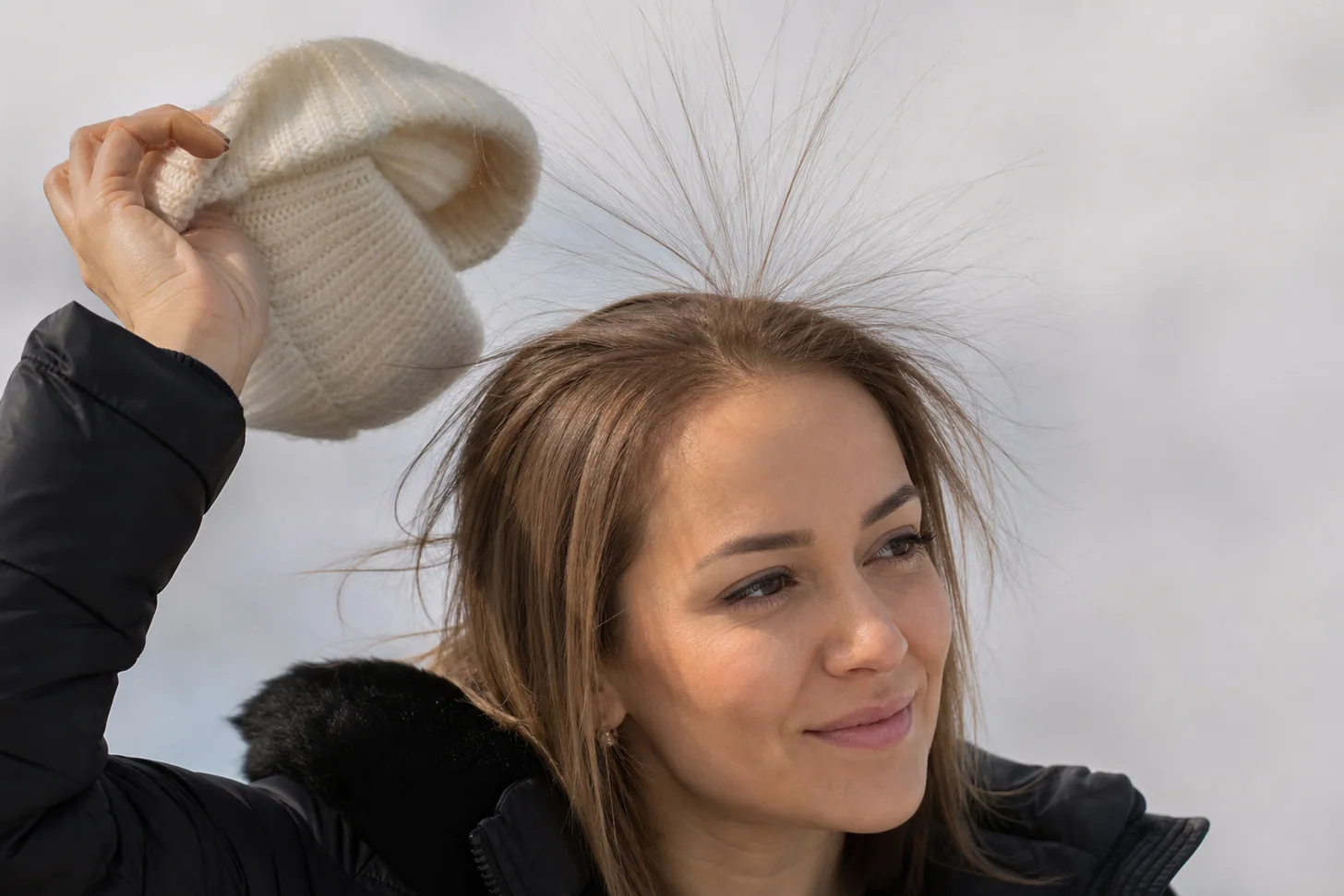
Hat hair isn't damage, it's a set: the hair dries or cools in the shape the hat pressed it into. Fine hair takes that shape fastest.
Never put a hat on damp hair. Dry the roots fully first.
Choose looser, lined hats. A silk or satin lining reduces friction and static.
Part your hair differently before putting the hat on, then flip it back when you take it off for instant lift.
Hats are the easiest way to protect a scalp that shows through fine or thinning hair. A sunburned part is painful and peels, and the scalp is a common site for sun damage. A loose, breathable hat is the better choice for a day outside.
See a dermatologist if
Your hairline is thinning where a hat or helmet strap sits. Traction alopecia is reversible early. Loosen or change the headwear now.
You have tender bumps or pus around the follicles. That can be folliculitis, which needs treatment.
No. Ordinary hats don't reach or damage the hair follicles. The only exception is tight headwear worn daily, which can cause traction alopecia at the hairline.
Not if it fits loosely. Pattern baldness is driven by genes and hormones. In a twin study, women who didn't wear hats had more frontal hair loss, possibly because of sun exposure.
Yes, over time. Constant pulling at the hairline can cause traction alopecia. Choose hats you can slide two fingers under.
Those are hairs you would have shed anyway. Most people shed 50 to 100 hairs a day, and knit fabrics catch them.
No. Leaving sweat on the scalp for days can irritate it, so wash after heavy sweating, but sweat doesn't cause hair loss.
Dry your roots fully before putting a hat on, choose a loose lined hat, and flip your part when you take it off.
This article is for general education and is not medical advice. If your hairline is thinning or your scalp is sore, see your doctor or a board-certified dermatologist.
Images in this guide are AI-generated illustrations, not photos of real clients or results. See our image policy.
Get the good hair intel
One honest, stylist-written guide in your inbox each week. No hype.

 MH