If your hair is thin, meaning low density, skip K-tips; our extensions guide ranks keratin bonds near the bottom for exactly that reason. If your strands are fine but you have plenty of them, small bonds can work, with a light total load and a stylist who matches each bond to the hair it holds.
Done the standard way, with full-size bonds on a full head, K-tips put more weight on fewer strands than fine hair can carry.
This guide explains what flat-tip and K-tip bonds are, how they differ from U-tips, I-tips and tape-ins, what the dermatology research says about the risk, and the signs that you should choose a gentler method.
a stylist attaching a tiny keratin-bonded extension close to the root of a thin section of fine blonde hair, close-up
Chair-side note
The fine-haired clients who do well with bonds have one thing in common: they asked for less. Fewer strands, smaller bonds, a little volume rather than six inches of length.
The ones who end up in my chair with breakage asked for a transformation. On fine hair, the hair you add is only as secure as the hair holding it.
SB
— Simone Baptiste, Senior Stylist
What K-tip and flat-tip extensions are
A K-tip is a strand of extension hair with a small keratin tip at one end. A stylist wraps that tip around a matching section of your own hair near the root and softens it with heat, so it sets as a bond. "Keratin bond", "fusion" and "pre-bonded" all describe the same family.
Flat tip is a shape. The tip is pressed flat rather than shaped like a nail, and Remy Royale describes its flatter surface as easier to heat and mould around the natural hair. A flat bond sits closer to the head, which matters on fine hair, where a bulky bond shows through.
K-tip vs U-tip vs I-tip vs tape-in
The difference that matters for fine hair is how the load is attached, not the hair quality. This is a quick comparison; our hair extensions for fine hair guide ranks every method by what it asks of your strands.
Method
How it attaches
Heat?
On fine hair
Flat tip / K-tip
Flat keratin tip fused around a small section
Yes, or ultrasonic
Possible with micro or nano bonds
U-tip
Nail-shaped keratin tip fused around a section
Yes
Bulkier; bonds show more easily
I-tip
Clamped in a lined bead, no glue
No
Bead can slip or pinch fine strands
Nano ring
Very small metal ring
No
Discreet, but still a point load
Tape-in
Flat weft sandwiched with adhesive
No
Spreads load wider; must be moved on time
How keratin bonds are applied and removed
Hot fusion uses a heat connector that melts the keratin tip around your hair. Great Lengths says its thermal applicator heats only the side touching the extension, at about the temperature of a curling iron. Its ultrasonic "cold" method uses sound waves instead of heat.
A full head usually takes several hours. Bellami lists three to six hours, and smaller bonds take longer because there are more of them.
Removal is a salon job. The stylist applies a bond remover, usually alcohol-based, then squeezes each bond with removal pliers until it cracks and slides off. Pulling a bond out at home takes your own hair with it.
The bond size fine hair needs
Standard K-tips weigh about 1 gram per strand. Retailers sell micro bonds at roughly 0.6 to 0.8 grams for fine hair and nano bonds at 0.3 to 0.5 grams for very thin hair. Many stylists simply cut a standard bond into halves, thirds or quarters.
The rule that matters is matching. Donna Bella's education team puts it simply: the section of your own hair should match the size of the extension piece. A small bond on a large section looks bulky; a large bond on a small section breaks it.
Great Lengths says fine strands can be damaged at the root by standard attachments and that bonds can be cut smaller to match. No source gives a universal number of hairs per bond, so be wary of a salon that quotes one without looking at your hair.
How many K-tips for thin hair
Brand guides quote 100 to 150 strands for a full head and up to 200 or more for length. That is a figure for average hair. On fine hair, fewer is safer.
Cliphair's own guide suggests one to two packs of 50 strands for volume on thin hair, against four to five packs for thick hair. If a salon proposes a thick-hair quantity for your fine hair, that is the warning sign.
Are K-tip extensions safe for fine hair?
The risk is traction alopecia, hair loss caused by repeated pulling. A 2018 review in Clinical, Cosmetic and Investigational Dermatology lists weaves and extensions among the highest-risk styles, and says the damage depends on how hard and how long the hair is pulled.
Caught early, traction alopecia usually reverses. Left long enough, it scars the follicle and the hair does not come back. The American Academy of Dermatology describes it as possibly permanent.
Fine hair is more exposed for a simple reason: each strand is thinner, so the same bond weight is a larger share of what it can hold. Great Lengths' own fine-hair advice says fine hair is more sensitive to tension and extension weight.
How long K-tips last, and why the dermatologists say less
Brands quote three to six months before a refit. Great Lengths says four to six months; Cliphair says to remove and reapply after 12 weeks; Bellami suggests reapplying every six to nine weeks.
Dermatology advice is shorter. The AAD says to wear extensions for two or three months at most and then give your hair a break. A 2021 review in the International Journal of Women's Dermatology says the same, and adds that pain or stinging during placement is one of the earliest signs of traction.
On fine hair, follow the shorter number. Book the check-up at six to eight weeks, and plan a break between installs rather than going straight into the next set.
Skip K-tips, or stop, if any of these apply
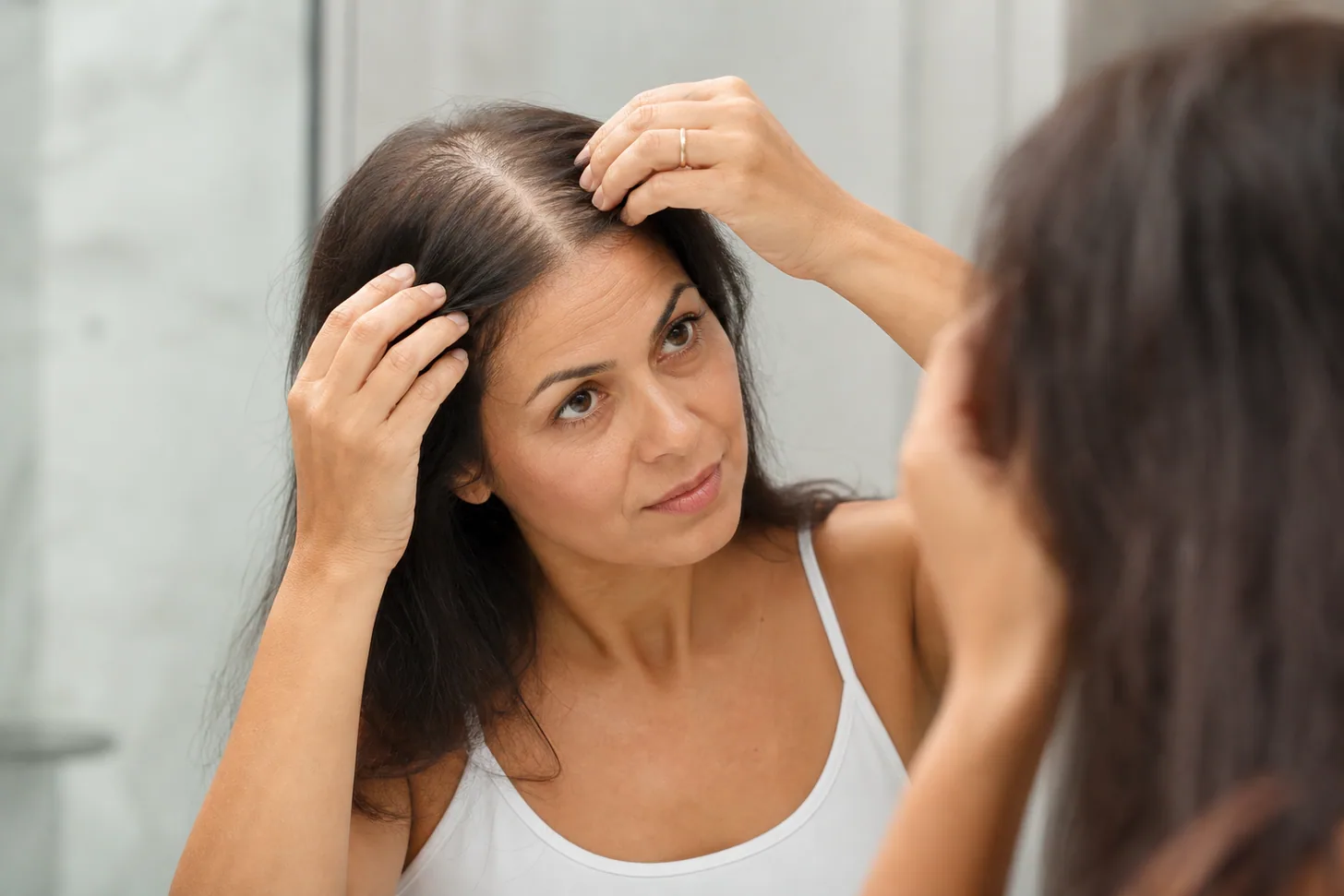
Your part or crown is already widening. Bonds need healthy hair to hold on to, and adding weight to thinning areas speeds up the loss you are trying to hide. A topper or a halo rests on the head instead.
It hurts, stings or gives you a headache after the install. Both the AAD and the 2021 dermatology review treat pain as a sign the attachment is too tight. Ask for those bonds to be loosened or removed.
You see redness, small bumps or broken hairs around the bonds. These are early signs of traction alopecia, and the window to reverse it is early.
Your hair is relaxed or freshly bleached. Chemically treated hair is weaker, and dermatologists specifically advise against extensions on relaxed hair.
Your own hair is shorter than about two inches. Great Lengths needs at least 5 cm of healthy hair, ideally 8 cm, for a bond to hold.
How much K-tip extensions cost
Expect roughly $500 to $3,000 or more for a full head, depending on length, how many strands you need and the salon. Hair alone runs about $139 for a 50-strand pack from Cliphair's pro line, and installation, maintenance and removal are charged separately.
Premium brands such as Great Lengths only quote after a consultation. Fine hair often costs less in hair, because you need fewer strands, but micro bonds take longer to fit.
What K-tips look like on thin hair, before and after
A realistic result on fine hair is more fullness through the lengths and ends, not a thick mane. The bonds sit about a centimetre from the scalp, so they are hidden by hair falling over them; on very sparse hair, especially at the part, they can show.
Ask to see the salon's own before-and-after photos of fine-haired clients, taken in daylight with the hair down and parted. Our realistic before and after on fine hair explains what to look for.
Gentler options if K-tips are not right
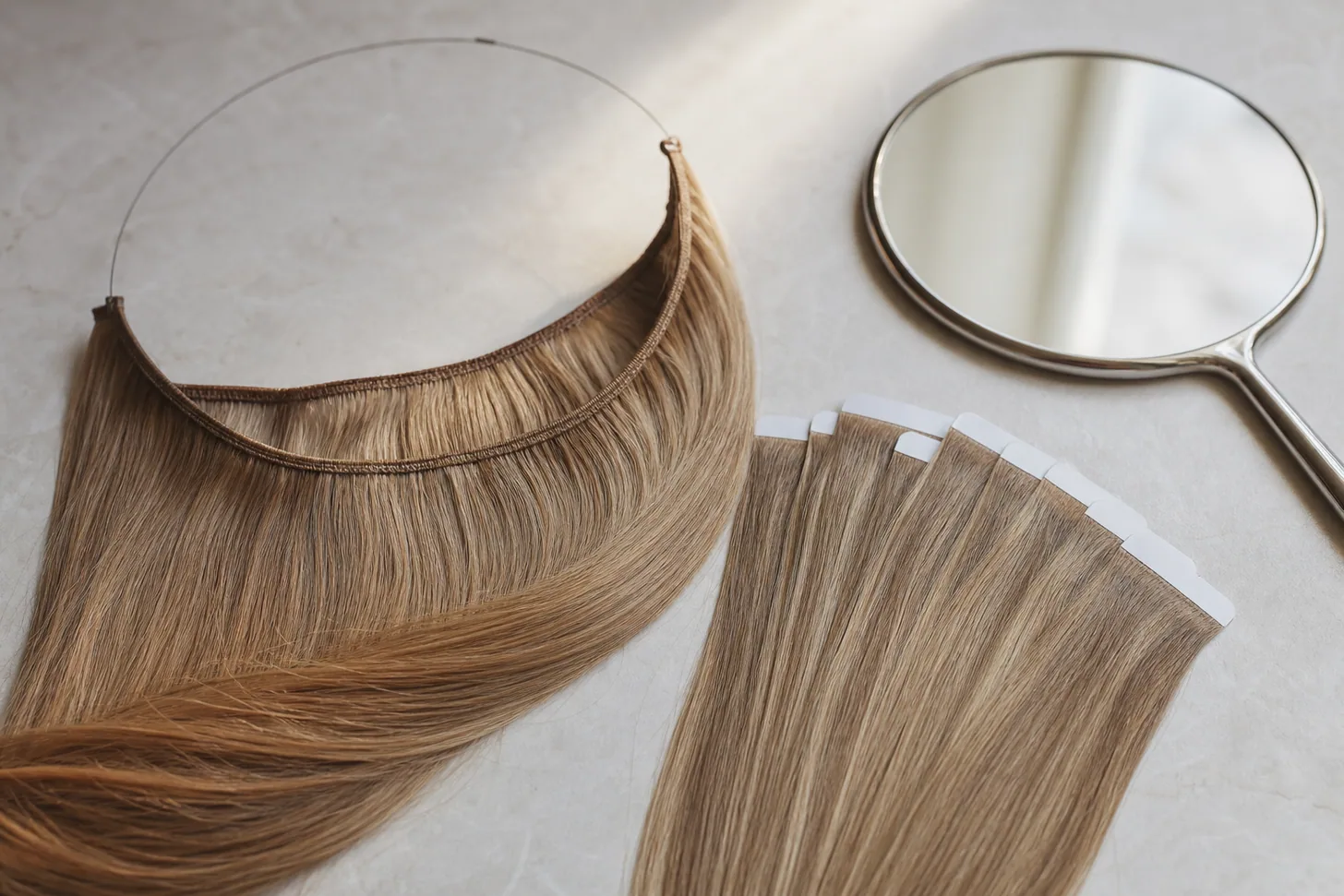
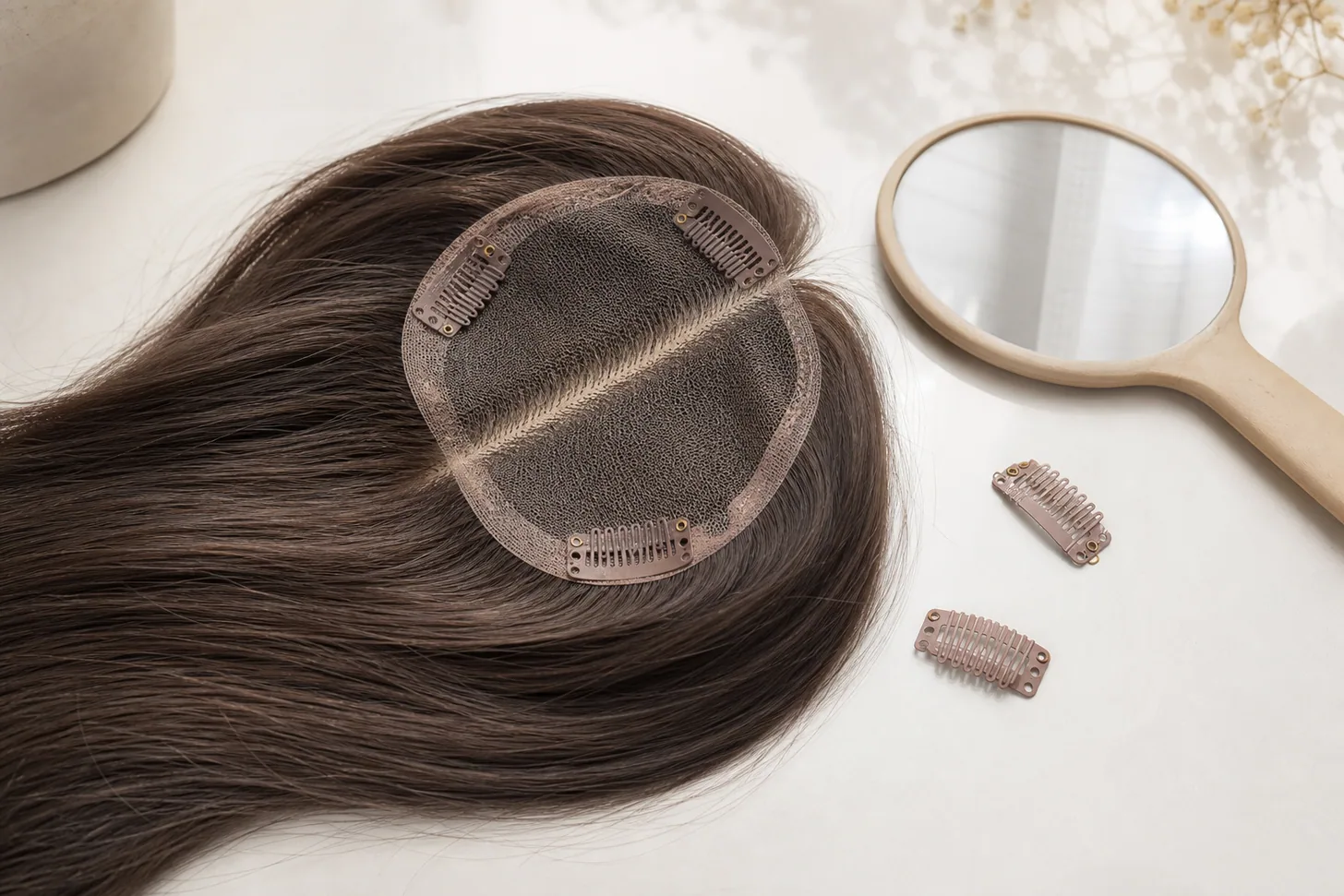
If you want volume more than length, a hair topper clips over the thinnest area. A halo rests on the head and attaches to nothing, and clip-ins come out at night.
Only if your strands are fine but your density is normal, and then with micro or nano bonds, fewer strands and regular check-ups. If your hair is thin or thinning, skip them: the bonds hang from small sections, and a halo, clip-ins or a topper ask far less of your hair.
They are the same keratin-bond method. K-tip means keratin tip; flat tip describes the shape of the tip, pressed flat so it wraps closely around the natural hair. U-tips are the nail-shaped version and sit a little bulkier.
Fewer than the 100 to 150 strands brands quote for an average full head. Cliphair suggests one to two packs of 50 for volume on thin hair. The right number depends on how much healthy hair you have to attach them to.
They can, mainly through traction: steady pulling on the follicles. Dermatologists link extensions to traction alopecia, which is reversible early and can become permanent. Small, well-matched bonds, a two-to-three-month wear time and breaks between installs reduce the risk.
Brands quote three to six months. Dermatology advice is shorter: the AAD suggests two or three months at most before a break. On fine hair, book a check-up at six to eight weeks and follow the shorter timeline.
A stylist applies a bond remover, usually alcohol-based, to each bond, then squeezes it with removal pliers until it cracks and slides off. Do not pull bonds out yourself.
Tape-ins spread the weight across a wider, flat section, so many stylists prefer them for fine hair, as long as they are moved on schedule. K-tips can be more discreet in small sizes but put the load on smaller sections. Neither is right for hair that is actively thinning.
Roughly $500 to $3,000 or more for a full head in the US, depending on length, strand count and salon. Removal and refits are extra, and premium brands quote only after a consultation.
Eleven years behind the chair, specializing in short shapes and fine-hair texture. Simone believes the best haircut is the one you can style yourself in ten minutes.
This article is general information, not medical advice. Bond weights, wear times and prices are industry figures checked in October 2026 and vary by brand and salon. If you have pain, redness or new hair loss around extensions, see a dermatologist.
Hairstyle images in this guide are AI-generated illustrations, not photos of real clients or results. See our image policy.
Get the good hair intel
One honest, stylist-written guide in your inbox each week. No hype.

 SB